
Home › Sample questions › Agriculture (SSW 2)
Agriculture (SSW 2) sample exam questions – 10 questions with answers
農業(2号)
10 sample questions in the real exam format, with furigana, English translation, answers and explanations. Tap "Show answer" under each question. For the full question bank and realistic mock exams, open the free app.
Question 1
労働基準法の第41条では、農業は天候などの自然条件に左右されるため、労働時間や休日だけでなく、深夜業の割増賃金および年次有給休暇の規定も適用除外とされている。
Under Article 41 of the Labor Standards Act, because agriculture is affected by natural conditions such as weather, not only provisions on working hours and holidays, but also provisions on night work premium wages and paid annual leave are exempt from application.
- A. ○
○ True - B. ×
× False
Show answer
Correct answer: B
In agriculture and livestock farming, statutory working hours, breaks, and holidays are exempt under Article 41, but night work premium pay (22:00 to 05:00) and statutory paid annual leave still apply in full. (Textbook: ASAT Level 2 Safety & Hygiene 1-4 p.2)
| Word | Meaning |
|---|---|
| 労働基準法 | Labor Standards Act |
| 労働時間 | working hours |
| 割増賃金 | premium wages |
| 年次有給休暇 | paid annual leave |
Question 2
ある殺虫剤(乳剤)のラベルに「希釈倍数 2,000倍、10a当たり散布液量 150L」と記載されている。面積 30aのほ場に散布する薬液を作る場合、必要な農薬の原液量はいくらか。
The label of an insecticide (emulsifiable concentrate) states 'Dilution ratio: 2,000x; Spray volume per 10a: 150 L'. When preparing the spray solution for a 30a field, how much undiluted pesticide is required?
- A. 225mLの農薬原液が必要となる
A total of 225 mL of undiluted liquid is required - B. 全体で150mLの農薬原液が必要となる
A total of 150 mL of undiluted liquid is required - C. 全体で300mLの農薬原液が必要となる
A total of 300 mL of undiluted liquid is required
Show answer
Correct answer: A
The total spray volume for 30a is 150 L × 3 = 450 L (450,000 mL). At a 2,000x dilution ratio, the required amount of undiluted concentrate is 450,000 mL ÷ 2,000 = 225 mL. (Textbook: ASAT Level 2 Safety & Hygiene 4-3 p.25)
| Word | Meaning |
|---|---|
| 殺虫剤 | insecticide |
| 希釈倍数 | dilution ratio |
| 散布液量 | spray solution volume |
| 原液量 | undiluted concentrate volume |
Question 3
日本の食料自給率(令和4年度・重量ベース)において、自給率が約97%と最も高い水準を維持している品目はどれか。
In Japan's food self-sufficiency rate (FY2022, weight basis), which commodity maintains the highest self-sufficiency level at approximately 97%?
- A. 国内生産量が少ない大豆や小麦
Soybeans and wheat with low domestic production - B. 主食用として国内で生産される米
Rice produced domestically as a staple food - C. 輸入品の割合が増えている果実類
Fruits with an increasing share of imports
Show answer
Correct answer: B
On a weight basis (FY2022), Japan's food self-sufficiency rate is 97% for rice, compared to 79% for vegetables, 38% for fruits, 16% for wheat, and 6% for soybeans. (Textbook: ASAT Level 2 Crop Farming 第1章 2 p.2)
| Word | Meaning |
|---|---|
| 食料自給率 | food self-sufficiency rate |
| 国内生産量 | domestic production volume |
| 主食用 | for staple food use |
Question 4
植物に当たる光の強さを徐々に強くしていくとき、光合成による二酸化炭素の吸収量と呼吸による二酸化炭素の放出量が等しくなり、見かけの光合成速度がゼロになる光の強さを「光補償点」という。
As light intensity on a plant is gradually increased, the light intensity at which CO2 absorption by photosynthesis equals CO2 release by respiration—making the apparent photosynthetic rate zero—is called the 'light compensation point'.
- A. ○
○ True - B. ×
× False
Show answer
Correct answer: A
The light compensation point is the light intensity where photosynthetic CO2 uptake equals respiratory CO2 release. When further increases in light intensity no longer increase the photosynthetic rate, it reaches the light saturation point. (Textbook: ASAT Level 2 Crop Farming 第2章 3 p.9)
| Word | Meaning |
|---|---|
| 光合成 | photosynthesis |
| 二酸化炭素 | carbon dioxide (CO2) |
| 光補償点 | light compensation point |
| 呼吸 | respiration |
Question 5
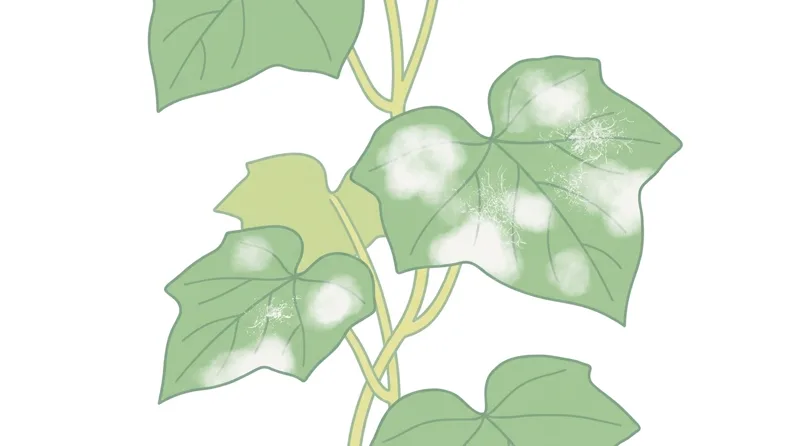
次の写真のように、葉や茎の表面に白いうどん粉をまぶしたようなカビが生え、乾燥した環境でも発生しやすい病害はどれか。
As shown in the photo, which disease forms white flour-like fungal growth on the surfaces of leaves and stems and readily occurs even under relatively dry conditions?
- A. 低温多湿の環境で灰色のカビが生える灰色かび病
Gray mold, which grows gray fungal mold under cool, humid conditions - B. 地際部が腐敗して強い悪臭を放つ軟腐病
Bacterial soft rot, which rots the stem base and emits a foul odor - C. 白い粉状のカビが生えるうどんこ病
Powdery mildew, which covers leaf surfaces with white powdery mold
Show answer
Correct answer: C
Powdery mildew is a filamentous fungal disease that covers leaf and stem surfaces with white flour-like colonies, inhibiting photosynthesis and occurring readily under relatively dry conditions. (Textbook: ASAT Level 2 Crop Farming 資料 p.128)
| Word | Meaning |
|---|---|
| 病害 | plant disease |
| 乾燥 | drying, dry conditions |
| 軟腐病 | bacterial soft rot |
Question 6
水稲の直播栽培は、育苗や田植え作業が不要になるため春作業の労働時間を短縮できるが、移植栽培に比べて出芽・苗立ちが不安定になりやすく、雑草防除や倒伏対策が重要となる。
Direct-seeded rice cultivation eliminates nursery raising and transplanting, thereby reducing spring labor hours, but compared to transplanting it is more prone to unstable emergence and stand establishment, making weed control and lodging prevention critical.
- A. ○
○ True - B. ×
× False
Show answer
Correct answer: A
Direct seeding saves labor and cost by skipping seedling raising and transplanting, but emergence is more vulnerable to weather and birds, and weed control and lodging resistance require careful management. (Textbook: ASAT Level 2 Crop Farming 第3章 1 p.37)
| Word | Meaning |
|---|---|
| 労働時間 | working hours |
| 水稲 | paddy rice |
| 直播栽培 | direct-seeded cultivation |
| 移植栽培 | transplanting cultivation |
Question 7
水稲の種子予措において、充実した良質な種もみを選別する「塩水選」と、その後に行う「浸種」の基準として適切な組合わせはどれか。
In rice seed preparation, which combination correctly states the standard for 'saltwater selection' to select plump seeds and the subsequent 'seed soaking' process?
- A. うるち米は比重1.03の塩水で選別し、水温25℃で浸種する
Select non-glutinous rice at specific gravity 1.03 and soak at 25°C water temperature - B. うるち米は比重1.13の塩水で選別し、積算水温100℃を目安に浸種する
Select non-glutinous rice at specific gravity 1.13 and soak to a cumulative water temperature of 100°C - C. うるち米は比重1.25の塩水で選別し、積算水温30℃を目安に浸種する
Select non-glutinous rice at specific gravity 1.25 and soak to a cumulative water temperature of 30°C
Show answer
Correct answer: B
In saltwater seed selection, a specific gravity of about 1.13 is used to select sunken plump seeds, followed by thorough rinsing and soaking at 10–15°C until the cumulative water temperature reaches roughly 100°C-days. (Textbook: ASAT Level 2 Crop Farming 第3章 2 p.40)
| Word | Meaning |
|---|---|
| 水稲 | paddy rice |
| 種子予措 | seed preparation |
| 塩水選 | saltwater seed selection |
| 浸種 | seed soaking |
Question 8
野菜の種子には光が当たることで発芽が促進される「好光性種子」がある。播種時の覆土を薄くする好光性種子の組合わせとして正しいものはどれか。
Among vegetable seeds, 'photoblastic (light-favored) seeds' have germination promoted by exposure to light. Which combination correctly lists light-favored seeds that require thin soil covering at sowing?
- A. ダイコン、トマト、スイカ
Daikon radish, tomato, watermelon - B. タマネギ、ナス、キュウリ
Onion, eggplant, cucumber - C. ニンジン、レタス、ハクサイ
Carrot, lettuce, napa cabbage
Show answer
Correct answer: C
Carrot, lettuce, napa cabbage, cabbage, and garland chrysanthemum are light-favored seeds and should be covered thinly with soil. Daikon radish, tomato, watermelon, and onion are dark-favored seeds . (Textbook: ASAT Level 2 Crop Farming 第5章 1 p.58)
| Word | Meaning |
|---|---|
| 好光性種子 | light-favored (photoblastic) seed |
| 発芽 | germination |
| 覆土 | soil covering |
Question 9
施設園芸で用いられる被覆資材のうち、保温性が最も優れているが、ほこりが付きやすく経年劣化による光線透過率の低下が早いため1〜2年で張り替えるフィルムはどれか。
Among covering materials used in greenhouse horticulture, which film has the best heat retention but easily attracts dust and suffers rapid decline in light transmittance due to aging, requiring replacement every 1–2 years?
- A. 10年以上の耐候性を持つフッ素樹脂フィルム(ETFE)
Fluoropolymer film (ETFE) with weather resistance exceeding 10 years - B. ポリオレフィン系樹脂を原料とする農業用POフィルム(農PO)
Agricultural polyolefin film (Nou-PO) made from polyolefin resin - C. 塩化ビニル樹脂を原料とする農業用塩化ビニルフィルム(農ビ)
Agricultural polyvinyl chloride film (Nou-bi) made from PVC resin
Show answer
Correct answer: C
Agricultural PVC film offers superior heat retention among soft films, but dust adheres easily and weather degradation lowers light transmittance quickly, requiring replacement every 1 to 2 years. (Textbook: ASAT Level 2 Crop Farming 第6章 1 p.77)
| Word | Meaning |
|---|---|
| 施設園芸 | greenhouse horticulture |
| 被覆資材 | covering material |
| 保温性 | heat retention |
| 光線透過率 | light transmittance |
Question 10
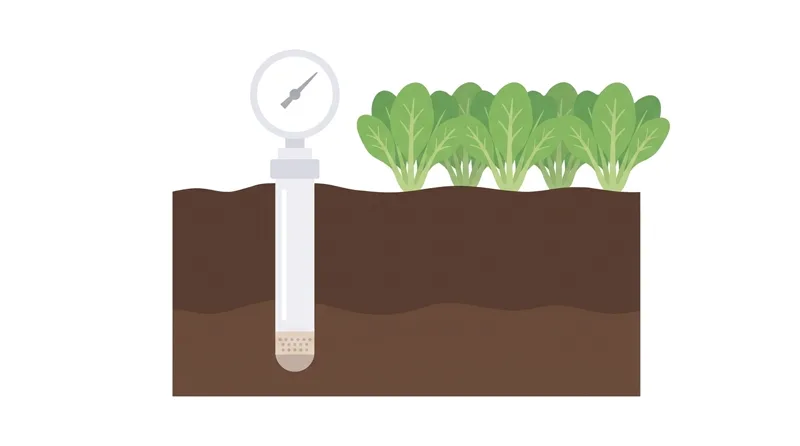
次の図の土壌水分計(テンションメーター)において、真空計の目盛りが「pF 3.2」を示している。このときの土壌水分状態の判断と対応として適切なものはどれか。
In the soil moisture meter (tensiometer) diagram shown below, the vacuum gauge reads 'pF 3.2'. Which assessment of the soil moisture state and corresponding action is appropriate?
- A. 土壌が乾いているため、かん水を行う
The soil is dry, so irrigation should be carried out promptly - B. 土壌水分が最適な範囲にあるため、そのまま様子を見る
Soil moisture is within the optimal range, so continue monitoring - C. 土壌水分が過剰な状態であるため、排水対策を行う
Soil moisture is excessive, so drainage measures should be taken
Show answer
Correct answer: A
The optimal pF range for crop growth is 1.8 to 2.7. A reading of pF 3.0 or higher (such as pF 3.2) indicates dry soil where water is held tightly, requiring prompt irrigation. (Textbook: ASAT Level 2 Crop Farming 第6章 2 p.81)
| Word | Meaning |
|---|---|
| 土壌水分計 | soil moisture meter |
| かん水 | irrigation, watering |
| 排水対策 | drainage measures |