
Daily Barn Management, Milking Hygiene, Biosecurity, and Composting
日常管理・搾乳衛生・防疫・堆肥化
Agriculture · 農業 · Written by Tokutei Pass based on the official study texts; not copied verbatim.
畜舎の環境管理(温度・換気・暑熱対策・光線管理)
Barn Environment Management (Temperature, Ventilation, Heat Abatement, and Lighting)
畜舎内には、家畜の呼吸や排せつ物からアンモニアや硫化水素などの有害ガス・湿気・粉じん・熱が発生します。換気扇や窓の開閉で新鮮な空気を入れ、冬場も家畜に冷たいすきま風が直接当たらないようにしながら最低限の換気を行います。
Inside livestock barns, respiration and manure generate harmful gases (such as ammonia and hydrogen sulfide), moisture, dust, and heat. Use exhaust fans or window vents to supply fresh air; even in winter, maintain minimum ventilation while preventing cold drafts from blowing directly onto animals.
夏場の高温多湿(暑熱ストレス)は、乳量や産卵率・増体・受胎率を大きく下げ、死亡事故の原因にもなります。大型送風ファン、細霧冷房(ミスト)、屋根への散水や石灰塗布・遮光ネット、十分な冷たい水の給与で暑熱対策を行います。
Summer heat and humidity (heat stress) sharply reduce milk yield, egg production, weight gain, and conception rates, and can cause mortality. Combat heat stress using large circulation fans, fogging/misting systems, roof sprinkling or whitewashing, shade nets, and ample cool drinking water.
採卵鶏は日長(明るい時間)が短くなると産卵が減る性質があるため、照明によって1日14〜16時間程度の明るさを保つ「光線管理(点灯管理)」を行います。
Because laying hens lay fewer eggs when day length shortens, poultry farms practice "lighting management (photoperiod control)" with artificial lights to maintain about 14–16 hours of light per day.
Key points
- 換気はアンモニアなどの有害ガスや湿気を排出するために行い、冬もすきま風を防ぎつつ換気する。
Ventilation removes harmful gases like ammonia and moisture; ventilate in winter too while avoiding cold drafts. - 夏の暑熱対策には送風ファン・細霧冷房・屋根散水・遮光ネット・新鮮な給水を用いる。
Summer heat abatement uses fans, misting, roof sprinkling, shade nets, and fresh water. - 採卵鶏では産卵を維持するため、1日14〜16時間明るくする「光線管理」を行う。
Maintain 14–16 hours of light per day ("lighting management") for laying hens to sustain egg production.
| Word | Meaning |
|---|---|
| アンモニア・硫化水素 | ammonia / hydrogen sulfide |
| 暑熱ストレス・細霧冷房 | heat stress / fog (mist) cooling |
| すきま風 | draft (cold air leak) |
| 光線管理 | lighting (photoperiod) management |
搾乳衛生の手順と乳房炎の予防
Milking Hygiene Procedures and Mastitis Prevention
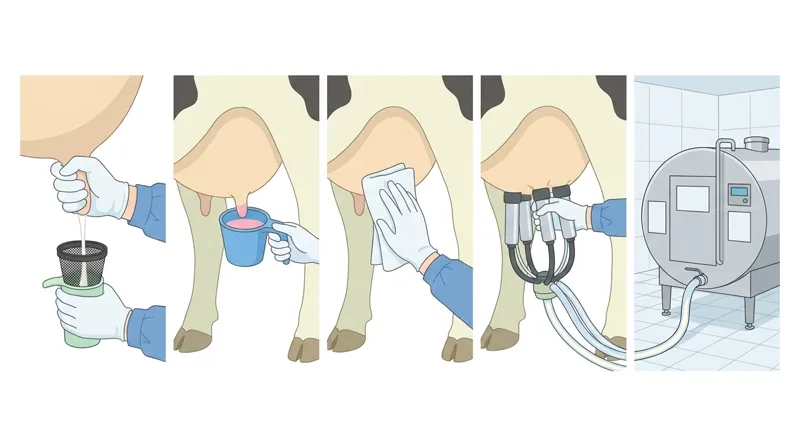
酪農での搾乳作業では、まず「前搾り」を専用容器(ストリップカップ)に行い、生乳に塊(ブツ)や血・異常がないかを確認します。床に前搾り乳を捨てると細菌が広がるため厳禁です。
During milking, first perform "forestripping (maeshibori)" into a strip cup to check the milk for clots, flakes, blood, or watery abnormalities. Never squirt forestrippings onto the barn floor, as this spreads bacteria.
次に乳頭を殺菌剤に浸す「プレディッピング」を行い、1頭ごとに清潔なタオルで拭いてから「ミルカー(搾乳機)」を着けます。乳が出なくなったら「過搾乳」を防ぐため速やかに外し、搾乳後は「ポストディッピング」で消毒します。
Next, sanitize teats by "pre-dipping", wipe each cow's teats dry using an individual clean towel or paper towel, and attach the milking unit ("milker"). Remove the unit promptly once milk flow stops to prevent "overmilking", then apply "post-dipping" disinfectant to protect the open teat canal from bacteria.
搾った生乳は「バルククーラー」ですぐに4℃以下(10℃以下)に冷却します。「乳房炎」の感染を防ぐため健康な牛から先に搾乳し、乳房炎や抗生物質治療中の牛は最後に別搾りして出荷を控えます。
Immediately chill raw milk in a "bulk cooler" to 4℃ or below (under 10℃) to inhibit bacterial growth. To prevent "mastitis (nyuubouen)" caused by Staphylococcus aureus or E. coli, milk healthy cows first and milk cows with mastitis or under antibiotic treatment last, keeping their milk separate from shipment.
Key points
- 前搾りは必ず専用容器(ストリップカップ)に行い、床には絶対に捨てない。
Always forestrip into a dedicated strip cup and never onto the barn floor. - 乳頭の清拭は1頭につき1枚の清潔なタオルを使い、搾乳後は過搾乳を避けてポストディッピングを行う。
Use one clean towel per cow to wipe teats, avoid overmilking, and perform post-dipping after unit removal. - 搾乳した生乳はバルククーラーですぐに冷却し、乳房炎の牛は最後に別搾りする。
Chill raw milk immediately in the bulk cooler, and milk cows with mastitis last and separately.
| Word | Meaning |
|---|---|
| 前搾り・ストリップカップ | forestripping / strip cup |
| ミルカー・過搾乳 | milking machine (milker) / overmilking |
| プレディッピング・ポストディッピング | pre-dipping / post-dipping |
| 乳房炎・バルククーラー | mastitis / bulk milk cooler |
家畜伝染病予防と衛生管理区域(防疫)
Livestock Infectious Disease Prevention and Biosecurity Zones
口蹄疫(牛・豚などの偶蹄類)、豚熱(CSF)・アフリカ豚熱(ASF)、高病原性鳥インフルエンザなどの重大な家畜伝染病を防ぐため、農場では「飼養衛生管理基準」に基づく防疫対策(バイオセキュリティ)を徹底します。
To prevent devastating livestock diseases such as Foot-and-Mouth Disease (in cloven-hoofed animals like cattle and pigs), Classical Swine Fever (CSF), African Swine Fever (ASF), and Highly Pathogenic Avian Influenza, farms strictly enforce biosecurity under the "Biosecurity Management Standards".
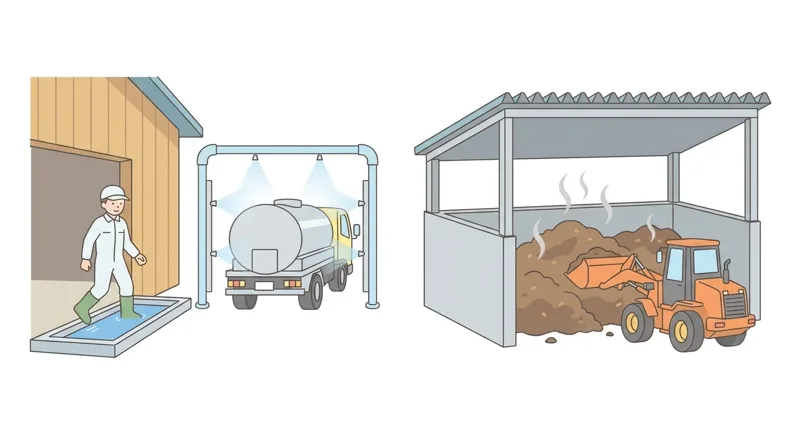
病原体を持ち込まないため、畜舎周辺の「衛生管理区域」の境界を明確にし、部外者の立入りを制限します。区域へ入る車両は消毒し、作業者は手指消毒・専用作業着への着替え・専用長靴への履き替えと「踏込消毒槽」での靴底消毒を行います。
To keep pathogens out, clearly demarcate the "Sanitary Management Zone" around barns and restrict unauthorized entry. Disinfect all vehicles entering the zone, and require workers to sanitize hands, change into dedicated barn coveralls and boots, and step through "footbaths (disinfection trays)".
また、防鳥ネットや柵で野鳥・イノシシ・ネズミなどの野生動物の侵入を防ぎます。出荷後に畜舎を一度空にして洗浄・消毒・乾燥を行う「オールイン・オールアウト」も大変有効です。
Install bird-proof nets and perimeter fencing to block wild birds, wild boars, and rodents. Practicing "All-in, All-out" management—emptying an entire barn after shipment to wash, disinfect, and dry it thoroughly before introducing the next batch—is also highly effective.
Key points
- 口蹄疫・豚熱・鳥インフルエンザなどを防ぐため、衛生管理区域への病原体の持ち込みを遮断する。
Block pathogens from entering the Sanitary Management Zone to prevent Foot-and-Mouth Disease, Swine Fever, and Avian Influenza. - 畜舎に入るときは専用の作業着と長靴に着替え、踏込消毒槽で消毒する。
Change into dedicated barn clothing and boots and use disinfectant footbaths when entering barns. - 群れを一斉に出荷して空の畜舎を洗浄・消毒・乾燥する方法を「オールイン・オールアウト」という。
"All-in, All-out" refers to shipping a whole group at once so the empty barn can be washed, disinfected, and dried.
| Word | Meaning |
|---|---|
| 口蹄疫・豚熱・鳥インフルエンザ | Foot-and-Mouth Disease / Swine Fever / Avian Influenza |
| 衛生管理区域 | Sanitary Management Zone (biosecurity zone) |
| 踏込消毒槽 | disinfectant footbath |
| オールイン・オールアウト | All-in, All-out system |
日常の手入れ(削蹄・除角)と牛の個体識別(耳標)
Routine Care (Hoof Trimming and Dehorning) and Cattle Identification (Ear Tags)
舎飼いの牛は運動量が少なく蹄が伸びやすいため、そのままにすると姿勢が崩れたり蹄病(蹄の病気)になったりして乳量や増体が落ちます。定期的に蹄を削って形を整える「削蹄」と消毒液による「蹄浴」を行います。
Barn-housed cattle get less exercise, causing their hooves to overgrow; left untrimmed, this ruins posture and leads to hoof diseases, reducing milk yield and weight gain. Perform regular "hoof trimming (sakutei)" to restore proper shape, along with antiseptic "hoof baths (teiyoku)".
牛同士の闘争による傷や作業者への突き刺し事故を防ぐため、子牛のうちに角をなくす「除角」を行います。また、肥育用の雄子牛や雄子豚では、性質を温厚にし肉質を良くして雄臭を防ぐため「去勢」が行われます。
To prevent horn injuries among herd mates and protect handlers from being gored, calves undergo "dehorning (disbudding / jokaku)" at a young age. Male beef calves and male piglets raised for meat are also "castrated (kyosei)" to make them docile, improve meat quality, and prevent boar/bull taint.
日本で飼養されるすべての牛には、牛トレーサビリティ法に基づき、出生後速やかに10桁の「個体識別番号」が印字された黄色い「耳標」を両耳に装着し、出生や移動を届け出ることが義務付けられています。
Under Japan's Cattle Traceability Act, every cow raised in Japan must have yellow "ear tags (jihyou)" printed with a unique 10-digit "individual identification number" attached to both ears shortly after birth, with all births and movements reported.
Key points
- 蹄の伸びすぎや蹄病を防ぐため、定期的な「削蹄」と「蹄浴」を行う。
Perform regular "hoof trimming (sakutei)" and "hoof baths (teiyoku)" to prevent overgrown hooves and hoof disease. - 事故防止のために子牛の「除角」を行い、肉質向上と温厚化のために肥育雄の「去勢」を行う。
Dehorn calves ("jokaku") for safety, and castrate male meat animals ("kyosei") for docility and better meat quality. - すべての牛の両耳には、10桁の個体識別番号が記された「耳標」を装着する義務がある。
All cattle are legally required to wear "ear tags (jihyou)" on both ears bearing a 10-digit individual ID number.
| Word | Meaning |
|---|---|
| 削蹄・蹄浴 | hoof trimming / hoof bath |
| 除角・去勢 | dehorning (disbudding) / castration |
| 耳標 | ear tag |
| 個体識別番号(10桁) | individual identification number (10 digits) |
家畜排せつ物の適正処理と良質堆肥の製造
Proper Livestock Manure Management and Producing High-Quality Compost
家畜の糞尿を地面にそのまま積み上げる「野積み」や穴を掘って捨てる「素掘り」は、悪臭や地下水・河川の汚染を招くため「家畜排せつ物法」で禁止されています。屋根とコンクリートなどの床・側壁がある堆肥舎で適正に管理します。
Piling livestock manure directly on bare ground ("open piling / nozumi") or dumping it into unlined earthen pits ("subori") causes foul odors and pollutes groundwater and rivers, and is prohibited under the "Livestock Excreta Management Act". Manure must be managed in roofed composting facilities with impermeable concrete floors and walls.
良質な堆肥を作るには、まず糞にオガクズ(おが粉)・もみ殻・ワラなどの「副資材(水分調整材)」を混ぜ、水分を約60〜65%(手で強く握ると塊になり、指の間から水がにじみ出ない程度)に調整します。
To make high-quality compost, first mix manure with "bulking agents (moisture-adjusting materials)" such as sawdust, rice husks, or straw to adjust the moisture content to about 60–65% (when squeezed firmly by hand, it forms a ball without water seeping between the fingers).
その後、ショベルローダーなどでの「切り返し」やブロワー送風で十分に酸素を送り、「好気性微生物」の働きで60℃以上の高温発酵を促します。これにより悪臭が減り、病原菌や雑草の種子が死滅した完熟堆肥になります。
Next, supply ample oxygen through periodic "turning (kirikaeshi)" with a loader or forced aeration blowers so "aerobic microbes" generate high-temperature fermentation of 60℃ or higher. This reduces odors and kills pathogens and weed seeds, producing fully matured compost.
Key points
- 家畜排せつ物法により、糞尿の「野積み」や「素掘り」は禁止されている。
Open piling ("nozumi") and unlined earthen pits ("subori") for manure are prohibited under the Livestock Excreta Management Act. - 堆肥化では副資材(オガクズ・もみ殻等)を混ぜて水分を約60〜65%に調整する。
Mix bulking agents (sawdust, rice husks, etc.) into manure to adjust moisture to about 60–65% for composting. - 切り返しや通気で酸素を補給し、60℃以上の好気性発酵で病原菌や雑草種子を死滅させる。
Supply oxygen by turning or aeration to achieve aerobic fermentation at 60℃ or higher, killing pathogens and weed seeds.
| Word | Meaning |
|---|---|
| 家畜排せつ物法(野積み・素掘り禁止) | Livestock Excreta Management Act (ban on open piling/unlined pits) |
| 副資材(オガクズ・もみ殻) | bulking agents (sawdust, rice husks) |
| 切り返し・好気性発酵 | pile turning / aerobic fermentation |
| 完熟堆肥 | fully matured compost |
Daily Livestock Care and Observation
Practice this chapter in the appOfficial references
- 全国農業会議所 農業技能測定試験テキスト 畜産農業全般(日常管理・衛生) — https://asat-nca.jp/textbook
- 農林水産省 飼養衛生管理基準ガイドブック — https://www.maff.go.jp/j/syouan/douei/katiku_yobo/k_shiyou/