
Livestock Breeding, Calving/Farrowing Management, Feeds, and Feeding
家畜の繁殖・分娩管理と飼料・給餌
Agriculture · 農業 · Written by Tokutei Pass based on the official study texts; not copied verbatim.
発情周期と発情発見・人工授精
Estrous Cycle, Heat Detection, and Artificial Insemination
成熟した雌の牛や豚は、妊娠していないと約21日(約3週間)ごとに発情を繰り返します。これを「発情周期」といい、朝夕の丁寧な観察で発情を見逃さないことが繁殖成績を高める鍵です。
Mature non-pregnant cows and sows repeat estrus (heat) approximately every 21 days (about 3 weeks), known as the "estrous cycle". Careful morning and evening observation to detect heat without missing a cycle is key to reproductive performance.
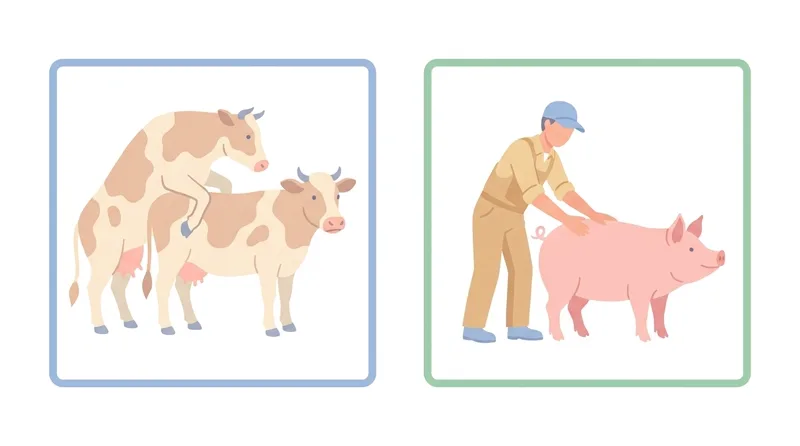
牛の発情兆候には、他の牛が乗りかかるのをじっと受け入れる「乗駕許容(スタンディング発情)」のほか、外陰部の腫れと透明な粘液の流出、よく鳴く、落ち着きがなく歩き回るなどがあります。
Signs of estrus in cattle include "standing heat (mounting acceptance)"—standing still while being mounted by another cow—along with a swollen vulva discharging clear mucus, frequent bellowing, and restlessness.
豚の発情では、外陰部が赤く腫れ、人間が背中や腰を強く押すと耳を立ててじっと動かなくなる「許容反応(バックプレッシャーテスト)」が見られます。適期に凍結精液や冷蔵精液で「人工授精」を行います。
In sows, estrus causes the vulva to swell and redden, and pressing firmly on the back or loin elicits the "standing reflex (back-pressure test)", where the sow stands rigid with ears pricked. "Artificial insemination (AI)" is then performed at the optimal timing using frozen or chilled semen.
Key points
- 牛・豚の発情周期は約21日(約3週間)である。
The estrous cycle of both cattle and pigs is approximately 21 days (3 weeks). - 牛の発情の決定的な兆候は他の牛に乗られるのを許す「乗駕許容」である。
The definitive sign of heat in cattle is standing to be mounted by herd mates (standing heat). - 豚の発情確認では、背中や腰を押して静止するかを調べる「バックプレッシャーテスト」を行う。
Check heat in sows using the "back-pressure test" to see if they stand immobile when pressed on the back.
| Word | Meaning |
|---|---|
| 発情周期 | estrous cycle |
| 乗駕許容 | standing heat (mounting acceptance) |
| 許容反応(バックプレッシャーテスト) | standing reflex (back-pressure test) |
| 人工授精 | artificial insemination (AI) |
妊娠期間と分娩管理・初乳の給与
Gestation Period, Calving/Farrowing Care, and Colostrum Feeding
牛の妊娠期間は約280日(約9か月と10日)、豚の妊娠期間は約114日(「3か月・3週間・3日」)です。また、鶏の受精卵が孵化するまでの期間は約21日です。乳牛は分娩前約60日間、搾乳を休む「乾乳期間」を設けます。
The gestation period is about 280 days (roughly 9 months and 10 days) for cattle and about 114 days ("3 months, 3 weeks, and 3 days") for pigs. Fertilized chicken eggs hatch in about 21 days. Dairy cows are given a "dry period (kannyuu kikan)" of about 60 days without milking before calving.
分娩予定日が近づいたら、清潔に消毒して敷料を敷いた「分娩房(豚は分娩ストール)」へ母畜を移動させます。出生直後の子牛や子豚は、すぐに鼻や口の粘液(羊水)を拭き取って呼吸を助け、へその緒(臍帯)を消毒します。
As the due date approaches, move the dam into a cleaned, disinfected, and well-bedded "maternity pen (or farrowing crate for sows)". Immediately after birth, wipe mucus and amniotic fluid from the newborn's nose and mouth to clear its airway, and disinfect the umbilical cord (navel).
分娩後数日間に母畜が出す「初乳」には、子を病気から守る「移行抗体(免疫グロブリン)」と栄養が豊富に含まれています。生後できるだけ早く(数時間以内に)十分な初乳を飲ませます。子豚には保温箱での保温や貧血予防の鉄剤投与も行います。
"Colostrum (first milk)" secreted during the first few days after birth is rich in maternal antibodies (immunoglobulins) and nutrients that protect newborns from infection. Ensure newborns drink sufficient colostrum as soon as possible (within the first few hours). Piglets also require supplemental heating and iron administration to prevent anemia.
Key points
- 妊娠期間は牛が約280日、豚が約114日であり、鶏卵の孵化日数は約21日である。
Gestation lasts about 280 days in cattle and 114 days in pigs; chicken eggs incubate for about 21 days. - 出生直後は鼻や口の粘液を拭き取って呼吸を確認し、臍帯(へその緒)を消毒する。
Right after birth, clear mucus from the nose and mouth to ensure breathing and disinfect the umbilical cord. - 免疫抗体を多く含む「初乳」を生後できるだけ早く十分に飲ませる。
Feed antibody-rich "colostrum" in sufficient amounts as soon as possible after birth.
| Word | Meaning |
|---|---|
| 妊娠期間・乾乳期間 | gestation period / dry period |
| 分娩房・臍帯消毒 | maternity pen / umbilical cord disinfection |
| 初乳・移行抗体 | colostrum / maternal antibodies |
| 鉄剤投与 | iron administration |
粗飼料・濃厚飼料の特徴とTMR(混合飼料)
Characteristics of Roughage, Concentrates, and Total Mixed Ration (TMR)
家畜の飼料は、繊維質が多く容積の大きい「粗飼料」と、エネルギー(TDN)やタンパク質(CP)が多い「濃厚飼料」に分かれます。牛などの反芻動物には、第一胃の健康を保つため十分な粗飼料が不可欠です。
Livestock feeds are divided into high-fiber, bulky "roughage (soshiryou)" and energy- (TDN) and protein-rich (CP) "concentrates (noukou shiryou)". For ruminants like cattle, adequate roughage is essential to maintain healthy rumen function.
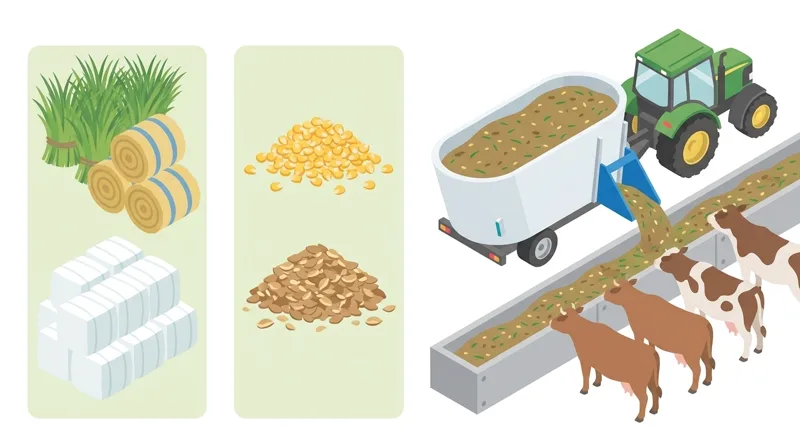
粗飼料には、チモシーやイタリアンライグラスなどの「イネ科牧草」、アルファルファ(ルーサン)やクローバーなどの「マメ科牧草」、稲わらがあります。牧草は乾燥させた「乾草」や、乳酸発酵させた「サイレージ」として利用します。
Roughages include "grass forages" (Timothy, Italian ryegrass, orchardgrass, Sudangrass), protein- and calcium-rich "legume forages" (alfalfa/lucerne, clover), and rice straw. Forages are preserved either by drying into "hay (kansou)" or sealing air-tight for lactic acid fermentation into "silage".
濃厚飼料には、トウモロコシなどの穀類、大豆粕などの油粕類、ふすま・米ぬかなどの糟糠類、配合飼料があります。また、粗飼料と濃厚飼料を細かく混ぜて選り食いを防ぐ「TMR(混合飼料)」も広く使われます。
Concentrates include cereal grains (corn, milo/sorghum, barley), oilseed meals (soybean meal, rapeseed meal), brans (wheat bran, rice bran), and compound feeds. "TMR (Total Mixed Ration)", which blends chopped roughage, concentrates, vitamins, and minerals together to prevent cows from "sorting feed", is widely used.
Key points
- 粗飼料にはイネ科牧草(チモシー等)やマメ科牧草(アルファルファ等)、乾草・サイレージ・稲わらがある。
Roughages include grass forages (e.g., Timothy), legume forages (e.g., alfalfa), hay, silage, and rice straw. - 濃厚飼料にはトウモロコシ・大豆粕・ふすま・配合飼料などがあり、エネルギーやタンパク質が多い。
Concentrates include corn, soybean meal, wheat bran, and compound feeds rich in energy and protein. - TMR(混合飼料)は粗飼料と濃厚飼料を混ぜて与えるため、牛の選り食いを防ぎ第一胃の発酵を安定させる。
TMR mixes roughage and concentrates together, preventing feed sorting and stabilizing rumen fermentation.
| Word | Meaning |
|---|---|
| 粗飼料・濃厚飼料 | roughage (forage) / concentrate feed |
| 乾草・サイレージ | hay / silage |
| 大豆粕・ふすま | soybean meal / wheat bran |
| TMR(混合飼料) | Total Mixed Ration (TMR) |
飼料の保管管理と給餌・給水の基本
Feed Storage Management and Basics of Feeding & Watering
飼料に雨や湿気が当たると、カビが生えて有害な「カビ毒(マイコトキシン)」が作られたり変敗したりします。飼料袋は直射日光や雨を避け、風通しの良い涼しい場所にすのこ(パレット)を敷いて保管し、古いものから順に使う「先入れ先出し」を守ります。
Exposure to rain or moisture causes mold growth and toxic "mycotoxins" or spoilage in feed. Store feed bags on pallets in a cool, well-ventilated place away from direct sunlight and rain, and follow "first-in, first-out" rotation.
サイレージは空気を遮断して乳酸発酵させた飼料で、良質なものは甘酸っぱい芳香があります。開封後などに空気が入ると「二次発酵」で発熱やカビが生じるため、切り口を密閉しカビた部分は取り除きます。
Silage is fermented anaerobically (without air) by lactic acid bacteria; good-quality silage has a pleasant sweet-sour aroma. If air enters after opening or through film tears, "secondary fermentation (aerobic spoilage)" causes heating and mold, so reseal the face tightly and discard any moldy portions.
飼料の種類を変えるときは、消化障害を防ぐため1〜2週間かけて少しずつ切り替えます。毎日、給餌前に飼槽(エサ箱)の残餌を取り除いて清掃し、ウォーターカップや給水器を点検して、いつで新鮮で清潔な水が飲めるようにします。
When changing feed types, transition gradually over 1–2 weeks to prevent digestive upset. Every day before feeding, clear leftover feed from troughs and clean them, and inspect water cups or troughs so livestock have constant access to fresh, clean water.
Key points
- 飼料はカビ毒の発生を防ぐため、風通しの良い乾燥した場所に保管し「先入れ先出し」で使う。
Store feed in a dry, ventilated area using first-in, first-out rotation to prevent mycotoxin formation. - 良質なサイレージは甘酸っぱい香りがし、開封後は空気による二次発酵(変敗)を防ぐため密閉する。
Good silage smells pleasantly sweet-sour; reseal tightly after opening to prevent aerobic secondary fermentation. - 飼槽の残餌は毎日取り除き、清潔で新鮮な水をいつでも飲めるようにする。
Remove leftover feed from troughs daily and provide continuous access to clean, fresh water.
| Word | Meaning |
|---|---|
| カビ毒(マイコトキシン) | mycotoxin (mold toxin) |
| 乳酸発酵・二次発酵 | lactic acid fermentation / secondary fermentation |
| 飼槽・残餌 | feed trough / leftover feed |
| ウォーターカップ | automatic water cup (water bowl) |
栄養障害・代謝病と異物誤飲の予防
Preventing Nutritional Disorders, Metabolic Diseases, and Foreign Body Ingestion
牛に濃厚飼料を与えすぎて粗飼料が不足すると、第一胃が酸性に傾く「ルーメンアシドーシス」や、ガスがたまって左腹が大きく膨らむ「鼓脹症」、第四胃が正常な位置からずれる「第四胃変位」などが起こりやすくなります。
Feeding cattle excessive concentrates with insufficient roughage can cause "rumen acidosis" (excessive acidity in the rumen), "bloat (kochoushou)" where trapped gas distends the left flank, and "displaced abomasum".
また、高泌乳の乳牛では、分娩直後に急激な泌乳で血液中のカルシウムが不足し、起立不能(立てなくなる)に陥る「乳熱(低カルシウム血症)」や、エネルギー不足による「ケトーシス」に注意します。
High-producing dairy cows right after calving are also prone to "milk fever (hypocalcemia)"—where sudden milk production depletes blood calcium and makes the cow unable to stand—as well as "ketosis" caused by negative energy balance.
飼料の中に針金や釘などの金属片が混ざっていると、牛が飲み込んで第二胃の壁や心臓を刺す「創傷性第二胃腹膜炎(心嚢炎)」を起こします。飼料への異物混入を防ぎ、牛の胃に「磁石(カウマグネット)」を投与して予防します。
If metal fragments like wire or nails contaminate feed, cattle may swallow them, puncturing the second stomach (reticulum) and heart sac ("hardware disease / traumatic reticuloperitonitis"). Prevent foreign object contamination and administer a "cow magnet" into the stomach for prevention.
Key points
- 濃厚飼料の多給や粗飼料不足は、ルーメンアシドーシス・鼓脹症・第四胃変位の原因になる。
Overfeeding concentrates and underfeeding roughage cause rumen acidosis, bloat, and displaced abomasum. - 乳牛の分娩直後にカルシウム不足で立てなくなる病気を「乳熱」という。
"Milk fever" is a postpartum condition in dairy cows where blood calcium deficiency causes recumbency (inability to stand). - 金属異物の誤飲による創傷性第二胃腹膜炎を防ぐため、飼料管理と磁石の投与を行う。
Prevent hardware disease from swallowed metal objects through careful feed management and administering cow magnets.
| Word | Meaning |
|---|---|
| ルーメンアシドーシス・鼓脹症 | rumen acidosis / bloat |
| 第四胃変位 | displaced abomasum |
| 乳熱・ケトーシス | milk fever (hypocalcemia) / ketosis |
| 創傷性第二胃腹膜炎 | traumatic reticuloperitonitis (hardware disease) |
Breeding, Feed and Diseases
Practice this chapter in the appOfficial references
- 全国農業会議所 農業技能測定試験テキスト 畜産農業全般(繁殖・飼料) — https://asat-nca.jp/textbook