
Livestock Characteristics, Breeds, Physiology, and Behavior
家畜の特徴・品種と生理・習性
Agriculture · 農業 · Written by Tokutei Pass based on the official study texts; not copied verbatim.
牛(乳用牛・肉用牛)の品種と反芻の仕組み
Cattle Breeds (Dairy and Beef) and the Rumination Mechanism
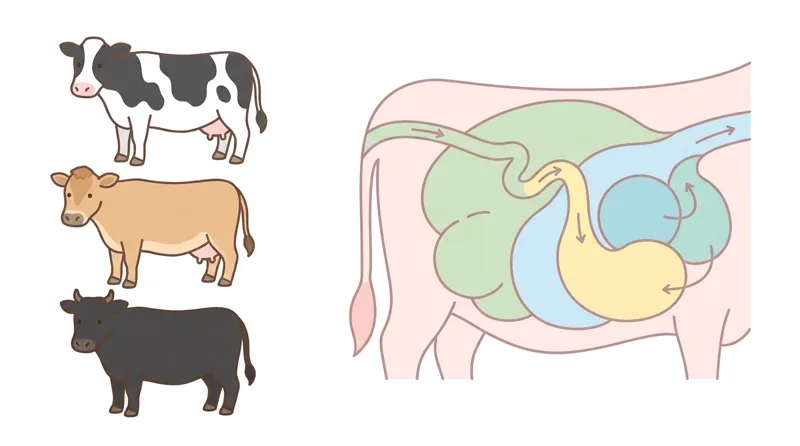
日本で最も多く飼われている乳用牛は、白黒斑で泌乳量が多い「ホルスタイン種」です。また、小柄で淡褐色の「ジャージー種」は乳脂肪率が高い牛乳を出します。
The most common dairy breed in Japan is the black-and-white "Holstein", prized for high milk yield. The smaller, fawn-colored "Jersey" breed produces milk with a high butterfat content.
肉用牛の専用種(和牛)には、「黒毛和種」(最も多く霜降り肉が特徴)、「褐毛和種」、「日本短角種」、「無角和種」の4品種があります。ホルスタイン種の雌に黒毛和種の雄を交配した「交雑種(F1)」も肥育されます。
Dedicated Japanese beef breeds (Wagyu) consist of four breeds: "Japanese Black (Kuroge Washu)"—the most numerous, known for marbled beef—"Japanese Brown", "Japanese Shorthorn", and "Japanese Polled". Crossbred cattle ("F1", from a Holstein dam and Japanese Black sire) are also raised for beef.
牛やヤギ・ヒツジは4つの胃(第一胃ルーメン・第二胃・第三胃・第四胃)を持つ「反芻動物」です。一度飲み込んだ草を口に戻してよく噛み直す「反芻」を行い、最大の第一胃に住む微生物の働きで繊維を分解し、第四胃で胃液による消化を行います。
Cattle, goats, and sheep are "ruminants" with four stomach compartments (rumen, reticulum, omasum, and abomasum). They regurgitate swallowed forage to chew it again ("rumination"), break down fiber via microbes in the largest first stomach (rumen), and digest with gastric juices in the fourth stomach (abomasum).
Key points
- 乳用牛はホルスタイン種(泌乳量が多い)とジャージー種(乳脂肪率が高い)が代表である。
Representative dairy breeds are Holstein (high milk yield) and Jersey (high butterfat percentage). - 和牛は黒毛和種・褐毛和種・日本短角種・無角和種の4品種である。
Wagyu comprises four breeds: Japanese Black, Japanese Brown, Japanese Shorthorn, and Japanese Polled. - 牛は4つの胃を持つ反芻動物で、第一胃(ルーメン)の微生物が繊維を発酵分解する。
Cattle are ruminants with four stomachs; microbes in the first stomach (rumen) ferment and break down plant fiber.
| Word | Meaning |
|---|---|
| ホルスタイン種・ジャージー種 | Holstein breed / Jersey breed |
| 黒毛和種・交雑種(F1) | Japanese Black breed / crossbreed (F1) |
| 反芻動物 | ruminant animal |
| 第一胃(ルーメン)・第四胃 | first stomach (rumen) / fourth stomach (abomasum) |
豚の品種と三元交配・生理的特徴
Pig Breeds, Three-way Crossbreeding (LWD), and Physiological Traits
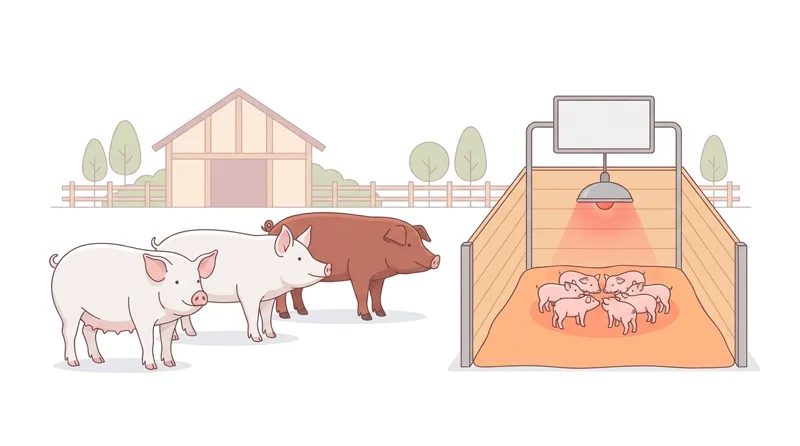
養豚で使われる主な品種には、体が白く繁殖能力(産子数・泌乳能力)に優れた「ランドレース種(L)」と「大ヨークシャー種(W)」、赤褐色で発育と肉質が良い「デュロック種(D)」、黒い体で肉質が良い「バークシャー種(黒豚)」があります。
Major pig breeds include the white "Landrace (L)" and "Large White / Yorkshire (W)", both excelling in maternal traits (litter size and milk production); the reddish-brown "Duroc (D)", known for fast growth and meat quality; and the black "Berkshire (Kurobuta)", prized for high-quality pork.
肉用の肥育豚(コマーシャル豚)は、雑種強勢を生かした「三元交配(LWD)」が一般的です。ランドレース種(L)と大ヨークシャー種(W)をかけ合わせた雑種母豚(LW)に、デュロック種(D)の雄を交配して生産します。
Commercial market hogs are typically produced through "three-way crossbreeding (LWD)" to harness hybrid vigor: a crossbred LW sow (Landrace × Large White) is mated with a Duroc (D) terminal sire.
豚は胃が1つの「単胃動物」で雑食性です。きれい好きで寝る場所と排せつ場所を分ける習性があります。また、皮膚の汗腺がほとんど機能せず汗をかけないため、成豚は暑さに大変弱く、反対に子豚は皮下脂肪が少ないため寒さに弱いです。
Pigs are omnivorous "monogastric (single-stomach) animals". They naturally keep their sleeping area separate from their dunging area. Because their sweat glands barely function, adult pigs are extremely sensitive to heat stress, whereas newborn piglets have little subcutaneous fat and are vulnerable to cold.
Key points
- 母豚系には繁殖性が高いランドレース種(L)と大ヨークシャー種(W)、雄豚系には産肉性が良いデュロック種(D)が使われる。
Maternal lines use prolific Landrace (L) and Large White (W) breeds, while terminal sire lines use meaty Duroc (D) boars. - 肉用豚はLWの母豚にDの雄を交配した「三元交配豚(LWD)」が一般的である。
Market hogs are commonly "three-way crossbred pigs (LWD)" from an LW sow and a D boar. - 豚は単胃動物で汗をかけないため、成豚は暑さに弱く、子豚は寒さに弱い。
Pigs are monogastric and cannot sweat effectively; adult pigs are vulnerable to heat, while piglets are vulnerable to cold.
| Word | Meaning |
|---|---|
| ランドレース種・大ヨークシャー種 | Landrace breed / Large White (Yorkshire) breed |
| デュロック種・バークシャー種 | Duroc breed / Berkshire breed |
| 三元交配(LWD) | three-way crossbreeding (LWD) |
| 単胃動物 | monogastric (single-stomach) animal |
鶏(採卵鶏・肉用鶏)の品種と消化器の特徴
Chicken Breeds (Layers and Broilers) and Digestive Features
鶏は卵をとる「採卵鶏(レイヤー)」と肉をとる「肉用鶏(ブロイラー)」に分かれます。採卵鶏の代表は白い卵を多く産む「白色レグホーン種」や赤玉(褐色卵)を産む「ロードアイランドレッド種」系の交雑鶏です。
Chickens are categorized into egg-producing "layers" and meat-producing "broilers". Typical layers include the white-egg-laying "White Leghorn" and brown-egg-laying hybrids derived from "Rhode Island Red".
肉用鶏(ブロイラー)は、「白色コーニッシュ種」と「白色プリマスロック種」などを交配して作られ、成長が速く約7〜8週間(約50日齢)で出荷されます。
Commercial meat chickens (broilers) are crossbred from "White Cornish" and "White Plymouth Rock" stocks, growing rapidly to market weight in about 7–8 weeks (roughly 50 days of age).
鶏には歯がなく、食べた餌を「そ嚢」にためた後、消化液を出す「腺胃」と、筋肉が厚く小石(グリット)で餌をすりつぶす「筋胃(砂嚢・砂肝)」で消化します。また、羽毛に覆われ汗腺がないため暑さに弱いです。
Chickens have no teeth; swallowed feed is stored temporarily in the "crop (sonou)", mixed with digestive enzymes in the "proventriculus (glandular stomach)", and ground up with grit in the thick-muscled "gizzard (muscular stomach)". Covered in feathers and lacking sweat glands, chickens are very susceptible to heat.
Key points
- 採卵鶏には白色レグホーン種(白玉)やロードアイランドレッド種(赤玉)が使われる。
Layers utilize White Leghorns (white eggs) and Rhode Island Red lines (brown eggs). - 肉用鶏(ブロイラー)は白色コーニッシュ種と白色プリマスロック種の交配で作られる。
Broilers are produced by crossing White Cornish and White Plymouth Rock breeds. - 鶏は歯がなく、筋胃(砂嚢)で餌をすりつぶして消化する。
Chickens lack teeth and grind their feed in the muscular stomach (gizzard / sanou).
| Word | Meaning |
|---|---|
| 採卵鶏(レイヤー)・肉用鶏(ブロイラー) | layer (egg chicken) / broiler (meat chicken) |
| 白色レグホーン種 | White Leghorn breed |
| そ嚢・腺胃 | crop / proventriculus (glandular stomach) |
| 筋胃(砂嚢) | gizzard (muscular stomach) |
家畜の正常体温と日常の健康観察
Normal Body Temperatures of Livestock and Daily Health Observation
家畜の正常な体温は人間よりも高く、成牛で約38.0〜39.5℃(38.5℃前後)、豚で約38.5〜39.5℃(39.0℃前後)、鶏ではさらに高く約40.5〜42.0℃(41℃前後)です。子牛や子豚は親より少し高めです。
Livestock have higher normal body temperatures than humans: adult cattle average about 38.0–39.5℃ (around 38.5℃), pigs about 38.5–39.5℃ (around 39.0℃), and chickens even higher at about 40.5–42.0℃ (around 41℃). Calves and piglets run slightly warmer than adults.
毎日の見回りでは、「元気・食欲があるか」「牛がしっかり反芻しているか」「鼻鏡(牛の鼻先)が適度に湿っているか」「鶏のトサカ(肉冠)の色や産卵率に異常がないか」を観察します。
During daily rounds, check whether animals have normal vigor and appetite, whether cattle are ruminating properly, whether the cattle muzzle (nose mirror) has normal moisture beading, and whether chicken combs and egg-laying rates look normal.
また、糞尿の状態(下痢・血便・便秘)、呼吸の速さや咳・鼻水、足を引きずる歩様異常(跛行)、群れから離れてうずくまる個体がいないかを確かめ、異常があればすぐに責任者へ報告します。
Also inspect manure and urine (diarrhea, bloody stool, constipation), breathing rate, coughing or nasal discharge, lameness (limping), and any animal isolating itself from the herd or flock. Report abnormalities to the supervisor immediately.
Key points
- 正常体温の目安は、成牛で約38.5℃、豚で約39.0℃、鶏で約41.0℃である。
Normal body temperature benchmarks are roughly 38.5℃ for adult cattle, 39.0℃ for pigs, and 41.0℃ for chickens. - 健康な牛はしっかり反芻を行い、鼻先(鼻鏡)が適度に湿っている。
Healthy cattle ruminate regularly and have a moist muzzle (nose mirror). - 食欲低下・下痢・咳・跛行(足を引きずる)などを見つけたらただちに報告する。
Immediately report signs of poor appetite, diarrhea, coughing, or lameness (limping).
| Word | Meaning |
|---|---|
| 正常体温 | normal body temperature |
| 鼻鏡 | muzzle / nose mirror (of cattle) |
| 肉冠(トサカ) | comb (of a chicken) |
| 跛行 | lameness (limping gait) |
アニマルウェルフェア(家畜福祉)と安全な家畜の扱い方
Animal Welfare and Safe Livestock Handling
家畜を快適な環境で飼い、ストレスを減らす考え方を「アニマルウェルフェア(家畜福祉)」といいます。基本原則の「5つの自由」では、飢えや渇き、不快、痛み・病気、恐怖をなくし正常な行動ができるようにします。
Raising livestock in a comfortable environment that minimizes stress and suffering is called "Animal Welfare". Its international foundation is the "Five Freedoms": freedom from hunger and thirst; freedom from discomfort; freedom from pain, injury, and disease; freedom to express normal behavior; and freedom from fear and distress.
牛や豚は視界が広い反面、真後ろに「死角(見えない範囲)」があり、真後ろから急に近づいたり触ったりすると驚いて蹴られる危険があります。近づくときは穏やかに声をかけながら斜め前(視野に入る位置)から近づきます。
Cattle and pigs have wide panoramic vision but a "blind spot" directly behind them; approaching or touching them suddenly from straight behind can startle them and cause a dangerous kick. Always speak calmly and approach from the front-side within their field of view.
家畜を移動させるときに大声で怒鳴ったり棒で強く叩いたりしてはいけません。家畜が嫌がる強い光や急な物音、通路の段差・水たまり・暗闇をなくし、落ち着いて誘導します。
Never shout at or strike livestock with sticks when moving them. Remove obstacles that cause animals to balk—such as harsh glare, sudden loud noises, steps, puddles, or dark shadows in alleys—and guide them calmly.
Key points
- アニマルウェルフェア(家畜福祉)では、ストレスを減らす「5つの自由」に配慮した飼養管理を行う。
Animal welfare emphasizes stress-reducing husbandry aligned with the "Five Freedoms". - 牛の真後ろは死角で蹴られる危険があるため、必ず声をかけながら斜め前から近づく。
Directly behind cattle is a blind spot where kicking is a risk; speak gently and approach from the front-side. - 家畜の移動時は大声や暴力を使わず、通路の障害物や段差をなくして穏やかに誘導する。
Move livestock calmly without shouting or hitting, keeping walkways clear of obstacles and harsh contrasts.
| Word | Meaning |
|---|---|
| アニマルウェルフェア(家畜福祉) | animal welfare |
| 5つの自由 | the Five Freedoms |
| 死角 | blind spot |
| 誘導 | guiding / herding livestock |
Livestock Industry and Breeds
Practice this chapter in the appOfficial references
- 全国農業会議所 農業技能測定試験テキスト 畜産農業全般 — https://asat-nca.jp/textbook