Fruit Tree Cultivation Operations (Pruning, Pollination, and Fruit Thinning)
果樹栽培の管理作業(剪定・授粉・摘果)
Agriculture · 農業 · Written by Tokutei Pass based on the official study texts; not copied verbatim.
落葉果樹と常緑果樹・結果習性
Deciduous vs. Evergreen Fruit Trees and Bearing Habits
果樹は、秋冬に葉を落として休眠する「落葉果樹」と、一年中緑の葉をつけている「常緑果樹」に分かれます。落葉果樹にはリンゴ・ニホンナシ・モモ・ブドウ・カキ・クリがあり、常緑果樹にはウンシュウミカン・レモン・ビワがあります。
Fruit trees are classified into "deciduous fruit trees", which shed their leaves in autumn/winter and enter dormancy, and "evergreen fruit trees", which retain green leaves year-round. Deciduous species include apples, Japanese pears, peaches, grapes, persimmons, and chestnuts; evergreens include satsuma mandarins, lemons, and loquats.
果樹は接ぎ木で苗を増やすことが多く、花芽がつく枝の性質(結果習性)は樹種で異なります。今年伸びた新梢に実がつくブドウ・カキ・ミカンや、前年の枝(結果枝)に実がつくモモ・ナシ・リンゴがあります。
Fruit trees are usually propagated by grafting (tsugiki), and their bearing habits vary by species. Some bear fruit on current-season shoots growing from last year's mother branches (grapes, persimmons, mandarins), while others flower and fruit directly on one-year-old or older branches (peaches, pears, apples).
落葉果樹が冬の休眠から目覚めて春に正常に発芽・開花するためには、冬の間に一定時間以上の低温(7℃以下など)に当たる必要があります。
For deciduous fruit trees to break winter dormancy and bud and flower normally in spring, they must be exposed to a required cumulative duration of chilling temperatures (such as below 7℃) during winter.
Key points
- 落葉果樹にはリンゴ・ナシ・モモ・ブドウ・カキがあり、常緑果樹にはウンシュウミカン・ビワがある。
Deciduous fruit trees include apples, pears, peaches, grapes, and persimmons; evergreens include satsuma mandarins and loquats. - 果樹の苗木は、台木に穂木をつなぐ「接ぎ木」で作られることが多い。
Fruit tree nursery stock is commonly produced by "grafting (tsugiki)", joining a scion onto a rootstock. - 落葉果樹が休眠から覚めるには、冬に一定期間の低温に当たる必要がある。
Deciduous fruit trees require a certain period of winter chilling temperatures to break dormancy.
| Word | Meaning |
|---|---|
| 落葉果樹・常緑果樹 | deciduous fruit trees / evergreen fruit trees |
| 接ぎ木(台木・穂木) | grafting (rootstock / scion) |
| 結果母枝・結果枝 | mother branch / fruiting branch |
| 休眠 | dormancy |
整枝・剪定と棚仕立て・誘引
Tree Training, Pruning, Trellis Systems, and Tying
果樹の枝を切って樹形を整える作業を「整枝・剪定」といいます。木の内側まで日光がよく当たり風通しが良くなるようにして、果実の品質を高め、病害虫を防ぎ、管理や収穫作業をしやすくします。
Shaping fruit trees by cutting branches is called "training and pruning (seishi / sentei)". It allows sunlight and air to penetrate inside the canopy, improving fruit quality, reducing pests and diseases, and making management and harvesting easier.
休眠期(冬)に行う「冬季剪定」では、真上に勢いよく伸びた「徒長枝」、重なり合う「交差枝」、内側に向かう「内向枝」、枯れ枝や病害虫被害枝を切り除きます。
During "winter pruning" in the dormant season, remove vigorous upright "water sprouts (tochoushi)", crossing branches, inward-growing branches, dead wood, and pest- or disease-damaged limbs.
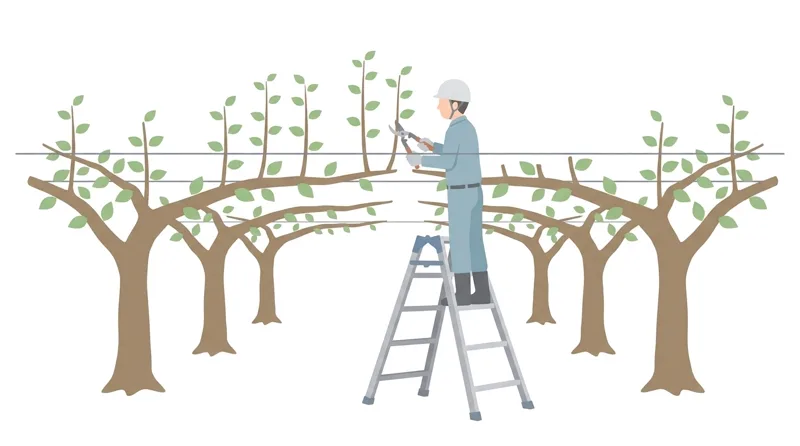
ニホンナシ・ブドウ・キウイフルーツなどは、台風の風害を防ぎ作業しやすくするため、針金を張った平棚に枝を広げて固定する「棚仕立て」で栽培されます。
Japanese pears, grapes, and kiwifruit are commonly grown on overhead wire "flat trellises (tanajitate)", spreading and tying branches horizontally to prevent typhoon wind damage and facilitate orchard work.
Key points
- 剪定は日当たりと風通しを良くし、果実品質と作業性を高めるために行う。
Pruning improves sunlight penetration and airflow, enhancing fruit quality and work efficiency. - 徒長枝・交差枝・内向枝・病害枝は剪定で優先的に切り除く。
Prioritize removing water sprouts, crossing branches, inward-growing shoots, and diseased limbs. - ニホンナシ・ブドウ・キウイフルーツでは、枝を棚に誘引する「棚仕立て」が多く用いられる。
Japanese pears, grapes, and kiwifruit are widely grown using overhead flat trellis systems (tanajitate).
| Word | Meaning |
|---|---|
| 整枝・剪定 | tree training / pruning |
| 徒長枝 | water sprout (vigorous upright shoot) |
| 交差枝・内向枝 | crossing branch / inward-growing branch |
| 棚仕立て | overhead trellis training |
人工授粉と摘蕾・摘花・摘果
Artificial Pollination and Bud, Flower, & Fruit Thinning
リンゴ・ニホンナシ・オウトウ(サクランボ)などの多くの品種は、同じ品種の花粉では受精しない「自家不和合性」を持っています。そのため、相性の良い別の品種(授粉樹)を植えたり、人の手で花粉をつける「人工授粉」を行ったりします。
Many cultivars of apples, Japanese pears, and sweet cherries exhibit "self-incompatibility (jika fuwagousei)", meaning they cannot set fruit with their own pollen. Therefore, growers interplant compatible pollinizer varieties or perform hand "artificial pollination (jinkou jufun)".
花や幼果(小さい実)をそのまま全部残すと、養分が分散して果実が小さくなり、木が疲れて翌年に花がつかなくなる「隔年結果」が起きます。これを防ぐため、余分なつぼみ・花・実を間引く「摘蕾・摘花・摘果」を行います。
Leaving all blossoms and young fruits on the tree disperses nutrients, resulting in small fruit and exhausting the tree so it fails to bear the next year ("alternate bearing / kakunen kekka"). Prevent this by removing excess buds, flowers, and young fruit ("thinning: tekirai, tekika").
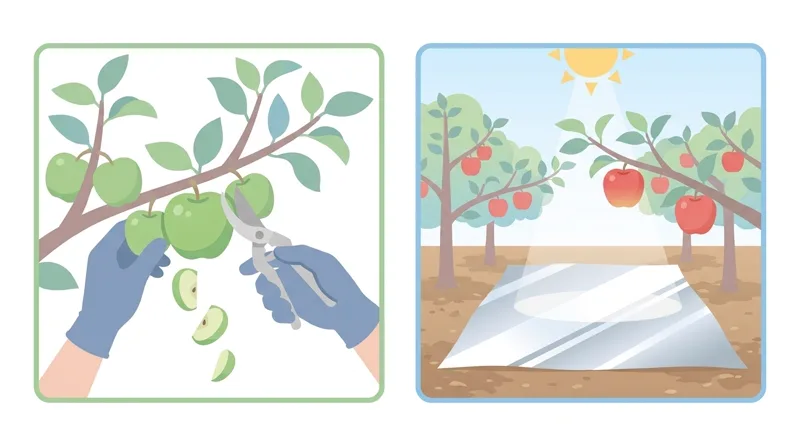
リンゴの摘花・摘果では、花房の真ん中に咲く発育の良い「中心果」を1つ残し、周りの「側果」や傷・変形のある実を摘み取ります。また、種なしブドウを作るには「ジベレリン処理」を行います。
When thinning apples, keep the vigorous central "king fruit (chuushinka)" of each cluster and remove surrounding lateral fruits ("sokka") as well as blemished or misshapen ones. To produce seedless grapes, clusters are treated with "gibberellin".
Key points
- リンゴやニホンナシなどは自家不和合性があるため、別品種の花粉で人工授粉を行う。
Apples and Japanese pears are self-incompatible and require cross-pollination with another cultivar. - 摘蕾・摘花・摘果は、果実を大きくし翌年の実つきが悪くなる「隔年結果」を防ぐ。
Bud, flower, and fruit thinning increases fruit size and prevents alternate bearing (kakunen kekka). - リンゴの摘果では発育の良い「中心果」を残し、周りの「側果」を摘み取る。
When thinning apples, retain the central king fruit (chuushinka) and remove the lateral fruits (sokka).
| Word | Meaning |
|---|---|
| 自家不和合性・人工授粉 | self-incompatibility / artificial pollination |
| 摘蕾・摘花・摘果 | bud thinning / flower thinning / fruit thinning |
| 隔年結果 | alternate (biennial) bearing |
| 中心果・側果 | central (king) fruit / lateral fruit |
袋かけ・着色管理と収穫・貯蔵
Fruit Bagging, Coloration Management, Harvesting, and Storage
リンゴ・モモ・ナシ・ブドウなどでは、摘果後の幼果に袋をかぶせる「袋かけ」を行います。袋かけには、病害虫の被害や枝ずれによる傷、果皮のサビを防ぎ、外観をきれいにする効果があります。
For apples, peaches, pears, and grapes, paper bags are placed over young fruits after thinning ("fruit bagging / fukurokake"). Bagging protects fruit from pests and diseases, prevents limb-rub scratches and skin russeting, and improves appearance.
リンゴやモモなどを赤くきれいに色づかせる(着色管理)ため、収穫前に袋を外す「除袋」、果実の陰になる葉を取る「葉摘み」、太陽が当たる向きを変える「玉回し」、木の下に光を跳ね返す「反射シート」を敷く作業を行います。
To promote even red coloration in apples and peaches before harvest, growers remove the bags ("debagging / jotai"), pluck leaves shading the fruit ("leaf plucking / hatsumi"), gently rotate the fruit toward the sun ("fruit turning / tamamawashi"), and lay "reflective sheets" on the orchard floor.
ウンシュウミカンでは、地面を白い透湿性シートで覆って雨を防ぎ、光を反射させて糖度の高いミカンを作る「マルチ栽培」が行われます。収穫は果皮色(カラーチャート)や糖度・酸度・成熟日数で適期を判断し、傷をつけないよう丁寧に採果します。
In satsuma mandarin cultivation, white breathable "mulch sheets" are spread over the ground to block rainwater and reflect light upward, producing high-sugar fruit. Judge harvest maturity using skin color charts, sugar content (Brix), acidity, and days after flowering, and pick carefully to avoid bruising.
Key points
- 袋かけは病害虫や傷・サビから果実を守り、外観を良くする。
Fruit bagging protects against pests, diseases, scratches, and russeting while improving appearance. - リンゴなどの着色管理には、除袋・葉摘み・玉回し・反射シート敷設がある。
Coloration practices for apples include debagging, leaf plucking, fruit turning, and laying reflective sheets. - 収穫適期はカラーチャート(果皮色)や糖度・酸度・開花後日数で判断する。
Determine harvest timing using skin color charts, sugar content (Brix), acidity, and days after full bloom.
| Word | Meaning |
|---|---|
| 袋かけ・除袋 | fruit bagging / debagging |
| 葉摘み・玉回し | leaf plucking / fruit turning |
| 反射シート | reflective sheet |
| 糖度・カラーチャート | sugar content (Brix) / color chart |
Fruit Tree Cultivation
Practice this chapter in the appOfficial references
- 全国農業会議所 農業技能測定試験テキスト 耕種農業全般(果樹) — https://asat-nca.jp/textbook