
Greenhouse Horticulture Environment Management and Cultivation
施設園芸の環境管理と栽培作業
Agriculture · 農業 · Written by Tokutei Pass based on the official study texts; not copied verbatim.
園芸施設の種類と被覆資材・防災対策
Types of Greenhouse Structures, Covering Materials, and Disaster Prevention
施設園芸のハウスには、パイプを組み立ててフィルムを張る「パイプハウス」や、強度と耐久性が高い「鉄骨ハウス(ガラス室を含む)」があります。屋根の形には丸屋根型(かまぼこ型)や切妻型があります。
Greenhouse structures include "pipe houses" built from bent steel pipes covered with plastic film, and stronger, more durable "steel-frame greenhouses (including glasshouses)". Roof styles include arched (quonset) and gable roofs.
被覆資材には、耐久性と光透過率が高い「ガラス」や、軽くて扱いやすい「農POフィルム(ポリオレフィン系)」「農業用塩化ビニルフィルム(農ビ)」が使われます。また、内張りカーテンで保温性を高めます。
Covering materials include "glass" with high durability and light transmission, as well as lightweight, easy-to-handle "agricultural polyolefin (PO) film" and "agricultural PVC film". Internal thermal curtains are also used to improve heat retention.
台風や強風の前には、天窓・側窓・出入口をすべて閉めてハウス押さえバンド(マイカ線)を締め直し、破れたフィルムを補修します。大雪のときは暖房機をたいて融雪し、倒壊を防ぎます。
Before typhoons or strong winds, close all roof vents, side vents, and doors, retighten hold-down straps, and repair any torn film. During heavy snowfall, run heaters to melt snow and prevent structural collapse.
Key points
- 園芸施設にはパイプハウスや鉄骨ハウスがあり、ガラスや農POフィルム・農ビで覆う。
Greenhouses include pipe houses and steel-frame houses covered with glass, PO film, or PVC film. - 台風接近前には窓や出入口を完全に閉め、ハウスバンドの緩みやフィルムの破れを点検する。
Before a typhoon, close all vents and doors completely and check hold-down bands and film tears. - 冬の夜間は内張りカーテンを閉めて熱が逃げるのを防ぎ、暖房効率を高める。
Close internal thermal curtains on winter nights to prevent heat loss and improve heating efficiency.
| Word | Meaning |
|---|---|
| パイプハウス・鉄骨ハウス | pipe house / steel-frame greenhouse |
| 被覆資材(農PO・農ビ) | covering materials (PO film / PVC film) |
| 内張りカーテン | internal thermal curtain |
| 天窓・側窓 | roof vent / side vent |
施設内の温度・湿度・光・二酸化炭素(CO2)管理
Controlling Temperature, Humidity, Light, and CO2 Inside Greenhouses
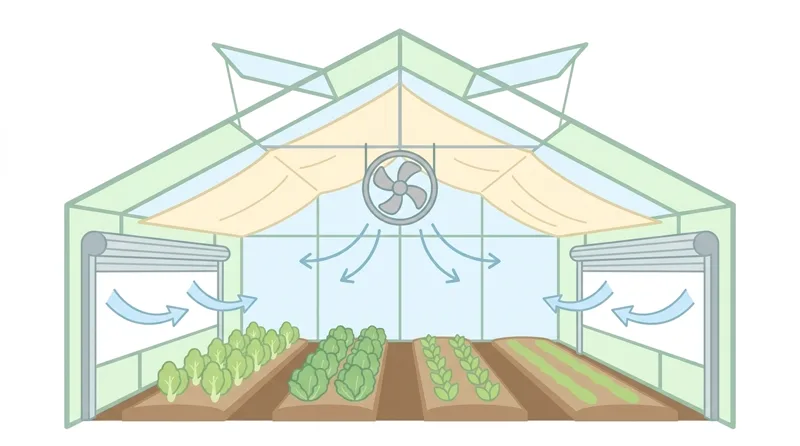
晴れた日の日中はハウス内の温度が急上昇するため、天窓や側窓を開ける「自然換気」や「換気扇(強制換気)」で高温障害を防ぎます。夏場は「遮光ネット」や細霧冷房も使います。
On sunny days, greenhouse temperatures rise rapidly; prevent heat stress through natural ventilation (opening roof and side vents) or forced ventilation (exhaust fans). In summer, shade nets and fog cooling systems are also used.
ハウス内の湿度が高すぎると灰色かび病などの病気が発生しやすくなるため、換気と「循環扇(サーキュレーター)」で空気を動かし、葉の結露と温度ムラを防ぎます。
Excessive humidity inside the greenhouse encourages diseases like gray mold, so combine ventilation with air circulation fans (circulators) to keep air moving, prevent leaf condensation, and eliminate temperature pockets.
冬の朝などに窓を閉め切っていると、作物の光合成によってハウス内の二酸化炭素(CO2)濃度が不足します。日の出ごろからCO2発生装置でCO2を施用すると、光合成が促進されて収量や品質が向上します。
When vents remain closed on winter mornings, plant photosynthesis depletes indoor carbon dioxide (CO2). Supplementing CO2 with a CO2 generator starting around sunrise boosts photosynthesis, increasing yield and quality.
Key points
- 日中の高温対策には換気(天窓・側窓・換気扇)や遮光ネットを用いる。
Control daytime high temperatures using ventilation (roof/side vents, exhaust fans) and shade nets. - 循環扇はハウス内の温度ムラをなくし、結露や多湿による病気を防ぐ。
Circulation fans eliminate temperature unevenness and prevent condensation and humidity-related diseases. - 早朝に二酸化炭素(CO2)を施用すると、作物の光合成が促進される。
Applying carbon dioxide (CO2) in the early morning promotes crop photosynthesis.
| Word | Meaning |
|---|---|
| 自然換気・強制換気 | natural ventilation / forced ventilation |
| 遮光ネット | shade net |
| 循環扇 | air circulation fan (circulator) |
| 光合成・CO2施用 | photosynthesis / CO2 enrichment |
かん水設備と養液栽培・土壌消毒
Irrigation Systems, Hydroponics, and Soil Disinfection
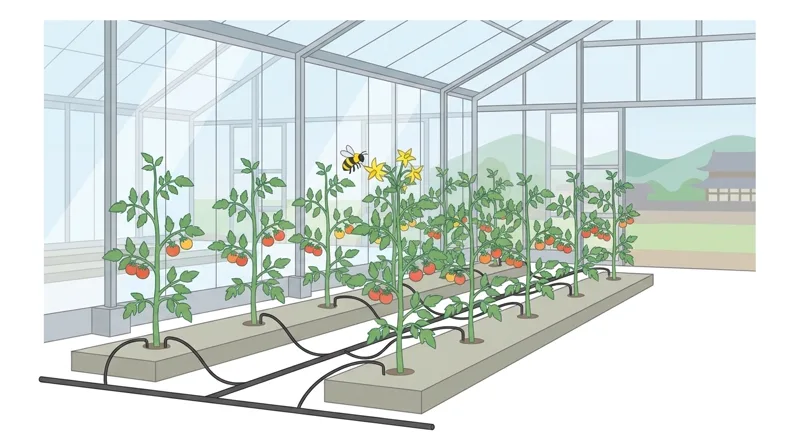
施設内では雨が当たらないため人工的な「かん水」が欠かせません。株元に少しずつ水や液肥を届けて湿度上昇を抑える「点滴チューブ(ドリップかん水)」や、葉菜類などに広く散水する「頭上かん水(スプリンクラー)」があります。
Because rain cannot enter a greenhouse, artificial irrigation is essential. Methods include "drip irrigation (drip tubes)" that delivers water and liquid fertilizer slowly to the plant base without raising humidity, and "overhead sprinklers" for leafy crops.
土を使わず、水に肥料を溶かした「培養液」とロックウールやヤシ殻などの培地で作物を育てる方法を「養液栽培」といいます。連作障害が起きにくく、培養液の肥料濃度(EC)と酸性度(pH)を毎日管理します。
Growing crops without soil using nutrient solution (water with dissolved fertilizers) and media such as rockwool or coco peat is called "hydroponics / nutriculture (youeki saibai)". It avoids soil-borne continuous cropping injury and requires daily monitoring of electrical conductivity (EC, nutrient concentration) and pH.
土耕栽培のハウスで土壌病害虫を防ぐには、夏の高温期に水を入れて透明フィルムで密閉し地温を高める「太陽熱消毒」や、蒸気消毒・土壌還元消毒を行います。
To control soil-borne pests and diseases in soil-based greenhouses, perform "solarization (taiyounetsu shoudoku)" in summer by flooding the soil, covering it with clear plastic film, and sealing the house to trap solar heat, or use steam sterilization.
Key points
- 点滴チューブによるかん水は、株元だけに給水できハウス内の過湿を防げる。
Drip tube irrigation waters only the root zone and prevents excessive greenhouse humidity. - 養液栽培では、培養液のEC(肥料濃度)とpH(酸性度)を適切に管理する。
In hydroponics, properly manage the nutrient solution EC (fertilizer concentration) and pH (acidity). - 太陽熱消毒は、夏にハウスを密閉し太陽熱で地温を上げて土壌病害虫を減らす方法である。
Solarization seals the greenhouse in summer to raise soil temperature with solar heat and reduce soil pests and pathogens.
| Word | Meaning |
|---|---|
| 点滴チューブ | drip irrigation tube |
| 養液栽培・培養液 | hydroponics / nutrient solution |
| EC(電気伝導度) | EC (electrical conductivity / nutrient concentration) |
| 太陽熱消毒 | soil solarization |
施設果菜類(トマト・キュウリ・イチゴ)の管理
Managing Greenhouse Fruit Vegetables (Tomatoes, Cucumbers, and Strawberries)
トマトの栽培では、主枝1本を伸ばす「一本仕立て」が多く、葉の付け根から出る「わき芽」を小さいうちに摘み取ります。確実に着果させるため、ハウス内に「マルハナバチ」を放つかホルモン処理・振動受粉を行います。
Tomatoes are commonly trained to a single main stem ("single-stem training"), with lateral shoots ("suckers / wakime") pinched out while small. To ensure fruit set inside greenhouses, introduce bumblebees (maruhanabachi) or use hormone sprays or vibration pollination.
キュウリの長期栽培では、伸びた茎を少しずつ下へおろして作業しやすい高さに保つ「つる下ろし誘引」や、古い下葉・病葉を切り取る「摘葉」を行います。
In long-term cucumber cultivation, practice "vine-lowering training (tsuruoroshi)", gradually lowering the main stem to keep the growing zone at a comfortable working height, along with "defoliation (tekiyou)" to remove old or diseased lower leaves.
イチゴは親株から伸びる「ランナー(走出枝)」で子苗を増やします。定植時は新芽が出る「クラウン(短縮茎)」に土をかぶせて埋めないよう浅植えにし、開花期にはハウス内で「ミツバチ」を飼って受粉させ、奇形果を防ぎます。
Strawberries are propagated from daughter plants formed on "runners (stolons)" extending from mother plants. When transplanting, keep the "crown" above the soil surface without burying it, and use honeybees inside the greenhouse during flowering to ensure uniform pollination and prevent malformed fruit.
Key points
- トマトはわき芽かきを行い、受粉にはマルハナバチや着果ホルモン・振動を利用する。
Remove suckers on tomatoes and pollinate flowers using bumblebees, hormone treatment, or vibration. - キュウリでは茎を低くおろす「つる下ろし誘引」と古い葉を取る「摘葉」を行う。
Practice vine lowering (tsuruoroshi) and removal of old lower leaves (tekiyou) in cucumbers. - イチゴはランナーで苗を増やし、クラウンを土に埋めずに定植してミツバチで受粉させる。
Propagate strawberries from runners, plant without burying the crown, and pollinate with honeybees.
| Word | Meaning |
|---|---|
| マルハナバチ・ミツバチ | bumblebee / honeybee |
| つる下ろし誘引 | vine-lowering training |
| ランナー(走出枝) | runner (stolon) |
| クラウン(短縮茎) | crown (shortened stem base) |
Greenhouse Horticulture
Practice this chapter in the appOfficial references
- 全国農業会議所 農業技能測定試験テキスト 耕種農業全般(施設園芸) — https://asat-nca.jp/textbook