Paddy Rice and Upland Crop Cultivation Operations
水稲・畑作の栽培管理作業
Agriculture · 農業 · Written by Tokutei Pass based on the official study texts; not copied verbatim.
水稲の種子選別(塩水選)と育苗
Rice Seed Selection (Saltwater Selection) and Raising Seedlings
水稲栽培では、まず比重約1.13の塩水に種もみを入れ、底に沈んだ充実した良い種もみを選び出す「塩水選」を行います。その後、種子消毒をして病気を防ぎます。
In paddy rice cultivation, first perform "saltwater selection (ensuisen)" using salt water with a specific gravity of about 1.13 to select plump, heavy seeds that sink to the bottom, followed by seed disinfection to prevent disease.
消毒した種もみは水に浸して十分に吸水させる「浸種」を行い、30〜32℃程度の温水などで芽を1mmほど出させる「催芽(ハト胸状態)」をしてから育苗箱に播種します。
Soak the disinfected rice seeds in water so they absorb sufficient moisture ("soaking / shinshu"), then warm them at around 30–32℃ until sprouts emerge by about 1mm ("pre-sprouting / saiga") before sowing into nursery trays.
育苗中は温度と水分を丁寧に管理し、田植えの前には外の気温や日光に慣らして丈夫な苗にする「硬化(順化)」を行います。
Manage temperature and moisture carefully during seedling raising, and acclimate the seedlings to outdoor temperatures and sunlight before transplanting ("hardening / kouka").
Key points
- 塩水選では、塩水の底に沈んだ重く充実した種もみを選ぶ。
In saltwater selection, choose the heavy, well-filled rice seeds that sink to the bottom. - 種子消毒→浸種(吸水)→催芽(発芽をそろえる)→播種の順に行う。
Follow the sequence: seed disinfection -> soaking (shinshu) -> pre-sprouting (saiga) -> sowing. - 田植え前に外気や日光に慣らす作業を「硬化」という。
Acclimating seedlings to outdoor air and sunlight before transplanting is called "hardening (kouka)".
| Word | Meaning |
|---|---|
| 塩水選 | saltwater seed selection |
| 浸種・催芽 | seed soaking / pre-sprouting |
| 育苗箱 | nursery tray (seedling box) |
| 硬化 | hardening (acclimation of seedlings) |
本田準備(耕起・代かき)と田植え
Paddy Field Preparation (Tilling and Puddling) and Transplanting
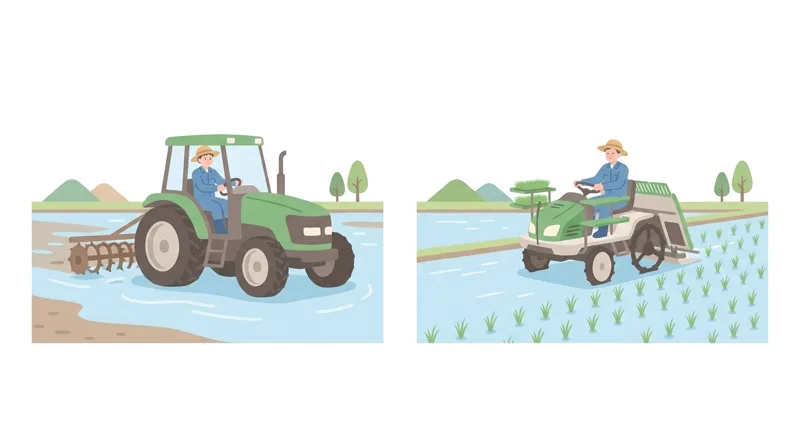
水田の準備では、まず元肥や堆肥をまいて土を掘り起こす「耕起」を行い、土を砕いて空気を入れます。また、水田の周りの畦(あぜ)からの水漏れを防ぐため「畦塗り」を行います。
To prepare a paddy field, first spread basal fertilizer and compost and perform "tilling/plowing (kouki)" to break up clods and aerate the soil. Also plaster the levees ("azenuri") around the paddy to prevent water leakage.
その後、水田に水を入れて土を細かく砕き、表面を平らにならす「代かき」を行います。代かきには、水漏れを防ぎ、雑草の発芽を抑え、苗を植えやすくする目的があります。
Next, flood the paddy and pulverize and level the wet soil in an operation called "puddling (shirokaki)". Puddling prevents water seepage, suppresses weed emergence, and creates an even surface for transplanting seedlings.
田植機で苗を植え付けた後、苗が植わっていない箇所(欠株)があれば手作業で苗を補う「補植(さし苗)」を行います。
After transplanting with a rice transplanter, manually plant seedlings into any missed spots ("missing hills / kekkabu") in a step called "replanting (hoshoku)".
Key points
- 耕起は土を砕いて空気を入れ、畦塗りは畦からの水漏れを防ぐ作業である。
Tilling breaks up and aerates the soil, while levee plastering prevents water leakage through the bunds. - 代かきは水を入れた水田の土を砕いて平らにし、水漏れ防止や雑草抑制を行う。
Puddling levels the flooded soil, prevents water seepage, and suppresses weeds. - 田植え後の欠株には、手作業で苗を補う「補植」を行う。
Missed hills after mechanical transplanting are filled manually through replanting (hoshoku).
| Word | Meaning |
|---|---|
| 耕起・畦塗り | tilling (plowing) / levee plastering |
| 代かき | puddling (leveling flooded soil) |
| 田植機 | rice transplanter |
| 欠株・補植 | missing hill / replanting |
水稲の水管理・中干し・穂肥
Paddy Water Management, Mid-season Drainage, and Panicle Fertilizer
田植え直後は苗を風や低温から守って活着を促すためやや深水にし、活着後は水温・地温を上げて茎が増える「分げつ」を促すため浅水で管理します。
Right after transplanting, maintain slightly deep water to protect seedlings from wind and cold until roots establish; once established, switch to shallow water to warm the soil and promote "tillering (bungetsu)".
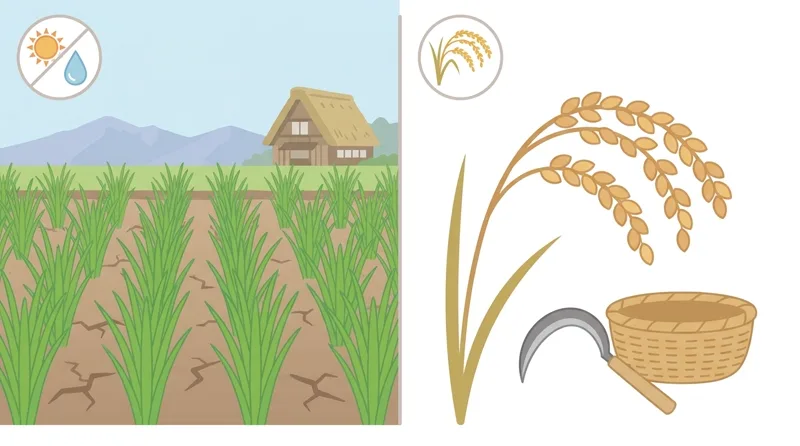
目標の茎数になったころ、一時的に水田の水を抜いて土を乾かす「中干し」を行います。中干しには、穂にならない無効分げつを抑え、土の中の有害ガスを抜いて酸素を補給し、根を強くして倒伏を防ぐ効果があります。
Once the target number of stems is reached, temporarily drain the paddy to dry the soil in a practice called "mid-season drainage (nakaboshi)". This suppresses non-productive tillers, releases toxic soil gases, supplies oxygen to strengthen roots, and prevents lodging.
茎の中で若い穂(幼穂)が作られる時期には、もみ数や登熟を良くする追肥「穂肥」を施します。また、穂ばらみ期や出穂・開花期は多くの水が必要なため水を切らさないようにし、低温時は深水にして幼穂を守ります。
During young panicle formation, apply "panicle fertilizer (hogoe)" to improve grain number and ripening. Keep the field well-irrigated during booting, heading, and flowering when water demand peaks, and use deep water during cold spells to protect young panicles.
Key points
- 活着後は浅水管理で分げつを促し、十分に茎が増えたら「中干し」を行う。
Use shallow water after establishment to promote tillering, then perform mid-season drainage (nakaboshi) once stems are sufficient. - 中干しは無効分げつを抑え、土中のガスを抜いて根を張らせ倒伏を防ぐ。
Mid-season drainage suppresses unproductive tillers, vents soil gases, strengthens roots, and prevents lodging. - 幼穂形成期には「穂肥」を施し、穂ばらみ期や出穂期は水不足にしない。
Apply panicle fertilizer (hogoe) at young panicle formation and avoid water shortages during booting and heading.
| Word | Meaning |
|---|---|
| 分げつ・無効分げつ | tillering / non-productive tillers |
| 中干し | mid-season drainage |
| 幼穂・穂肥 | young panicle / panicle fertilizer |
| 出穂 | heading (panicle emergence) |
水稲の病害虫と収穫・乾燥・籾摺り
Rice Pests & Diseases, Harvesting, Drying, and Hulling
水稲の代表的な病気には、葉や穂に病斑ができる「いもち病」や「紋枯病」があります。害虫には、茎から汁を吸って稲を枯らす「ウンカ類」や、穂の汁を吸って黒い点のある「斑点米」を作る「カメムシ類」があります。
Typical rice diseases include "rice blast (imochibyou)", which causes lesions on leaves and panicles, and "sheath blight (mongarebyou)". Key pests include "planthoppers (unka)" that suck stem sap and wither plants, and "stink bugs (kamemushi)" that feed on panicles and cause black-spotted "pecky rice (hantenmai)".
収穫(稲刈り)の適期は、出穂後の積算気温(約950〜1,100℃)や、穂のもみの約80〜90%が黄色く熟したころを目安にします。収穫前にはコンバインが入りやすいよう「落水」して地面を固めます。
Optimal harvest timing is judged by cumulative temperature after heading (about 950–1,100℃) and when roughly 80–90% of the grains on the panicle have turned yellow. Before harvesting, drain the paddy ("final drainage / rakusui") so the ground firms up for the combine harvester.
収穫した生もみはそのまま置くと品質が落ちるため、乾燥機で水分約14.5〜15.0%まで乾燥させます。その後、籾摺機でもみ殻を除いて「玄米」にし、選別機でくず米を分けます。
Freshly harvested rough rice spoils quickly if left wet, so dry it in a grain dryer to a moisture content of about 14.5–15.0%. Next, remove the husks with a rice huller (momisuriki) to produce "brown rice (genmai)" and sort out immature grains.
Key points
- いもち病やウンカ類、斑点米の原因となるカメムシ類の防除が重要である。
Control rice blast, planthoppers, and stink bugs (which cause black-spotted pecky rice). - 収穫適期はもみの黄化率約80〜90%が目安で、収穫前に落水して地面を乾かす。
Harvest when about 80–90% of grains have yellowed, after draining the field (rakusui) to firm the ground. - 収穫後は水分約14.5〜15%に乾燥させ、籾摺りをして玄米にする。
Dry harvested grain to about 14.5–15% moisture and hull it into brown rice (genmai).
| Word | Meaning |
|---|---|
| いもち病・斑点米 | rice blast disease / pecky (spotted) rice |
| 落水 | final drainage before harvest |
| コンバイン | combine harvester |
| 籾摺り・玄米 | rice hulling / brown rice |
主な畑作物(麦・大豆・いも類)の栽培
Cultivation of Major Upland Crops (Wheat/Barley, Soybeans, and Tuber Crops)
小麦や大麦などの麦類は湿害に弱いため排水対策を行います。また、冬に苗を上から踏みつけ、霜柱による浮き上がりと徒長・倒伏を防ぎ根張りを良くする「麦踏み(踏圧)」を行います。
Wheat and barley are sensitive to excess moisture, requiring good field drainage. In winter, perform "wheat treading (mugifumi)" by pressing down the young plants to prevent frost heaving, spindly growth, and lodging while encouraging strong root development.
マメ科の大豆は、根に共生する「根粒菌」が空気中の窒素を固定するため、窒素の元肥は控えめにします。生育途中で株元に土を寄せる「中耕・培土(土寄せ)」を行い、開花期・子実肥大期の乾燥を防ぎます。
Soybeans (a legume) have symbiotic "rhizobia (root nodule bacteria)" that fix atmospheric nitrogen, so basal nitrogen fertilizer is kept low. Perform intertillage and hilling ("chuukou / baido") during growth, and prevent drought during flowering and pod filling.
ジャガイモ(馬鈴薯)は種いもを芽が残るように切り分けて植え、いもが光に当たって緑化(有毒なソラニン生成)しないよう土寄せします。サツマイモ(甘藷)は「つる苗(挿し穂)」を植え、つるから余分な根が出ないよう「つる返し」を行います。
Potatoes are planted using cut seed tubers with eyes, and soil is hilled around the base to prevent light exposure and greening (toxic solanine formation). Sweet potatoes are planted from vine cuttings, and "vine turning (tsurugaeshi)" prevents adventitious rooting along the vines.
Key points
- 麦類の「麦踏み(踏圧)」は、霜柱による浮き上がりや徒長・倒伏を防ぐ。
Wheat treading (mugifumi) prevents frost heaving, spindly growth, and lodging. - 大豆の根には空気中の窒素を固定する「根粒菌」が共生している。
Soybean roots host symbiotic root nodule bacteria (rhizobia) that fix nitrogen from the air. - ジャガイモは種いもを植えて緑化防止の土寄せを行い、サツマイモはつる苗を植える。
Potatoes are planted from seed tubers and hilled to prevent greening, while sweet potatoes are planted from vine cuttings.
| Word | Meaning |
|---|---|
| 麦踏み(踏圧) | wheat treading (soil compaction on seedlings) |
| 根粒菌 | root nodule bacteria (rhizobia) |
| 中耕・培土(土寄せ) | intertillage / hilling (earthing up) |
| つる返し | vine turning (sweet potato) |
Rice, Field Crops and Vegetables
Practice this chapter in the appOfficial references
- 全国農業会議所 農業技能測定試験テキスト 耕種農業全般(水稲・畑作) — https://asat-nca.jp/textbook