
General Crop Farming (Soil Preparation, Fertilizers, and Cultivation Management)
耕種農業一般(土づくり・肥料・栽培管理)
Agriculture · 農業 · Written by Tokutei Pass based on the official study texts; not copied verbatim.
土壌の性質と土づくり・連作障害
Soil Properties, Soil Preparation, and Continuous Cropping Injury
作物がよく育つ良い土とは、土の粒が集まった「団粒構造」が発達し、空気を通す通気性、水を保つ保水性、余分な水を抜く排水性、養分を保つ保肥力がそろった土壌です。
Good soil for crop growth has a well-developed "crumb (aggregate) structure" that balances aeration, water retention, drainage of excess water, and nutrient-holding capacity.
日本の土壌は雨が多いため酸性に傾きやすく、多くの作物が好む弱酸性〜中性(pH6.0〜6.5程度)に整えるため、苦土石灰などの石灰資材や完熟堆肥を耕起前にすき込みます。
Because abundant rainfall makes Japanese soils naturally acidic, lime materials such as magnesium lime and fully matured compost are plowed in to adjust soil pH to slightly acidic or neutral (around pH 6.0–6.5).
同じ場所で同じ科の作物(ナス科のトマト・ナス・ピーマン・ジャガイモなど)を続けて栽培すると、土壌病害虫が増えて生育が悪くなる「連作障害」が起きます。これを防ぐため、異なる科の作物を順番に植える「輪作」を行います。
Growing crops of the same plant family (such as nightshades: tomatoes, eggplants, bell peppers, and potatoes) repeatedly in the same field causes "continuous cropping injury" due to soil-borne pests and diseases. Prevent this by practicing "crop rotation" with different plant families.
Key points
- 団粒構造の土は通気性・保水性・排水性・保肥力に優れる。
Soil with a crumb structure excels in aeration, water retention, drainage, and nutrient retention. - 酸性土壌の矯正には苦土石灰などの石灰資材を用い、土づくりには完熟堆肥を施用する。
Use lime materials (like magnesium lime) to correct acidic soil and apply fully matured compost to build soil health. - 同じ科の作物を続けて植える連作障害を防ぐには、輪作が有効である。
Crop rotation across different plant families is effective in preventing continuous cropping injury.
| Word | Meaning |
|---|---|
| 団粒構造 | crumb (aggregate) soil structure |
| 苦土石灰 | magnesium lime (dolomitic lime) |
| 完熟堆肥 | fully matured compost |
| 連作障害・輪作 | continuous cropping injury / crop rotation |
肥料の三要素と元肥・追肥
The Three Major Fertilizer Nutrients, Basal Application, and Topdressing
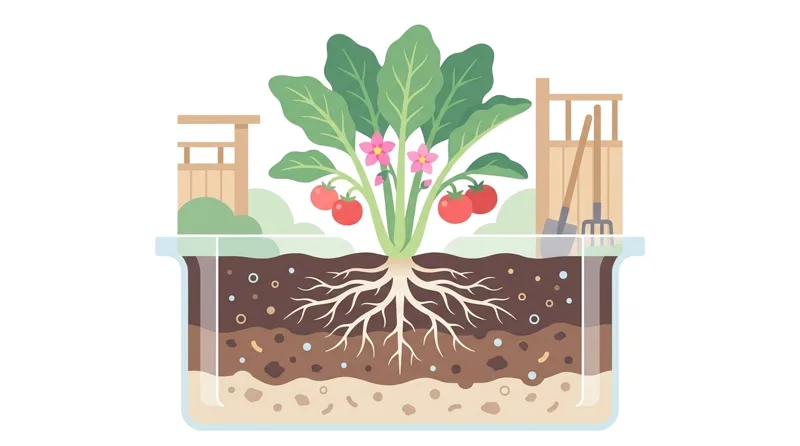
植物の生育に特に多く必要な「肥料の三要素」は、窒素(N)・リン酸(P)・カリウム(K)です。窒素は葉や茎を育てる「葉肥」、リン酸は花や実のつきを良くする「実肥(花肥)」、カリウムは根を育てる「根肥」と呼ばれます。
The "three major fertilizer elements" needed in the largest amounts by plants are Nitrogen (N), Phosphorus (P), and Potassium (K). Nitrogen promotes leaf and stem growth ("leaf fertilizer"), Phosphorus aids flowering and fruiting ("fruit/flower fertilizer"), and Potassium strengthens roots ("root fertilizer").
種まきや定植の前にあらかじめ土に施す肥料を「元肥(基肥)」といい、作物の生育途中で不足する養分を補う肥料を「追肥」といいます。
Fertilizer incorporated into the soil before sowing or transplanting is called "basal fertilizer (motogoe)", whereas fertilizer added during growth to replenish nutrients is called "topdressing (tsuihi)".
窒素を与えすぎると、葉や茎ばかりが軟弱に茂る「つるぼけ(過繁茂)」を起こし、実つきが悪くなったり病害虫に弱くなったりするため、適正量を守ります。
Applying excessive nitrogen causes overly lush, weak foliage growth ("vine overgrowth"), resulting in poor fruit set and higher susceptibility to pests and diseases, so always apply proper amounts.
Key points
- 肥料の三要素は、窒素(葉・茎)、リン酸(花・実)、カリウム(根)である。
The three major fertilizer elements are Nitrogen (leaves/stems), Phosphorus (flowers/fruits), and Potassium (roots). - 植える前に施す肥料を「元肥」、育っている途中で補う肥料を「追肥」という。
Fertilizer applied before planting is "basal fertilizer (motogoe)"; fertilizer added during growth is "topdressing (tsuihi)". - 窒素のやりすぎは過繁茂(つるぼけ)や病害虫発生の原因になる。
Excessive nitrogen leads to vegetative overgrowth and increased pest and disease problems.
| Word | Meaning |
|---|---|
| 肥料の三要素 | three major fertilizer elements |
| 窒素・リン酸・カリウム | Nitrogen, Phosphorus, and Potassium |
| 元肥(基肥) | basal fertilizer (pre-plant application) |
| 追肥 | topdressing (additional fertilizer) |
種まき(播種)・育苗と定植
Sowing, Raising Seedlings, and Transplanting
種子が発芽するために必要な3つの条件(発芽の三条件)は「水(水分)・温度・酸素(空気)」です。また、レタスやニンジンなど発芽に光が必要な「好光性種子」は覆土(土かけ)を薄くし、ダイコンやネギなどの「嫌光性種子」はしっかり土をかぶせます。
The three essential conditions for seed germination are "water (moisture), temperature, and oxygen (air)". Light-favored seeds (photoblastic) like lettuce and carrots require only a thin soil cover, whereas dark-favored seeds like daikon and green onions need adequate soil coverage.
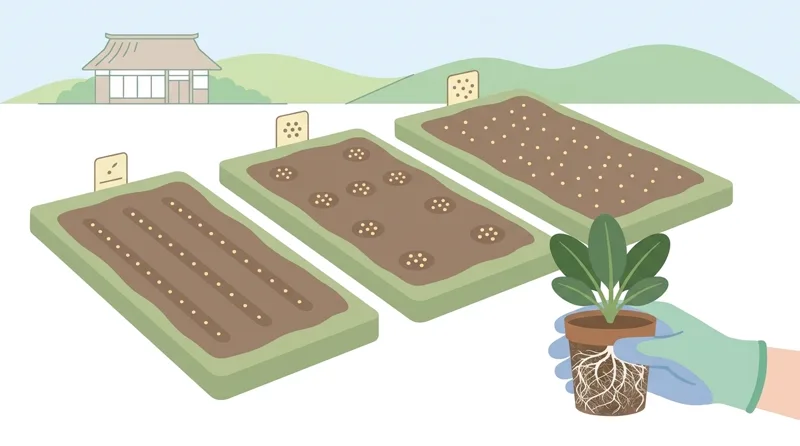
畑への種まき方法には、溝に一列にまく「すじまき(条播)」、一定の間隔で数粒ずつまく「点まき(点播)」、広くまく「ばらまき(散播)」があります。発芽後は混み合った株を抜く「間引き」を行います。
Field sowing methods include line sowing in furrows (sujimaki), spot sowing several seeds at fixed intervals (tenmaki), and broadcast sowing (baramaki). After emergence, perform "thinning (mabiki)" to remove crowded or weak seedlings.
良い苗(健苗)とは、節間が詰まって茎が太く、葉の色が良く根がしっかり張った苗です。畑に苗を植え付ける「定植」では、深植えや浅植えを避け、植えた直後にたっぷりかん水して根を活着させます。
Healthy seedlings have compact internodes, thick stems, vibrant leaves, and dense roots. During transplanting (teishoku), avoid planting too deep or too shallow, and water thoroughly right after planting so the roots establish quickly.
Key points
- 発芽の三条件は「水・温度・酸素」であり、好光性種子は覆土を薄くする。
The three germination conditions are water, temperature, and oxygen; cover light-favored seeds lightly. - 種まきには「すじまき・点まき・ばらまき」があり、発芽後は適正な株間に間引きする。
Sowing methods include line, spot, and broadcast sowing, followed by thinning to proper spacing. - 良い苗は節間が詰まり根張りが良く、定植後は活着を促すため十分にかん水する。
Good seedlings have short internodes and strong roots; water thoroughly after transplanting for root establishment.
| Word | Meaning |
|---|---|
| 発芽の三条件 | three conditions for germination |
| 好光性種子 | light-favored (photoblastic) seed |
| すじまき・点まき | line sowing / spot sowing |
| 間引き・定植 | thinning / transplanting |
畝立て・マルチングと支柱立て・整枝
Ridging, Mulching, Staking, and Training/Pruning
畑の土を盛り上げて列を作る「畝立て」には、排水性と通気性を良くし、根が張りやすい環境を作る効果があります。水はけの悪い畑では高畝にします。
Forming raised beds in rows, called "ridging (unetate)", improves drainage and soil aeration, creating a favorable environment for root growth. High ridges are used in poorly drained fields.
畝の表面をプラスチックフィルムやワラなどで覆う「マルチング(マルチ)」には、地温の調整、雑草の抑制、土壌水分の保持、肥料の流亡防止、雨による泥はね(病気感染)防止の効果があります。
Covering the ridge surface with plastic film or straw, known as "mulching", regulates soil temperature, suppresses weeds, retains soil moisture, prevents fertilizer leaching, and stops rain splash from spreading soil-borne diseases.
背が高くなる作物やつるが伸びる作物には、倒伏を防ぎ日当たりを良くするため「支柱立て」と「誘引」を行います。また、茎の先端を摘む「摘心」や不要な枝を取る「わき芽かき(芽かき)」で栄養を実に集中させます。
Tall or vining crops require "staking" and "training/tying (yuuin)" to prevent lodging and improve sunlight exposure. Pinching the growing tip ("topping/tekishin") and removing lateral shoots ("desuckering/wakimekaki") direct nutrients to the fruit.
Key points
- 畝立ては排水性と通気性を高め、マルチングは地温調整・雑草抑制・水分保持・泥はね防止に役立つ。
Ridging improves drainage and aeration; mulching regulates soil temperature, suppresses weeds, retains moisture, and prevents mud splash. - 黒色マルチは雑草抑制、透明マルチは地温上昇、シルバーマルチはアブラムシなどの飛来防止に効果が高い。
Black mulch excels at weed control, clear mulch raises soil temperature most, and silver mulch repels flying pests like aphids. - 摘心やわき芽かきを行うことで、風通しを良くし養分を果実へ集中させる。
Pinching growing tips and removing side shoots improve airflow and concentrate nutrients into developing fruit.
| Word | Meaning |
|---|---|
| 畝立て | ridging (making raised beds) |
| マルチング | mulching |
| 摘心・わき芽かき | pinching tips (topping) / removing side shoots |
| 誘引 | training and tying stems |
病害虫・雑草防除と収穫・予冷
Pest, Disease & Weed Control, Harvesting, and Pre-cooling
主な害虫には、ウイルス病を媒介し汁を吸うアブラムシ・アザミウマ・コナジラミ、高温乾燥時に増えるハダニ、葉を食害するヨトウムシやアオムシがあります。主な病気には、うどんこ病・灰色かび病・べと病・青枯病などがあります。
Major pests include sap-sucking and virus-transmitting aphids, thrips, and whiteflies; spider mites that thrive in hot, dry conditions; and leaf-chewing armyworms and cabbage worms. Major diseases include powdery mildew, gray mold, downy mildew, and bacterial wilt.
化学農薬だけに頼らず、防虫ネットや黄色粘着板、太陽熱消毒(物理的防除)、輪作や抵抗性品種(耕種的防除)、天敵昆虫(生物的防除)を組み合わせる総合的病害虫・雑草管理(IPM)を行います。
Rather than relying solely on chemical pesticides, practice Integrated Pest Management (IPM) by combining insect nets, yellow sticky traps, and solarization (physical control), crop rotation and resistant varieties (cultural control), and natural enemies (biological control).
野菜の収穫は、品温が低くみずみずしい早朝に行うのが基本です。収穫後は呼吸による鮮度低下を抑えるため、出荷前に低温で冷やす「予冷」を行います。
Vegetables are generally harvested in the early morning when produce temperature is low and turgidity is high. After harvest, perform "pre-cooling (yorei)" to lower respiration and preserve freshness before shipping.
Key points
- アブラムシ・アザミウマ・コナジラミは汁を吸うだけでなくウイルス病を媒介する。
Aphids, thrips, and whiteflies not only suck plant sap but also transmit viral diseases. - 物理的・耕種的・生物的防除を組み合わせて農薬への依存を減らす取り組みをIPMという。
IPM combines physical, cultural, and biological controls to reduce reliance on chemical pesticides. - 野菜は品温の低い早朝に収穫し、予冷を行って呼吸熱と鮮度低下を抑える。
Harvest vegetables in the cool early morning and pre-cool them to suppress respiration heat and quality loss.
| Word | Meaning |
|---|---|
| アブラムシ・ハダニ | aphids / spider mites |
| うどんこ病・灰色かび病 | powdery mildew / gray mold |
| 総合的病害虫管理(IPM) | Integrated Pest Management (IPM) |
| 予冷 | pre-cooling |
General Crop Cultivation
Practice this chapter in the appOfficial references
- 全国農業会議所 農業技能測定試験テキスト 耕種農業全般 — https://asat-nca.jp/textbook