
Japanese Used at Agricultural Workplaces
農作業の現場で使う日本語
Agriculture · 農業 · Written by Tokutei Pass based on the official study texts; not copied verbatim.
職場のあいさつと指示の確認・報告
Workplace Greetings, Confirming Instructions, and Reporting
朝に職場へ着いたときは「おはようございます」、仕事が終わって帰るときは「お疲れ様でした」とあいさつします。物をもらったり手伝ってもらったりしたときは「ありがとうございます」と伝えます。
Greet coworkers with "Ohayou gozaimasu" when arriving in the morning and "Otsukaresama deshita" when finishing work for the day. Say "Arigatou gozaimasu" when receiving items or assistance.
責任者から作業の指示を受けたときは、「はい、わかりました」と返事をします。指示の内容がよく聞き取れなかったときや意味がわからないときは、勝手に判断せず「すみません、もう一度お願いします」と聞き返します。
When given work instructions by a supervisor, reply "Hai, wakarimashita" (Yes, I understand). If you did not catch the instruction clearly or are unsure of its meaning, do not guess—politely ask "Sumimasen, mou ichido onegaishimasu".
作業が終わったときや、作物の病気・家畜の体調不良・道具の破損を見つけたときは、そのまま放置せずすぐに責任者へ報告します。
Report to your supervisor immediately upon finishing an assigned task or whenever you notice crop disease, sick livestock, or broken tools.
Key points
- 朝は「おはようございます」、作業終了時は「お疲れ様でした」とあいさつする。
Use "Ohayou gozaimasu" in the morning and "Otsukaresama deshita" at the end of work. - 指示がわからないときは勝手に作業せず、必ず責任者に聞き返して確認する。
If an instruction is unclear, never guess—always ask the supervisor to confirm. - 異常や故障を見つけたときは、ただちに責任者へ報告する。
Report any abnormality or equipment damage to the supervisor immediately.
| Word | Meaning |
|---|---|
| 指示 | instruction |
| 報告 | report |
| 責任者 | supervisor / person in charge |
| 確認 | confirmation |
時刻・日付・期間と温度・湿度の表現
Expressions for Time, Dates, Duration, Temperature, and Humidity
作業時間の指示では、「午前8時から午後5時まで」「12時から1時間休憩」「30分後に集合」のように時刻と時間(長さ)を区別して聞き取ります。
In work schedule instructions, distinguish between specific clock times and durations, such as "from 8:00 AM to 5:00 PM", "a 1-hour break starting at 12:00", or "gather in 30 minutes".
日付や予定では、「今日・明日・明後日」「昨日・一昨日」「今週・来週」のほか、「ついたち(1日)・ふつか(2日)・みっか(3日)・とおか(10日)・はつか(20日)」などの特別な読み方に注意します。
For dates and schedules, know terms like today, tomorrow, the day after tomorrow, yesterday, this week, and next week, as well as special Japanese date readings like tsuitachi (1st), futsuka (2nd), mikka (3rd), tooka (10th), and hatsuka (20th).
ハウスや畜舎の管理では、温度計の「25度(25℃)」や「マイナス5度(-5℃)」、湿度計の「70パーセント(70%)」などの数値を正確に読み取り、換気や保温の指示に従います。
In greenhouse and barn management, accurately read values on thermometers such as "25 degrees (25℃)" or "minus 5 degrees (-5℃)" and hygrometers such as "70 percent (70%)" to follow ventilation or heating instructions.
Key points
- 「午前・午後」「今日・明日・明後日」などの時刻と日程を正確に把握する。
Understand time expressions (AM/PM) and schedule terms (today, tomorrow, day after tomorrow). - 1日(ついたち)、2日(ふつか)、10日(とおか)、20日(はつか)などの日付の読み方を覚える。
Memorize special date readings such as the 1st (tsuitachi), 2nd (futsuka), 10th (tooka), and 20th (hatsuka). - 温度(〜度)や湿度(〜パーセント)の数値を正確に読み取る。
Read temperature (degrees) and humidity (percent) figures accurately.
| Word | Meaning |
|---|---|
| 午前・午後 | AM (morning) / PM (afternoon) |
| 明後日 | the day after tomorrow |
| 温度計 | thermometer |
| 湿度 | humidity |
農業で使う数の単位(助数詞)
Counters Used in Agriculture
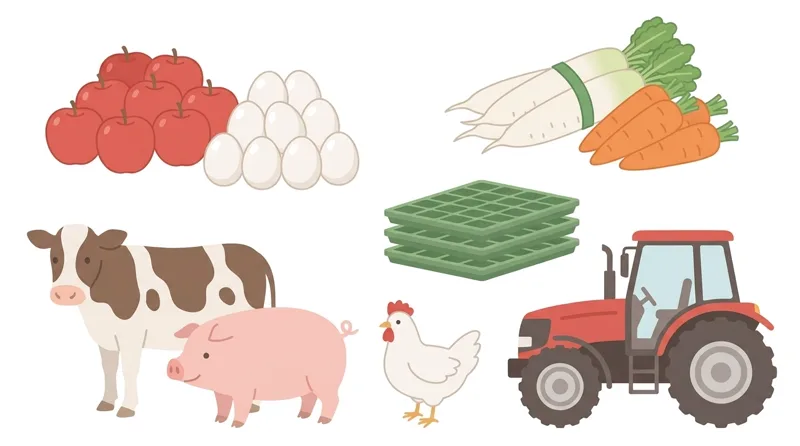
農産物の形によって数え方が変わります。リンゴ・トマト・ジャガイモ・卵などの丸いものは「個(または玉)」、ダイコン・ニンジン・キュウリ・果樹の木や支柱などの細長いものは「本」で数えます。
Counters vary by shape. Round items like apples, tomatoes, potatoes, and eggs are counted with "ko" (or "tama"), whereas long cylindrical items like daikon radishes, carrots, cucumbers, fruit trees, and stakes are counted with "hon / pon / bon".
葉や育苗箱・田畑の区画などの平らなものは「枚」、キャベツやレタスなどの結球野菜は「玉(個)」、ホウレンソウなどの束ねた葉物野菜は「束(把)」を使います。
Flat objects like leaves, nursery trays, and field plots are counted with "mai"; head vegetables like cabbage and lettuce use "tama (ko)"; bundled leafy greens like spinach use "taba (wa)".
家畜では、牛・豚・馬などの大きな動物は「頭」、鶏やひよこなどの鳥類は「羽」で数えます。また、トラクターや一輪車などの機械・車両は「台」、肥料や飼料の袋は「袋」、出荷箱は「箱(ケース)」です。
For livestock, large animals like cattle, pigs, and horses are counted with "tou", while poultry like chickens and chicks use "wa". Machinery and vehicles like tractors and wheelbarrows use "dai", fertilizer or feed bags use "fukuro", and shipping boxes use "hako".
Key points
- 丸い果実や卵は「個」、細長い野菜や支柱は「本」、葉や育苗箱は「枚」で数える。
Count round fruits and eggs with "ko", long vegetables and stakes with "hon", and leaves or nursery trays with "mai". - 牛・豚は「頭」、鶏は「羽」で数える。
Count cattle and pigs with "tou", and chickens with "wa". - 機械・車両は「台」、肥料袋は「袋」、出荷用段ボールは「箱」で数える。
Count machines and vehicles with "dai", fertilizer bags with "fukuro", and shipping cartons with "hako".
| Word | Meaning |
|---|---|
| 個・本・枚 | counters for round items (ko), long items (hon), flat items (mai) |
| 頭・羽 | counters for large livestock (tou) and poultry (wa) |
| 台 | counter for machines and vehicles (dai) |
| 袋・箱 | counters for bags (fukuro) and boxes (hako) |
農具・資材の名称と位置・方向の指示
Names of Farm Tools & Materials and Location/Direction Instructions
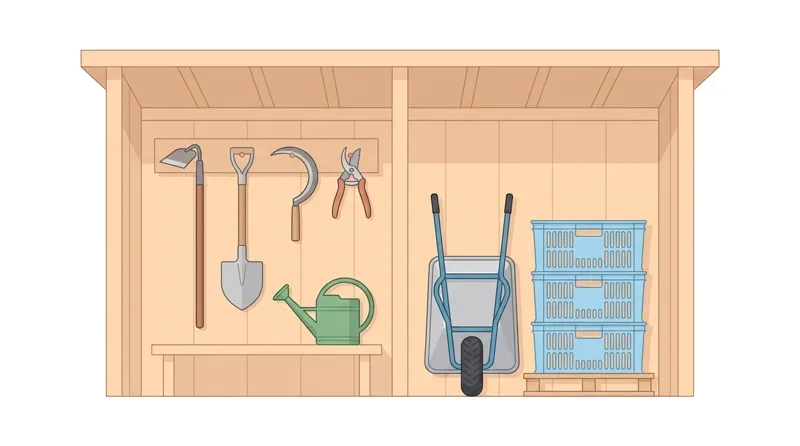
よく使う手農具には、土を耕して畝を作る「くわ(鍬)」、土や堆肥をすくう「スコップ(シャベル)」、草や稲を刈る「鎌」、枝を切る「剪定ばさみ」、水をまく「じょうろ」があります。
Common hand tools include the hoe (kuwa) for tilling soil and forming ridges, the scoop/shovel (sukoppu) for moving soil or compost, the sickle (kama) for cutting grass or rice, pruning shears (senteibasami), and the watering can (jouro).
運搬や収穫には、1つの車輪で荷物を運ぶ「一輪車(ネコ車)」、プラスチック製の「収穫コンテナ」、フォークリフトで荷役するための荷台「パレット」を使います。
For transport and harvesting, workers use a single-wheeled wheelbarrow (ichirinsha), plastic harvest crates (kontena), and pallets (paretto) for forklift loading.
片付けや配置の指示では、「棚の上・下・真ん中」「倉庫の奥・手前(入口側)」「通路の右側・左側・横(隣)」などの位置を正確に理解します。
When following storage or placement instructions, accurately understand position words such as top, bottom, and middle of a shelf; the back (oku) and front/near side (temae) of a shed; and the right, left, or beside (yoko/tonari) an aisle.
Key points
- 「くわ・スコップ・鎌・剪定ばさみ・じょうろ・一輪車・コンテナ」の名称と用途を覚える。
Memorize the names and uses of hoes, shovels, sickles, pruning shears, watering cans, wheelbarrows, and crates. - 「奥(入口から遠い方)」と「手前(自分や入口に近い方)」の違いに注意する。
Distinguish clearly between "oku" (far inside/back) and "temae" (near side/front). - 使った農具は泥を洗い落とし、指示された元の場所へ戻す。
Wash mud off farm tools after use and return them to their designated storage spots.
| Word | Meaning |
|---|---|
| くわ(鍬)・鎌 | hoe (kuwa) / sickle (kama) |
| 剪定ばさみ | pruning shears |
| 一輪車 | wheelbarrow |
| 奥・手前 | far inside (back) / near side (front) |
安全標識と選別・作業指示の読み取り
Reading Safety Signs and Sorting/Work Instructions
農場や倉庫には、事故や病気を防ぐための注意表示があります。「立入禁止(中に入るな)」「火気厳禁(火を使うな)」「触るな」「足元注意」などの意味を覚えて守ります。
Farms and warehouses post warning signs to prevent accidents and disease outbreaks. Learn and obey signs such as "No Entry (Tachiiri kinshi)", "No Open Flames (Kaki genkin)", "Do Not Touch (Sawaru na)", and "Watch Your Step (Ashimoto chuui)".
出荷作業では、「重さ150g以上で傷がないものをA品にする」「1箱に10個ずつ入れる」といった選別基準の指示を正確に読み取り、規格外のものを分けます。
During shipping preparation, accurately follow grading instructions such as "sort unblemished items weighing 150g or more as Grade A" or "pack 10 pieces per box", and separate out-of-spec items.
また、「1頭あたり2kgの餌を午前と午後の2回に分けて与える」「3番のハウスの側窓を開ける」など、番号・数量・回数の指示を間違えないようにします。
Also pay close attention to numbers, quantities, and frequencies in instructions such as "feed 2kg per head split into two meals (morning and afternoon)" or "open the side vents of greenhouse No. 3".
Key points
- 「立入禁止」「火気厳禁」「足元注意」などの安全標識の意味を理解して守る。
Understand and obey safety signs such as "No Entry", "No Open Flames", and "Watch Your Step". - 選別基準(重さ・大きさ・色・傷の有無)の指示を正確に読み取る。
Accurately follow sorting criteria instructions regarding weight, size, color, and blemishes. - 場所の番号や1回あたりの分量・回数を間違えないように確認する。
Double-check location numbers, amounts per application, and frequencies to avoid mistakes.
| Word | Meaning |
|---|---|
| 立入禁止 | no entry / keep out |
| 火気厳禁 | flammable / no open flames |
| 選別 | sorting / grading |
| 規格外 | out of specification (off-grade) |
Japanese for Farm Work
Practice this chapter in the appOfficial references
- 全国農業会議所 農業技能測定試験 日本語テキスト(耕種・畜産共通) — https://asat-nca.jp/textbook