
General Agriculture and Farm Occupational Safety & Health
農業全般と農作業の安全衛生
Agriculture · 農業 · Written by Tokutei Pass based on the official study texts; not copied verbatim.
日本の農業の特徴とGAP・5Sの基本
Characteristics of Japanese Agriculture and Basics of GAP & 5S
日本には春夏秋冬の四季があり、南北に長い地形を生かして多様な農産物が作られています。主食用のコメの自給率はほぼ100%ですが、カロリーベースの食料自給率は約38%です。
Japan has four distinct seasons and a long north-to-south geography, enabling the production of diverse agricultural products. Self-sufficiency in staple rice is nearly 100%, whereas calorie-based food self-sufficiency is around 38%.
農産物の生産工程で食品安全・環境保全・労働安全などを適切に管理する取り組みをGAP(農業生産工程管理)といいます。また、有機栽培の農産物には有機JASマークが表示されます。
Managing food safety, environmental conservation, and worker safety properly throughout farm production processes is called GAP (Good Agricultural Practices). Additionally, certified organic farm products carry the Organic JAS mark.
作業場を安全で衛生的に保つため、「整理・整頓・清掃・清潔・しつけ」の5Sを徹底します。不要なものを処分し、道具の置き場所を決めて表示することが事故防止につながります。
To keep the workplace safe and hygienic, strictly practice the 5S principles: Sort, Set in Order, Shine, Standardize, and Sustain. Disposing of unnecessary items and designating labeled storage spots for tools helps prevent accidents.
Key points
- 主食用のコメの自給率はほぼ100%、カロリーベースの食料自給率は約38%である。
Self-sufficiency in staple rice is nearly 100%, while calorie-based food self-sufficiency is about 38%. - GAPは食品安全・環境保全・労働安全などを管理する農業生産工程管理である。
GAP stands for Good Agricultural Practices, managing food safety, environmental protection, and worker safety. - 5Sとは「整理・整頓・清掃・清潔・しつけ」の5つを指す。
The 5S principles refer to Sort, Set in Order, Shine, Standardize, and Sustain.
| Word | Meaning |
|---|---|
| 食料自給率 | food self-sufficiency rate |
| 農業生産工程管理 | Good Agricultural Practices (GAP) |
| 有機JASマーク | Organic JAS mark |
| 整理整頓 | sorting and setting in order |
作業着・保護具の着用と熱中症対策
Wearing Work Clothes, Personal Protective Equipment, and Heatstroke Prevention
農作業では、皮膚のけがや虫刺され、日焼けを防ぐため長袖・長ズボン・帽子を着用します。機械への巻き込みを防ぐため、袖口やすそを締め、首にタオルを垂らして巻かないようにします。
During farm work, wear long sleeves, long pants, and a hat to prevent skin injuries, insect bites, and sunburn. To prevent entanglement in machinery, fasten cuffs and hems tightly and never drape a loose towel around your neck.
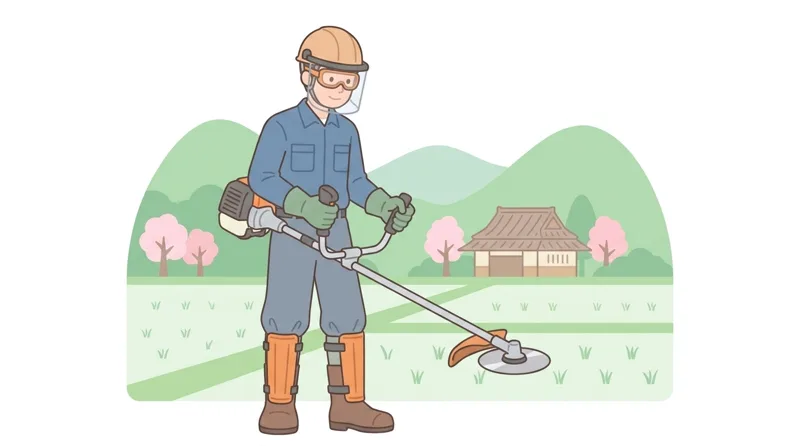
刈払機(草刈機)を使うときは、飛び石や刃の破片から体を守るため、ヘルメット・保護メガネ(防災面)・防振手袋・すね当て・安全靴を必ず着け、周囲15m以内に人を近づけません。
When operating a brush cutter, always wear a helmet, safety goggles (or face shield), anti-vibration gloves, shin guards, and safety boots to protect against flying stones or blade fragments, and keep others at least 15m away.
夏場の屋外やハウス内では熱中症の危険が高まります。のどが渇く前にこまめに水分と塩分を補給し、涼しい日陰で定期的に休憩をとります。めまいや吐き気が出たらすぐに作業を中止します。
Working outdoors or inside greenhouses in summer carries a high risk of heatstroke. Hydrate frequently with water and salt before feeling thirsty, and take regular breaks in cool shade. Stop work immediately if dizziness or nausea occurs.
Key points
- 機械への巻き込みを防ぐため、首にタオルを垂らさず袖口やすそを締める。
Fasten cuffs and hems and avoid hanging towels around your neck to prevent machine entanglement. - 刈払機作業では保護メガネ・すね当てなどを着用し、周囲15m以内に人を近づけない。
Wear safety goggles and shin guards when using a brush cutter, keeping people at least 15m away. - 熱中症予防には、のどが渇く前のこまめな水分・塩分補給と涼しい日陰での休憩が重要である。
Prevent heatstroke by taking frequent water and salt breaks in cool shade before feeling thirsty.
| Word | Meaning |
|---|---|
| 保護メガネ | safety goggles |
| 刈払機 | brush cutter |
| すね当て | shin guards |
| 熱中症 | heatstroke |
| 塩分補給 | salt replenishment |
農業機械の安全操作と日常点検
Safe Operation and Daily Inspection of Agricultural Machinery
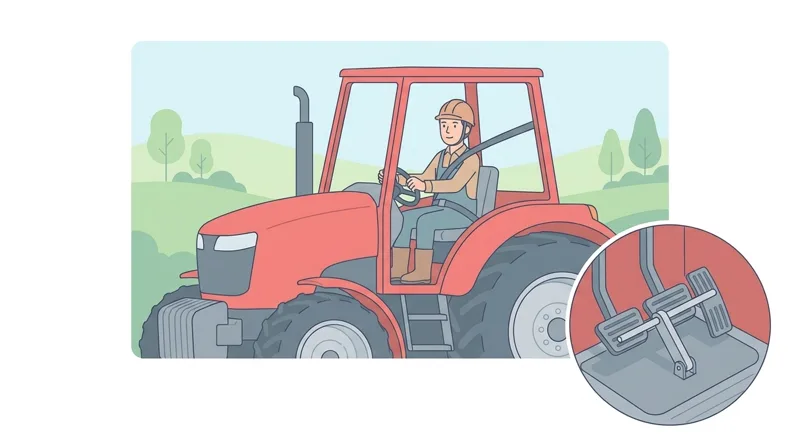
トラクターに乗るときは、転倒時に運転者を守るため安全フレーム(キャビン)を立てて必ずシートベルトとヘルメットを着用します。また、運転席以外の場所や荷台に人を乗せてはいけません。
When operating a tractor, keep the safety frame (ROPS or cabin) upright and always wear the seatbelt and a helmet to protect yourself in case of a rollover. Never allow passengers outside the driver seat or on cargo beds.
田畑から道路(公道)へ出て走行するときは、片輪ブレーキによる急旋回・転倒を防ぐため、左右の独立ブレーキペダルを必ず連結ロックします。斜面では急発進や急旋回を避けます。
Before driving on public roads from a field, always lock the left and right independent brake pedals together to prevent one-wheel braking, sharp swerving, and overturning. Avoid sudden starts or sharp turns on slopes.
コンバインやロータリーに草やワラが詰まったときや点検・清掃・給油をするときは、必ずエンジンを止めて駐車ブレーキをかけ、回転部が完全に止まったことを確認してから行います。
Before clearing clogged weeds or straw from a combine or rotary tiller, or performing maintenance, cleaning, or refueling, always shut off the engine, set the parking brake, and confirm all rotating parts have completely stopped.
Key points
- トラクター運転時は安全フレームを立ててシートベルトを着け、公道では左右のブレーキペダルを連結する。
Keep the tractor safety frame upright, wear the seatbelt, and lock left and right brake pedals together on public roads. - 機械の詰まり除去・点検・清掃・給油の前には必ずエンジンを停止する。
Always stop the engine before clearing clogs, inspecting, cleaning, or refueling machinery. - 給油時は火気厳禁とし、燃料がこぼれたらよく拭き取る。
Keep flames away during refueling and wipe up any spilled fuel thoroughly.
| Word | Meaning |
|---|---|
| 安全フレーム | safety frame (ROPS) |
| ブレーキペダル連結 | brake pedal interlock |
| 回転部 | rotating parts |
| 駐車ブレーキ | parking brake |
農薬・消毒薬の適正使用と保管
Proper Use and Storage of Pesticides and Disinfectants
農薬を使う前には容器のラベルを必ず読み、登録された適用作物・希釈倍率・使用量・使用時期(収穫前日数)・使用回数などの基準を厳守します。
Before using any pesticide, always read the container label and strictly follow the registered target crops, dilution ratio, application rate, timing (pre-harvest interval days), and maximum number of applications.
調合や散布のときは、防除衣(カッパ)・農薬用マスク・保護メガネ・ゴム手袋・長靴を着用します。薬液を浴びないよう風上から風下へ向かって散布し、強風時は周辺への飛散(ドリフト)を防ぐため作業を控えます。
When mixing or spraying pesticides, wear protective clothing, a respirator mask, safety goggles, rubber gloves, and rubber boots. Spray from upwind toward downwind to avoid exposure, and refrain from spraying in strong winds to prevent chemical drift.
農薬は子供や部外者が触れないよう、鍵のかかる涼しい専用保管庫に保管します。誤飲事故を防ぐため、飲料用のペットボトルや食品容器に絶対に移し替えてはいけません。
Store pesticides in a cool, locked dedicated cabinet out of reach of children and unauthorized persons. Never transfer chemicals into beverage bottles or food containers to prevent accidental ingestion.
Key points
- 農薬はラベルの適用作物・希釈倍率・収穫前日数・使用回数を必ず守る。
Strictly follow the pesticide label for target crops, dilution ratio, pre-harvest interval, and application count. - 散布時は防除衣・マスク・保護メガネ・ゴム手袋を着け、風上から散布する。
Wear protective gear (suit, mask, goggles, rubber gloves) and spray from upwind. - 農薬は鍵のかかる専用保管庫に置き、飲料容器には絶対に移し替えない。
Keep pesticides in a locked storage cabinet and never transfer them into beverage containers.
| Word | Meaning |
|---|---|
| 希釈倍率 | dilution ratio |
| 収穫前日数 | pre-harvest interval (days) |
| 防除衣 | protective spray suit |
| 飛散(ドリフト) | pesticide drift |
重量物の運搬姿勢と脚立作業の安全
Posture for Lifting Heavy Loads and Stepladder Safety
肥料袋や収穫コンテナなどの重い荷物を持ち上げるときは、腰痛を防ぐため荷物を体に近づけ、膝を曲げて腰を落とし、足の力を使ってゆっくり持ち上げます。
When lifting heavy loads such as fertilizer bags or harvest crates, prevent lower back injury by pulling the load close to your body, bending your knees to lower your hips, and lifting slowly using leg strength.
果樹園などで脚立を使うときは、平らで固い地面に設置し、開き止め金具を確実にロックします。転落を防ぐため、一番上の天板に立ったり乗り出して作業したりしてはいけません。
When using a stepladder in an orchard, set it on firm, level ground and lock the spreader bars securely. Never stand on the top cap or overreach from the ladder to prevent falls.
作業中にけがや機械の故障、異常が起きたときは、自分の判断だけで無理に続けず、ただちに作業を止めて責任者へ報告し指示を仰ぎます。
If an injury, machine malfunction, or abnormality occurs during work, do not continue on your own judgment; stop work immediately and report to your supervisor for instructions.
Key points
- 重い荷物は体に引き寄せ、膝を曲げて腰を落として持ち上げる。
Hold heavy loads close to your body and bend your knees with hips lowered when lifting. - 脚立は開き止め金具を確実にロックし、一番上の天板には絶対に乗らない。
Always lock the stepladder spreader bars and never stand on the top step. - 事故や機械の異常が起きたときは、ただちに作業を中止して責任者に報告する。
Stop work immediately and report to your supervisor if an accident or machine abnormality occurs.
| Word | Meaning |
|---|---|
| 腰痛 | lower back pain |
| 脚立 | stepladder |
| 開き止め金具 | spreader bar lock |
| 天板 | top cap (of a stepladder) |
Japanese Agriculture and Safety
Practice this chapter in the appOfficial references
- 全国農業会議所 農業技能測定試験テキスト 耕種農業全般・畜産農業全般 — https://asat-nca.jp/textbook
- 農林水産省 農作業安全対策・GAP推進ポータル — https://www.maff.go.jp/j/seisan/gizyutu/hukyu/nougi_anzen/