
Home › Sample questions › Nursing Care
Nursing Care sample exam questions – 10 questions with answers
介護 - Kaigo
10 sample questions in the real exam format, with furigana, English translation, answers and explanations. Tap "Show answer" under each question. For the full question bank and realistic mock exams, open the free app.
Question 1
利用者の尊厳を守る対応として、最も適切なものはどれですか。
Which response is most appropriate to protect the user's dignity?
- A. 親しみやすさを大切にし、愛称や「おばあちゃん」と呼ぶ。
Value friendliness by calling them by a nickname or "Grandma." - B. 利用者の気持ちを尊重し、名前を呼ぶときも敬意をもって接する。
Respect the user's feelings, and treat them with respect even when calling their name. - C. 施設全体の日課を優先し、決められた時間どおりにケアを行う。
Prioritize the daily schedule of the entire facility and provide care strictly at set times. - D. 季節に合わせて介護職が先に服を選び、手早く着替えを行う。
Have the care worker choose seasonal clothes first and change the user's clothes quickly.
Show answer
Correct answer: B
Protecting dignity means respecting each user as an independent individual, valuing their feelings and wishes, and addressing them politely by their name. Calling elderly users "Grandma," putting facility schedules ahead of individual wishes, or choosing their clothes without asking disrespects their autonomy.
| Word | Meaning |
|---|---|
| 尊厳 | dignity |
| 利用者 | care user (client/resident) |
| 敬意 | respect |
| 尊重 | respect, honor |
Question 2
自立支援の考え方として、正しいものはどれですか。
Which is the correct way of thinking about independence support (jiritsu shien)?
- A. 利用者が疲れないように、時間のかかる動作は介護職が代わりに行う。
Perform time-consuming movements in place of the user so that the user does not get tired. - B. 安全を最優先にするため、少しでも難しい動作は控えてもらう。
To prioritize safety above all else, have the user refrain from any slightly difficult movements. - C. 転ぶ危険を減らすため、少し歩ける方も車いすで介助する。
To reduce the risk of falling, assist even those who can walk a little by using a wheelchair. - D. 利用者が自分でできることは、できるだけ自分でしてもらう。
Have the user do what they can do by themselves as much as possible.
Show answer
Correct answer: D
Independence support means utilizing the user's remaining abilities so they can do what they are able to do on their own, while assisting only with what they cannot do. Doing tasks for them out of concern for fatigue, discouraging movement, or overusing a wheelchair leads to disuse syndrome and weakens physical and mental functions.
| Word | Meaning |
|---|---|
| 自立 | independence |
| 支援 | support |
| 代わり | in place of, substitute |
| 転ぶ | fall down |
Question 3
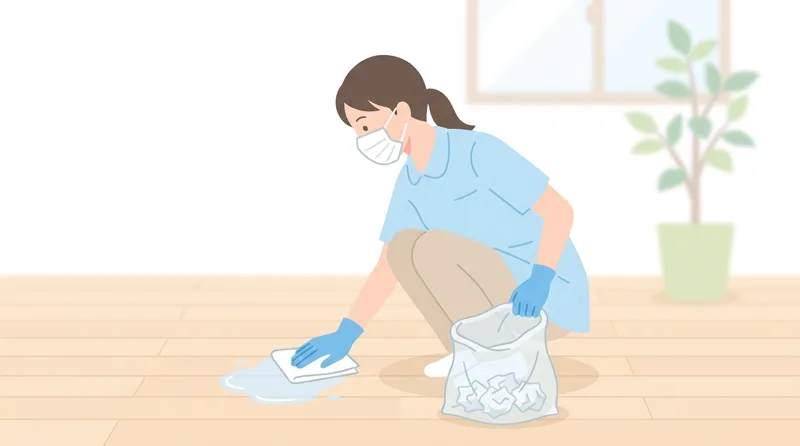
利用者が嘔吐したとき、嘔吐物の処理として正しいものはどれですか。
When a user vomits, what is the correct way to clean up the vomit?
- A. 使い捨て手袋とマスクをつけ、外側から内側へ拭き取り袋に密閉する。
Put on gloves and a mask, wipe inward from the outside, and seal the waste in a bag. - B. 手袋を着けて内側から外側へ拭き取り、外したあと素手で袋を閉じる。
Wear gloves to wipe from the inside outward, then remove the gloves and tie the bag with bare hands. - C. 手袋とマスクを着けて水拭きしたあと、窓を閉めたまま消毒液で拭く。
Wear gloves and a mask to wipe with water first, then wipe with disinfectant while keeping the windows closed. - D. 手袋とマスクを着けて外側から内側へ拭き取り、アルコールで消毒する。
Wear gloves and a mask to wipe from the outside inward, then disinfect the floor with alcohol.
Show answer
Correct answer: A
Vomit may contain infectious pathogens such as norovirus. Ventilate the room, wear disposable gloves and a mask, wipe from the outside inward to prevent spreading, seal the waste in a bag, and disinfect with sodium hypochlorite. Wiping from the inside outward, touching the unsealed bag with bare hands, disinfecting with windows closed, or using only alcohol (which is ineffective against norovirus) are inappropriate.
| Word | Meaning |
|---|---|
| 嘔吐物 | vomit |
| 手袋 | gloves |
| 消毒 | disinfection |
| 素手 | bare hands |
Question 4
高齢者の脱水を予防するための対応として、適切なものはどれですか。
Which response is appropriate to prevent dehydration in older adults?
- A. 夜間のトイレを減らすため、夕方以降は水分を控えてもらう。
To reduce nighttime trips to the toilet, have them refrain from drinking fluids from the evening onward. - B. 本人からのどの渇きの訴えがあったときに、まとめて多めの水分をすすめる。
When the person complains of thirst, offer a large amount of fluid all at once. - C. のどの渇きを訴えなくても、時間を決めて少しずつ水分をすすめる。
Offer small amounts of fluids at set times, even if they do not complain of thirst. - D. むせを防ぐため、1日の水分は朝昼晩の食事のときにまとめてとってもらう。
To prevent choking, have them drink the day's fluids all at once during breakfast, lunch, and dinner.
Show answer
Correct answer: C
Older adults are less likely to feel thirsty and can easily become dehydrated without noticing. Care workers should encourage them to drink small amounts of fluids frequently at regular times throughout the day. Restricting evening fluids, waiting until they feel thirsty, or limiting fluids only to mealtimes leads to dehydration.
| Word | Meaning |
|---|---|
| 脱水 | dehydration |
| 水分 | fluid, water |
| 渇き | thirst |
| 予防 | prevention |
Question 5
認知症の中核症状として、正しいものはどれですか。
Which of the following is a core symptom of dementia?
- A. 幻覚(実際にはないものが見えたり聞こえたりする症状)
Hallucinations (seeing or hearing things that are not actually there) - B. 見当識障害(今がいつか、ここがどこかが分からなくなる)
Disorientation (not knowing what time it is or where one is) - C. 徘徊(不安などから目的なく歩き回ってしまう症状)
Wandering (walking around aimlessly due to anxiety or other factors) - D. 暴言・暴力(感情を抑えられず強い行動が出る症状)
Verbal abuse and physical violence (expressing strong words or actions due to difficulty controlling emotions)
Show answer
Correct answer: B
Core symptoms of dementia are caused directly by brain cell damage and include memory impairment, disorientation (time, place, person), impaired judgment, and executive dysfunction. Hallucinations, wandering, and verbal or physical aggression are behavioral and psychological symptoms of dementia (BPSD) influenced by environmental and psychological factors.
| Word | Meaning |
|---|---|
| 認知症 | dementia |
| 中核症状 | core symptom |
| 見当識障害 | disorientation |
| 徘徊 | wandering |
Question 6
利用者の話を聞くときの態度として、傾聴にあたるものはどれですか。
Which attitude when listening to a user talk corresponds to active listening (keichou)?
- A. 相手の目を見て、うなずきながら最後まで話を聞く。
Look at the person's eyes and listen until the end while nodding. - B. 話の途中で、介護職の意見やアドバイスをすぐに伝える。
In the middle of the conversation, immediately share the care worker's own opinion and advice. - C. 話の内容を正しく整理するため、事実と違う点はその都度訂正する。
To organize the content of the story accurately, correct any points that differ from the facts each time. - D. 同じ話が続くときは、途中で明るい話題に変えて気分を切り替える。
When the same story continues, change to a cheerful topic in the middle to refresh their mood.
Show answer
Correct answer: A
Active listening means focusing empathetically on the speaker, making eye contact, nodding, and listening patiently to the end. Interrupting to give advice, correcting factual errors every time while they are speaking, or changing the subject midway makes the user feel disrespected.
| Word | Meaning |
|---|---|
| 傾聴 | active listening |
| 態度 | attitude |
| 途中 | in the middle of |
| 意見 | opinion |
Question 7
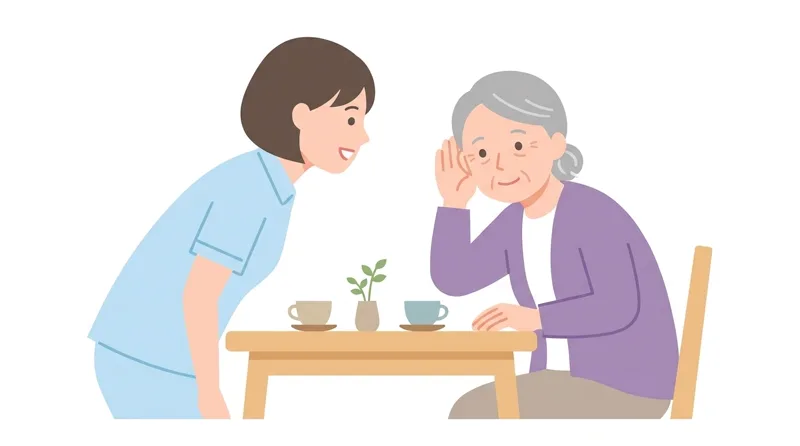
耳が遠いAさんに話しかけるとき、適切な方法はどれですか。
When speaking to User A, who is hard of hearing, which method is appropriate?
- A. 難聴の耳元に口を近づけ、できるだけ大きな声で高い音を出して話す。
Bring your mouth close to the ear with hearing loss and speak as loudly as possible in a high-pitched voice. - B. 正面から身振りを交えて合図し、要件を早口で手短にまとめて伝える。
Signal from the front with gestures and summarize the main points quickly and briefly. - C. 聞き返されたときは、同じ言葉をさらに大きな声で繰り返して伝える。
When asked to repeat, repeat the exact same words in an even louder voice. - D. Aさんの正面から、顔が見える位置で、はっきりと、ややゆっくり話す。
From directly in front of User A where they can see your face, speak clearly and slightly slowly.
Show answer
Correct answer: D
When communicating with someone with hearing loss, face them directly so they can see your facial expressions and lip movements, and speak clearly and slightly slowly in a moderate, calm tone. Speaking in a high pitch right at the ear causes glare/distortion; speaking quickly even from the front makes words run together; if they ask you to repeat, rephrase clearly rather than just shouting louder.
| Word | Meaning |
|---|---|
| 難聴 | hearing loss (hard of hearing) |
| 正面 | directly in front |
| 位置 | position |
| 早口 | fast talking |
Question 8
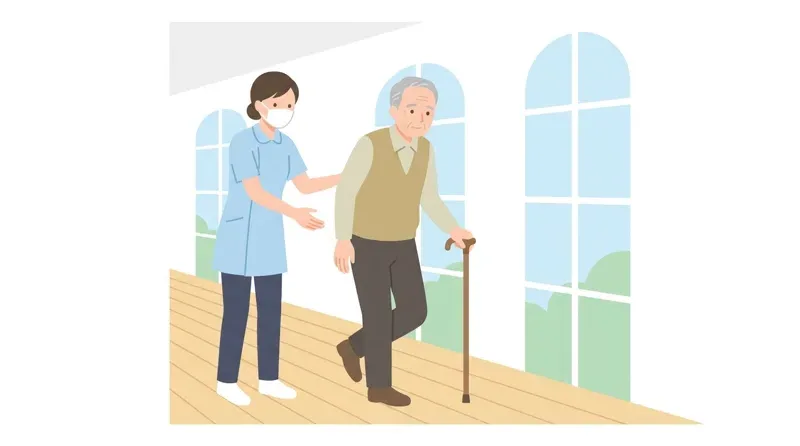
右片麻痺のAさんが杖を使って歩くとき、杖を持つ手と介助者の位置の組み合わせとして、正しいものはどれですか。
When User A, who has right-side hemiplegia (paralysis), walks using a cane, which combination of the hand holding the cane and the caregiver's position is correct?
- A. 杖は麻痺のある右手に持ち、介助者は右側の斜め後ろに立つ。
Hold the cane in the paralyzed right hand, and the caregiver stands diagonally behind on the right side. - B. 杖は左手に持ち、介助者は左側の斜め前に立つ。
Hold the cane in the unaffected left hand, and the caregiver stands diagonally in front on the left side. - C. 杖は健側の左手に持ち、介助者は右側の斜め後ろに立つ。
Hold the cane in the left hand, and the caregiver stands diagonally behind on the right side. - D. 杖は麻痺のある右手に持ち、介助者は左側の斜め後ろに立つ。
Hold the cane in the paralyzed right hand, and the caregiver stands diagonally behind on the left side.
Show answer
Correct answer: C
The cane must be held in the unaffected (healthy) left hand to support the body weight, while the caregiver stands diagonally behind on the affected (paralyzed) right side to support and protect the weaker side if the user loses balance.
| Word | Meaning |
|---|---|
| 片麻痺 | hemiplegia (paralysis on one side) |
| 杖 | cane, walking stick |
| 介助者 | caregiver |
| 斜め | diagonal |
Question 9
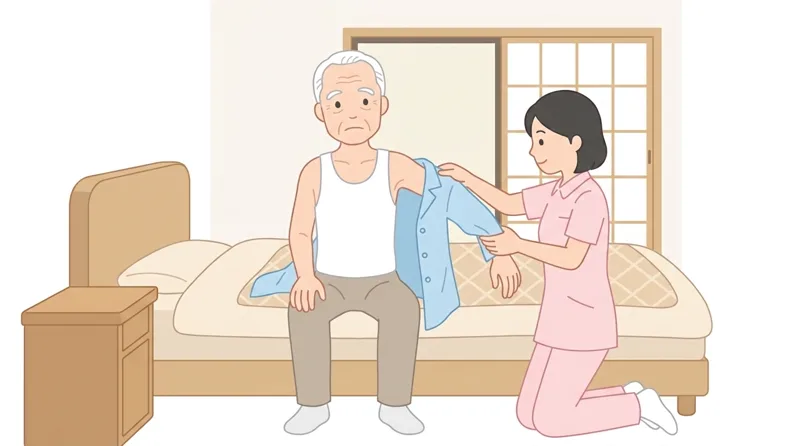
左片麻痺のAさんが前開きの上着に着替えるときの順番として、正しいものはどれですか。
When User A, who has left-side hemiplegia, puts on a front-opening jacket/shirt, what is the correct order?
- A. 麻痺のある左の袖から先に通し、次に右の袖を通す。
Put the affected left arm through the sleeve first, then put the right arm through the sleeve. - B. 麻痺のない右の袖から先に通し、次に左の袖を通す。
Put the unaffected right arm through the sleeve first, then put the left arm through the sleeve. - C. 両腕を前に出してもらい、左右の袖を同時にゆっくり通す。
Have them extend both arms forward and slowly put both the left and right arms through the sleeves at the same time. - D. 頭から先に上着をかぶせ、麻痺のない右の袖から順番に腕を通す。
Pull the jacket over the head first, then put the arms through starting with the unaffected right sleeve.
Show answer
Correct answer: A
The principle for dressing a person with hemiplegia is 'undress the unaffected side first, dress the affected side first.' For a front-opening top, putting the affected left arm through the sleeve first while the garment has plenty of room prevents straining the shoulder joint. Putting the unaffected arm in first, putting both arms in at once, or pulling it over the head first makes dressing difficult and unsafe.
| Word | Meaning |
|---|---|
| 着替え | changing clothes |
| 上着 | jacket, upper garment |
| 袖 | sleeve |
| 麻痺 | paralysis |
Question 10
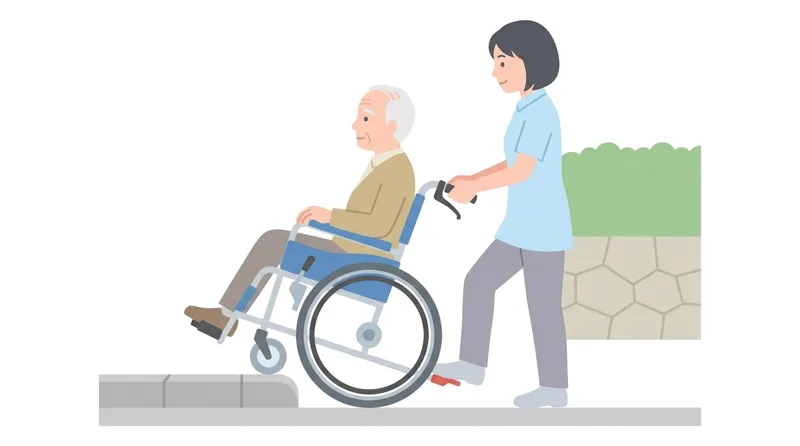
車いすで段差を上がるときの介助として、正しいものはどれですか。
What is the correct way to assist a user in a wheelchair when going up a step (curb)?
- A. 声をかけてから、ティッピングレバーを踏まずにグリップを押して前輪を上げる。
Speak to the user first, then push down on the handgrips to lift the front wheels without stepping on the tipping lever. - B. 前輪を段差の前で止め、フットサポートを持ち上げて段差に乗せる。
Stop the front wheels right in front of the step, then lift the foot supports to place the front wheels onto the step. - C. 車いすを後ろ向きにし、後輪から先に段差へ引き上げる。
Turn the wheelchair backward and pull the large rear wheels up onto the step first. - D. 声をかけてから、前輪を上げて段差に乗せ、後輪を押し上げる。
Speak to the user, lift the front wheels onto the step, and then push the rear wheels up.
Show answer
Correct answer: D
When pushing a wheelchair up a step, inform the user, step on the tipping lever while pressing the grips to lift the front wheels onto the step, and then push the rear wheels up smoothly. Pushing only on the grips without using the tipping lever or lifting by the foot supports is unsafe; turning the wheelchair backward is used when going down a step or slope.
| Word | Meaning |
|---|---|
| 車いす | wheelchair |
| 段差 | step, level difference |
| 前輪 | front wheels (casters) |
| 後輪 | rear wheels (drive wheels) |