
Labor Management and Work Safety (Common)
労務管理と作業安全(共通)
Agriculture (SSW 2) · 農業(2号) · Written by Tokutei Pass based on the official study texts; not copied verbatim.
現場管理の基本(PDCA・5S・KYT・ヒヤリハット)
Fundamentals of Site Management (PDCA, 5S, KYT, Near-Misses)
農業現場のリーダーは、計画(Plan)・実行(Do)・評価(Check)・改善(Act)のPDCAサイクルを回して作業工程と安全管理を継続的に改善します。
Agricultural site leaders apply the PDCA cycle—Plan, Do, Check, and Act—to continuously improve work workflows and safety management.
職場環境を整える5S活動とは、整理(不要物を捨てる)・整頓(決まった場所に置く)・清掃・清潔・しつけ(ルールを守る習慣化)の5つです。
The 5S workplace activities are Seiri (Sort: discard unneeded items), Seiton (Set in order: place needed items in designated spots), Seiso (Shine), Seiketsu (Standardize), and Shitsuke (Sustain).
作業前には危険予知訓練(KYT)を行い、作業中にヒヤッとした出来事(ヒヤリハット)を共有して重大な労働災害を未然に防ぎます。
Before starting work, teams conduct Hazard Prediction Training (KYT) and share near-miss incidents (Hiyari-hatto) to prevent serious occupational accidents before they occur.
Key points
- PDCAサイクルは「計画(P)→実行(D)→評価(C)→改善(A)」の順に回す。
The PDCA cycle follows the sequence: Plan (P) -> Do (D) -> Check (C) -> Act (A). - 整理は不要な物を処分すること、整頓は必要な物を取り出しやすく配置することである。
Seiri means disposing of unnecessary items, while Seiton means arranging necessary items for easy retrieval. - ヒヤリハットやKYT(危険予知訓練)を活用し、小さな危険の段階で対策をとる。
Use near-miss reporting (Hiyari-hatto) and KYT to eliminate hazards at an early stage.
| Word | Meaning |
|---|---|
| 工程管理 | process / workflow management |
| 危険予知訓練 | hazard prediction training (KYT) |
| 労働災害 | occupational accident |
| 習慣化 | habituation / discipline |
労働安全衛生法と作業者への安全指導
Industrial Safety and Health Act and Worker Safety Instruction
労働安全衛生法により、新しい作業者を雇い入れた時や作業内容を変更した時は、遅滞なく安全衛生教育を行う義務があります。
Under the Industrial Safety and Health Act, employers must provide safety and health education without delay when hiring new workers or changing job assignments.
フォークリフトやホイールローダーなどの運転、および玉掛け作業には、法令で定められた技能講習修了や特別教育などの資格が必要です。
Operating forklifts or wheel loaders and performing slinging work (rigging) require statutory qualifications such as completion of skill training courses or special education.
新しい作業を教えるときは「手本を見せ、理由を説明し、実際にやらせて確認する」指導法をとり、腰痛予防のため重い荷物は膝を曲げて腰を落として持ち上げます。
When teaching new tasks, demonstrate the work, explain the reasons, and observe the worker practicing. To prevent lower back pain, hold heavy loads close to the body, bend the knees, lower the hips, and lift with the legs.
Key points
- 雇入れ時や作業内容変更時には、必ず安全衛生教育を実施する。
Safety and health education must be provided upon hiring and whenever work duties change. - フォークリフトやホイールローダーの運転には技能講習や特別教育などの資格が必須である。
Statutory qualifications (skill training or special education) are mandatory for operating forklifts and wheel loaders. - 重量物を持ち上げるときは荷物を体に近づけ、膝を曲げて腰を落とし脚力を使って立ち上がる。
Lift heavy objects by keeping the load close to the body, bending the knees, lowering the hips, and using leg strength.
| Word | Meaning |
|---|---|
| 安全衛生教育 | safety and health education |
| 技能講習 | skill training course |
| 特別教育 | special safety education |
| 腰痛予防 | lower back pain prevention |
農業機械・脚立作業の事故防止
Preventing Accidents with Farm Machinery and Orchard Ladders
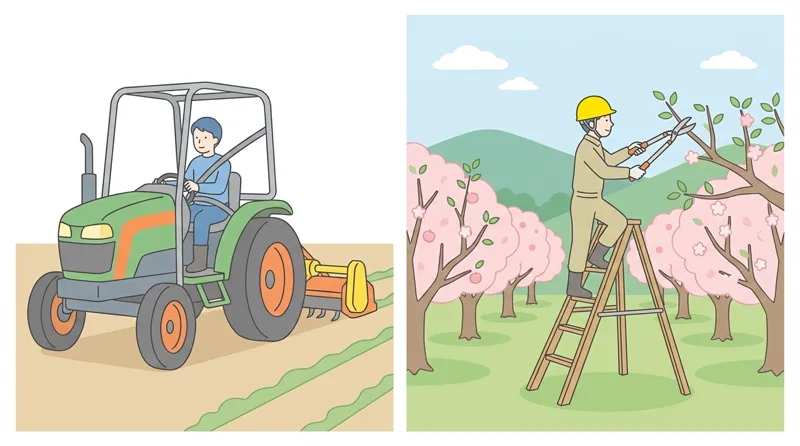
トラクターでは安全フレーム(ROPS)を立ててシートベルトを着け、公道や移動時は左右の独立ブレーキペダルを連結金具で必ずロックします。
On a tractor, keep the safety frame (ROPS) upright, fasten the seatbelt, and always lock the left and right independent brake pedals together with the connecting latch when traveling on roads.
機械の詰まりを取り除くときや点検時は必ずエンジンを止めます。トラック等への積み降ろしでは道板(角度15度以下)を平坦な場所に固定し、上で方向転換してはいけません。
Always stop the engine before clearing jams or inspecting machinery. When loading onto a truck, secure the loading ramps (at an angle of 15 degrees or less) on level ground and never steer on the ramps.
刈払機は周囲15m以内に人を近づけず、刃の左側先端で右から左へ刈ります。果樹園の三脚脚立は天板に立たず、開き止め金具を確実にロックして使います。
Keep bystanders at least 15 m away when operating a brush cutter, sweeping from right to left using the front-left sector of the blade. On tripod orchard ladders, lock the spreader brace and never stand on the top cap.
Key points
- トラクターは安全フレームを立ててシートベルトを着用し、走行時は左右ブレーキペダルを連結する。
Keep the tractor ROPS upright, wear the seatbelt, and latch the left and right brake pedals together when traveling. - 機械の清掃・詰まり除去時は必ずエンジンを停止し、ホイールローダーはバケットを地上30〜40cmに下げて走る。
Stop the engine before clearing jams; travel with a wheel loader's bucket lowered 30–40 cm above the ground. - 刈払機は半径15m以内を立入禁止とし、脚立は天板に乗らず開き止めをロックして使用する。
Maintain a 15 m exclusion zone around brush cutters, and lock ladder spreaders without standing on the top step.
| Word | Meaning |
|---|---|
| 安全フレーム | safety frame (ROPS) |
| 連結金具 | brake pedal interlocking latch |
| 道板 | loading ramp / board |
| 刈払機 | brush cutter |
熱中症対策・密閉空間・家畜の安全取扱い
Heatstroke Prevention, Confined Spaces, and Safe Livestock Handling
高温多湿の環境では暑さ指数(WBGT)を把握し、のどが渇く前にこまめに水分と塩分を補給します。熱中症の疑いがあれば涼しい場所へ移し、首・脇の下・太ももの付け根を冷やします。
In hot and humid conditions, monitor the WBGT heat index and replenish water and salt regularly before feeling thirsty. If heatstroke is suspected, move the person to a cool shaded area and cool the neck, armpits, and groin.
タワーサイロやスラリーピット(汚水槽)では酸素欠乏症や硫化水素中毒の危険があるため、事前に十分換気して濃度を測定し、複数人で作業します。
Tower silos and slurry pits pose severe risks of oxygen deficiency and hydrogen sulfide poisoning; always ventilate thoroughly, measure gas and oxygen levels beforehand, and work with multiple people.
ウシの後方(死角)には急に近づかず、声をかけながら前方斜めから接近します。引き綱を手に巻き付けず、処置時は保定枠で確実に保定し、手洗いで人獣共通感染症を防ぎます。
Never approach cattle suddenly from behind (their blind spot); speak calmingly and approach at a front angle. Never wrap lead ropes around your hand or waist, restrain cattle securely in a chute/stanchion during procedures, and wash hands to prevent zoonoses.
Key points
- 熱中症予防ではWBGTを確認して水分・塩分を定期補給し、発症時は首・脇・脚の付け根を冷やす。
Monitor WBGT, take regular water and salt breaks, and cool the neck, armpits, and groin if heatstroke occurs. - サイロや汚水槽に入る前は必ず換気と酸素・有毒ガス濃度確認を行い、複数人で作業する。
Always ventilate and test oxygen/toxic gas levels before entering silos or slurry pits, and never work alone. - ウシを牽引するときはロープを手首や腰に巻き付けず、処置時は確実に保定して安全を確保する。
Never wrap a lead rope around your hand or waist when leading cattle, and use proper restraint frames during treatment.
| Word | Meaning |
|---|---|
| 暑さ指数 | Wet Bulb Globe Temperature (WBGT) |
| 酸素欠乏症 | oxygen deficiency |
| 保定 | animal restraint |
| 人獣共通感染症 | zoonosis |
Labor Management and Farm Safety
Practice this chapter in the appOfficial references
- 一般社団法人全国農業会議所 農業特定技能2号評価試験 テキスト(安全衛生管理・共通) — https://asat-nca.jp/