
Pesticide, Disinfectant, and Fertilizer Calculations and Waste Management (Common)
農薬・消毒薬・肥料の計算と廃棄物管理(共通)
Agriculture (SSW 2) · 農業(2号) · Written by Tokutei Pass based on the official study texts; not copied verbatim.
農薬の安全使用基準と保管・保護具
Safe Pesticide Use Standards, Storage, and Protective Gear
農薬を使用する際はラベルの登録内容を確認し、適用作物・希釈倍数・使用時期(収穫前日数)・総使用回数を厳守します。
Before applying pesticides, check the registered label and strictly follow the target crop, dilution ratio, application timing (pre-harvest interval), and maximum total applications.
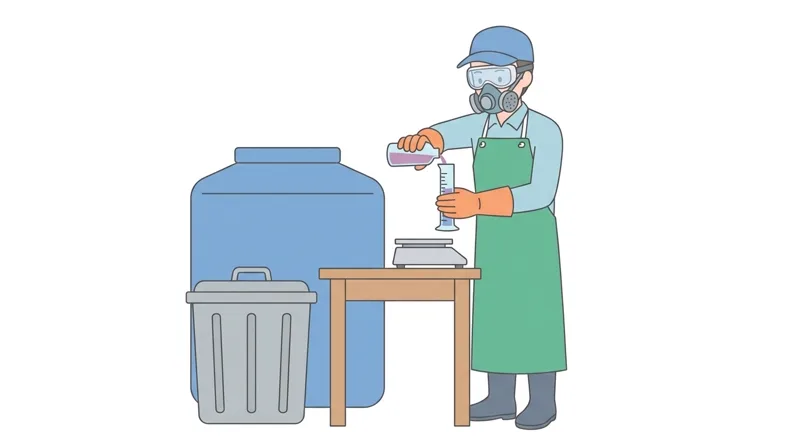
散布時は保護眼鏡・防毒(防じん)マスク・不浸透性手袋・防除衣を着用し、近隣の作物へ飛散(ドリフト)しないよう風の弱い時に風上から散布します。
Wear protective goggles, a respirator mask, impermeable gloves, and protective clothing, and spray in calm weather from upwind to prevent spray drift onto neighboring crops.
使用後は「使用年月日・場所・作物名・農薬名・使用量(希釈倍数)」を記帳し、農薬は鍵のかかる専用保管庫で保管します(飲料容器への移し替えは厳禁)。
After application, record the date, location, crop, pesticide name, and amount/dilution, and store pesticides in a locked dedicated cabinet (never transfer them into beverage bottles).
Key points
- ラベルに記載された適用作物・希釈倍数・収穫前日数・総使用回数を必ず守る。
Strictly observe the target crop, dilution ratio, pre-harvest interval, and total application count on the label. - 保護具を着用してドリフト(飛散)を防ぎ、使用履歴を正確に記録する。
Wear proper PPE, prevent pesticide drift, and maintain accurate application records. - 農薬は施錠できる専用保管庫に保管し、ペットボトルなどの飲料容器には絶対に移し替えない。
Store pesticides in a locked cabinet and never transfer chemicals into drinking bottles.
| Word | Meaning |
|---|---|
| 希釈倍数 | dilution ratio / factor |
| 収穫前日数 | pre-harvest interval (PHI) |
| 飛散 | pesticide drift |
| 専用保管庫 | dedicated locked storage cabinet |
農薬・消毒薬の希釈計算
Dilution Calculations for Pesticides and Disinfectants
農薬や畜舎消毒薬の希釈計算では「1L=1,000mL」として単位をそろえ、「必要な原液量=作りたい散布液量÷希釈倍数」の式で求めます。
In pesticide and barn disinfectant dilution calculations, convert liters to milliliters (1 L = 1,000 mL) and use the formula: Required Concentrate = Total Solution Volume ÷ Dilution Ratio.
例えば、1,000倍希釈の薬液を100L(100,000mL)作る場合は「100,000mL÷1,000=100mL」、500倍希釈で200L作る場合は「200,000mL÷500=400mL」となります。
For example, preparing 100 L (100,000 mL) at 1,000x dilution requires 100,000 mL ÷ 1,000 = 100 mL; preparing 200 L at 500x dilution requires 200,000 mL ÷ 500 = 400 mL.
また、原液50mLを2,000倍に希釈するときにできる薬液量は「50mL×2,000=100,000mL=100L」です。踏込消毒槽で200倍希釈液を40L作るなら「40,000mL÷200=200mL」が必要です。
Conversely, diluting 50 mL of concentrate by 2,000x yields 50 mL × 2,000 = 100,000 mL = 100 L of solution. Preparing 40 L of a 200x footbath disinfectant requires 40,000 mL ÷ 200 = 200 mL of concentrate.
Key points
- 希釈計算の基本公式は「原液量(mLまたはg)=薬液量(mL)÷希釈倍数」である。
Basic dilution formula: Concentrate Volume (mL or g) = Total Solution Volume (mL) ÷ Dilution Factor. - 100Lを1,000倍希釈するときは100mL、200Lを500倍希釈するときは400mLの原液が必要となる。
100 L at 1,000x dilution requires 100 mL of concentrate; 200 L at 500x dilution requires 400 mL. - 40Lの踏込消毒槽に200倍希釈の消毒液を作る場合は、原液200mLを計量する。
To make 40 L of 200x disinfectant for a footbath trough, measure out 200 mL of undiluted concentrate.
| Word | Meaning |
|---|---|
| 原液量 | volume of undiluted concentrate |
| 散布液量 | total spray solution volume |
| 踏込消毒槽 | footbath disinfection trough |
| 計量 | measuring / weighing |
肥料の三要素と施肥量の計算
Three Primary Fertilizer Nutrients and Application Rate Calculations
肥料の三要素は、葉や茎を育てる「窒素(N:葉肥)」、開花や結実を促す「リン酸(P:実肥)」、根の発育を助ける「カリウム(K:根肥)」です。
The three primary fertilizer nutrients are Nitrogen (N: leaf/stem growth), Phosphorus/Phosphate (P: flowering and fruiting), and Potassium/Potash (K: root and tuber development).
元肥(基肥)は種まきや定植前に施す肥料、追肥は生育途中に補う肥料です。必要な肥料現物量は「必要成分量÷(含有率%÷100)」で計算します。
Basal fertilizer (motogoe) is applied before planting, while topdressing (tsuihi) is applied during growth. The required actual fertilizer weight is calculated as: Required Nutrient Weight ÷ (Nutrient Percentage ÷ 100).
例えば、窒素成分15%の化成肥料で10a当たり12kgの窒素を施すには「12kg÷0.15=80kg」が必要です。成分20%の肥料で10kg施すなら「10kg÷0.20=50kg」となります。
For example, applying 12 kg of nitrogen per 10a using a compound fertilizer containing 15% N requires 12 kg ÷ 0.15 = 80 kg of fertilizer. Applying 10 kg of N using a 20% N fertilizer requires 10 kg ÷ 0.20 = 50 kg.
Key points
- 三要素は窒素(N:葉肥)・リン酸(P:実肥)・カリウム(K:根肥)である。
The three primary elements are Nitrogen (N: leaf fertilizer), Phosphorus (P: fruit fertilizer), and Potassium (K: root fertilizer). - 必要な肥料現物量(kg)=必要な成分量(kg)÷(成分含有率%÷100)で求める。
Formula: Actual Fertilizer Weight (kg) = Required Nutrient Amount (kg) ÷ (Nutrient Content % ÷ 100). - 窒素15%の肥料で窒素成分12kgを施す場合、12÷0.15=80kgの肥料現物が必要である。
To supply 12 kg of nitrogen using a 15% N fertilizer, 12 ÷ 0.15 = 80 kg of actual fertilizer is required.
| Word | Meaning |
|---|---|
| 肥料の三要素 | three primary fertilizer elements (N-P-K) |
| 元肥・追肥 | basal fertilizer and topdressing |
| 化成肥料 | compound chemical fertilizer |
| 成分含有率 | nutrient content percentage |
消毒薬の特性と農業廃棄物・家畜排せつ物の処理
Disinfectant Properties and Agricultural & Livestock Waste Management
畜舎消毒では先にふんや泥(有機物)を水洗除去してから消毒薬を散布します。逆性石けんや塩素系消毒薬は有機物があると効力が急激に落ちます。
Before disinfecting barns, wash away manure and dirt (organic matter) thoroughly. Inverted soap (quaternary ammonium) and chlorine disinfectants rapidly lose effectiveness in the presence of organic matter.
消石灰(強アルカリ性)は水分に触れると高熱を出すため保護眼鏡を着けて扱い、コクシジウムのオーシストにはオルソ剤と熱湯・スチーム消毒が有効です。
Slaked lime (strongly alkaline) generates heat when wet and requires eye protection; against coccidial oocysts, ortho-dichlorobenzene disinfectants and steam/boiling water are effective.
使用済み農ビ・マルチ・農薬空容器や注射針は野焼きせず産業廃棄物として適正処理します。家畜排せつ物法により、ふんは不浸透性の床と屋根・壁がある施設で管理し、汚水は活性汚泥法等で浄化します。
Used agricultural plastics, empty pesticide containers, and used needles must never be burned in the open; dispose of them as regulated industrial/medical waste. Under the Livestock Excreta Act, manage manure in roofed, walled facilities with impermeable floors and purify wastewater via the activated sludge process.
Key points
- 消毒前には必ず水洗で有機物(ふんや泥)を落とす。消石灰は強アルカリ性で発熱するため目を保護する。
Always wash off organic matter before disinfecting; wear eye protection when handling strongly alkaline slaked lime. - 廃プラスチックや農薬空容器・使用済み注射針の野焼きや不法投棄は法律で厳しく禁止されている。
Open burning or illegal dumping of waste agricultural plastics, pesticide containers, and veterinary needles is strictly prohibited. - 家畜排せつ物法に基づき素掘りや野積みをせず、不浸透性の床・屋根・貯留槽で管理し好気性発酵で完熟堆肥化する。
Under the Livestock Excreta Act, avoid open piling and unlined pits; use impermeable floors/tanks and aerobic composting.
| Word | Meaning |
|---|---|
| 消石灰 | slaked lime (strongly alkaline) |
| 産業廃棄物 | industrial waste |
| 家畜排せつ物法 | Livestock Excreta Act |
| 活性汚泥法 | activated sludge process |
Pesticides, Fertilizer Calculation and Waste
Practice this chapter in the appOfficial references
- 一般社団法人全国農業会議所 農業特定技能2号評価試験 テキスト(耕種・畜産・安全衛生) — https://asat-nca.jp/