Cultivation Management of Rice, Upland Crops, and Open-Field Vegetables
稲作・畑作・露地野菜の栽培管理
Agriculture (SSW 2) · 農業(2号) · Written by Tokutei Pass based on the official study texts; not copied verbatim.
水稲の種子予措・育苗・本田準備
Rice Seed Preparation, Raising Seedlings, and Puddling
充実した良い種籾を選ぶため、比重1.13の塩水(うるち米用)に浸けて浮いた軽い籾を除く「塩水選」を行い、種子消毒後に積算水温100℃・日を目安に浸種します。
To select plump seed rice, perform saltwater selection at a specific gravity of 1.13 (for non-glutinous rice) to remove floating seeds, disinfect the seeds, and soak them until cumulative water temperature reaches ~100°C-days.
催芽では30〜32℃の温水で1mm程度の「鳩胸状態」に芽をそろえ、育苗箱に播種します。育苗中の急激な低温や多湿ではカビ等による「苗立枯病」が発生しやすいため温度・水分管理に注意します。
During pre-germination (saiga), keep seeds in 30–32°C warm water until buds swell uniformly to ~1 mm ('pigeon-breast stage') before sowing into nursery trays. Avoid sudden chilling or overwatering to prevent seedling damping-off.
田植え前の水田では、土を乾かした状態で耕す「耕起」のあと、水を入れて土を砕き田面を平らに均す「代かき」を行い、水持ちを良くして雑草の発芽を抑えます。
Before transplanting, after dry plowing (kouki), flood the paddy and perform puddling (shirokaki) to pulverize clods and level the field surface, preventing water leakage and suppressing weeds.
Key points
- うるち米の塩水選は比重1.13で行い、浸種は積算水温100℃・日、催芽は30〜32℃で鳩胸状態にする。
Use specific gravity 1.13 for non-glutinous rice saltwater selection, soak for 100°C-days, and sprout at 30–32°C to the pigeon-breast stage. - 育苗期の低温や過湿は苗立枯病やムレ苗の原因となるため、適切な換気と温度管理を行う。
Prevent seedling damping-off during nursery raising by avoiding low temperatures and excessive moisture. - 代かきは水田に水を入れて土を砕き平らにする作業で、漏水防止と苗の活着促進に役立つ。
Puddling (shirokaki) levels the flooded paddy soil, reduces water percolation, and promotes uniform transplanting.
| Word | Meaning |
|---|---|
| 塩水選 | saltwater seed selection (specific gravity 1.13) |
| 浸種・催芽 | seed soaking and pre-germination |
| 鳩胸状態 | pigeon-breast sprouting stage (~1 mm) |
| 代かき | puddling |
水稲の水管理(中干し・深水)・追肥・適期収穫
Rice Water Management, Panicle Topdressing, and Harvesting
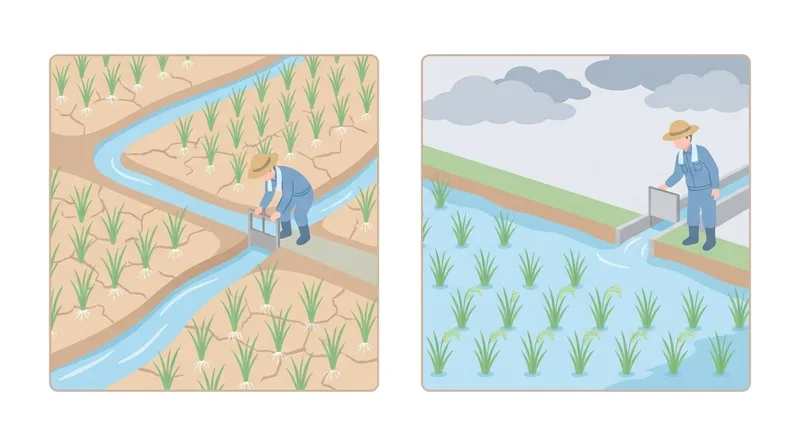
有効分げつ終止期には一旦水を抜いて田面に軽いひびが入るまで乾かす「中干し」を行い、無効分げつを抑え、土壌中の有毒ガスを抜いて根に酸素を送り倒伏を防ぎます。
At the end of effective tillering, drain the paddy until light surface cracks appear ('mid-season drainage / nakaboshi') to suppress non-productive tillers, vent toxic gases, supply oxygen to roots, and prevent lodging.
出穂前の「幼穂形成期(減数分裂期)」に17℃以下の低温が予想されるときは、15〜20cmの「深水管理」で幼穂を保温して不稔(障害型冷害)を防ぎます。この時期に施す追肥が「穂肥」です。
During the young panicle formation (meiotic) stage before heading, if temperatures below 17°C are forecast, maintain 15–20 cm deep water to insulate the developing panicles against cool-weather sterility. Topdressing applied at this stage is called panicle fertilizer (hogoe).
出穂後の積算気温が約950〜1,050℃(籾の85〜90%が黄化)になったら収穫し、すぐ乾燥機で玄米水分「14.5〜15.0%」に乾燥させます。登熟期にカメムシ類が吸汁すると「斑点米」になり等級が下がります。
Harvest when cumulative temperature after heading reaches ~950–1,050°C (85–90% yellow grains) and dry promptly to a brown-rice moisture content of 14.5–15.0%. Stink bugs feeding during grain filling cause pecky rice (hantenmai), lowering grade.
Key points
- 中干しは無効分げつを抑制し、根に酸素を供給して秋落ちや倒伏を防ぐ効果がある。
Mid-season drainage (nakaboshi) suppresses unproductive tillers, oxygenates roots, and prevents lodging. - 減数分裂期の低温時には深水かんがい(15〜20cm)で幼穂を守り、出穂15〜25日前に穂肥を施用する。
Use deep-water management (15–20 cm) to protect young panicles from cold damage, and apply panicle fertilizer 15–25 days before heading. - 収穫後の籾は玄米水分14.5〜15.0%を目標に乾燥させ、カメムシ類による斑点米被害を防除する。
Dry harvested paddy to 14.5–15.0% brown-rice moisture and control rice stink bugs to prevent pecky rice.
| Word | Meaning |
|---|---|
| 中干し | mid-season drainage |
| 深水管理 | deep-water irrigation management |
| 穂肥 | panicle fertilizer (topdressing) |
| 斑点米 | pecky rice (stink bug-damaged rice) |
畑作物(ダイズ・ムギ・イモ類)の重要管理
Key Management for Upland Crops (Soybeans, Wheat, and Tubers)
ダイズやジャガイモで行う「中耕・培土(土寄せ)」には、雑草を除き通気性を良くするとともに、株元から新しい根(不定根)を出させて倒伏を防ぎ、ジャガイモの塊茎の緑化(ソラニン生成)を防ぐ目的があります。
Intertillage and hilling (earthing up) in soybeans and potatoes control weeds, improve soil aeration, encourage adventitious root growth against lodging, and prevent potato tubers from turning green (producing toxic solanine) in sunlight.
秋まきコムギやオオムギで冬〜早春に行う「麦踏み(鎮圧)」は、霜柱による根の浮き上がりを防ぎ、徒長を抑えて分げつを増やし丈夫な株に育てる作業です。
Wheat treading (mugifumi) in winter and early spring prevents frost heaving of roots, restrains spindly overgrowth, and promotes tillering and sturdy stems.
ジャガイモの種イモは切り口の腐敗防止のため定植数日前に切ってコルク化(浴光催芽も有効)させ、サツマイモは収穫後に高温多湿(30〜33℃・湿度90〜95%)で傷口を治す「キュアリング処理」をしてから13〜15℃で貯蔵します。
Cut seed potatoes several days before planting so cut surfaces suberize (heal) against rot. After harvesting sweet potatoes, apply curing treatment at 30–33°C and 90–95% humidity to heal skin wounds before storing at 13–15°C.
Key points
- 中耕・培土は除草・通気改善・倒伏防止のほか、ジャガイモが光に当たって緑化(有毒なソラニン蓄積)するのを防ぐ。
Intertillage and hilling control weeds, prevent lodging, and keep potato tubers covered to prevent greening (solanine formation). - 麦踏みは霜柱による根浮きや徒長を防ぎ、茎数(分げつ)を増やして耐倒伏性を高める。
Wheat treading prevents root lifting from frost pillars, suppresses overgrowth, and increases tiller numbers. - サツマイモは温度30〜33℃・湿度90〜95%でキュアリング処理を行い、傷口をコルク化させてから13〜15℃で貯蔵する。
Cure sweet potatoes at 30–33°C and 90–95% RH to suberize wounds before storing them at 13–15°C.
| Word | Meaning |
|---|---|
| 中耕・培土 | intertillage and hilling (earthing up) |
| 麦踏み | wheat treading / rolling |
| 緑化・ソラニン | greening and solanine toxin |
| キュアリング処理 | curing treatment (wound healing) |
露地野菜の連作障害対策・マルチ・接ぎ木・春化
Preventing Continuous Cropping Injury, Mulching, Grafting, and Bolting
同じ「科」の野菜(ナス科:トマト・ナス・ピーマン・ジャガイモ、ウリ科:キュウリ・スイカ、アブラナ科:キャベツ・ダイコン・ハクサイ)を続けて作ると、土壌病害やセンチュウが増える「連作障害」が起きます。
Repeatedly growing vegetables of the same botanical family (Solanaceae: tomato, eggplant, pepper, potato; Cucurbitaceae: cucumber, watermelon; Brassicaceae: cabbage, radish, Chinese cabbage) causes continuous cropping injury from soilborne pathogens and nematodes.
連作障害は異なる科の作物を組み合わせる「輪作」や、病害に強い台木に穂木をつなぐ「接ぎ木苗」で防ぎます。接ぎ木苗を植えるときは「接ぎ木部(接合部)」を絶対に土に埋めないよう浅植えにします。
Prevent this through crop rotation across different families and by planting grafted seedlings (joining a scion onto a disease-resistant rootstock). Always plant grafted seedlings shallowly so the graft union stays above the soil line.
ダイコン・キャベツ・ハクサイ・タマネギなどは生育初期に低温に当たると花芽分化(春化・バーナリゼーション)して花茎が伸びる「抽苔(とう立ち)」が起きるため、保温資材や晩抽性品種で防ぎます。
Exposure of young radish, cabbage, Chinese cabbage, or onion plants to low temperatures induces vernalization and premature flower stalk elongation ('bolting / chuudai'), ruining market quality; prevent bolting with row covers, mulch, or slow-bolting cultivars.
Key points
- トマト・ナス・ピーマン・ジャガイモはすべて「ナス科」であり、これらを交互に植えても輪作にはならない。
Tomato, eggplant, bell pepper, and potato all belong to Solanaceae; rotating among them does not prevent continuous cropping injury. - 接ぎ木苗の定植時に接合部を土に埋めると、穂木から自根が出て土壌病害に感染するため浅植えにする。
Keep the graft union above the soil surface when transplanting so the susceptible scion does not root into infested soil. - 低温による花芽分化(春化)で花茎が伸びる「抽苔(とう立ち)」は、収穫物の商品価値を損なう。
Low-temperature vernalization triggers bolting (premature flowering), which destroys the market value of root and leafy vegetables.
| Word | Meaning |
|---|---|
| 連作障害・輪作 | continuous cropping injury and crop rotation |
| 接ぎ木(台木・穂木) | grafting (rootstock and scion) |
| 春化 | vernalization |
| 抽苔(とう立ち) | bolting (premature flower stalk elongation) |
Rice, Field Crop and Vegetable Management
Practice this chapter in the appOfficial references
- 一般社団法人全国農業会議所 農業特定技能2号評価試験 テキスト(耕種農業全般・稲作・野菜) — https://asat-nca.jp/