
Daily Management by Livestock Type (Dairy Cattle, Beef Cattle, Swine, Poultry)
畜種別の日常飼養管理(乳牛・肉牛・豚・鶏)
Agriculture (SSW 2) · 農業(2号) · Written by Tokutei Pass based on the official study texts; not copied verbatim.
乳用牛の搾乳手順・乳房炎予防・乾乳・削蹄
Milking Routine, Mastitis Prevention, Dry Period, and Hoof Trimming
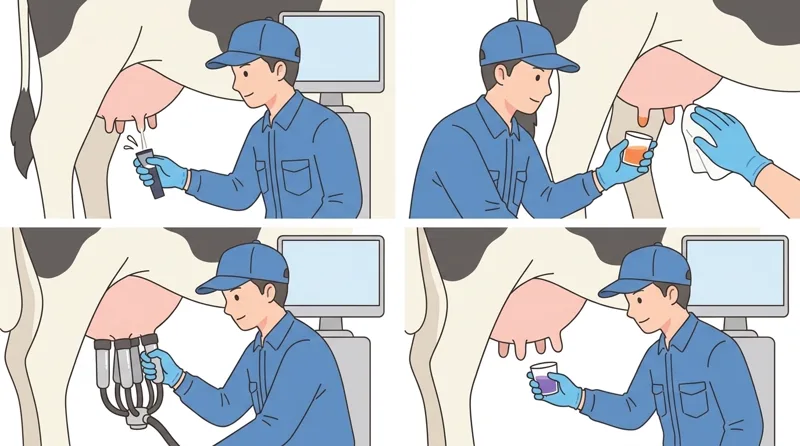
衛生的な搾乳手順は「乳頭清拭・前搾り(ストリップカップでブツなどの異常乳を確認し、オキシトシンによる催乳反射を促す)→ティートカップ装着→過搾乳せず自動離脱→乳頭浸漬消毒(ポストディッピング)」の順に行います。
Hygienic milking follows the sequence: clean teats and forestrip into a black strip cup (to check for clots and stimulate oxytocin milk let-down) -> attach teat cups -> remove promptly without overmilking -> apply post-milking teat dip (post-dipping).
乳房炎では体細胞数(SCC)が増え、PLテストで凝集反応が出ます。搾乳直後は新鮮な餌を置いて30分以上ウシを立たせ、生乳はバルククーラーで速やかに「4℃以下」に冷却します。
Mastitis elevates milk somatic cell count (SCC), detected as gel formation in the CMT/PL test. Because teat canals remain open right after milking, provide fresh feed to keep cows standing for at least 30 minutes, and rapidly chill raw milk to 4°C or below in the bulk cooler.
次の分娩予定日の「約60日前」から搾乳を止める「乾乳期」を設けて乳腺を休ませます。分娩直後のカルシウム不足で起立不能になる「乳熱」に注意し、蹄病予防のため年1〜2回「削蹄」を行います。
Stop milking about 60 days before expected calving ('dry period') so mammary tissue can regenerate. Watch for postpartum milk fever (hypocalcemia causing recumbency) and perform functional hoof trimming once or twice a year.
Key points
- 前搾りはストリップカップに行って異常乳を確認し、搾乳後はポストディッピングと30分以上の起立維持で乳房炎を防ぐ。
Forestrip into a strip cup to check for abnormal milk, and prevent mastitis with post-dipping and keeping cows standing for 30+ minutes. - 搾乳した生乳はバルククーラーで速やかに「4℃以下」に冷却し、乳房炎の検査にはPLテスト(体細胞数検査)を用いる。
Chill raw milk rapidly to 4°C or below in the bulk tank, and screen for subclinical mastitis using the PL (CMT) test. - 分娩予定日の約60日前から「乾乳」し、分娩直後の「乳熱(低カルシウム血症)」と定期的な「削蹄」に留意する。
Provide a ~60-day dry period before calving, prevent postpartum milk fever, and trim hooves 1–2 times annually.
| Word | Meaning |
|---|---|
| 前搾り・ストリップカップ | forestripping and strip cup |
| ポストディッピング | post-milking teat dipping |
| バルククーラー | bulk milk cooler (chills to ≤ 4°C) |
| 乾乳期・乳熱 | dry period (~60 days) and milk fever |
分娩管理・子牛の初乳給与・個体識別・肉用牛管理
Calving Care, Colostrum Feeding, Individual ID Tags, and Beef Management
分娩前の母牛は清潔な敷料を敷いた分娩房へ移します。破水(尿膜水・羊水の流出)から2時間以上たっても娩出されない難産時は、前足2本と頭の向きを確認し、母牛の陣痛(いきみ)に合わせて後方斜め下へ牽引して介助します。
Move cows nearing calving to a clean, well-bedded maternity pen. During assisted calving, verify the presentation of both forelegs and the head, and pull downward at a backward angle in sync with the cow's contractions.
生まれた子牛は鼻や口の羊水を拭き取り、臍帯(へその緒)をヨード剤等で消毒します。子牛は生まれつき免疫抗体を持たないため、生後できるだけ早く(遅くとも6時間以内、24時間以内に十分量)抗体を多く含む母牛の「初乳」を飲ませます。
Clear amniotic fluid from the newborn calf's nose and mouth and disinfect the navel cord with iodine. Because calves are born without antibodies, feed antibody-rich colostrum as soon as possible—within 6 hours of birth and amply within 24 hours.
日本国内のすべてのウシには10桁の個体識別番号の「耳標」を両耳に装着します。肉用牛では「除角」や雄の「去勢」、黒毛和種肥育でのビタミンA管理(欠乏症の失明・浮腫防止)を行います。
Under the Cattle Traceability Act, every calf born in Japan must have official ear tags bearing a 10-digit ID number attached to both ears. Beef management includes dehorning, castration of bull calves (improving meat tenderness and docility), and careful vitamin A control in Wagyu fattening to avoid blindness and edema.
Key points
- 分娩介助では胎児の姿勢を確認し、母牛のいきみ(陣痛)に合わせて後方斜め下方向へ引く。
Assist calving by pulling backward and slightly downward in rhythm with the mother's contractions. - 新生子牛には免疫抗体(IgG)を与えるため、分娩後6時間以内(24時間以内)に十分な「初乳」を給与する。
Feed newborn calves colostrum within 6 hours (and within 24 hours) so they absorb maternal antibodies (IgG). - すべてのウシの両耳に10桁の個体識別耳標を装着し、肥育牛の極端なビタミンA欠乏(失明・浮腫)を防ぐ。
Attach 10-digit ID ear tags to both ears of all cattle, and prevent severe vitamin A deficiency (blindness, edema) in fattening Wagyu.
| Word | Meaning |
|---|---|
| 初乳・免疫抗体 | colostrum and maternal antibodies |
| 個体識別番号(耳標) | 10-digit individual ID number (ear tag) |
| 除角・去勢 | dehorning and castration |
| ビタミンA欠乏症 | vitamin A deficiency (blindness, edema) |
養豚の日常管理(子豚処置・温度管理・オールインオールアウト)
Daily Swine Management (Piglet Care, Heating, and All-In All-Out)
分娩直後の子豚は寒さに大変弱く、母豚は暑さに弱いため、分娩舎全体は母豚に合わせて涼しく(18〜22℃)保ち、保温箱や赤外線ランプで子豚の寝床だけを局所的に「30〜35℃」に温めます。これにより母豚の下敷きになる「圧死」や下痢を防ぎます。
Newborn piglets are extremely cold-sensitive whereas nursing sows are heat-sensitive; keep the farrowing room cool for the sow (18–22°C) and use a creep box or heat lamp to warm the piglets locally to 30–35°C, preventing chilling diarrhea and crushing by the sow.
生後1〜3日頃の子豚には、母豚の乳首を傷つけないための「犬歯切断(歯切り)」、尾かじり防止の「断尾(尾切り)」、母乳だけでは不足する「貧血予防のための鉄剤注射(または経口投与)」、および雄子豚の獣臭(雄臭)を防ぐ「去勢」を行います。
At 1–3 days of age, piglets receive needle-teeth clipping (to protect the sow's udder), tail docking (to prevent tail biting), iron injection or oral iron (to prevent iron-deficiency anemia), and castration of male piglets (to prevent boar taint).
豚舎管理では、部屋(または豚舎)ごとに豚を一斉に入れて一斉に出し、空になった期間に水洗・消毒・乾燥を徹底して病原体の連鎖を断ち切る「オールイン・オールアウト方式」が重要です。
In barn management, the 'all-in, all-out system'—moving batches of pigs in and out of a room simultaneously so the empty room can be thoroughly washed, disinfected, and dried—is essential to break disease cycles.
Key points
- 分娩房は母豚に合わせて18〜22℃と涼しく保ち、保温箱等で子豚を局所的に30〜35℃に保温して圧死と下痢を防ぐ。
Keep farrowing rooms at 18–22°C for sows while heating piglet creep areas locally to 30–35°C to prevent crushing and diarrhea. - 新生子豚には、貧血予防の「鉄剤投与」、乳首保護の「歯切り」、尾かじり防止の「断尾」、雄臭防止の「去勢」を行う。
Newborn piglet care includes iron supplementation (against anemia), teeth clipping, tail docking, and castration. - 群単位で一斉に入退舎させ、空舎期間に洗浄・消毒・乾燥を行う「オールイン・オールアウト方式」で疾病を防ぐ。
Practice all-in, all-out management with thorough washing, disinfection, and drying between batches.
| Word | Meaning |
|---|---|
| 局所保温・圧死防止 | localized heating (30–35°C) and crushing prevention |
| 鉄剤注射・貧血予防 | iron injection for anemia prevention |
| 歯切り・断尾 | teeth clipping and tail docking |
| オールイン・オールアウト方式 | all-in, all-out system |
養鶏の日常管理(育雛温度・光線管理・デビーク・誘導換羽・鶏卵品質)
Daily Poultry Management (Brooding, Lighting, Debeaking, Molting, and Egg Quality)
初生雛の「育雛」では最初の1週間を「32〜35℃」に保ち、週ごとに2〜3℃下げます。ひなが熱源下に密集していれば低温(寒い)、離れて口を開けていれば高温、均一分散なら適温です。
When brooding day-old chicks, maintain 32–35°C during the first week and lower by 2–3°C each week thereafter. Chicks huddling tightly under the heater indicate cold, chicks panting far from the heater indicate excessive heat, and chicks spread evenly indicate optimal temperature.
採卵鶏の光線管理では、育成期は日長を延ばさず、産卵期は日長を縮めず「1日14〜16時間明期」を保ちます。また、つつき合いを防ぐ「デビーク(断嘴)」や老鶏の「誘導換羽」を行います。
In layer lighting management, never increase daylength during the growing period (to prevent precocious laying), and never decrease daylength during the laying period (maintain 14–16 hours of light daily). Beak trimming (debeaking) prevents feather pecking and cannibalism, while induced molting rejuvenates laying rate and shell quality in older flocks.
集卵した鶏卵は洗卵・検卵(ヒビ卵・血斑卵の除去)を行い、とがった方(鋭端)を下・丸い方(鈍端:気室側)を上にして詰めます。卵の新鮮度は、割卵時の濃厚卵白の高さと卵重から算出する「ハウユニット(HU)」で評価します。
Collected eggs are washed, candled/inspected for cracks and blood spots, and packed with the pointed end down and the blunt end (air cell side) up. Interior egg freshness is measured by the Haugh Unit (HU), calculated from thick albumen height and egg weight.
Key points
- 育雛初期は32〜35℃とし、ひなが熱源に密集していれば低温、均一に分散していれば適温と判断する。
Start brooding at 32–35°C; huddling under the brooder means chicks are too cold, while even distribution means optimal warmth. - 採卵鶏は育成期に日長を延ばさず、産卵期は日長を短縮させない(14〜16時間明期)。デビークはつつき合いを防ぐ。
Do not lengthen light during rearing and never shorten light during lay (14–16 hours); debeaking prevents cannibalism. - 鶏卵は気室のある丸い方(鈍端)を上、とがった方(鋭端)を下にして詰め、鮮度は「ハウユニット(HU)」で示す。
Pack eggs blunt end (air cell) up and pointed end down, and evaluate internal freshness using the Haugh Unit (HU).
| Word | Meaning |
|---|---|
| 育雛・初生雛 | brooding and day-old chicks |
| 光線管理 | lighting management (14–16 h light in laying period) |
| デビーク(断嘴)・誘導換羽 | beak trimming (debeaking) and induced molting |
| ハウユニット(HU) | Haugh Unit (HU: egg freshness index) |
Daily Management and Production Process
Practice this chapter in the appOfficial references
- 一般社団法人全国農業会議所 農業特定技能2号評価試験 テキスト(畜産農業全般・日常管理) — https://asat-nca.jp/