
Feed Management, Feeding, Livestock Hygiene, and Biosecurity
飼料管理・給餌・家畜衛生・防疫
Agriculture (SSW 2) · 農業(2号) · Written by Tokutei Pass based on the official study texts; not copied verbatim.
粗飼料と濃厚飼料・栄養指標(TDN・CP)・TMR
Roughage, Concentrates, Nutritional Metrics (TDN, CP), and TMR
家畜の飼料は、繊維質が多くウシの反すうや第一胃の健康維持に不可欠な「粗飼料(牧草・乾草・サイレージ・稲わら)」と、エネルギーやタンパク質が多い「濃厚飼料(トウモロコシ・大豆粕・ふすま・配合飼料)」に分かれます。
Livestock feeds are divided into fiber-rich roughage essential for rumination and rumen health (pasture grass, hay, silage, rice straw) and energy/protein-dense concentrates (corn, soybean meal, wheat bran, formula feed).
トウモロコシや大麦に蒸気を当てて平らに押しつぶした「圧ぺん飼料」はデンプンが糊化して消化率が高まります。飼料の栄養価は「可消化養分総量(TDN)」と「粗蛋白質(CP)」で評価します。
Steam-flaked grains (corn or barley steamed and rolled flat) have gelatinized starch for higher digestibility. Feed nutritional value is evaluated primarily by Total Digestible Nutrients (TDN) and Crude Protein (CP).
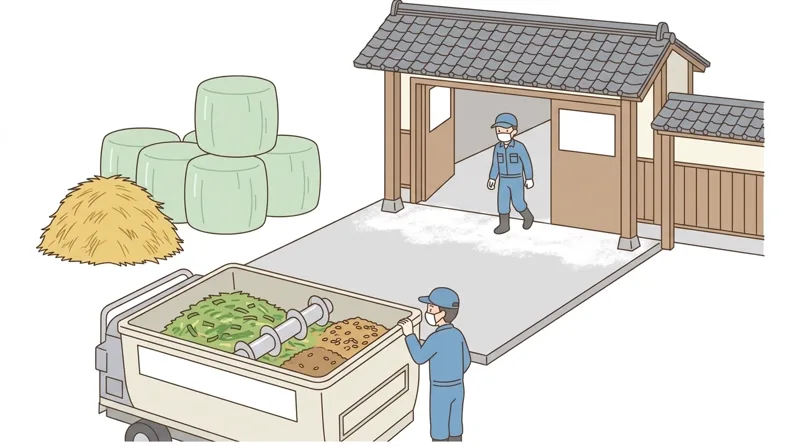
乳牛などで粗飼料と濃厚飼料・ミネラルをミキサーで均一に混ぜて給与する「混合飼料(TMR)」は、牛の「選り食い(好きな濃厚飼料だけ食べること)」を防ぎ、第一胃のpHを安定させます。
Feeding cattle a Total Mixed Ration (TMR)—blending chopped roughage, concentrates, and minerals uniformly—prevents feed sorting (selective eating of concentrates) and stabilizes rumen pH.
Key points
- 牧草・乾草・サイレージは「粗飼料」、トウモロコシ・大豆粕・配合飼料は「濃厚飼料」である。
Grass, hay, and silage are roughages; corn, soybean meal, and formula feeds are concentrates. - 栄養価の代表指標は可消化養分総量(TDN:エネルギー)と粗蛋白質(CP)であり、圧ぺん加工は消化率を高める。
TDN (energy) and CP (crude protein) are the primary nutritional metrics, and steam-flaking improves grain digestibility. - TMR(混合飼料)は粗飼料と濃厚飼料を均一に混合することで「選り食い」とルーメンアシドーシスを防ぐ。
TMR blends roughage and concentrates evenly to prevent selective eating and rumen acidosis.
| Word | Meaning |
|---|---|
| 粗飼料・濃厚飼料 | roughage and concentrate feed |
| 可消化養分総量 | Total Digestible Nutrients (TDN) |
| 混合飼料(TMR) | Total Mixed Ration (TMR) |
| 選り食い | feed sorting / selective eating |
乾草・サイレージの調製管理と飼料中毒の防止
Hay & Silage Preparation and Prevention of Feed Poisoning
長期保存用の「乾草」は、カビや自然発火を防ぐため水分「15%以下」まで乾燥させます。「サイレージ」は水分50〜70%の牧草等を密封し、嫌気状態(空気遮断)で乳酸発酵させます。
Hay for long-term storage must be dried to 15% moisture or less to prevent mold and spontaneous combustion. Silage (including wrapped bale silage) is made by sealing forage at 50–70% moisture under anaerobic (airtight) conditions to promote lactic acid fermentation.
良質なサイレージはpH 4.2以下で甘酸っぱい芳香があります。空気が入ると「二次発酵」で発熱・カビ・腐敗が起きるため、不良部分は廃棄し、フィルムの穴は専用テープで直ちに補修します。
High-quality silage has a low pH (4.2 or below), a greenish-yellow to yellowish-brown color, and a pleasant sweet-sour aroma. Air infiltration causes aerobic secondary fermentation, heating, mold, and dark putrid spoilage; discard spoiled silage and immediately patch any film holes with repair tape.
カビが生えた飼料は「マイコトキシン(カビ毒:アフラトキシン等)」による中毒や牛乳への残留を招きます。また、窒素肥料過多と日照不足の牧草をウシが多食すると、血中で酸素が運べなくなる「硝酸塩中毒(窒息症状)」が起こるため注意します。
Moldy feed can cause mycotoxin poisoning (such as aflatoxin) and milk residues. Also avoid heavy feeding of high-nitrate forage grown with excess nitrogen fertilizer under low sunlight, which causes acute nitrate poisoning (hypoxia) in cattle.
Key points
- 乾草は水分15%以下まで乾燥させ、サイレージは空気を遮断(密封)して嫌気的に乳酸発酵させる。
Dry hay to 15% moisture or below; seal silage tightly to ensure anaerobic lactic acid fermentation. - 良質なサイレージは甘酸っぱい良いにおいがし、白や青のカビ・黒褐色に腐敗した部分は決して給与しない。
Good silage smells pleasantly sweet-sour; never feed moldy or dark, slimy spoiled silage. - カビ毒(マイコトキシン)や、窒素過多・日照不足の飼料作物による「硝酸塩中毒」を防ぐ。
Prevent mycotoxicosis from moldy feed and nitrate poisoning from high-nitrogen, low-sunlight forage crops.
| Word | Meaning |
|---|---|
| 乳酸発酵・嫌気状態 | lactic acid fermentation and anaerobic condition |
| 二次発酵 | secondary fermentation (aerobic spoilage) |
| マイコトキシン(カビ毒) | mycotoxin (fungal toxin) |
| 硝酸塩中毒 | nitrate poisoning |
飼養衛生管理基準と農場のバイオセキュリティ(防疫)
Rearing Hygiene Management Standards and Farm Biosecurity
口蹄疫・豚熱(CSF)・アフリカ豚熱(ASF)・高病原性鳥インフルエンザなどの重大な家畜伝染病を防ぐため、家畜伝染病予防法に基づく「飼養衛生管理基準」を守ります。
To prevent devastating infectious diseases such as foot-and-mouth disease (FMD), classical/African swine fever (CSF/ASF), and highly pathogenic avian influenza (HPAI), farms strictly enforce Rearing Hygiene Management Standards under the Act on Domestic Animal Infectious Diseases Control.
農場全体を外部と区別する「衛生管理区域」に設定し、入口で車両消毒を行い、部外者の立入を制限します。作業者は専用の作業着と畜舎ごとの専用長靴に替え、手指消毒と踏込消毒槽を通って入室します。
Designate a biosecurity (hygiene management) area separated from the outside, disinfect vehicles at the gate, and restrict visitors. Workers must change into farm-dedicated clothes and barn-specific boots, disinfect hands, and step through footbaths.
野生動物(イノシシ・野鳥・ネズミ)の侵入を防ぐため防護柵や防鳥ネット(網目2cm以下)を張り、海外渡航後の入場制限や肉製品の持込禁止を徹底します。牛・豚の急死や水疱・鶏の連続死を見つけたら直ちに責任者・家畜保健衛生所へ通報します。
Install perimeter fencing and bird-proofing nets (2 cm mesh or smaller) to exclude wild boars, wild birds, and rodents, restrict entry after overseas travel, and ban bringing meat products onto the farm. Immediately report any vesicular lesions, sudden deaths, or mass poultry mortality.
Key points
- 農場内に「衛生管理区域」を設け、車両消毒・専用作業着・畜舎別長靴の交換と踏込消毒を徹底する。
Maintain a designated hygiene management area with vehicle disinfection, dedicated clothing, barn-specific boots, and footbaths. - 防鳥ネット(網目2cm以下)や防護柵で野鳥・イノシシ・ネズミを遮断し、生肉や肉製品を農場に持ち込まない。
Use bird nets (≤2 cm mesh) and fences against wild animals, and never bring raw meat or meat products onto the farm. - 伝染病を疑う異常(水疱・高熱・大量死など)を発見したら、移動や出荷を止めて直ちに報告・通報する。
If infectious disease is suspected (blisters, high fever, cluster deaths), halt animal movement and report immediately.
| Word | Meaning |
|---|---|
| 飼養衛生管理基準 | Biosecurity / Rearing Hygiene Management Standards |
| 衛生管理区域 | biosecurity / hygiene management area |
| 口蹄疫・豚熱 | foot-and-mouth disease and swine fever |
| 防鳥ネット | bird-proofing net (mesh ≤ 2 cm) |
ワクチン注射の衛生原則と動物用医薬品の休薬期間
Vaccination Hygiene Principles and Veterinary Drug Withdrawal Periods
ワクチン等の注射時に1本の針を使い回すと、血液を介して牛伝染性リンパ腫(BLV)やPRRSなどの病原体が広がるため、1頭ごとに新しい針に替える「一頭一針」を守ります。
When injecting vaccines or medications, reusing a single needle across multiple animals transmits blood-borne pathogens such as Bovine Leukemia Virus (BLV) and PRRS; therefore, strictly practice 'one needle per animal (ittou-isshin)'.
万一、体内で注射針が折れて残ってしまった場合(残留注射針)は、食肉への混入事故を防ぐため、直ちにその個体番号と部位を記録してマーキングし、責任者および獣医師へ報告します。
If an injection needle accidentally breaks and remains inside an animal, immediately mark and identify the individual, record its ID and the injection site, and report to the supervisor and veterinarian to prevent broken needles in meat.
また、抗生物質などの動物用医薬品を投与した家畜は、生乳・食肉・鶏卵への薬物残留を防ぐため、薬ごとに定められた「休薬期間(出荷制限期間)」が経過するまで決して生産物を出荷してはなりません。
Furthermore, for livestock treated with veterinary drugs such as antibiotics, milk, meat, or eggs must never be shipped until the statutory 'withdrawal period (withholding period)' specified for each drug has fully elapsed.
Key points
- 注射針の使い回しは血液感染(BLVやPRRS等)の原因となるため、1頭ごとに交換する「一頭一針」を徹底する。
Never reuse needles across animals; use a fresh needle per head (ittou-isshin) to prevent blood-borne diseases like BLV and PRRS. - 注射針が折れて家畜の体内に残ったときは、直ちに個体識別と記録を行い責任者・獣医師へ報告する。
If a needle breaks inside an animal, immediately mark the animal, record the details, and report to the supervisor and veterinarian. - 抗生物質等を投与した家畜は、定められた「休薬期間」が終わるまで乳・肉・卵を出荷してはならない。
Never ship milk, meat, or eggs from medicated livestock until the mandatory drug withdrawal period has passed.
| Word | Meaning |
|---|---|
| 一頭一針 | one needle per animal (fresh needle per head) |
| 残留注射針 | broken / retained injection needle |
| 動物用医薬品 | veterinary medicinal product |
| 休薬期間 | withdrawal period (withholding period) |
Feed Nutrition and Biosecurity
Practice this chapter in the appOfficial references
- 一般社団法人全国農業会議所 農業特定技能2号評価試験 テキスト(畜産農業全般・飼料・衛生) — https://asat-nca.jp/