
General Livestock Farming, Breeds, Physiology, and Reproduction
畜産農業一般・家畜の品種・生理・繁殖
Agriculture (SSW 2) · 農業(2号) · Written by Tokutei Pass based on the official study texts; not copied verbatim.
主要家畜(乳牛・肉牛・豚・鶏)の品種と特徴
Major Livestock Breeds (Dairy, Beef, Swine, and Poultry) and Traits
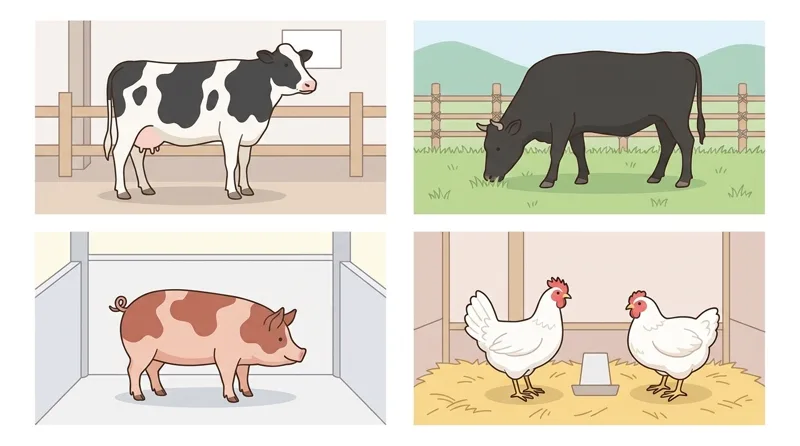
乳用牛は白黒斑で泌乳量が最も多い「ホルスタイン種」が約98%を占め、「ジャージー種」は小型の淡褐色で乳脂肪率が高いのが特徴です。肉専用種(和牛)は脂肪交雑(サシ)に優れた「黒毛和種」が90%以上を占めます。
Among dairy cattle, black-and-white Holsteins (highest milk yield) account for ~98%, while smaller fawn-colored Jerseys produce high-butterfat milk. Among beef cattle (Wagyu), Japanese Black (Kuroge Washu) renowned for fine marbling accounts for over 90%.
「三元交配豚(LWD)」は、繁殖性が高いランドレース種(L:白・垂れ耳)と大ヨークシャー種(W:白・立ち耳)のF1母豚に、デュロック種(D:赤褐色)の雄を交配します。黒豚は「バークシャー種(六白)」です。
In three-way crossbred pork production (LWD), Landrace (L: white, lop-eared) and Large White/Yorkshire (W: white, erect-eared) are crossed to create prolific F1 maternal sows (LW), which are bred to terminal Duroc boars (D: reddish-brown). The black six-white-pointed Berkshire breed is famed as Kurobuta.
養鶏では、白色卵を多産する採卵鶏の代表が「白色レグホーン種」、肉用鶏(ブロイラー)の交配元が「白色コーニッシュ種×白色プリマスロック種」です。
In poultry, White Leghorn is the primary white-egg layer breed, while commercial broilers are hybrids of White Cornish and White Plymouth Rock.
Key points
- 乳牛は乳量が多いホルスタイン種と高脂肪のジャージー種、肉牛(和牛)は黒毛和種が主力である。
Holsteins lead in milk volume and Jerseys in milk fat; Japanese Black (Kuroge Washu) dominates Wagyu beef. - 三元交配豚(LWD)は母系のL(垂れ耳)×W(立ち耳)のF1母豚に父系のD(茶色)を交配し、バークシャー種は黒豚(六白)である。
Three-way cross pigs (LWD) pair an LW F1 sow with a terminal Duroc (D) boar; Berkshire (six white points) produces Kurobuta pork. - 採卵鶏の代表は白色レグホーン種、ブロイラーは白色コーニッシュ種と白色プリマスロック種の交雑鶏である。
White Leghorn is the main egg layer breed, and broilers are crosses of White Cornish and White Plymouth Rock.
| Word | Meaning |
|---|---|
| 脂肪交雑 | marbling (intramuscular fat) |
| 三元交配豚 | three-way crossbred pig (LWD) |
| 雑種強勢 | heterosis (hybrid vigor) |
| 採卵鶏・肉用鶏 | layer chickens and broiler chickens |
ウシの反すう胃(4つの胃)とニワトリの消化・卵形成
Bovine Ruminant Stomachs and Avian Digestion & Egg Formation
ウシは4つの胃を持つ反すう動物です。最も大きい「第一胃(ルーメン・ミノ)」には無数の微生物がすんでおり、植物の繊維(セルロース)を発酵分解して揮発性脂肪酸(VFA:エネルギー源)を作り、胃内容物を口に戻して噛み直す「反すう」を行います。
Cattle are ruminants with four stomach compartments. The largest, the rumen (first stomach), hosts microbes that ferment plant fiber into volatile fatty acids (VFAs) for energy, while cattle regurgitate and rechew cud (rumination).
「第二胃(ハチノス)」は反すうを助け、「第三胃(センマイ)」は水分を吸収し、「第四胃(ギアラ)」が胃液を出す真胃です。濃厚飼料過多では第一胃が酸性化する「ルーメンアシドーシス」が起きます。
The reticulum (second stomach) aids rumination, the omasum (third stomach / senmai) absorbs water and grinds feed between leaf-like folds, and the abomasum (fourth stomach / giara) is the true stomach secreting hydrochloric acid and pepsin. Excess concentrates cause rumen acidosis.
ニワトリには歯がなく、食べた飼料を「筋胃(砂肝)」の厚い筋肉とグリット(小石)ですりつぶします。また、排卵された卵黄が卵管を通って卵白や卵殻(カラ)を作り産卵されるまでには「約24〜25時間」かかります。
Chickens lack teeth and grind feed in the muscular gizzard using grit. In laying hens, it takes about 24–25 hours from ovulation of the yolk until the completed egg is laid.
Key points
- ウシの第一胃(ルーメン)は微生物発酵の場、第三胃(センマイ)は水分吸収、第四胃(ギアラ)は胃液を出す真胃である。
In cattle, the rumen ferments fiber via microbes, the omasum absorbs water, and the abomasum is the acid-secreting true stomach. - 粗飼料不足・濃厚飼料過多になると、第一胃のpHが低下する「ルーメンアシドーシス」や第四胃変位が起こりやすい。
Insufficient roughage and excessive concentrate feed lower rumen pH, causing rumen acidosis and displaced abomasum. - ニワトリは筋胃(砂肝)で餌をすりつぶし、卵は排卵から約24〜25時間かけて形成・産卵される。
Chickens grind feed in the gizzard, and egg formation from ovulation to laying takes approximately 24–25 hours.
| Word | Meaning |
|---|---|
| 反すう・第一胃(ルーメン) | rumination and rumen (first stomach) |
| 第四胃(真胃) | abomasum (true stomach) |
| ルーメンアシドーシス | rumen acidosis |
| 筋胃(砂肝) | gizzard (ventriculus) |
家畜のバイタルサイン(体温・脈拍・呼吸数)
Livestock Vital Signs (Body Temperature, Pulse, and Respiration)
健康な成畜の平熱(直腸温)は人間より高く、成牛は「38.0〜39.5℃(約38.5℃)」、成豚は「38.5〜39.5℃(約39.0℃)」、ニワトリ(成鶏)は「41.0〜42.0℃(約41.5℃)」です。
Normal rectal temperatures of healthy adult livestock are higher than in humans: adult cattle average 38.0–39.5°C (~38.5°C), adult pigs 38.5–39.5°C (~39.0°C), and adult chickens 41.0–42.0°C (~41.5°C).
1分間の正常な呼吸数は成牛で「15〜30回」、成豚で「10〜20回」程度であり、暑熱ストレスや発熱時には著しく増加します。
Normal respiration rates per minute are 15–30 breaths for adult cattle and 10–20 breaths for adult pigs, rising sharply during heat stress or fever.
また、1分間の正常脈拍数は成牛で「40〜80回(平均60〜70回)」、成豚で「60〜80回」です。ウシの検脈は尾の付け根の裏側にある「尾動脈」や下顎の「外顎動脈」に指を当てて測ります。
Normal pulse rates per minute are 40–80 beats (average 60–70) for adult cattle and 60–80 beats for adult pigs. In cattle, pulse is palpated at the coccygeal artery on the underside of the tail base or the external maxillary artery along the lower jaw.
Key points
- 平熱は成牛が約38.5℃(38.0〜39.5℃)、成豚が約39.0℃、成鶏が約41.5℃(41〜42℃)である。
Normal temperatures: adult cattle ~38.5°C (38.0–39.5°C), adult pigs ~39.0°C, and adult chickens ~41.5°C (41–42°C). - 成牛の正常呼吸数は毎分15〜30回、正常脈拍数は毎分40〜80回である。
Adult cattle have a normal respiration rate of 15–30 breaths/min and a pulse rate of 40–80 beats/min. - ウシの脈拍は尾根部腹側の「尾動脈」または下あごの「外顎動脈」で測定する。
Measure a cow's pulse at the coccygeal (tail) artery or the external maxillary artery.
| Word | Meaning |
|---|---|
| 直腸温 | rectal temperature |
| 呼吸数・脈拍数 | respiration rate and pulse rate |
| 尾動脈 | coccygeal (tail) artery |
| 外顎動脈 | external maxillary (facial) artery |
発情周期・発情徴候・人工授精と妊娠期間
Estrous Cycle, Estrus Signs, Artificial Insemination, and Gestation
ウシとブタの発情周期はともに「約21日(19〜22日)」です。ウシの発情持続時間は約15〜18時間で、他の牛に乗りかかる、または乗りかかられても逃げずにじっと立つ「乗駕許容(スタンディング発情)」が最も確実なサインです。
Both cattle and pigs have an estrous cycle of about 21 days (19–22 days). Estrus in cattle lasts ~15–18 hours, and standing immobile when mounted by another cow ('standing heat') is the most reliable sign.
ウシは乗駕許容開始から12〜18時間後(AM-PMルール)に人工授精します。液体窒素(−196℃)の凍結精液ストローは「35〜38℃」の温湯で融解し、長手袋を着けて直腸膣法で注入します。
Because ovulation in cattle occurs 10–12 hours after estrus ends, artificial insemination (AI) is performed 12–18 hours after the onset of standing heat (AM-PM rule). Frozen semen straws stored in liquid nitrogen (−196°C) are thawed in 35–38°C warm water and deposited using the rectovaginal method with trimmed nails and a lubricated shoulder-length glove.
ブタは背中を押して動かない「許容姿勢」で授精適期を判断します。平均妊娠期間はウシが「約280日(黒毛和種は約285日)」、ブタが「約114日」、ニワトリの孵卵日数は「約21日」です。
In sows, optimal AI timing is confirmed by the standing immobilization reflex when pressing the back (back-pressure test). Average gestation is ~280 days in Holsteins (~285 days in Wagyu; Month − 3, Day + 10) and ~114 days in pigs (3 months, 3 weeks, 3 days); chicken egg incubation takes ~21 days.
Key points
- ウシ・ブタの発情周期は約21日であり、ウシは「乗駕許容」、ブタは背中を押して静止する「許容姿勢」で適期を見極める。
Cattle and pigs cycle every ~21 days; detect optimal timing via standing heat in cows and the back-pressure reflex in sows. - ウシの凍結精液(−196℃保存)は「35〜38℃」のぬるま湯で融解し、乗駕許容後12〜18時間(AM-PMルール)に授精する。
Thaw frozen bull semen (−196°C) in 35–38°C warm water and inseminate 12–18 hours after standing heat begins (AM-PM rule). - 平均妊娠期間はウシが約280〜285日(月−3・日+10)、ブタが約114日、ニワトリの孵卵期間は約21日である。
Gestation averages ~280–285 days in cattle (Month − 3, Day + 10) and ~114 days in pigs; chicken eggs hatch in ~21 days.
| Word | Meaning |
|---|---|
| 発情周期・乗駕許容 | estrous cycle (21 days) and standing heat |
| 凍結精液・融解 | frozen semen and thawing (at 35–38°C) |
| 直腸膣法 | rectovaginal AI technique |
| 妊娠期間 | gestation period (Cattle ~280 d, Swine ~114 d) |
Livestock Industry, Breeding and Reproduction
Practice this chapter in the appOfficial references
- 一般社団法人全国農業会議所 農業特定技能2号評価試験 テキスト(畜産農業全般) — https://asat-nca.jp/