 Tokutei Pass
Architectural Site Occupational Health, Safety & Disaster Prevention
建築現場の安全衛生・災害防止
Construction – Building (SSW 2) · 建設分野(2号・建築区分) · Written by Tokutei Pass based on the official study texts; not copied verbatim.
建設業の死亡災害第1位・安全施工サイクル・安全衛生マークと熱中症対策
Top Fatal Accident Cause, Safety Cycle, Safety/Health Emblems & Heatstroke Prevention
建設業における死亡労働災害の原因で最も多いのは全体の約4割を占める「墜落・転落」です。毎日の「安全施工サイクル」では、全体安全朝礼の後・作業開始前に職種別グループで「危険予知(KY)活動と指差呼称」を行います。
The leading cause of fatal occupational accidents in the construction industry—accounting for about 40% of all deaths—is 'falls from height (Tsuiraku / Tenraku)'. In the daily 'Safety Construction Cycle', right after the all-hands morning safety assembly and before starting work, each trade group holds small-group 'Hazard Prediction (KY) activities and Pointing-and-Calling'.
ヒューマンエラー対策では「人間は誰でも見落としや思い込みをする」という前提に立ち、複数人のダブルチェックや安全装置(フェールセーフ等)でミスを補う仕組みを作ります。
Human error countermeasures must be built on the premise that 'every human being can overlook things or make assumptions', establishing multi-person double-checks and safety devices (fail-safes) to catch mistakes.
現場に掲げる安全衛生旗やヘルメットマークにおいて、白地の「緑十字は安全」を表し、緑地の「白十字は衛生(健康)」を表します。
On site safety flags and helmet emblems, a 'green cross on a white background represents Safety (Anzen)', whereas a 'white cross on a green background represents Industrial Health/Hygiene (Eisei)'.
夏期の熱中症予防では、のどの渇きを感じる前に「水分と塩分(ナトリウム)を同時にこまめに補給」し、通気性の良い服装で涼しい休憩所での計画的な休憩をとります。
To prevent heatstroke in summer, workers must 'frequently replenish both water and salt (sodium) simultaneously before feeling thirsty', wear breathable clothing, and take scheduled breaks in cool rest areas.
Key points
- 建設業死亡災害の最多原因(約4割)は「墜落・転落」であり、安全朝礼後・作業前に小集団で「KY活動」を行う。
The #1 cause of construction fatalities (~40%) is 'falls from height'; conduct small-group 'KY activities' after morning assembly before starting work. - 人は誰でもミスをする前提で「ダブルチェックと安全装置」を設け、マークは「緑十字=安全・白十字=衛生」である。
Assume 'all humans make mistakes' by implementing 'double-checks and safety devices'; Green Cross = Safety, White Cross = Health/Hygiene. - 熱中症対策は渇きを感じる前に「水分と塩分を同時補給」し、涼しい休憩所で計画的に休む。
Prevent heatstroke by 'replenishing both water and salt before feeling thirsty' and taking planned breaks in cool rest areas.
| Word | Meaning |
|---|---|
| 安全施工サイクル・KY活動 | Safety Construction Cycle & KY (Hazard Prediction) Activity |
| 緑十字(安全)と白十字(衛生) | Green Cross (Safety) & White Cross (Health/Hygiene) |
| 墜落・転落災害(死亡原因第1位) | Falls from height (Leading cause of construction fatalities) |
屋根・開口部・はしご・脚立の墜落防止と飛来落下・仮設安全
Fall Prevention on Roofs, Openings, Ladders & Stepladders, Falling Objects & Scaffolds
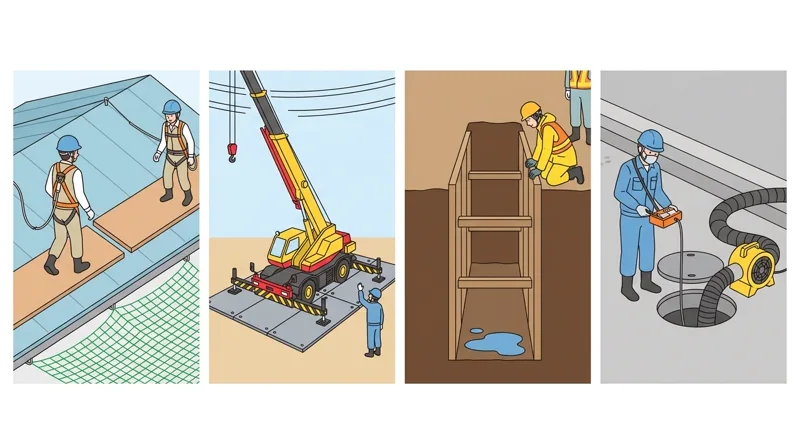
スレートや折板などの踏み抜きやすい屋根上では、幅「30cm以上の歩み板」と防網・墜落制止用器具を使います。床開口部には手すりや囲いを設けるか、「固定した高強度の覆い(ふた)と開口部表示」を行います。
When working on fragile slate or folded-plate roofs, install 'walkway boards (Ayumi-ita) at least 30 cm wide', string safety nets below, and wear fall arrest equipment. At floor openings, install guardrails/enclosures or fit 'securely fastened covers of sufficient strength with opening warning signs'.
「移動はしご」は丈夫な構造で滑り止めを設け、立て掛け角度は「75度以下」、上端は床から「60cm以上」突き出して固定します。「脚立(立ち馬)」は開き止め金具を確実にロックし、「天板の上に乗ったりまたがったりしない」ようにします。
A 'portable ladder (Idou hashigo)' must have non-slip feet, be set at an angle of '75 degrees or less', and extend 'at least 60 cm above' the upper landing and be tied off. On a 'stepladder or trestle (Kyatatsu / Tachiuma)', lock the spreader bars securely and 'never stand on or straddle the top cap'.
足場等からの物の飛来・落下災害を防ぐため、足場に「幅木・メッシュシート・防網」を設け、工具には「落下防止コード」を付けて作業床に資材を放置しません。
To prevent flying or falling object accidents from scaffolds, install 'toeboards (Habaki), mesh sheets, and protective nets', attach 'drop-prevention lanyards' to hand tools, and never leave materials loose on working platforms.
足場や型枠支保工などの仮設設備を組み立て・解体するときは、資格を持つ「作業主任者」を選任して直接指揮させ、関係労働者以外を「立入禁止」にします。
When assembling or dismantling temporary structures such as scaffolding or formwork shoring, appoint a qualified 'Operations Chief (Sagyou shuninsha)' to direct the work directly and 'bar unauthorized workers from entering the area'.
Key points
- スレート屋根には「幅30cm以上の歩み板と防網」、開口部には「囲い・手すり」または「固定した覆いと表示」を設ける。
Use 'walkway boards ≥ 30 cm wide + safety nets' on fragile roofs, and protect floor openings with 'guardrails or fixed covers with signs'. - 移動はしごは「75度以下・上端60cm以上突き出し」、脚立は「開き止めロック・天板に乗らない」を徹底する。
Set portable ladders at '≤ 75 degrees with ≥ 60 cm top extension', and lock stepladder spreaders while 'never standing on the top cap'. - 飛来落下防止に「幅木・メッシュシート・落下防止コード」を設け、仮設組立解体は「作業主任者の直接指揮と立入禁止」を行う。
Use 'toeboards, mesh sheets, and tool lanyards' against falling objects, and have an 'Operations Chief direct scaffold assembly/dismantling with entry barred'.
| Word | Meaning |
|---|---|
| 歩み板(幅30cm以上) | Roof walkway board (Ayumi-ita at least 30 cm wide) |
| 移動はしごの設置基準 | Portable ladder setup standard (Angle ≤ 75°, top extension ≥ 60 cm) |
| 幅木・落下防止コード・作業主任者 | Toeboard (Habaki), Tool lanyard & Operations Chief (Sagyou shuninsha) |
建設機械・クレーン・高所作業車・架空電線・玉掛けの安全
Safety for Construction Machinery, Cranes, Aerial Platforms, Overhead Lines & Slinging
移動式クレーンやドラグ・ショベル(バックホウ)では、旋回範囲やブーム下などの「可動範囲内への立入禁止措置」を行い、誘導員(合図者)を配置して定めた合図を確認しながら運転します。
To prevent caught-in or struck-by accidents with mobile cranes or backhoes (drag shovels), 'prohibit entry into the swing radius and boom operating zone', assign a signaler (inducer), and operate according to agreed signals.
移動式クレーンの転倒を防ぐには、設置場所の地盤を調べて軟弱なときは「敷鉄板」等で補強し、アウトリガーを「最大に張り出して」定格荷重以内で使用します。また「高所作業車」もアウトリガーで水平に据え付け、作業床内で「墜落制止用器具」を使用します。
To prevent mobile crane overturning, inspect ground bearing capacity, reinforce soft ground with 'steel road plates (Shikiteppan)', extend outriggers to their 'maximum width', and stay within rated capacity. Set up 'aerial work platforms' level on outriggers and wear 'fall arrest equipment' inside the bucket/platform.
架空電線(高圧線など)の近くでクレーンや重機を使うときは、電力会社と協議して「安全な離隔距離の確保・絶縁防護管の取付け・専任監視人の配置」を行い感電を防ぎます。
When operating cranes or heavy machinery near overhead power lines, consult the power company and prevent electrocution by 'maintaining a safe clearance distance, fitting insulating protective tubes, and assigning a dedicated watcher'.
玉掛け作業の前にはワイヤロープを点検し、「直径の減少が公称径の7%を超えるもの」や「キンク(ねじれ)・著しい形崩れ・素線切れがあるもの」は破断の危険があるため絶対に使用しません。
Inspect wire ropes before crane slinging (Tamagake): 'wire ropes with diameter reduction exceeding 7% of nominal diameter' or ropes with 'kinks, severe deformation, or broken wires' risk snapping and must never be used.
Key points
- 重機・クレーンの「可動範囲内は立入禁止」とし、誘導員の合図で運転する。
'Bar entry into the operating/swing radius' of heavy equipment and cranes, and operate with a signaler. - 移動式クレーンは地盤を「敷鉄板で補強しアウトリガー最大張出し」とし、高所作業車内では「墜落制止用器具」を使う。
Reinforce soft ground with 'steel plates + full outrigger extension' for mobile cranes, and wear 'fall arrest equipment' inside aerial platforms. - 架空電線付近は「離隔距離確保・防護管取付・監視人配置」を行い、ワイヤロープは「直径減少7%超やキンクあり」を使用禁止とする。
Near overhead power lines, 'keep safe distance + install protective tubes + assign a watcher'; discard wire ropes with '> 7% diameter loss or kinks'.
| Word | Meaning |
|---|---|
| 敷鉄板・アウトリガー最大張出し | Steel ground plates (Shikiteppan) & Maximum outrigger extension |
| 不適格ワイヤロープ(直径減少7%超・キンク) | Unfit wire rope criteria (Diameter reduction > 7% or kinking) |
| 架空電線の絶縁防護管と監視人 | Overhead line insulating protective tube & Dedicated safety watcher |
土砂崩壊・感電・火災・酸欠・中毒・粉じん・石綿・振動障害防止
Cave-ins, Electrocution, Fire, Oxygen Deficiency, Poisoning, Dust, Asbestos & Vibration
掘削作業では土砂崩壊を防ぐため地質に応じた「勾配または土留め支保工」を設け、作業開始前や大雨後に地山を点検します。電気機械器具の電路には感電防止の「漏電遮断器と接地(アース)」を設け、交流アーク溶接機には「自動電撃防止装置」を取り付けます。
In excavation work, prevent cave-ins by providing 'proper slope angles or earth retaining shoring' suited to the soil and inspecting the ground before work and after heavy rain. Fit 'earth leakage circuit breakers and grounding (earth)' on electrical circuits, and attach an 'automatic electric shock preventer' to AC arc welders.
屋内溶接では可燃物を除き「防炎シートと消火器」を備えます。地下ピットは作業前に「酸素濃度18%以上」を確認して換気し、冬期に練炭やヒーターを使うシート養生内は立入前に換気して一酸化炭素と酸素濃度を測ります。
During indoor welding or gas cutting, clear combustibles, 'shield sparks with flame-retardant/non-combustible sheets, and place fire extinguishers'. Before entering underground pits or manholes, measure and verify 'oxygen concentration at 18% or higher' and ventilate with blowers; before entering winter curing enclosures heated by charcoal briquettes (Rentan) or jet heaters, ventilate thoroughly and measure carbon monoxide (CO) and oxygen levels.
屋内有機溶剤作業では「局所排気・全体換気」を行い「有機ガス用防毒マスク(または送気マスク)」を着けます。コンクリートはつり作業ではじん肺防止のため「散水(湿潤化)と国家検定合格の防じんマスク着用」を行います。
During indoor organic solvent painting or waterproofing, ventilate with 'local exhaust or general ventilation' and wear an 'organic gas respirator (or airline mask)'. During concrete chipping (Hatsuri), prevent pneumoconiosis by 'spraying water (wetting) and wearing a nationally certified dust respirator'.
「石綿除去作業」はシートで隔離し薬液や水で「湿潤化」して呼吸用保護具と保護衣を着けます。「振動工具」は連続使用時間を短くして休止時間を入れ、低振動工具を選んで振動障害を防ぎます。
In 'asbestos (Ishiwata) removal work', isolate the work zone with plastic sheeting, 'wet the asbestos with chemical solution or water' to prevent fiber dispersal, and wear respiratory protection and protective clothing. When using 'vibrating tools', shorten continuous operating time, take regular rest pauses, and select low-vibration tools.
Key points
- 掘削は「勾配・土留め支保工と雨後点検」、感電防止は「漏電遮断器・アース・自動電撃防止装置」を行う。
Use 'proper slopes/shoring + post-rain inspections' in excavations, and prevent shock with 'ELCBs, grounding, and welder shock preventers'. - ピット内は「酸素濃度18%以上確認と換気」、練炭養生内は「換気と一酸化炭素・酸素測定」、有機溶剤は「換気と有機ガス用防毒マスク」を使う。
Verify 'oxygen ≥ 18% + ventilate' in pits, 'ventilate + measure CO and O2' in winter curing tents, and use 'ventilation + organic gas masks' for solvents. - はつりは「散水と検定防じんマスク」、石綿除去は「隔離・湿潤化・保護具保護衣」、振動工具は「連続使用時間短縮と休止」を行う。
Use 'water spray + certified dust masks' for concrete chipping, 'isolation + wetting + protective gear' for asbestos removal, and 'short continuous use + rest breaks' for vibrating tools.
| Word | Meaning |
|---|---|
| 自動電撃防止装置・漏電遮断器 | Automatic electric shock preventer & Earth leakage circuit breaker (ELCB) |
| 酸素欠乏症(酸素濃度18%未満) | Oxygen deficiency (Oxygen < 18%) & Carbon monoxide (CO) poisoning |
| 石綿湿潤化隔離・国家検定防じんマスク | Asbestos wetting/containment & Nationally certified dust respirator |
Building Construction Safety
Practice this chapter in the appOfficial references
- 建設分野特定技能2号評価試験(一般社団法人建設技能人材機構 JAC) — https://jac-skill.or.jp/exam.html
- 建設分野特定技能2号評価試験 試験実施要領(国土交通省) — https://www.mlit.go.jp/tochi_fudousan_kensetsugyo/content/001708857.pdf