Civil Engineering Safety, Health, Disaster Prevention & Environmental Protection (Type 2 Practical)
土木の安全衛生・災害防止・環境保全(2号実技)
Construction (SSW 2) · 建設分野(2号) · Written by Tokutei Pass based on the official study texts; not copied verbatim.
掘削・土留め・法面・高所作業の墜落・崩壊防止
Fall & Collapse Prevention in Excavation, Shoring, Slope & High-Elevation Work
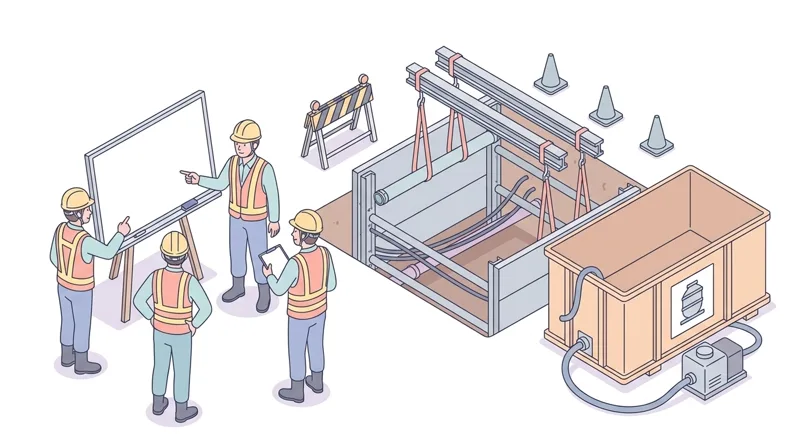
地山の掘削および土留め支保工の組み立て・解体では、作業主任者を選任し、大雨や地震の後は作業再開前に地山のひび割れ・湧水や切梁の緩みを点検します。
Operations chiefs must be appointed for ground excavation and shoring assembly/dismantling, and ground cracks, seepage, and strut looseness must be inspected after heavy rain or earthquakes.
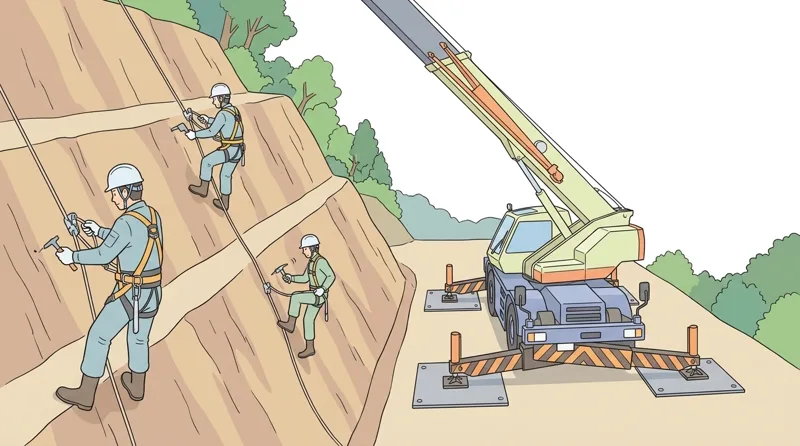
高さ2m以上の作業床の端や開口部には高さ85cm以上の手すりと中桟・幅木を設け、高さ5m以上の法面作業ではロリップと親綱にフルハーネス型墜落制止用器具を接続します。
Guardrails (>= 85 cm high), mid-rails, and toeboards must be installed at platform edges >= 2 m high, and full-body harnesses must be attached to lifelines via rope grabs on slopes >= 5 m high.
深さ1.5mを超える掘削箇所への昇降には、矢板や切梁をよじ登らせず、安全な昇降設備(階段や固定はしご)を設置しなければなりません。
For access into excavations deeper than 1.5 m, workers must not climb on sheet piles or struts; dedicated safe access facilities (stairs or secured ladders) must be provided.
Key points
- フルハーネス型墜落制止用器具のフックは、落下距離を短くするため腰より高い位置に掛け、ショックアブソーバの自由落下距離以下の低い場所では使用に注意する。
Attach the full-body harness hook above waist level to minimize fall distance, and verify sufficient clearance below the worker for shock absorber deployment. - 法面や切羽の下で作業する前に、必ず上部から浮石(落石の危険がある石)を除去し、上下同時作業を禁止する。
Before working at the toe of a slope or excavation face, remove loose rocks from the top down and strictly prohibit simultaneous upper-and-lower vertical work. - 掘削端(肩)のすぐ近くに重機を据えたり掘削土砂を積み上げたりすると、荷重で法肩が崩壊するため離隔をとる。
Keep heavy machinery and excavated soil piles well back from the excavation edge (shoulder) to prevent surcharge-induced edge collapse.
| Word | Meaning |
|---|---|
| 地山の掘削及び土止め支保工作業主任者 | Operations chief for ground excavation and shoring |
| フルハーネス型墜落制止用器具 | Full-body harness fall arrest equipment |
| 親綱・ロリップ(安全器) | Main lifeline & Rope grab fall arrester (Rorip) |
| 浮石の除去(こそく)・上下作業禁止 | Scaling loose rock & Prohibition of simultaneous vertical work |
建設機械・クレーン・玉掛け作業の接触・転倒防止
Collision & Tip-Over Prevention in Construction Machinery, Crane & Rigging Work
車両系建設機械の稼働範囲(旋回範囲)内は立入り禁止措置をとり、誘導者(合図者)を配置して運転者から見える位置で明確に合図させます。
Barricade the operating/swing radius of vehicle-type construction machinery to prohibit entry, and station a signaler in clear view of the operator to give unambiguous signals.
移動式クレーンは地盤を平坦に固めて敷鉄板の上にアウトリガーを最大張出しで設置し、作業半径に応じた定格荷重および過負荷防止装置を厳守します。
Mobile cranes must have outriggers extended to their maximum width on steel plates over firm level ground, strictly observing the rated load for the working radius and overload limiter.
玉掛け作業では吊り角度を60度以内とし、フックの外れ止め装置を必ず確認して、「地切り(床から少し浮かせて一旦停止)」で荷のバランスを確かめます。
In rigging work, keep the sling angle within 60 degrees, verify the hook safety latch, and perform a 'lift-off check (stopping briefly just above the ground)' to confirm load balance.
Key points
- 運転席から離れるときは、バケットなどの作業装置を必ず地上に下ろし、駐車ブレーキをかけてエンジンを止める。
Before leaving the operator's seat, always lower the bucket or attachment to the ground, set the parking brake, and shut off the engine. - 油圧ショベルの用途外使用(バケットの爪にワイヤを掛けて荷を吊る行為)は原則禁止であり、移動式クレーン仕様機のフックを用いる。
Using an excavator for non-intended lifting (hooking wire ropes onto bucket teeth) is prohibited; always use the dedicated hook of a crane-equipped excavator. - 強風時(10分間の平均風速が10m/s以上)はクレーン作業を中止し、吊り荷の下には絶対に人を入れない。
Suspend crane operations during strong winds (10-minute average wind speed >= 10 m/s), and never allow anyone under a suspended load.
| Word | Meaning |
|---|---|
| アウトリガー最大張出し・敷鉄板 | Maximum outrigger extension & Steel ground plates |
| 定格荷重・作業半径 | Rated load capacity & Working radius |
| 玉掛け吊り角度60度以内・地切り | Sling angle within 60 degrees & Lift-off balance check |
| 用途外使用の禁止・合図者(誘導者) | Prohibition of unintended machine use & Signaler |
地下埋設物・架空線の防護と酸素欠乏・有毒ガス対策
Underground Utility & Overhead Line Protection and Oxygen Deficiency / Toxic Gas Safety
道路掘削では、事前に埋設物台帳を確認した上で「手掘りによる試掘」でガス管・水道管・電力ケーブルの位置を目視確認し、露出した管は吊り防護・受け防護します。
Before road excavation, check utility records and perform 'manual trial digging (test pitting)' to visually locate gas, water, and power lines, supporting exposed pipes with hanging or cradling protection.
架空電線(高圧線)の近くでクレーンや油圧ショベルを使うときは、電線に絶縁防護管を取り付け、安全な離隔距離を保つとともに専任の監視人を配置します。
When operating cranes or excavators near overhead power lines, install insulating protective sleeves on the lines, maintain safe clearance distances, and assign a dedicated spotter.
マンホール・ピット・トンネルなどの閉鎖空間では、立入前に複合型ガス検知器で酸素濃度18%以上・硫化水素10ppm以下を測定し、作業中も継続換気します。
Before entering confined spaces like manholes, pits, or tunnels, use a multi-gas detector to verify oxygen >= 18% and hydrogen sulfide <= 10 ppm, maintaining continuous ventilation during work.
Key points
- 埋設物の周辺(50cm以内など)や埋設表示シート・防護板が出た箇所は、重機で掘らずスコップで慎重に手掘りする。
Within close proximity (e.g., 50 cm) of buried utilities or once warning tape/protection plates appear, stop machine digging and excavate carefully by hand with a shovel. - 万一ガス管を損傷してガスが漏洩したら、直ちにエンジンや火気を止めて風上へ避難し、ガス事業者・消防へ通報する。
If a gas pipe is accidentally damaged and leaking, immediately shut off all engines and ignition sources, evacuate upwind, and notify the gas utility and fire department. - 酸欠危険場所で作業員が倒れた場合、空気呼吸器(または送気マスク)を着けずに素手で救出に入ると二次災害になるため厳禁。
If a worker collapses in an oxygen-deficient space, never enter to rescue them without wearing a self-contained breathing apparatus (SCBA) or airline respirator, to prevent secondary fatalities.
| Word | Meaning |
|---|---|
| 試掘(手掘り確認)・吊り防護 | Trial digging (manual verification) & Hanging pipe protection |
| 架空線の絶縁防護管・離隔距離 | Overhead line insulating sleeve & Safe clearance distance |
| 酸素欠乏(18%未満)・硫化水素(10ppm超) | Oxygen deficiency (< 18%) & Hydrogen sulfide (> 10 ppm) |
| 空気呼吸器・送気マスク | Self-contained breathing apparatus (SCBA) & Airline mask |
リスクアセスメント・KY活動・職業性疾病予防・環境保全
Risk Assessment, KY Activities, Occupational Health & Environmental Protection
現場では毎日の作業前にKY(危険予知)活動やリスクアセスメントを行い、不安全状態と不安全行動を洗い出して具体的な対策を全員で共有します。
Before starting work each day, conduct KY (hazard prediction) activities and risk assessments to identify unsafe conditions and unsafe acts and share concrete countermeasures with all workers.
夏場の熱中症予防ではWBGT(暑さ指数)を測定してこまめな水分・塩分補給を行い、油圧ブレーカやランマなどの振動工具は1日2時間以内・連続30分以内を目安に管理します。
For summer heatstroke prevention, monitor the WBGT index and replenish water and salt frequently; limit handheld vibrating tool use to <= 2 hours/day and <= 30 minutes continuously.
コンクリートカッタ等の濁水(強アルカリ性)は河川にそのまま流さず中和・沈殿処理し、建設廃棄物は分別してマニフェスト(産業廃棄物管理票)で適正処分します。
Highly alkaline concrete cutting wastewater must undergo neutralization and sedimentation before discharge, and construction waste must be sorted and tracked using industrial waste manifests.
Key points
- ハインリッヒの法則:1件の重大災害の背後には29件の軽微な災害と300件のヒヤリ・ハットが存在するため、ヒヤリ・ハット段階で対策をとる。
Heinrich's Law: Behind 1 major injury lie 29 minor injuries and 300 near-misses (Hiyari-Hatto); eliminating near-misses prevents serious accidents. - コンクリートのはつり・切断やトンネル作業では、じん肺予防のため国家検定合格の防じんマスクを着用し湿潤化(散水)を行う。
During concrete chipping, cutting, or tunneling, wear government-certified dust respirators and apply water spraying to prevent pneumoconiosis. - 特定建設作業では低騒音・低振動型建設機械を使用し、防音シートや夜間・休日の作業規制を守る。
In specified construction work, use low-noise and low-vibration machinery, install soundproof sheets, and observe nighttime and holiday work restrictions.
| Word | Meaning |
|---|---|
| リスクアセスメント・KY(危険予知)活動 | Risk assessment & KY (hazard prediction) activity |
| WBGT(暑さ指数)・振動障害予防 | WBGT heat stress index & Vibration disorder prevention |
| アルカリ排水の中和処理 | Neutralization treatment of alkaline wastewater |
| マニフェスト(産業廃棄物管理票) | Industrial waste management manifest |
Civil Engineering Safety
Practice this chapter in the appOfficial references
- 建設分野特定技能2号評価試験 学科・実技試験テキスト【土木区分】(JAC 建設技能人材機構) — https://jac-skill.or.jp/exam/files/text6d.pdf
- 建設分野特定技能2号評価試験 サンプル問題【土木区分】(JAC 建設技能人材機構) — https://jac-skill.or.jp/exam/files/st2_sample2_d.pdf