 Tokutei Pass
Foreman Duties & Construction Site Management (QCDSE)
職長の職務・現場管理(QCDSE)
Construction – Building (SSW 2) · 建設分野(2号・建築区分) · Written by Tokutei Pass based on the official study texts; not copied verbatim.
職長の役割・リーダーシップ(PM理論)・CCUS
Role of the Foreman, PM Leadership Theory, and CCUS
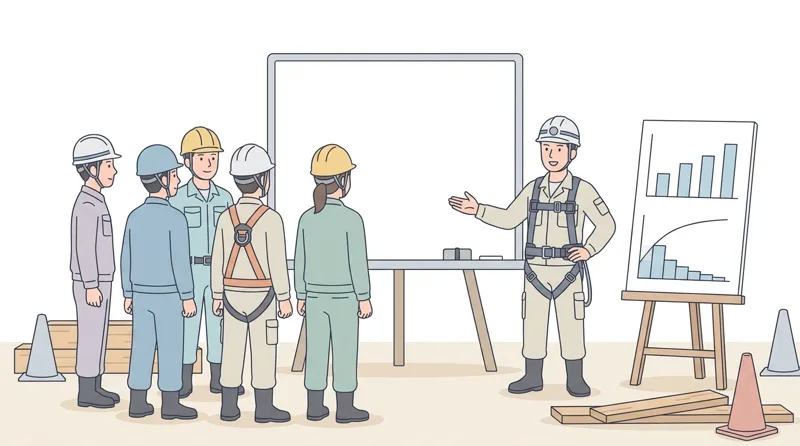
職長は、元請の現場代理人(所長)や主任技術者の施工計画・安全方針を的確に理解し、技能者を直接指揮・指導して安全と品質を実現する要です。
The foreman (Shokuchou) serves as the vital link between the prime contractor's site manager / chief engineer and skilled workers, accurately understanding the construction plan and safety policy to directly supervise and guide workers for safety and quality.
協力会社の「安全衛生責任者」を兼務する職長は、元請の統括安全衛生責任者と連絡を取り、伝達事項を自班や関係者へ周知・管理します。
A foreman who also serves as the subcontractor's 'Safety and Health Person in Charge (Anzen eisei sekininsha)' liaises with the prime contractor's Overall Safety and Health Controller and communicates and manages instructions for their crew.
リーダーシップの「PM理論」では、手順を示して品質・工程目標を達成させる働きを「P機能(目標達成機能)」、意見や悩みを聴き協力しやすい職場をつくる働きを「M機能(集団維持機能)」といいます。
In 'PM Leadership Theory', showing clear procedures and directing workers toward quality and schedule goals is the 'P function (Performance / Goal Achievement)', while listening to workers' opinions and concerns to build a cooperative atmosphere is the 'M function (Maintenance)'.
建設キャリアアップシステム(CCUS)で職長・班長クラスの中核技能者は「レベル3(銀色カード)」に該当します。職長は法令遵守(コンプライアンス)を率先し、暴言や威圧的指導(パワハラ)を決して行いません。
In the Construction Career Up System (CCUS), core skilled workers serving as foremen correspond to 'Level 3 (Silver card)'. Foremen must lead by example in legal compliance and never use abusive language or intimidating guidance (power harassment).
Key points
- PM理論の「P機能」は目標達成への指示、「M機能」は人間関係や職場の輪を保つ配慮である。
In PM theory, the 'P function' drives goal achievement, while the 'M function' maintains team harmony and morale. - CCUSで職長クラスの技能者に交付されるレベル3のカードは「銀色カード」である。
In CCUS, Level 3 skilled workers serving as foremen on site are issued a 'Silver card'. - 元請担当者への報告は「事実と推測を分けて結論から簡潔に」伝え、法令遵守とハラスメント防止を徹底する。
Report to the prime contractor concisely 'stating the conclusion first while separating facts from speculation', and uphold compliance.
| Word | Meaning |
|---|---|
| PM理論 | PM Leadership Theory (P function & M function) |
| 安全衛生責任者 | Subcontractor Safety and Health Person in Charge |
| 銀色カード(レベル3) | CCUS Level 3 Silver Card (Foreman level) |
作業指示(5W1H)・OJT4段階・外国人指導・職場巡視
Work Instructions (5W1H), OJT 4 Steps, Instructing Foreign Workers, and Patrols
作業手順書は作業をステップに分けて各ステップの「急所と理由」を明記し、安全朝礼直後に作業場所近くで班ごとに「ツールボックスミーティング(TBM)」を開いて「5W1H(いつ・どこで・だれが・なにを・なぜ・どのように)」で明確に指示します。
Work procedure manuals must break tasks into steps and state the 'key points and reasons' for each step; right after the morning safety assembly, hold a crew 'Tool Box Meeting (TBM)' near the work area and give clear instructions using '5W1H (When, Where, Who, What, Why, How)'.
日常業務を通じて計画的に部下を育てる「OJT(職場内訓練)」の4段階は、「①やってみせる → ②説明・解説する → ③やらせてみる → ④確認・追加指導(褒める・直す)」の順に進めます。
The four steps of planned 'OJT (On-the-Job Training)' are conducted in order: '1. Demonstrate (show how) → 2. Explain key points and reasons → 3. Have them try it → 4. Check and give follow-up guidance (praise or correct)'.
日本語が十分でない外国人技能者には、やさしい言葉と実物や図を使い「復唱」させて理解を確かめます。困りごとの相談は最後まで聴いて事実確認後に助言し、不安全行動には具体的事実と理由・正しい方法を伝えて改善を確かめます。
For foreign workers with limited Japanese, speak in simple Japanese using real objects or drawings and have them 'repeat back (Fukushou)' the instructions to verify understanding. Listen fully to workers' concerns before advising, and correct unsafe acts by stating specific facts, reasons, and the right method.
作業中の「職場巡視」では手順書通りの作業や保護具使用を確認し、不安全な点はその場で直させます。また溶接等の火気作業終了後は、散水しただけで直ちに退場せず、一定時間は残火・くすぶりがないか監視します。
During 'workplace patrols (Shokuba junshi)', verify compliance with procedures and PPE and have unsafe items corrected on the spot. After hot work such as welding, never leave immediately after spraying water—monitor for smoldering embers for a set period.
Key points
- OJTの4段階は「やってみせ → 説明・解説し → やらせてみて → 確認・追加指導」の順に行う。
The 4 steps of OJT are: Demonstrate → Explain → Let try → Check and provide follow-up guidance. - 安全朝礼後に班ごとに行うTBMで5W1Hの指示を出し、外国人技能者には実物・図と復唱で理解を確かめる。
Conduct crew TBM right after morning assembly using 5W1H, and use real objects/diagrams and repeat-back for foreign workers. - 作業中は職場巡視でその場指導を行い、火気作業後は散水直後にすぐ退場せず残火確認を徹底する。
Correct unsafe acts on the spot during workplace patrols, and never lock up and leave immediately after spraying water on hot-work areas.
| Word | Meaning |
|---|---|
| OJT(職場内訓練) | On-the-Job Training (OJT) |
| 5W1H | 5W1H instruction method |
| 職場巡視 | Workplace patrol (Shokuba junshi) |
5大管理(QCDSE)・PDCAサイクル・QC七つ道具
Five Major Management Areas (QCDSE), PDCA Cycle, and Seven QC Tools
施工管理の5大管理(QCDSE)のうち、設計図書や仕様書の寸法・強度・精度通りに造る管理を「品質管理」といい、着手前の「実行予算」と実際の費用を比べて差の原因を調べる管理を「原価管理」といいます。
Among the Five Major Management Areas (QCDSE), ensuring structures meet the dimensions, strength, and accuracy specified in drawings and specifications is 'Quality management', while comparing actual expenses against the pre-work 'working budget (Jikkou yosan)' to investigate variances is 'Cost management'.
生産の5要素「5M」は人材(Men)・材料(Materials)・機械(Machinery)・方法(Methods)・資金(Money)であり、継続改善は「計画P→実施D→確認C→処置A」のPDCAです。
The five elements of production '5M' are Men, Materials, Machinery, Methods, and Money, and the continuous improvement cycle is 'P (Plan) → D (Do) → C (Check) → A (Act)'.
品質管理の「QC七つ道具」のうち、不良項目別の件数を棒グラフ、累積比率を折れ線グラフで表して重点対象を絞る図を「パレート図」、結果(特性)に対する原因を魚の骨の形に整理する図を「特性要因図」といいます。
Among the 'Seven QC Tools', a 'Pareto chart' combines a descending bar graph of defect counts with a cumulative percentage line to narrow down priority problems, while a 'cause-and-effect diagram (fishbone diagram)' organizes causes affecting a result.
また、対応する2つのデータ(気温と強度など)を縦軸・横軸に打点して相関関係を調べる図を「散布図」、測定値を区間に分けて柱状グラフでばらつきの分布を見る図を「ヒストグラム」といいます。
A 'scatter diagram' plots paired data (such as temperature and concrete strength) on vertical and horizontal axes to examine correlation, and a 'histogram' divides measured values into intervals using vertical bars to show the distribution of variation.
Key points
- 5Mは人材・材料・機械・方法・資金、PDCAは計画(Plan)→実施(Do)→確認(Check)→改善(Act)である。
The 5Ms are Men, Materials, Machinery, Methods, and Money; the PDCA cycle is Plan → Do → Check → Act. - 不良件数順の棒グラフと累積折れ線で重点を絞るのは「パレート図」、魚の骨状に原因を整理するのは「特性要因図」である。
A 'Pareto chart' prioritizes defects using bars and a cumulative line, while a 'cause-and-effect diagram' maps causes like a fishbone. - 2変量の相関を点で見るのは「散布図」、区間別の度数柱状グラフでばらつき分布を見るのは「ヒストグラム」である。
A 'scatter diagram' checks correlation between two variables, and a 'histogram' shows variation distribution across intervals.
| Word | Meaning |
|---|---|
| パレート図 | Pareto chart |
| 特性要因図 | Cause-and-effect diagram / Fishbone diagram |
| 散布図・ヒストグラム | Scatter diagram & Histogram |
工程管理・歩掛かりと工期計算・混在作業・異常気象
Schedule Management, Productivity (Bugakari), Mixed Work, and Severe Weather
縦軸に作業項目、横軸に日程をとって横棒で期間を示す「バーチャート工程表」がよく使われ、単位数量の施工に要する延べ人工(労働量)の指標を「歩掛かり」といいます。
A 'bar chart schedule' lists work items on the vertical axis and dates on the horizontal axis with horizontal bars showing duration; the labor index indicating total man-days (Ninku) required per unit quantity of work is 'productivity rate (Bugakari)'.
人工・工期計算:総量240人工を20日間で終えるには毎日12人、480㎡を1人1日6㎡・8人(1日48㎡)で行えば10日間です。60人工を6人で3日(18人工)行い、残り42人工を8人で行えば6日かかり計9日目に完了します。
Man-day calculations: 240 man-days completed in 20 days requires 12 workers/day; 480 m² of formwork at 6 m²/worker-day with 8 workers (48 m²/day) takes 10 days. For 60 man-days worked by 6 workers for 3 days (18 man-days) and 8 workers thereafter (42 ÷ 8 = 5.25 → 6 days), work finishes on the 9th day.
また作業A(3日)の後にB(4日)とC(6日)を並行し、両方完了後にD(2日)を行う最短工期は3+6+2=11日間です。工程遅れ時も無理な突貫作業は避け、安全と品質を守れる範囲で計画を見直します。
If Task A (3 days) is followed by Tasks B (4 days) and C (6 days) in parallel, and Task D (2 days) starts after both B and C finish, the shortest duration is 3 + 6 + 2 = 11 days. Never use reckless rush work (Tokkan sagyou) to recover delays; revise plans within safe and quality limits.
他職種と上下・近接して重なる「混在作業」では元請の作業間連絡調整で時間帯や場所を調整し、台風等の異常気象予測時は事前に養生・飛散防止措置を行い基準超えの悪天候時は直ちに作業を中止します。
When 'mixed work (Konzai sagyou)' overlaps vertically or nearby with other trades, coordinate work hours and locations at the prime contractor's coordination meeting; before typhoons or storms, secure scaffolds/materials against wind and stop work immediately when weather exceeds limits.
Key points
- 単位作業量あたりの労働量を「歩掛かり」といい、横棒で日程を示す工程表を「バーチャート工程表」という。
Labor required per unit work quantity is 'Bugakari', and a horizontal bar schedule is a 'bar chart schedule'. - 60人工を3日間6人(18人工)、以後8人で行うと残り42÷8=5.25→6日となり開始から「9日目」に完了する。
60 man-days (6 workers × 3 days = 18; remaining 42 ÷ 8 = 6 days) finishes on 'Day 9'; A(3d)→B(4d)//C(6d)→D(2d) takes '11 days'. - A(3日)→B(4日)・C(6日)並行→D(2日)の最短工期は「11日間」であり、混在作業は元請の連絡調整で時間・場所を分ける。
Coordinate time and place for mixed multi-trade work, and secure materials and halt work during severe weather.
| Word | Meaning |
|---|---|
| 歩掛かり | Labor productivity rate per unit work (Bugakari) |
| バーチャート工程表 | Bar chart schedule |
| 混在作業 | Mixed / Overlapping multi-trade work (Konzai sagyou) |
Foreman Duties and Site Management
Practice this chapter in the appOfficial references
- 建設分野特定技能2号評価試験(一般社団法人建設技能人材機構 JAC) — https://jac-skill.or.jp/exam.html
- 建設分野特定技能2号評価試験 試験実施要領(国土交通省) — https://www.mlit.go.jp/tochi_fudousan_kensetsugyo/content/001708857.pdf