 Tokutei Pass
Foreman Safety & Health Activities and Risk Management
職長の安全衛生活動・リスク管理
Construction – Building (SSW 2) · 建設分野(2号・建築区分) · Written by Tokutei Pass based on the official study texts; not copied verbatim.
職長教育(安衛法第60条)とリスクアセスメント
Foreman Safety Training (Article 60) and Risk Assessment
労働安全衛生法第60条に基づく「職長教育」の法定事項には、作業方法の決定と労働者の配置、指導・監督方法、リスクアセスメント、異常時・災害発生時の措置などが含まれます(建設業許可申請や経営事項審査は含まれません)。
Statutory items in 'Foreman Safety and Health Training' under Article 60 of the Industrial Safety and Health Act include determining work methods and worker placement, supervision/guidance methods, risk assessment, and abnormality/accident response (construction business license applications and management evaluations are NOT included).
「リスクアセスメント」は、作業計画を立てるときや、機械・材料・作業手順を新規に採用・変更するときに実施します。
Conduct 'Risk Assessment' when formulating work plans or when newly adopting or changing machinery, materials, or work procedures.
特定した危険性・有害性のリスクの大きさ(優先度)は、災害の「発生可能性(頻度)」と負傷・疾病の「重篤度(ケガの程度)」の2要素を組み合わせて見積もります。
Estimate the magnitude (priority) of each identified hazard's risk by combining two elements: the 'probability (frequency) of accident occurrence' and the 'severity of injury or illness (Juutokudo)'.
リスク低減措置の検討では、法令遵守を前提としたうえで「①危険な作業の廃止・変更や有害性の低い材料への代替などの本質的対策」を第1順位(最優先)とし、次に工学的対策、管理的対策、個人用保護具の順に進めます。
When planning risk reduction measures while ensuring legal compliance, the 1st priority (highest priority) is '1. Intrinsic/Essential measures (eliminating hazardous work or substituting less hazardous materials)', followed by engineering controls, administrative controls, and personal protective equipment (PPE).
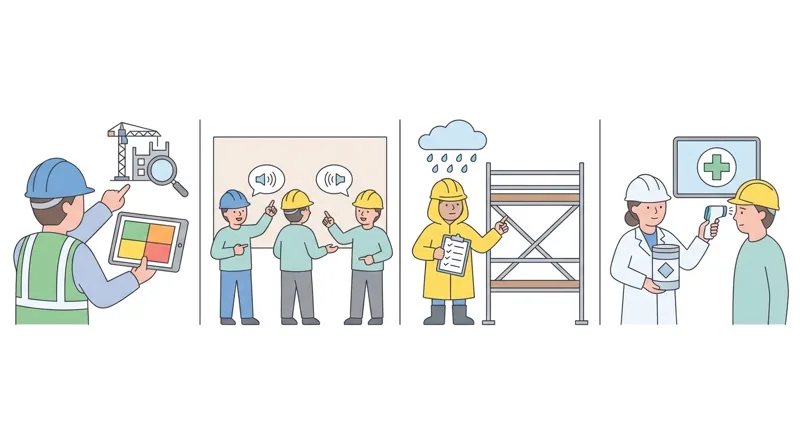
Key points
- 職長教育の法定項目に「建設業許可申請や経営事項審査」は含まれない。
Statutory Foreman Training does NOT include construction business licensing or management review procedures. - リスクは災害の「発生可能性(頻度)」と「重篤度(ケガの程度)」を組み合わせて見積もる。
Risk magnitude is estimated by combining 'occurrence probability (frequency)' and 'severity of injury (Juutokudo)'. - リスク低減対策の第1順位(最優先)は、危険作業の廃止や安全な材料への変更といった「本質的対策」である。
The 1st priority in risk reduction is 'intrinsic measures' such as eliminating hazardous tasks or substituting safer materials.
| Word | Meaning |
|---|---|
| リスクアセスメント | Risk Assessment |
| 重篤度 | Severity of injury or illness (Juutokudo) |
| 本質的対策 | Intrinsic / Essential safety measures (Honshitsuteki taisaku) |
ハインリッヒの法則・KYT4ラウンド法・なぜなぜ分析
Heinrich's Law, KYT Basic 4-Round Method, and Why-Why Analysis
1件の重大災害の背後には29件の軽微な災害と300件のヒヤリ・ハットがあるという経験則を「ハインリッヒの法則(1:29:300)」といいます。
The safety principle stating that behind 1 major accident lie 29 minor accidents and 300 near-misses (Hiyari-Hatto) is called 'Heinrich's Law (1 : 29 : 300 ratio)'.
労働災害は物や環境の「不安全な状態(例:丸のこ盤の安全カバーが破損して外れていたこと)」と人間の「不安全な行動」が重なって発生します。
Occupational accidents usually occur when physical/environmental 'unsafe conditions (e.g., a broken and detached safety guard on a circular saw)' overlap with human 'unsafe acts'.
危険予知訓練の「KYT基礎4ラウンド法」は、「1R:現状把握 → 2R:本質追究 → 3R:対策樹立 → 4R:目標設定」の順に進め、対象を指で差し声に出す「指差し呼称」で意識を高めて誤りを減らします。
The 'KYT Basic 4-Round Method' proceeds in order: '1R: Grasp current status → 2R: Pursue essence → 3R: Establish countermeasures → 4R: Set action goals', and 'pointing-and-calling (Shisa koshou)' raises awareness to reduce human error.
災害発生後の再発防止では、個人のミスで終わらせず「なぜなぜ分析」などで背後の設備不備や管理・教育の欠陥(間接原因)まで突き止め、同種災害を根本から防ぎます。
When investigating accidents or near-misses to prevent recurrence, do not stop at individual error—use 'Why-Why Analysis (Naze-naze bunseki)' to uncover root indirect causes in equipment defects, management, and training.
Key points
- 重大災害1件・軽微災害29件・ヒヤリ・ハット300件の比率を示す法則を「ハインリッヒの法則」という。
The 1 : 29 : 300 ratio among major accidents, minor accidents, and near-misses is 'Heinrich's Law'. - 安全カバーの破損・欠落等は物や環境側の「不安全な状態」に分類される。
A broken or missing circular saw blade guard is classified as an environmental/mechanical 'unsafe condition'. - KYT基礎4ラウンド法は「1R現状把握→2R本質追究→3R対策樹立→4R目標設定」の順に進める。
The KYT 4-Round Method follows: 1R Grasp status → 2R Pursue essence → 3R Establish countermeasures → 4R Set goals.
| Word | Meaning |
|---|---|
| ハインリッヒの法則 | Heinrich's Law (1 : 29 : 300) |
| KYT基礎4ラウンド法 | KYT Basic 4-Round Method |
| なぜなぜ分析 | Why-Why Analysis (Naze-naze bunseki) |
災害統計(度数率・強度率)・5S・SDS・異常時対応
Accident Statistics (Frequency & Severity Rates), 5S, SDS, and Emergencies
延べ実労働時間100万時間あたりの死傷者数(発生頻度)を「度数率」といい、50万時間で死傷者2人なら「2÷50万×100万=4.0」です。一方、1,000時間あたりの労働損失日数(災害の重さ)を「強度率」といいます。
The number of casualties per 1,000,000 working hours is the 'frequency rate (Dosuuritsu)'; 2 casualties in 500,000 hours gives a frequency rate of 2 ÷ 500,000 × 1,000,000 = 4.0. The number of lost workdays per 1,000 working hours is the 'severity rate (Kyoudoritsu)', indicating accident severity.
5S活動において、「整理」は不要なものを捨てること、「整頓」は必要なものを取り出しやすく置くこと、「清潔」は整理・整頓・清掃の状態を保つこと、「しつけ」は決められたルールを正しく守る習慣をつけることです。
In 5S activities: 'Seiri (Sort)' means discarding unneeded items, 'Seiton (Set in order)' means placing needed items for easy retrieval, 'Seiketsu (Standardize)' means maintaining the state of Seiri, Seiton, and Seisou, and 'Shitsuke (Sustain)' means building the habit of following rules.
塗料や接着剤等の化学物質を使う前には、危険有害性・取扱注意・応急措置・保管方法が記載された「SDS(安全データシート)」を確認します。
Before handling paints or adhesives containing chemicals, check the 'SDS (Safety Data Sheet)' for hazard information, handling precautions, first-aid measures, and storage instructions.
機械の異常音や足場の緩みを発見したときはまず作業・機械を止めて上司へ報告し、重大災害発生時は二次災害防止のため直ちに作業を中止して安全を確保し、救護と元請への緊急連絡を行います。
If abnormal machine noise or loose scaffold parts are found, stop the machine/work first and report to a supervisor; in a major accident, stop work immediately to prevent secondary accidents, rescue the injured, and make an emergency report to the prime contractor.
Key points
- 50万労働時間で死傷者2人の度数率は「4.0」であり、1,000時間あたりの労働損失日数は「強度率」である。
2 casualties in 500,000 working hours equals a frequency rate of '4.0'; lost workdays per 1,000 hours is the 'severity rate'. - 5Sで不要物を捨てるのは「整理」、3Sを保つのは「清潔」、ルールを守る習慣化は「しつけ」である。
In 5S, discarding unneeded items is 'Seiri', maintaining 3S is 'Seiketsu', and habituating rule compliance is 'Shitsuke'. - 化学物質使用前は「SDS」を確認し、異常・災害時はまず作業を止めて二次災害防止と報告・救護を行う。
Check the 'SDS' before using chemicals, and stop work immediately during abnormalities or accidents to prevent secondary disasters.
| Word | Meaning |
|---|---|
| 度数率・強度率 | Frequency rate (Dosuuritsu) & Severity rate (Kyoudoritsu) |
| SDS(安全データシート) | Safety Data Sheet (SDS) |
| 熱中症予防(水分+塩分補給) | Heatstroke prevention (Simultaneous water & salt intake) |
足場点検・手すり基準・保護具・健康と高齢労働者配慮
Scaffold Inspections, Guardrail Standards, PPE, Health & Older Workers
足場は毎作業日前の点検に加え、「強風・大雨・大雪等の悪天候後」および「中震(震度4)以上の地震後」には作業開始前に必ず点検します。作業床端の墜落防止設備は「手すり高さ85cm以上、中桟高さ35cm以上50cm以下」とします。
Inspect scaffolds before starting work after 'strong winds, heavy rain, or heavy snow' and after 'earthquakes of seismic intensity 4 (medium earthquake) or higher'. Fall prevention equipment on working floors requires a 'top guardrail at least 85 cm high and a mid-rail (Nakazan) 35 cm to 50 cm high'.
高所作業のフルハーネス型墜落制止用器具は、掛け替え時も無胴綱状態をなくすため「2丁掛け(ダブルランヤード)」を使い腰より高い親綱等に掛けます。強い衝撃を受けた保護帽は傷がなくても交換します。
Use a full-body harness with a 'double lanyard (2-chougake)' so one hook remains attached while moving, and hook onto a lifeline above waist level. Replace any safety helmet that has suffered a strong impact even if no cracks are visible.
朝礼やKY活動時には作業員の顔色や睡眠不足・体調不良を確かめ、不調者は高所等の危険作業から外します。また人力で持ち上げる重量目安(体重の約40%以下)は体重60kgの成人男性で「約24kg以下」です。
During morning assemblies and KY activities, check workers' complexion, sleep deprivation, and health, and reassign unwell workers away from high-place or hazardous tasks. The manual lifting guideline (approx. 40% or less of body weight) for a 60 kg adult male is 'approx. 24 kg or less'.
高年齢労働者は視力や平衡感覚が低下しやすいため、通路の照度確保や段差解消などの安全配慮を行います。
Because older workers are prone to declining vision and balance, provide adequate walkway lighting and eliminate floor level steps.
Key points
- 強風・大雨・大雪の後や「震度4以上の地震」の後には作業開始前に足場を点検する。
Inspect scaffolds before work after severe weather or earthquakes of seismic intensity 4 or higher. - 足場の「手すりは高さ85cm以上、中桟は高さ35cm以上50cm以下」とし、フルハーネスは2丁掛けを腰より高く掛ける。
Scaffold top rails must be ≥ 85 cm high and mid-rails 35–50 cm high; use a double-lanyard full-body harness hooked above waist level. - 体重60kgの男性が人力で持つ目安は「約24kg以下(体重の約40%以下)」であり、高齢労働者には照度確保や段差解消を行う。
Manual lifting for a 60 kg male should be 'approx. 24 kg or less' (≤ 40% of body weight); ensure lighting and step-free walkways for older workers.
| Word | Meaning |
|---|---|
| 2丁掛け(ダブルランヤード) | Double lanyard (2-chougake) |
| 中桟 | Scaffold mid-rail (Nakazan) |
| 5S活動(整理・整頓・清掃・清潔・しつけ) | 5S Activities (Sort, Set in order, Shine, Standardize, Sustain) |
Foreman Safety and Health Activities
Practice this chapter in the appOfficial references
- 建設分野特定技能2号評価試験(一般社団法人建設技能人材機構 JAC) — https://jac-skill.or.jp/exam.html
- 建設分野特定技能2号評価試験 試験実施要領(国土交通省) — https://www.mlit.go.jp/tochi_fudousan_kensetsugyo/content/001708857.pdf