
Lifeline & Equipment Safety, Health, Disaster Prevention & Environmental Protection (Type 2 Practical)
ライフライン・設備の安全衛生・災害防止・環境保全(2号実技)
Construction (SSW 2) · 建設分野(2号) · Written by Tokutei Pass based on the official study texts; not copied verbatim.
感電防止・停電作業(ロックアウト)・活線近接作業
Electric Shock Prevention, De-Energized Work (Lockout) & Live-Line Proximity Work
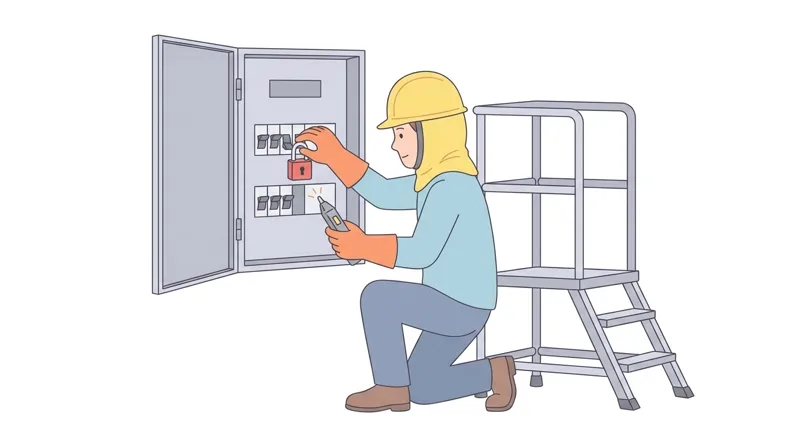
電気工事や機器点検では原則として電源を切る「停電作業」とし、ブレーカに施錠(ロックアウト)と「作業中・投入禁止」の表示札(タグアウト)を取り付けてから検電器で無電圧を確認します。
Electrical work and maintenance should be performed de-energized in principle: apply a padlock (Lockout) and 'Do Not Operate' tag (Tagout) to the breaker, then verify zero voltage with a voltage detector.
工事現場の仮設分電盤や電動工具・水中ポンプには、漏電による感電を防ぐため「高感度高速形漏電遮断器」とアース線(接地)を必ず設置します。
Temporary site distribution panels, power tools, and submersible pumps must always be protected by a high-sensitivity fast-acting earth leakage circuit breaker (ELCB) and proper grounding.
充電部の近くで作業する場合は、充電部に絶縁用防具(ゴムシート・防護管)を装着し、作業員は絶縁用保護具(電気用ゴム手袋・絶縁靴)を着用します。
When working near live parts, install insulating protective shields on the energized components and wear personal insulating protective gear (electrical rubber gloves and insulated boots).
Key points
- 検電器は使用前に内蔵電池や既知の充電部で正常に作動することを確かめてから、対象電路の無電圧を確認する。
Before checking a circuit with a voltage detector, test its battery and verify proper operation on a known live source. - アーク溶接機を使用するときは、ホルダーの無負荷電圧による感電を防ぐため「自動電撃防止装置」が正常に機能することを確認する。
When using an AC arc welder, confirm that the 'automatic shock prevention device (voltage reducer)' is functioning properly to prevent shock from no-load voltage. - コードリール(巻き取り式延長コード)は、巻いたまま大電流を流すと発熱・焼損するため、全長を引き出して使用する。
Always fully unwind extension cord reels before drawing high current, as leaving the cable coiled causes overheating and insulation melting.
| Word | Meaning |
|---|---|
| ロックアウト・タグアウト(施錠と表示札) | Lockout / Tagout (padlocking & warning tag) |
| 検電器・無電圧確認 | Voltage detector & Zero-voltage verification |
| 漏電遮断器・自動電撃防止装置 | Earth leakage circuit breaker & Automatic arc welder shock preventer |
| 絶縁用保護具・絶縁用防具 | Personal insulating protective gear & Insulating line shields |
脚立・可搬式作業台・高所作業車・開口部の安全
Safety for Stepladders, Portable Work Platforms, Aerial Work Platforms & Shaft Openings
屋内の天井配管や配線では、脚立の天板に乗ったりまたがったりする作業を避け、手すり付きの「可搬式作業台(たちうま)」やローリングタワー(移動式足場)を使用します。
For indoor overhead piping and wiring, never stand on or straddle the top cap of a stepladder; instead, use guardrail-equipped portable work platforms (Tachiuma) or mobile rolling towers.
ローリングタワーを使用するときは、移動前に必ず作業員を下ろし(人を乗せたまま移動厳禁)、作業中は脚輪(キャスター)のブレーキをすべてロックしアウトリガーを張り出します。
When using a rolling tower, all workers must climb down before moving it (moving with workers aboard is strictly prohibited), and all caster brakes and outriggers must be locked during work.
高所作業車(バケット車)のバスケット内では、ヘルメットとフルハーネス型墜落制止用器具を着用し、フックをバスケット内の所定の取付具に必ず掛けます。
Inside the basket of an aerial work platform (boom lift), workers must wear a helmet and full-body harness with the lanyard hooked to the designated anchor point inside the basket.
Key points
- 脚立を使う場合は、平坦な床に置いて「開き止め金具」を確実にロックし、天板やそのすぐ下の踏みさんに乗って作業しない。
When using a stepladder, place it on a flat floor, lock the spreader bars securely, and never work while standing on the top cap or top step. - パイプシャフト(PS)や電気シャフト(EPS)の床開口部で材料を通すため一時的に蓋や手すりを外したときは、監視人を置き作業終了後ただちに復旧する。
If a floor cover or guardrail at a pipe shaft (PS) or electrical shaft (EPS) opening is temporarily removed to pass materials, post a watchperson and restore the barrier immediately after. - 通信柱や電力柱の昇柱作業では、昇柱前に柱の根元の腐食・ひび割れを点検し、柱上安全帯(U字つり・フルハーネス)で身体を保持する。
Before climbing a telecom or utility pole, inspect the pole base for rot or cracks and secure yourself using pole-climbing fall protection (work-positioning lanyard and full-body harness).
| Word | Meaning |
|---|---|
| 可搬式作業台(たちうま)・ローリングタワー | Portable work platform (Tachiuma) & Rolling tower scaffold |
| 脚立の開き止め金具・天板使用禁止 | Stepladder spreader lock & Prohibition of standing on top cap |
| 高所作業車・バスケット内フック取付 | Aerial work platform & Hooking lanyard inside basket |
| シャフト開口部の養生・即時復旧 | Shaft opening protection & Immediate restoration |
火気・溶接・有機溶剤・マンホール内酸欠の災害防止
Hazard Prevention in Hot Work/Welding, Organic Solvents & Manhole Confined Spaces
配管のガス溶接・ろう付けやグラインダ切断などの火気作業では、周囲の保温材や可燃物を片付けて防炎シート(スパッタシート)で養生し、消火器と水バケツをすぐ使える位置に備えます。
During hot work such as gas welding, brazing, or grinder cutting, clear nearby insulation and combustibles, shield the area with fireproof spatter sheets, and keep fire extinguishers and water buckets at hand.
塩ビ管用接着剤や洗浄剤・塗料には揮発性で引火・中毒の危険がある有機溶剤が含まれるため、ピットや狭い室内では火気厳禁とし送風機で換気しながら防毒マスクを使用します。
PVC solvent cements, cleaners, and paints contain volatile, flammable organic solvents; in pits or tight rooms, strictly prohibit ignition sources, ventilate with blowers, and wear organic vapor respirators.
下水マンホールや通信マンホール・受水槽内に入る前には、必ず酸素および硫化水素・可燃性ガス濃度を測定し、地上に監視人を配置して送風換気を続けます。
Before entering sewer manholes, telecom vaults, or water tanks, measure oxygen, hydrogen sulfide, and flammable gas concentrations, station an attendant topside, and maintain continuous forced ventilation.
Key points
- 酸素・アセチレン溶接では、ボンベを直射日光の当たらない風通しの良い場所に転倒防止措置をして立てて置き、逆火防止器(安全器)を取り付ける。
In oxy-acetylene welding, secure gas cylinders upright against tipping in a shaded, well-ventilated area, and install flashback arrestors. - ディスクグラインダや高速切断機を使うときは、軍手が巻き込まれるのを防ぐため保護めがね・防じんマスクとともに適切な作業手袋(または素手規程)を守り、砥石カバーを外さない。
When operating a disc grinder or high-speed cutoff saw, wear safety goggles and a dust mask, and never remove the wheel guard. - パイプマシン(ねじ切り機)の回転部には、巻き込まれ災害を防止するため絶対に軍手を着けた手を触れさせない。
Never wear knitted cotton gloves (gunte) near rotating parts of a pipe threading machine or drill, as the fibers can get caught and pull the hand into the machine.
| Word | Meaning |
|---|---|
| 防炎シート(スパッタシート)・逆火防止器 | Fireproof spatter sheet & Flashback arrestor |
| 有機溶剤中毒予防・防毒マスク | Organic solvent poisoning prevention & Gas respirator |
| 回転体への巻き込まれ防止(軍手禁止) | Entanglement prevention on rotating machines (No cotton gloves) |
| 酸素・硫化水素・可燃性ガス濃度測定 | Oxygen, hydrogen sulfide & flammable gas measurement |
フロン回収・石綿(アスベスト)対策・産業廃棄物と環境保全
Fluorocarbon Recovery, Asbestos Measures, Industrial Waste & Environmental Protection
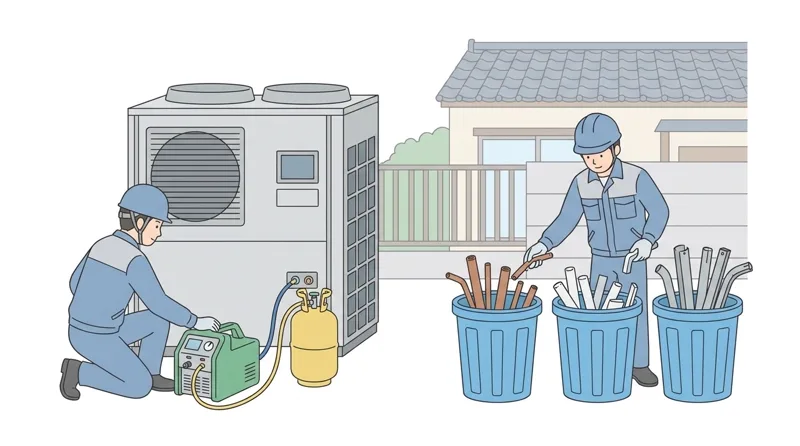
業務用エアコンや冷凍冷蔵機器の撤去・修理時には、冷媒フロンガスを大気中へ放出することがフロン排出抑制法で禁止されており、フロン回収機で回収ボンベに回収します。
When removing or servicing commercial air conditioners and refrigeration equipment, venting fluorocarbon refrigerant into the atmosphere is prohibited by law; it must be recovered into recovery cylinders using a recovery unit.
既存建築物の改修・配管撤去では、事前に石綿(アスベスト)含有保温材・パッキン・耐火被覆の有無を調査し、含有がある場合は飛散防止措置と呼吸用保護具を徹底します。
Before renovating existing buildings or removing old piping, survey insulation, gaskets, and fireproofing for asbestos; if present, enforce strict dust containment and respiratory protection.
現場から出る金属くず(鋼管・銅線)・廃プラスチック類(塩ビ管・被覆材)・ガラス陶磁器くず(グラスウール)は分別し、マニフェストにより適正に処理します。
Sort site waste into scrap metal (steel pipe, copper wire), waste plastics (PVC pipe, cable sheathing), and glass/ceramic waste (glass wool), and dispose of them properly using manifests.
Key points
- フロンガスをみだりに大気放出すると地球温暖化やオゾン層破壊を招き、厳しい処分の対象となる。
Illegally venting fluorocarbon refrigerants causes global warming and ozone depletion and is subject to strict legal penalties. - 機器更新時に古い高圧進相コンデンサや安定器を発見した場合は、有害なPCB(ポリ塩化ビフェニル)含有の有無を確認し特別管理産業廃棄物として厳重保管・処理する。
When replacing old high-voltage capacitors or lighting ballasts, check for toxic PCBs (polychlorinated biphenyls) and store/dispose of them strictly as specially controlled industrial waste. - 現場での整理・整頓・清掃・清潔・しつけ(5S)を徹底し、通路に管端くずや電線くずを放置して転倒災害を起こさないようにする。
Maintain strict 5S housekeeping on site, keeping walkways clear of pipe offcuts and wire scraps that cause tripping and rolling-pipe falls.
| Word | Meaning |
|---|---|
| フロン回収機・大気放出禁止 | Fluorocarbon recovery unit & Prohibition of atmospheric venting |
| 石綿(アスベスト)事前調査・飛散防止 | Pre-demolition asbestos survey & Dust dispersion prevention |
| PCB含有機器(特別管理産業廃棄物) | PCB-containing equipment (Specially controlled industrial waste) |
| 5S活動(整理・整頓・清掃・清潔・しつけ) | 5S activities (Sort, Set in order, Shine, Standardize, Sustain) |
Lifeline and Equipment Work Safety
Practice this chapter in the appOfficial references
- 建設分野特定技能2号評価試験 学科・実技試験テキスト【ライフライン・設備区分】(JAC 建設技能人材機構) — https://jac-skill.or.jp/exam/files/text6l.pdf
- 建設分野特定技能2号評価試験 サンプル問題【ライフライン・設備区分】(JAC 建設技能人材機構) — https://jac-skill.or.jp/exam/files/st2_sample2_l.pdf