
Lifeline & Equipment Construction Methods, Schedule & Quality Control (Type 2 Practical)
ライフライン・設備の施工方法・工程・品質管理(2号実技)
Construction (SSW 2) · 建設分野(2号) · Written by Tokutei Pass based on the official study texts; not copied verbatim.
給排水・衛生配管と地下ライフライン(水道・ガス・下水)の施工
Installation of Plumbing, Sanitary Piping & Underground Lifelines (Water, Gas, Sewer)
給水配管では汚水の逆流・混入を防ぐため、他の配管との直接接続(クロスコネクション)を絶対に行わず、受水槽などには吐水口空間や逆止弁を設けます。
In water supply piping, cross-connections with non-potable lines are strictly prohibited to prevent contamination; air gaps and backflow preventers (check valves) must be installed.
屋内の自然流下式排水横管は、適切な下り勾配(管径75mm以下は1/50、100mm以上は1/100が目安)をつけ、封水深さ50〜100mmの排水トラップと通気管で臭気を防ぎます。
Gravity horizontal drainage pipes require proper downward pitch (typically 1/50 for <= 75 mm pipes, 1/100 for >= 100 mm pipes), drainage traps with 50-100 mm water seal depth, and vent pipes.
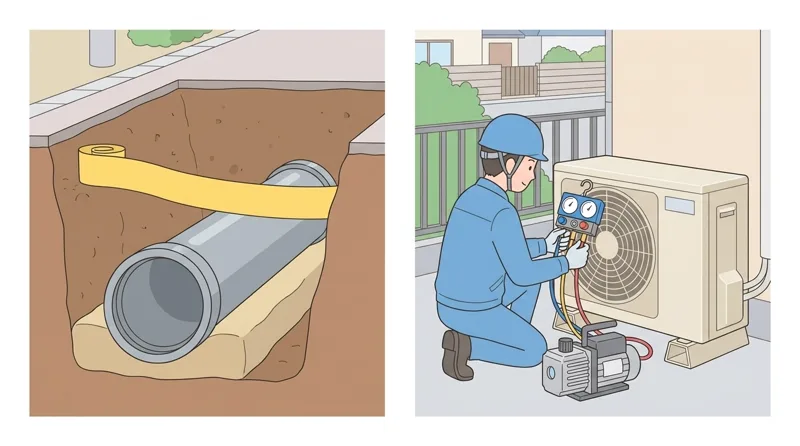
地下の上水道・ガス管の埋設では、管底に砂を敷いて石による傷を防ぎ、管頂と地表の中間に「埋設表示シート」を敷設して所定の土被りを確保します。
When burying underground water or gas mains, place sand bedding beneath the pipe to prevent rock damage, lay underground warning tape midway above the pipe crown, and maintain required earth cover.
Key points
- 排水管の合流部や曲がり部には、詰まりを防ぎ流れを滑らかにするため、直角エルボではなく大曲りエルボ(ロングエルボ)や45°Y継手を用いる。
At drainage junctions and bends, use long-sweep elbows and 45-degree wyes (Y-fittings) instead of sharp 90-degree elbows to ensure smooth flow and prevent clogging. - 塩ビ管(TS継手)の接着では、管端の面取りと清掃・挿入長さの標線記入を行い、接着剤を薄く塗ってひねらず真っすぐ差し込んで保持する。
For PVC solvent cement joints (TS fittings), chamfer and clean the pipe end, mark insertion depth, apply cement thinly, push straight in without twisting, and hold firmly. - 埋設管の曲がり部・分岐部・末端部には水圧による継手の抜け出しを防ぐため、コンクリートブロック等で移動阻止(スラスト防護)を行う。
At bends, tees, and dead ends of pressurized buried pipelines, install concrete thrust blocks or restrained joints to prevent internal water pressure from pushing joints apart.
| Word | Meaning |
|---|---|
| クロスコネクション禁止・吐水口空間 | Prohibition of cross-connection & Air gap |
| 封水(50〜100mm)・通気管 | Water seal (50-100 mm) & Vent pipe |
| 埋設表示シート・砂基礎(クッション砂) | Underground warning tape & Sand bedding cushion |
| 大曲りエルボ(ロングエルボ)・スラスト防護 | Long-sweep elbow & Thrust block protection |
空調・冷媒配管・換気ダクト・保温工事の施工手順
Procedures for HVAC, Refrigerant Piping, Ventilation Ducts & Thermal Insulation
エアコンの冷媒銅管は、雨やほこり・水分が入らないよう管端を養生して配管し、フレア接続後に「窒素ガスによる気密試験」と「真空ポンプによる真空引き」を行います。
Refrigerant copper tubes must have their ends taped against moisture and dust during installation; after flare connection, perform a 'nitrogen airtightness test' and 'vacuum pump evacuation'.
冷房時に室内機から出る結露水を流す「ドレン配管」は、逆勾配(鳥居配管)を絶対に作らず下り勾配で施工し、保温材を巻いた後に通水試験で確認します。
Air conditioner condensate drain pipes must maintain a continuous downward slope without any upward loops (high traps), be wrapped in thermal insulation, and undergo a water flow test.
空調ダクトはフランジにパッキンを挟んで気密よく接続し、送風機との接続部には振動がダクトへ伝わるのを防ぐ「キャンバス継手(たわみ継手)」を設けます。
HVAC ducts are joined airtight with gasketed flanges, and flexible 'canvas joints' are installed between the fan and ductwork to isolate fan vibration.
Key points
- 冷媒用銅管のろう付け(溶接)では、管内に酸化被膜(すす・スケール)ができるのを防ぐため、窒素ガスを微圧で流しながら行う(無酸化ろう付け)。
When brazing refrigerant copper pipes, purge the inside of the pipe with low-pressure nitrogen gas (nitrogen purging) to prevent internal oxide scale formation. - 冷水配管や冷媒液管・ガス管の保温工事では、外気の湿気が侵入して結露しないよう防湿層を隙間なく施工し、液管とガス管は別々に保温する。
On chilled water and refrigerant pipes, seal the vapor barrier tightly without gaps to prevent condensation, and insulate the liquid line and gas line separately. - 防火区画を貫通する防火ダンパ(FD)の周囲はモルタル等で隙間なく埋め、点検口を設けて温度ヒューズの交換・点検ができるようにする。
Fill the gap around Fire Dampers (FD) penetrating fire walls with mortar and provide a ceiling access hatch for inspecting and replacing thermal fuses.
| Word | Meaning |
|---|---|
| 窒素ブロー(無酸化ろう付け)・真空引き | Nitrogen-purged brazing & Vacuum evacuation |
| ドレン配管の下り勾配・鳥居配管の禁止 | Downward drain slope & Prohibition of upward high-loop piping |
| キャンバス継手(たわみ継手)・防振ゴム | Flexible canvas duct connector & Anti-vibration rubber mount |
| 防湿層・結露防止保温 | Vapor barrier layer & Anti-condensation insulation |
電気配線・電線管・接地工事・光通信ケーブルの施工
Installation of Electrical Wiring, Conduits, Grounding & Optical Telecom Cables
電線相互の接続は必ずアウトレットボックスやプルボックス内で行い、電線管の内部に電線の接続点を作ることは電気設備技術基準で禁止されています。
Wire splices must always be made inside outlet boxes or pull boxes; electrical technical standards strictly prohibit placing wire splices inside conduits.
単相100V回路では、電源の非接地側(黒線)を点滅器(片切りスイッチ)に入れ、接地側(白線:W)は負荷(照明)とコンセントのW端子へ直接つなぎます。
In a single-phase 100V circuit, the ungrounded live wire (black) connects to the single-pole switch, while the grounded neutral wire (white, W) connects directly to the load and the outlet W terminal.
金属製の電線管・ボックス・機器外箱には漏電感電を防ぐためボンド線と接地線(緑色)でアースをとる「接地工事(D種は100Ω以下)」を行います。
Metal conduits, boxes, and equipment enclosures must be bonded and grounded with a green ground wire (Class D grounding <= 100 ohms) to prevent electric shock from leakage.
Key points
- 金属管の管端には、電線を引き込む際に被覆が傷つかないよう必ず絶縁ブッシングを取り付ける。
Always install an insulating bushing on the cut end of a metal conduit to protect wire insulation from being abraded during cable pulling. - LANケーブル(UTP)や通信線は電力ケーブルと同一の管に入れず、電磁誘導ノイズを防ぐため離隔距離をとるか金属製セパレータで分離する。
Keep LAN (UTP) and communication cables separated from power cables—or divided by a metal separator—to prevent electromagnetic interference (noise). - 光ファイバケーブルは許容曲げ半径(外径の10〜20倍以上)および最大牽引張力を守り、無理に折り曲げたり強く引っ張ったりしない。
When pulling optical fiber cables, strictly observe the minimum bend radius (10-20 times outer diameter) and maximum pulling tension to prevent fiber micro-bending or breakage.
| Word | Meaning |
|---|---|
| 接地側電線(白:W)・非接地側(黒) | Grounded neutral wire (White: W) & Ungrounded live wire (Black) |
| 絶縁ブッシング・ボンド線 | Insulating bushing & Bonding jumper wire |
| D種接地工事(100Ω以下)・漏電遮断器 | Class D grounding work (<= 100 ohms) & Earth leakage circuit breaker |
| 光ファイバの許容曲げ半径 | Minimum allowable bend radius of optical fiber |
支持金具・耐震支持・貫通部防火措置・試運転調整
Pipe Supports, Seismic Bracing, Firestop Penetrations & Commissioning Adjustments
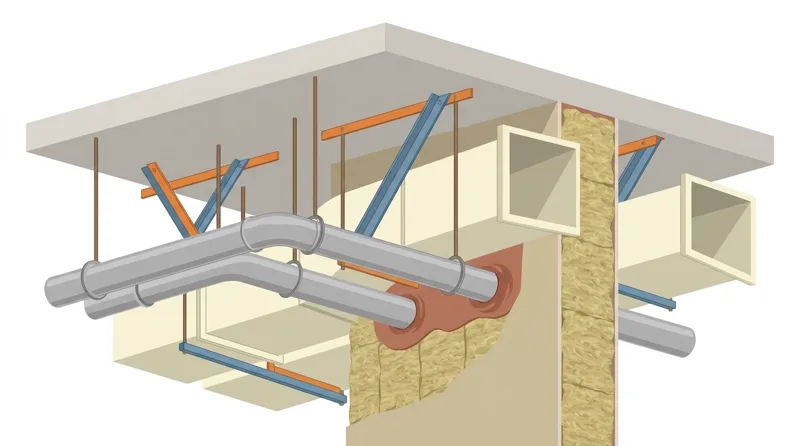
吊りボルトだけで支持された配管やダクト・ケーブルラックは、地震時の横揺れで破損・落下しないよう、一定間隔ごとに山形鋼などで斜め材を取り付ける「耐震支持(振れ止め)」を行います。
Piping, ducts, and cable racks suspended by threaded rods require diagonal 'seismic bracing' with angle steel at specified intervals to prevent lateral swaying and collapse during earthquakes.
防火区画の壁や床を配管・ケーブルが貫通する隙間には、火災時に煙や炎が隣室へ広がらないようロックウールや耐火パテで埋める「防火区画貫通処理」を施します。
Gaps where pipes or cables penetrate fire-rated walls or floors must be sealed with rock wool and intumescent firestop putty so smoke and flames cannot spread between compartments.
施工完了後の試運転(コミッショニング)では、配管内の異物を洗い流す「フラッシング」とストレーナ清掃を行い、機器の回転方向・電流値・風量・水量・漏水の有無を総合点検します。
During post-installation commissioning, flush piping to remove debris, clean strainer screens, and verify motor rotation direction, operating current, airflow/water flow rates, and leak-free operation.
Key points
- 冷水・冷媒などの保冷配管をバンドで吊る場合、金属バンドが直接管に触れるとヒートブリッジ(熱橋)で結露するため、保温材(硬質ウレタン等)の外側から受ける。
When supporting chilled water or refrigerant pipes, never clamp metal hangers directly to the bare pipe (which creates a thermal bridge and condensation); support outside high-density insulation blocks. - 温水管や蒸気管は温度変化で伸縮するため、伸縮継手(ベローズ形等)とその前後に固定支持点(アンカー)およびガイドを設ける。
Hot water and steam pipes expand and contract with temperature changes, requiring expansion joints along with fixed anchor points and alignment guides. - 建物のエキスパンションジョイントや埋設引込み部では、不同沈下や地震変位を吸収するフレキシブルジョイントを設ける。
Install flexible joints where piping crosses building expansion joints or enters from underground to absorb differential settlement and seismic displacement.
| Word | Meaning |
|---|---|
| 耐震支持(振れ止め)・吊りボルト | Seismic bracing (sway brace) & Hanger rod |
| 防火区画貫通処理(耐火パテ) | Firestop penetration sealing (Fire-resistant putty) |
| 配管フラッシング・ストレーナ清掃 | Pipe flushing & Strainer screen cleaning |
| 伸縮継手・フレキシブルジョイント | Expansion joint & Flexible joint |
Lifeline and Equipment Work Methods
Practice this chapter in the appOfficial references
- 建設分野特定技能2号評価試験 学科・実技試験テキスト【ライフライン・設備区分】(JAC 建設技能人材機構) — https://jac-skill.or.jp/exam/files/text6l.pdf
- 建設分野特定技能2号評価試験 サンプル問題【ライフライン・設備区分】(JAC 建設技能人材機構) — https://jac-skill.or.jp/exam/files/st2_sample2_l.pdf