
Lifeline & Equipment Construction (Piping, HVAC, Electrical/Telecom, Insulation & Fire Protection)
ライフライン・設備施工(配管・空調換気・電気通信・保温防災)
Construction · 建設分野 · Written by Tokutei Pass based on the official study texts; not copied verbatim.
配管加工・管の接合・支持金具
Pipe Cutting/Threading, Pipe Joining, and Support Hangers
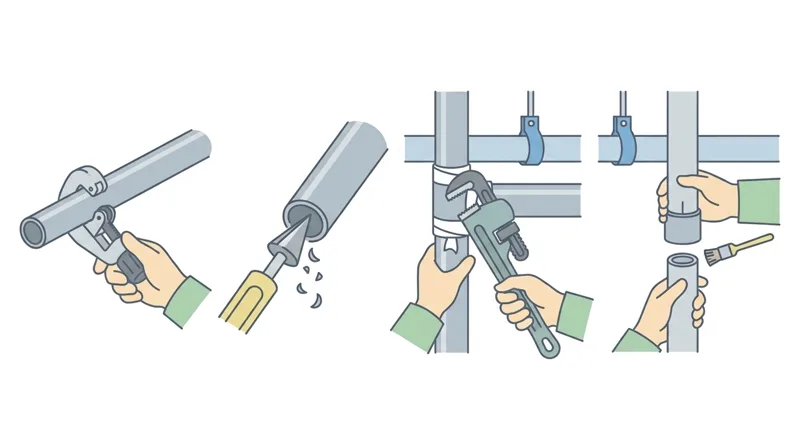
鋼管の切断には「パイプカッタ」や金切りノコを使い、管内面にできたバリ(かえり)は流水抵抗や腐食を防ぐため「パイプリーマ」で削り取ります。
Steel pipes are cut using a 'pipe cutter' or hacksaw, and internal burrs left inside the pipe end are removed with a 'pipe reamer' to prevent flow resistance and erosion-corrosion.
鋼管のねじ接合では「おねじ」にシールテープを巻き付け、「パイプレンチ」でねじ込みます。塩ビ管の接着接合では受口と挿し口の両方に接着剤を塗り、ひねらずに標線まで差し込みます。
For threaded steel pipe joints, PTFE seal tape is wrapped around the male threads and tightened with a 'pipe wrench'. For PVC solvent-cement joints, adhesive is applied to both socket and spigot and pushed straight to the mark without twisting.
横走り配管は吊りボルトと「吊りバンド」で支持し、大口径の給水本管や消防用配管には「ダクタイル鋳鉄管」やフランジ接合が用いられます。
Horizontal overhead pipes are supported by hanger bolts and 'hanger bands (tsuri band)', while large-diameter water mains and fire protection lines use 'ductile iron pipes' or flanged joints.
Key points
- 鋼管切断後の内面のバリは「パイプリーマ」で除去し、ねじ接合では「おねじ」にシールテープを巻いて「パイプレンチ」で締める。
Remove internal burrs after cutting steel pipe with a 'pipe reamer', wrap seal tape on male threads, and tighten with a 'pipe wrench'. - 塩ビ管の接着接合は、面取り・清掃・標線記入後、受口と挿し口の両方に接着剤を塗り、ひねらずに挿入する。
For PVC adhesive joints: chamfer, clean, mark the insertion depth, apply cement to both socket and spigot, and insert straight without twisting. - 天井の横走り管は「吊りバンド」で支持し、振動機器との接続部には「フレキシブル継手」を設ける。
Support horizontal overhead pipes with 'hanger bands' and install 'flexible joints' at connections to vibrating equipment.
| Word | Meaning |
|---|---|
| パイプカッタ・パイプリーマ | Pipe cutter & Pipe reamer |
| パイプレンチ・シールテープ | Pipe wrench & Seal tape |
| 塩ビ管の接着接合 | PVC pipe solvent-cement joint (Secchaku setsugou) |
| 吊りバンド・フレキシブル継手 | Hanger band & Flexible joint (Tsuri band / Flexible joint) |
給水・給湯・排水通気・衛生・ガス・消火設備
Water Supply, Hot Water, Drainage/Vent, Sanitary, Gas, and Fire Protection Systems
給水管と汚水等の配管を直接接続する「クロスコネクション」は逆流汚染防止のため絶対禁止です。また、急閉止時の衝撃音を「ウォーターハンマー(水撃作用)」といいます。
Directly connecting potable water supply pipes to wastewater pipes ('cross-connection') is strictly prohibited to prevent backflow contamination. The banging shock caused by suddenly closing a valve is called 'water hammer'.
給湯管には熱膨張対策として「伸縮継手」を設けます。屋内排水管は下流へ流れるよう「下り勾配」をつけ、悪臭防止の「排水トラップ(封水)」と破封防止の「通気管」を設けます。
Hot water pipes are equipped with 'expansion joints' for thermal expansion. Indoor drainage pipes are laid with a continuous 'downward slope', fitted with 'drain traps (water seal)' against sewer odors and 'vent pipes' against seal loss.
配管完了後、給水管は「水圧試験」、排水管は「満水試験・通水試験」を行います。ガス漏れ警報器は、軽い都市ガスは天井付近、重いLPガスは床面付近に設置します。
After installation, water supply pipes undergo a 'hydrostatic pressure test', while drainage pipes undergo a 'full-water test and flow test'. Gas leak alarms are mounted near the ceiling for lighter city gas and near the floor for heavier LP gas.
Key points
- 上水と汚水の「クロスコネクション」は厳禁であり、給湯管には熱伸縮を吸収する「伸縮継手」を設ける。
'Cross-connections' between potable water and wastewater pipes are strictly forbidden, and 'expansion joints' absorb thermal movement in hot water piping. - 排水管には「下り勾配」と「排水トラップ(封水)」および破封防止の「通気管」を設け、満水・通水試験を行う。
Provide drainage pipes with a 'downward slope', 'drain traps (trap seal water)', and 'vent pipes', then conduct full-water and flow tests. - 都市ガス警報器は「天井付近」、空気より重いLPガス警報器は「床面付近(30cm以内)」に設置する。
Install city gas alarms 'near the ceiling' and heavier-than-air LP gas alarms 'near the floor (within 30 cm)'.
| Word | Meaning |
|---|---|
| クロスコネクション | Cross-connection |
| ウォーターハンマー(水撃作用) | Water hammer (Suigeki sayou) |
| 排水トラップ・封水・通気管 | Drain trap, Trap seal water & Vent pipe (Fuusui / Tsuukikan) |
| 水圧試験・満水試験 | Hydrostatic pressure test & Full-water test (Suiatsu / Mansui shiken) |
空調換気設備(冷媒配管・ダクト)と保温保冷工事
HVAC Systems (Refrigerant Piping & Ductwork) and Thermal/Cold Insulation
エアコンの冷媒用銅管を接続する際は、フレアリングツールで管端をラッパ状に広げる「フレア加工」を行い、接続後は真空ポンプで管内の空気と水分を除く「真空引き」を行います。
When connecting copper refrigerant pipes for air conditioners, a flaring tool is used to form a bell-shaped 'flare', and after connection, 'vacuum evacuation (shinkuubiki)' is performed with a vacuum pump to remove air and moisture.
空気を送るダクト工事では、角ダクトや丸ダクト(スパイラルダクト)を用い、防火区画の壁・床貫通部には火災時に自動閉鎖する「防火ダンパ(FD)」を設けます。
In air ductwork using rectangular or spiral round ducts, 'fire dampers (FD)' that close automatically during a fire are installed where ducts penetrate fire-compartment walls or floors.
冷水配管や冷媒配管には、外気との温度差による表面の「結露」と熱損失を防ぐため、グラスウールや発泡ポリエチレン等の保温・保冷材を隙間なく巻きます。
Chilled water pipes and refrigerant pipes are wrapped tightly with cold insulation (such as glass wool or polyethylene foam) to prevent surface 'condensation' caused by ambient temperature differences and to reduce thermal loss.
Key points
- 冷媒銅管は「フレア加工」で接続し、配管後は必ず真空ポンプによる「真空引き」を行う。
Connect copper refrigerant pipes using 'flare joints' and always perform 'vacuum evacuation' with a vacuum pump after piping. - ダクトが防火区画を貫通する箇所には、延焼防止のため「防火ダンパ(FD)」を設置する。
Install 'fire dampers (FD)' where HVAC ducts penetrate fire compartments to prevent fire spread. - 冷水管や冷媒管には、管表面の「結露防止」と熱損失低減のために保冷材(断熱材)を施す。
Apply cold insulation to chilled water and refrigerant pipes to 'prevent surface condensation' and minimize energy loss.
| Word | Meaning |
|---|---|
| フレア加工・真空引き | Flare processing & Vacuum evacuation (Flare kakou / Shinkuubiki) |
| ダクト・防火ダンパ(FD) | Duct & Fire damper (FD) |
| 結露防止 | Condensation prevention (Ketsuro boushi) |
| 保温・保冷工事 | Thermal & Cold insulation work (Hoon / Horei kouji) |
電気通信設備工事とライフライン安全衛生
Electrical/Telecom Installation and Lifeline Occupational Safety
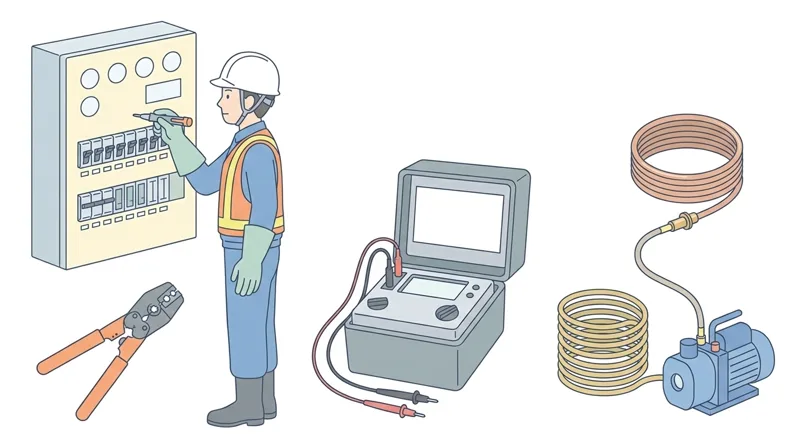
屋内配線ではVVFケーブルや金属管・合成樹脂製可とう電線管(PF管・CD管)を用い、電線接続には「リングスリーブ(専用圧着工具使用)」や差込形コネクタを使います。
Indoor electrical wiring uses VVF cables, metal conduits, or flexible plastic conduits (PF/CD conduits), and conductors are joined using 'ring sleeves (with a dedicated crimping tool)' or push-in connectors.
電気工事では漏電感電防止の「接地工事(アース)」を行い、作業前にはブレーカーを切って「検電器」で無電圧を確認し、回路完成後は「絶縁抵抗計(メガー)」で検査します。
In electrical work, 'grounding (earthing)' prevents shock during faults; before working, switch off the breaker and verify zero voltage with a 'voltage detector (kendenki)'; after completion, test insulation with a 'megohmmeter (Megger)'.
光ファイバは許容張力と許容曲げ半径を守って敷設します。また、汚水ピットやマンホール内作業では立入前に酸素(18%以上)・硫化水素(10ppm以下)を測定し換気を徹底します。
Optical fiber cables are pulled within allowable tension and bend radius limits. Before entering sewage pits or manholes, measure oxygen (>= 18%) and hydrogen sulfide (<= 10 ppm) levels and maintain continuous forced ventilation.
Key points
- 電線接続は「リングスリーブ用圧着工具」や差込形コネクタで行い、漏電防止のため「接地工事」と「絶縁抵抗測定」を行う。
Join wires with a 'ring-sleeve crimping tool' or push-in connectors, and perform 'grounding work' and 'insulation resistance measurement (Megger)'. - 電気作業前にはブレーカー遮断後に「検電器」で無電圧を確かめ、回転工具使用時は軍手を使わない。
Verify zero voltage with a 'voltage detector' after turning off the breaker before electrical work, and never wear cotton gloves with rotating drills. - ピットやマンホール内では、酸素濃度(18%以上)と硫化水素濃度(10ppm以下)の測定および送風換気を必ず行う。
Always measure oxygen (>= 18%) and hydrogen sulfide (<= 10 ppm) concentrations and ventilate continuously when working inside pits or manholes.
| Word | Meaning |
|---|---|
| リングスリーブ・圧着工具 | Ring sleeve & Crimping tool (Acchaku kougu) |
| 接地工事・絶縁抵抗計(メガー) | Grounding work & Insulation resistance tester (Secchi kouji / Megger) |
| 検電器 | Voltage detector (Kendenki) |
| 酸素欠乏・硫化水素中毒防止 | Oxygen deficiency & Hydrogen sulfide poisoning prevention |
Lifeline and Equipment Work (Practical)
Practice this chapter in the appOfficial references
- 建設分野特定技能1号評価試験 学習用テキスト「ライフライン・設備」(一般社団法人建設技能人材機構 JAC) — https://jac-skill.or.jp/exam/textbook.html
- 建設分野特定技能評価試験 試験実施要領(国土交通省) — https://www.mlit.go.jp/tochi_fudousan_kensetsugyo/content/001519991.pdf