 Tokutei Pass
Occupational Health & Safety and Accident Prevention
安全衛生・労働災害防止
Construction (Building) · 建設分野(建築区分) · Written by Tokutei Pass based on the official study texts; not copied verbatim.
建設業の三大災害と安全施工サイクル
Three Major Construction Disasters and the Safety Construction Cycle
建設業の死亡災害で特に多い「墜落・転落」「建設機械・クレーン等」「崩壊・倒壊」を建設業の三大災害といいます(騒音や振動は含まれません)。
In the construction industry, the three leading causes of fatal accidents—'Falls from height', 'Construction machinery / Cranes', and 'Collapse / Cave-in'—are called the Three Major Disasters (noise and vibration disorders are not included).
安全施工サイクルは、朝の全体朝礼(ラジオ体操・安全確認・「ご安全に!」の唱和)と危険予知活動(KY活動)から始まります。
The daily Safety Construction Cycle begins with the morning assembly (radio calisthenics, safety checks, and chanting 'Go-anzen ni!') followed by Hazard Prediction Activities (KY activities).
新しく現場に入る人は経験に関わらず新規入場者教育を受け、作業中にヒヤリ・ハットを経験したときは職長へ報告して全員で対策を共有します。
Workers entering a site for the first time must complete newcomer safety orientation regardless of prior experience; any near-miss incident (Hiyari-Hatto) must be reported to the foreman and shared with everyone.
「慣れによる手抜き」「思い込み」「連絡不足」などのヒューマンエラーを防ぐため、基本手順の厳守と指差呼称を徹底し、終業時は後片付けと火気・施錠確認を行います。
To prevent human errors caused by shortcuts from familiarity, assumptions, or poor communication, strictly follow standard procedures and pointing-and-calling (Shisa koshou), and check cleanup, fire extinguishing, and locks at the end of the shift.
Key points
- 建設業の三大災害は「墜落・転落」「建設機械・クレーン等」「崩壊・倒壊」である。
The Three Major Disasters in construction are Falls, Construction machinery/cranes, and Collapse/cave-in. - 作業前にKY活動で危険と対策を共有し、基本手順と指差呼称でヒューマンエラーを防ぐ。
Share hazards and countermeasures via pre-work KY activities and prevent human error through standard procedures and pointing-and-calling. - ヒヤリ・ハットは職長へ報告して共有し、終業時は整理・整頓・清掃と消火・施錠確認を行う。
Report near-misses (Hiyari-Hatto) to the foreman, and perform 3S cleanup, fire checks, and security locking at the end of work.
| Word | Meaning |
|---|---|
| 三大災害 | Three Major Disasters (Sandai saigai) |
| 危険予知活動(KY活動) | Hazard Prediction Activity (KY activity) |
| 新規入場者教育 | Newcomer safety orientation (Shinki nyuujousha kyouiku) |
| 指差呼称 | Pointing and calling (Shisa koshou) |
高所作業・足場・脚立・はしごの墜落防止
Fall Prevention in High-Place Work, Scaffolds, Stepladders, and Ladders
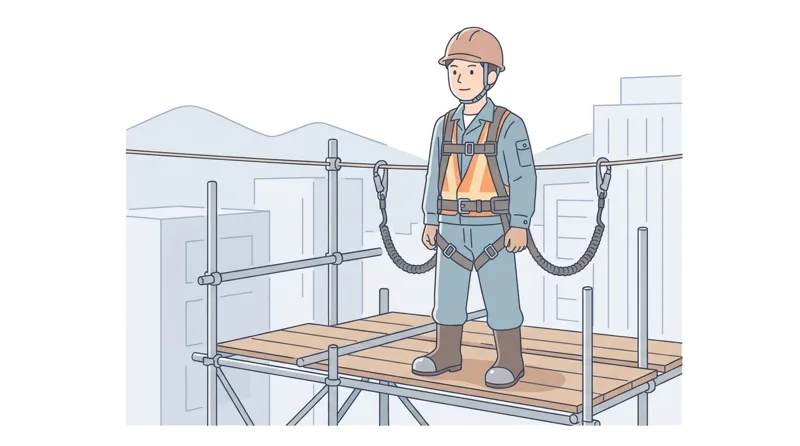
高さ2m以上の高所作業では墜落防止措置が必要であり、特に作業床の高さが5mを超える場所では「フルハーネス型墜落制止用器具」を装着し、フックは原則として腰より高い位置に掛けます。
Fall prevention measures are required at heights of 2 m or more; especially where the working floor exceeds 5 m, workers must wear a 'full-body harness fall arrest system' and hook the lanyard above waist level in principle.
鉄骨の昇降などでは安全ブロック(巻取式器具)や垂直親綱用ロリップを併用し、スレート屋根上では踏み抜きを防ぐため幅30cm以上の歩み板や防網を設けます。
Use a retractable safety block or vertical lifeline rope grab when climbing steel columns, and install walkways at least 30 cm wide and safety nets on fragile slate or plastic roof panels to prevent falling through.
床開口部の手すりや養生蓋は無断で外さず、強風予測時には外部足場の養生シートをたたむか外して壁つなぎを補強します。
Never remove floor opening guardrails or covers without permission; when strong winds are forecast, fold or remove external scaffold protective mesh sheets and reinforce wall ties.
脚立は開き止め金具をロックして天板には絶対に乗らず、移動はしごは約75度の角度で上端を床から60cm以上突き出して固定し、下端に滑り止めをして使用します。
Lock the spreader bars on a stepladder and never stand on the top cap (Tenban); set portable ladders at about a 75-degree angle with the top extending at least 60 cm above the landing and secure both top and bottom ends.
Key points
- 高さ5mを超える高所ではフルハーネス型墜落制止用器具を使い、フックは腰より高い位置に掛ける。
Wear a full-body harness at working floor heights over 5 m and attach the lanyard hook above waist level. - 脚立の天板には乗らず、はしごは約75度で上端を60cm以上突き出して上下端を固定する。
Never stand on a stepladder's top cap; set ladders at about 75 degrees extending 60 cm or more above the landing with both ends secured. - ローリングタワーは人を乗せたまま移動せず、高所作業車のバケットではフックを掛けて手すりに登らない。
Never move a rolling tower with workers on board, and hook your lanyard inside an aerial work platform bucket without climbing on guardrails.
| Word | Meaning |
|---|---|
| フルハーネス型墜落制止用器具 | Full-body harness fall arrest system |
| 天板 | Top cap of a stepladder (Tenban) |
| 歩み板 | Roof walkway board (Ayumi-ita) |
| ローリングタワー | Rolling tower scaffold |
建設機械・クレーン・電動工具の安全
Safety for Construction Machinery, Cranes, and Power Tools
油圧ショベル(バックホウ)の旋回範囲内やクレーンの吊り荷の下には絶対に入らず、移動式クレーンはアウトリガを最大に張り出して安定させます。
Never enter the swing radius of an excavator (backhoe) or stand under a suspended crane load, and fully extend outriggers to stabilize mobile cranes.
玉掛け用ワイヤロープに素線切れやキンク(ねじれ変形)があれば直ちに使用を中止して交換し、コンクリートポンプ車のブーム操作時は高圧電線との安全離隔距離を厳守します。
Immediately stop using and replace any slinging wire rope with broken strands or kinks, and strictly maintain the safe clearance distance from high-voltage power lines when operating a concrete pump boom.
ダンプトラックを後退(バック)させるとき、誘導員は運転手から見える斜め後方の安全な位置に立ち、周囲の通行を止めてから笛や旗で明確に合図します。
When guiding a reversing dump truck, the spotter must stand in a safe diagonal rear position visible to the driver, stop surrounding traffic, and give clear signals using a whistle or flags.
丸のこ・ディスクグラインダー・ボール盤などの回転工具では、刃への巻き込まれを防ぐため軍手を着用せず、安全カバーを固定・取外しせず、刃の交換時は電源プラグを抜きます。
When operating rotating tools such as circular saws, disc grinders, or drill presses, never wear cotton work gloves (gunte) to avoid entanglement, never fix open or remove safety guards, and unplug the power cord before changing blades.
Key points
- 重機の旋回範囲や吊り荷の下には絶対に入らず、異常のあるワイヤロープは使わない。
Never enter heavy machinery swing zones or under suspended loads, and never use wire ropes with broken wires or kinks. - 丸のこやボール盤などの回転工具では軍手を着けず、安全カバーを外さない。
Do not wear cotton gloves (gunte) when using circular saws or drills, and never disable safety guards. - 高所では工具に落下防止コードを付け、下の人に危険が迫ったら「危ない!よけろっ!」と叫ぶ。
Attach tool lanyards when working at height, and shout 'Abunai! Yokero!' (Danger! Watch out!) immediately if an object is falling or colliding.
| Word | Meaning |
|---|---|
| アウトリガ | Outriggers |
| 玉掛け | Slinging / Rigging work (Tamagake) |
| キンク | Wire rope kink (deformation) |
保護具・有害業務・緊急時対応
Protective Equipment, Hazardous Work, and Emergency Response
保護帽(ヘルメット)は一度でも強い衝撃を受けたら外見に傷がなくても交換し、足元は先芯と踏み抜き防止板が入った安全靴を着用します。
Replace a safety helmet if it receives even one strong impact even without visible damage, and wear safety shoes with protective toe caps and puncture-resistant soles.
アーク溶接では自動電撃防止装置付きの溶接機と遮光保護具・乾いた革手袋を使い、粉じん作業では防塵マスク、騒音作業では耳栓等、振動工具では防振手袋と時間管理を徹底します。
For arc welding, use a welder with an automatic shock prevention device, welding shield, and dry leather gloves; wear dust masks for dusty work, earplugs/earmuffs for loud noise, and anti-vibration gloves with time limits for vibrating tools.
有機溶剤作業では換気と火気厳禁・有機ガス用防毒マスクを守り、深いピットやマンホールでは始業前に酸素濃度18%以上を確認し、屋内でのエンジン工具使用による一酸化炭素中毒を防ぎます。
Ventilate, ban open flames, and wear an organic gas respirator when using organic solvents; verify oxygen concentration is at least 18% before entering deep pits or manholes, and avoid using engine tools indoors to prevent carbon monoxide poisoning.
熱中症予防では暑さ指数(WBGT)を確認して水分と塩分を補給し、法面のひび割れ・湧水増加(土砂崩壊の前兆)や消灯・火災・感電発生時は直ちに作業を止めて二次災害を防ぎます。
Check the WBGT heat index and replenish water and salt to prevent heatstroke; immediately stop work and evacuate or cut power to prevent secondary accidents if slope cracks/seepage appear, lighting fails, fire breaks out, or electric shock occurs.
Key points
- ピット内等は酸素濃度18%以上を測定して換気し、有機溶剤には防毒マスク、粉じんには防塵マスクを使う。
Confirm oxygen concentration is 18% or higher and ventilate before pit work; wear gas respirators for organic solvents and dust masks for concrete cutting. - ガス溶断のボンベは直射日光を避けて立てて固定し、石けん水でガス漏れを点検する。
Stand gas cylinders upright away from sunlight, secure them against tipping, and check for leaks with soapy water; bend knees and lift heavy loads with leg power. - 感電者には素手で触れずまず電源を遮断し、JIS安全色彩の赤は禁止・停止・防火、緑(緑十字)は安全・避難を表す。
Shut off power before rescuing an electrocuted worker; in JIS safety colors, Red means Prohibition/Stop/Fire protection and Green (Green Cross) means Safety/Evacuation.
| Word | Meaning |
|---|---|
| 酸素欠乏症 | Oxygen deficiency (Sanso ketsuboushou) |
| 暑さ指数(WBGT) | Wet Bulb Globe Temperature (WBGT heat index) |
| 緑十字 | Green Cross safety symbol (Midorijuuji) |
| トラロープ | Yellow-and-black warning rope (Tora rope) |
Construction Safety and Accident Prevention
Practice this chapter in the appOfficial references
- 建設分野特定技能1号評価試験(一般社団法人建設技能人材機構 JAC) — https://jac-skill.or.jp/exam.html
- 建設分野特定技能評価試験 試験実施要領(国土交通省) — https://www.mlit.go.jp/tochi_fudousan_kensetsugyo/content/001519991.pdf