 Tokutei Pass
Construction Industry Basics, Site Rules & Laws
建設業の基礎・現場ルール・法令
Construction (Building) · 建設分野(建築区分) · Written by Tokutei Pass based on the official study texts; not copied verbatim.
建設工事の特徴・施工体制・工事の流れ
Characteristics of Construction, Project Delivery System, and Workflow
建設工事は、発注者(施主)から注文を受けてから敷地や要望に合わせて現地で一つずつ造る「受注一品生産」という特徴があります。
Construction work is characterized by 'order-made single-item production (Juchuu ippin seisan)', meaning each structure is custom-designed and built on site after receiving an order from the client (owner).
発注者から直接工事を請け負う会社を「元請業者」といい、発注者に代わり設計図面通りの施工を確認する技術者を「監理者」といいます。
The construction company that contracts directly with the client is the 'prime contractor (Motouke gyousha)', and the engineer who verifies on the client's behalf that work matches the design drawings is the 'supervisor (Kanrisha)'.
特定技能の3区分のうち「建築区分」には型枠・鉄筋・内装仕上げなどが含まれ、建物の構造には鉄骨造(S造)や、引張力に強い鉄筋と圧縮力・熱に強いコンクリートを一体化した鉄筋コンクリート造(RC造)などがあります。
Within the three SSW categories, the 'Building category (Kenchiku kubun)' covers formwork, rebar, and interior finishing; structural types include steel structures (S) and reinforced concrete structures (RC, combining tensile-strong rebar with compressive- and fire-resistant concrete).
建築工事は「仮設工事 → 土工事・基礎工事 → 躯体工事 → 外装・内装仕上げ・設備工事 → 美装・ダメ工事(手直し)・竣工検査・引き渡し」の順に進みます。
Building construction proceeds in order: Temporary work → Earthwork & Foundation work → Structural frame work (Kutai) → Exterior/Interior finishing & MEP equipment → Cleaning (Bisou), punch-list rectification (Dame-kouji), final inspection, and handover.
Key points
- 建設工事は現地で一つずつ造る「受注一品生産」であり、発注者から直接請け負う業者を元請業者という。
Construction is order-made on-site production, and the contractor hired directly by the client is the prime contractor (Motouke). - RC造は引張に強い鉄筋と圧縮・火に強いコンクリートを合わせた構造で、H形鋼等の骨組みは鉄骨造(S造)という。
RC structures combine tensile-resistant rebar and compressive/fire-resistant concrete; H-beam/steel-tube frames are steel structures (S). - 引き渡し前に養生材を外して清掃(美装)し、傷ややり残しを補修する作業を「ダメ工事(駄目直し)」という。
Removing protective coverings, cleaning (Bisou), and fixing scratches or unfinished items before handover is called 'Dame-kouji (punch-list repair)'.
| Word | Meaning |
|---|---|
| 受注一品生産 | Order-made single-item production (Juchuu ippin seisan) |
| 元請業者 | Prime contractor (Motouke gyousha) |
| ダメ工事(駄目直し) | Punch-list rectification work (Dame-kouji) |
施工管理(QCDSE・5M)と現場の役職
Construction Management (QCDSE, 5M) and Site Roles
施工管理の5大目標「QCDSE」は、品質(Quality)・原価(Cost)・工程(Delivery)・安全(Safety)・環境(Environment)を表します。
The five construction management goals 'QCDSE' stand for Quality, Cost, Delivery (schedule), Safety, and Environment.
施工計画の「5M」は労力(Men)・材料(Materials)・方法(Methods)・機械(Machinery)・資金(Money)であり、近年は省エネのため高断熱・高気密の建物づくりも重視されています。
The '5M' elements of construction planning are Men (labor), Materials, Methods, Machinery, and Money; high-insulation, high-airtightness buildings are also emphasized today to save energy and prevent condensation.
現場では設計図をもとに納まりや加工寸法を描いた「施工図」と、作業順序を示す「工程表」を使い、隠れる部分も含めて「工事写真」で記録・証明します。
On site, workers use 'shop drawings (Sekouzu)' detailing joint fits and fabrication dimensions along with 'construction schedules (Kouteihyou)', and take 'construction photos' with a blackboard to document hidden parts and finished dimensions.
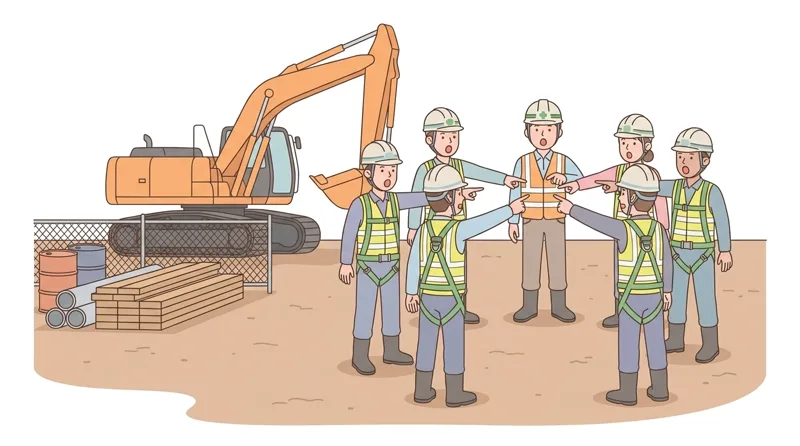
技術上の管理を行う「主任技術者」、作業員を直接指揮する「職長」、足場等の危険作業を指揮する「作業主任者」が連携し、安全パトロールやTBM(ツールボックスミーティング)を行います。
The chief engineer (Shunin gijutsusha), foreman (Shokuchou), and operations chief for hazardous work (Sagyou shuninsha) coordinate daily safety patrols and short pre-work Tool Box Meetings (TBM).
Key points
- QCDSEは品質(Q)・原価(C)・工程(D)・安全(S)・環境(E)であり、正確な採寸や手戻り防止は原価管理(C)につながる。
QCDSE stands for Quality, Cost, Delivery, Safety, and Environment; accurate measurement to reduce waste and rework supports Cost management (C). - 現場での加工寸法を示す図面を「施工図」、進捗を管理する表を「工程表」という。
Drawings showing on-site fitting and fabrication dimensions are 'shop drawings (Sekouzu)', and bar-chart progress tables are 'schedules (Kouteihyou)'. - 職長を中心に作業前に短時間で手順とKYを話し合う会合をツールボックスミーティング(TBM)という。
A brief pre-work meeting led by the foreman in small groups to review procedures and KY is called a Tool Box Meeting (TBM).
| Word | Meaning |
|---|---|
| QCDSE | Five management goals (QCDSE) |
| 施工図 | Shop drawing / Working drawing (Sekouzu) |
| 作業主任者 | Operations chief (Sagyou shuninsha) |
| ツールボックスミーティング(TBM) | Tool Box Meeting (TBM) |
建設関係法令・労働条件・環境保全
Construction Laws, Labor Standards, and Environmental Protection
建築物の耐震性や建ぺい率などの基準は「建築基準法」で定められ、「建設業法」では請け負った工事を丸ごと他社へ流す「一括下請負(丸投げ)」が原則禁止されています。
Building earthquake resistance and floor-area ratios are governed by the 'Building Standards Act', while the 'Construction Business Act' prohibits 'blanket subcontracting (Ikkatsu shitaukeoi / Marunage)' where a contractor passes the entire project to another firm without managing it.
労働基準法の法定労働時間は原則「1日8時間・1週間40時間」で、8時間を超えるときは「60分以上」の休憩が必要であり、賃金は「通貨で・直接本人に・全額を・毎月1回以上・一定期日に」支払います。
Under the Labor Standards Act, statutory working hours are up to '8 hours per day and 40 hours per week' with at least a '60-minute break' when working over 8 hours, and wages must be paid 'in currency, directly to the worker, in full, at least once a month, on a fixed date'.
労災保険料は全額事業主負担で「労災かくし」は犯罪です。労働安全衛生法により、雇入時と年1回の定期健康診断、作業内容変更時教育、業務に応じた免許・技能講習・特別教育の修了と資格証携帯が義務づけられています。
Workers' compensation insurance premiums are paid entirely by the employer and concealing work injuries ('Rousai kakushi') is a crime. Employers must provide health checkups upon hiring and once a year, training when tasks change, and ensure workers carry required license/training certificates.
産業廃棄物は分別して「マニフェスト」で管理し、特定建設資材(コンクリート塊・アスファルト塊・建設発生木材)の再資源化、アスベスト(石綿)飛散防止、低騒音型機械の活用、アルカリ性洗浄排水の中和処理を徹底します。
Sort industrial waste and track it with a 'Manifest' to prevent illegal dumping; recycle designated materials (concrete blocks, asphalt-concrete, wood), prevent asbestos dispersion, use low-noise machinery, and neutralize alkaline wash water instead of pouring it into drains.
Key points
- 法定労働時間は1日8時間・週40時間(8時間超で休憩60分以上)であり、労災かくしや一括下請負(丸投げ)は禁止されている。
Statutory working hours are 8 hours/day and 40 hours/week (minimum 60-minute break over 8 hours); concealing work injuries and blanket subcontracting are illegal. - 健康診断は雇入時および1年以内ごとに1回実施し、クレーン・玉掛け・足場等は資格証を携帯して従事する。
General health checkups are mandatory upon hiring and once every year; workers must complete statutory training and carry certificates for cranes, slinging, or scaffolding. - 廃棄物はマニフェストで不法投棄を防ぎ、生コン等のアルカリ性洗浄排水は側溝に流さず回収して中和処理する。
Manage industrial waste with a Manifest, and collect alkaline concrete wash water in a tank for neutralization rather than dumping it into gutters.
| Word | Meaning |
|---|---|
| 一括下請負(丸投げ) | Blanket subcontracting (Ikkatsu shitaukeoi) |
| マニフェスト(産業廃棄物管理票) | Industrial waste manifest (Manifest) |
| アスベスト(石綿) | Asbestos (Ishiwata) |
| 特定建設資材 | Designated construction materials for recycling |
現場のマナー・5S活動・CCUS
Site Etiquette, 5S Activities, and CCUS
現場では「ご安全に」「おつかれさまです」とあいさつし、連絡の基本「ほうれんそう(報告・連絡・相談)」と「5S活動(整理・整頓・清掃・清潔・しつけ)」を徹底します。
Greet coworkers with 'Go-anzen ni' and 'Otsukaresama desu', and practice 'Hou-Ren-Sou (Report, Inform, Consult)' along with the '5S activities (Sort, Set in order, Shine, Standardize, Sustain)'.
上着のボタンや袖口を留め、ポケットに手を入れて歩かず、酒気帯び作業は厳禁です。睡眠不足や体調不良は作業前に職長へ申し出ます。
Button jacket fronts and cuffs, never walk with hands in pockets, and never work under the influence of alcohol; report lack of sleep or poor health to the foreman before starting work.
貸与工具は点検・清掃して所定場所へ返却し、休憩所には靴の泥を落として入ります。近隣への配慮として指定喫煙場所を守り、出入口の清掃と終業時の重機・門扉の施錠を行います。
Inspect, clean, and return borrowed tools to their designated storage, and scrape mud off boots before entering break rooms. Smoke only in designated areas, keep site entrances clean, and lock heavy machinery and gates at the end of the day.
建設技能者の資格や就業履歴をICカードで蓄積する「建設キャリアアップシステム(CCUS)」では、最初に登録されたレベル1(見習い)のカードの色は「白(ホワイト)」です。
In the 'Construction Career Up System (CCUS)', which records workers' qualifications and site work history via IC cards, the Level 1 card issued upon initial registration is 'White'.
Key points
- コミュニケーションの基本は「報告・連絡・相談(ほうれんそう)」、5Sは「整理・整頓・清掃・清潔・しつけ」である。
Basic workplace communication is 'Hou-Ren-Sou (Report, Inform, Consult)', and the 5S principles are Seiri, Seiton, Seisou, Seiketsu, and Shitsuke. - 酒気帯び作業は厳禁であり、体調不良や共用工具の故障はすぐに職長へ報告する。
Working under the influence of alcohol is strictly prohibited; report poor physical condition or tool malfunctions to the foreman immediately. - 建設キャリアアップシステム(CCUS)のレベル1(見習い技能者)のカードの色は「白(ホワイト)」である。
The Level 1 (apprentice) card color in the Construction Career Up System (CCUS) is White.
| Word | Meaning |
|---|---|
| ほうれんそう | Report, Inform, Consult (Hou-Ren-Sou) |
| 5S活動 | 5S Activities (Seiri, Seiton, Seisou, Seiketsu, Shitsuke) |
| 建設キャリアアップシステム(CCUS) | Construction Career Up System (CCUS) |
Construction Basics, Site Rules, and Laws
Practice this chapter in the appOfficial references
- 建設分野特定技能1号評価試験(一般社団法人建設技能人材機構 JAC) — https://jac-skill.or.jp/exam.html
- 建設分野特定技能評価試験 試験実施要領(国土交通省) — https://www.mlit.go.jp/tochi_fudousan_kensetsugyo/content/001519991.pdf