 Tokutei Pass
Advanced Hygiene Management and HACCP Operation
高度な衛生管理とHACCPの運用
Food Service (SSW 2) · 外食業(2号) · Written by Tokutei Pass based on the official study texts; not copied verbatim.
食品衛生法と感染型食中毒菌
Food Sanitation Act and Infection-Type Food Poisoning Bacteria
食品衛生法第1条は、公衆衛生上の規制により飲食に起因する危害を防ぎ、国民の健康を保護することを目的としています。
Article 1 of the Food Sanitation Act aims to prevent sanitation hazards arising from eating and drinking through public health regulations, thereby protecting citizens' health.
鶏肉や牛レバーにいるカンピロバクターは微好気性で、少ない菌数でも2〜5日の潜伏期間を経て発症し、まれに手足の麻痺を起こします。
Campylobacter in chicken and beef liver is microaerophilic; even a small number of bacteria causes illness after a 2–5 day incubation period and rarely causes limb paralysis (Guillain-Barré syndrome).
生卵のサルモネラ属菌は乾燥に強く、魚介類の腸炎ビブリオは好塩性で真水や酸・低温に弱いため、水道水での洗浄と冷蔵で防ぎます。
Salmonella in raw eggs resists drying, while halophilic Vibrio parahaemolyticus on seafood is weak against fresh water, acid, and cold, so prevent it by washing with tap water and refrigerating.
牛の腸管にいる腸管出血性大腸菌(O157等)は強いベロ毒素を作るため、挽き肉料理も中心部75℃・1分間以上の加熱が必要です。
Enterohemorrhagic E. coli (O157, etc.) in cattle intestines produces potent Vero toxin, so minced meat dishes must be heated to a core temperature of 75℃+ for at least 1 minute.
Key points
- 食品衛生法の目的は、飲食に起因する衛生上の危害防止と国民の健康保護
The purpose of the Food Sanitation Act is preventing sanitation hazards from food/drink and protecting public health - カンピロバクターは新鮮な鶏肉でも生・半生で出さず中心まで十分に加熱する
For Campylobacter, never serve chicken raw or undercooked even if fresh; heat thoroughly to the center - 腸炎ビブリオは好塩性で真水に弱いため、調理前に水道水でよく洗い低温管理する
Vibrio parahaemolyticus is halophilic and weak against fresh water, so wash seafood with tap water and keep cold
| Word | Meaning |
|---|---|
| 食品衛生法 | Food Sanitation Act |
| 微好気性 | Microaerophilic |
| 潜伏期間 | Incubation period |
| 好塩性 | Halophilic (salt-loving) |
毒素型・芽胞菌・ウイルス・寄生虫・自然毒
Toxin-Producing & Spore-Forming Bacteria, Viruses, Parasites, Natural Toxins
手指の傷口にいる黄色ブドウ球菌や、赤身魚にできるヒスタミン、ジャガイモの芽のソラニン等は、通常の加熱では分解されません。
Staphylococcus aureus toxin from hand wounds, histamine in red-fleshed fish, and solanine in potato sprouts are heat-stable and are not decomposed by normal cooking.
大鍋のカレー等で増えるウェルシュ菌や、真空パック・ハチミツのボツリヌス菌は耐熱性の芽胞を作る嫌気性菌で、急冷や1歳未満へのハチミツ禁止で防ぎます。
Clostridium perfringens in large pots of curry and Clostridium botulinum in vacuum packs or honey are anaerobic spore-forming bacteria; prevent them by rapid cooling and never giving honey to infants under 1 year old.
ノロウイルスにはアルコールが効きにくいため、85〜90℃で90秒間以上の加熱と次亜塩素酸ナトリウム消毒(嘔吐物には1,000ppm)をおこないます。
Because alcohol is less effective against Norovirus, heat food at 85–90℃ for 90 seconds+ and disinfect with sodium hypochlorite (1,000ppm for vomit).
魚介類のアニサキスは酢や塩・わさびでは死なず、マイナス20℃以下で24時間以上の冷凍、または中心部70℃以上(60℃なら1分間)の加熱で死滅します。
Anisakis larvae in seafood do not die from vinegar, salt, or wasabi; kill them by freezing at -20℃ or below for 24 hours+ or heating the core to 70℃+ (or 60℃ for 1 minute).
Key points
- 黄色ブドウ球菌の毒素やヒスタミン・ソラニンは熱に強く加熱で無毒化できない
Staphylococcus aureus toxin, histamine, and solanine are heat-resistant and cannot be detoxified by heating - ウェルシュ菌対策として加熱後のカレー等は浅い容器に小分けし20℃以下へ急冷する
To prevent Clostridium perfringens, divide cooked curry/stew into shallow pans and rapidly cool to 20℃ or below - アニサキスはマイナス20℃以下で24時間以上冷凍、または60℃・1分以上の加熱で死滅させる
Kill Anisakis by freezing at -20℃ or below for 24 hours+ or heating at 60℃+ for at least 1 minute
| Word | Meaning |
|---|---|
| 黄色ブドウ球菌 | Staphylococcus aureus |
| 嫌気性菌 | Anaerobic bacterium |
| 芽胞 | Bacterial spore |
| 自然毒 | Natural toxin |
HACCPの7原則と温度測定・記録管理
The 7 Principles of HACCP, Temperature Measurement, and Record Keeping
HACCPの7原則は、①危害要因分析(HA)、②重要管理点(CCP)決定、③管理基準(CL)設定、④モニタリング、⑤改善措置、⑥検証、⑦記録保存です。
The 7 principles of HACCP are: (1) Hazard Analysis (HA), (2) Determine CCPs, (3) Establish Critical Limits (CL), (4) Monitoring, (5) Corrective Actions, (6) Verification, and (7) Record Keeping.
メニューを第1グループ(非加熱品)、第2グループ(加熱品:75℃1分等・保温65℃以上)、第3グループ(加熱後冷却品)に分けて温度を管理します。
Menus are managed by dividing them into Group 1 (unheated items), Group 2 (heated items: 75℃ 1min+, hot hold ≥65℃), and Group 3 (items cooled after heating).
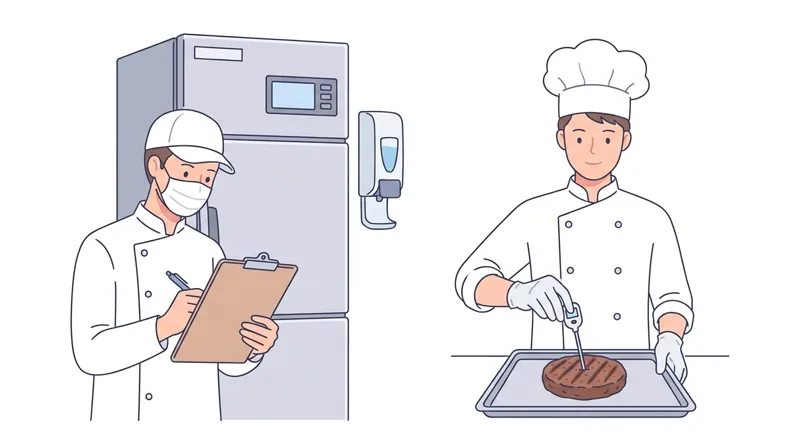
中心温度計を使う際は、感温部(先端)をアルコール消毒し、ハンバーグなどの最も肉厚な中心部に刺して規定温度を確認します。
When using a core thermometer, disinfect the probe tip with alcohol and insert it into the thickest center part of the food (such as a hamburger patty) to verify the required temperature.
記録に空欄(記録漏れ)があった場合は、絶対にうその数値を書かず、担当者に事実を確認して記録し手順を見直します。
If a blank space (omission) is found in daily records, never fabricate numbers; verify the actual facts with the staff in charge, record truthfully, and review the procedure.
Key points
- モニタリングで管理基準(CL)の逸脱を見つけた際、再加熱や廃棄で戻す手順が改善措置
When monitoring detects a deviation from a Critical Limit (CL), reheating or discarding to restore control is a Corrective Action - 中心温度計は先端をアルコール消毒し、食品の最も肉厚な中心部に刺して測る
Disinfect the core thermometer tip with alcohol and insert it into the thickest central part of the food - 日々の衛生記録は適切な管理の証拠となり、問題発生時の原因究明に役立つ
Daily hygiene records serve as proof of proper management and enable rapid cause investigation if trouble occurs
| Word | Meaning |
|---|---|
| 危害要因分析 | Hazard Analysis (HA) |
| 管理基準 | Critical Limit / Management standard (CL) |
| 改善措置 | Corrective action / Improvement measure |
| 中心温度計 | Core thermometer |
施設設備の衛生(5S・バイオフィルム・消毒液希釈)
Facility & Equipment Hygiene (5S, Biofilm, Disinfectant Dilution)
5Sでは不要品を処分する「整理」と定位置に置く「整頓」を徹底し、内壁(床から1m)やグリストラップ、ハンドドライヤーは毎日清掃します。
Under 5S, enforce Seiri (disposing of unnecessary items) and Seiton (placing items in fixed locations); clean inner walls (up to 1m from the floor), grease traps, and hand dryers daily.
シンクや排水口のバイオフィルム(微生物と多糖類の構造体)は、水や薬品を流すだけでは落ちないため、ブラシでこすり落としてから洗浄・消毒します。
Biofilm (a structure of microbes and polysaccharides) in sinks and drains cannot be removed by rinsing alone; scrub it off with a brush before washing and disinfecting.
作業面は十分な照度と飛散防止カバー付き照明を備え、井戸水等は年1回以上の水質検査と毎日の残留塩素確認をおこないます。
Ensure sufficient illuminance on work surfaces with shatterproof light covers; if using well water, conduct water quality tests at least once a year and check residual chlorine daily.
消毒液の必要原液量は「作成量×目標濃度÷原液濃度」で求め、6%原液で200ppm(0.02%)を3,000mL作るなら原液10mLです。
Required stock solution = Total volume × Target concentration ÷ Stock concentration; making 3,000mL of 200ppm (0.02%) disinfectant from a 6% stock solution requires 10mL of stock.
Key points
- バイオフィルムはブラシ等で物理的にこすり落としてから洗浄・消毒する
Physically scrub off biofilm with a brush before washing and disinfecting - 洗剤・消毒剤は食品と区別した専用場所に置き、飲料容器等への詰め替えは厳禁
Store detergents and disinfectants in a dedicated area separate from food, and strictly prohibit refilling into beverage containers - 5%原液で1,000ppm(0.1%)消毒液を2,000mL作る場合の原液量は40mL
Making 2,000mL of 1,000ppm (0.1%) disinfectant from a 5% stock solution requires 40mL of stock solution
| Word | Meaning |
|---|---|
| 定位置 | Fixed location (designated place) |
| 多糖類 | Polysaccharide |
| 残留塩素 | Residual chlorine |
| 次亜塩素酸ナトリウム | Sodium hypochlorite |
検品・保管・解凍・検食と従事者の健康管理
Receiving, Storage, Thawing, Retained Samples, and Worker Health
検品時に包装破損や品温異常(冷蔵肉が18℃等)があれば返品し、冷蔵庫では生肉を蓋付き容器に入れて最下段に保管しドリップ汚染を防ぎます。
Reject deliveries with torn packaging or abnormal temperature (e.g., chilled meat at 18℃); in refrigerators, store raw meat in covered containers on the bottom shelf to prevent drip contamination.
解凍は冷蔵庫解凍や流水解凍とし(常温解凍や再凍結は厳禁)、生野菜は次亜塩素酸ナトリウム(100mg/Lで10分等)で殺菌後に流水でよくすすぎます。
Thaw frozen food in a refrigerator or under running water (never at room temperature or refreeze); sterilize raw vegetables in sodium hypochlorite (e.g., 100mg/L for 10min) and rinse thoroughly in running water.
器具の金属片欠損に気づいた際は直ちに使用を中止して探すか全量廃棄し、宴会等の検食は原材料と調理済み品を50g以上ずつマイナス20℃以下で2週間以上保存します。
If a metal fragment breaks off a tool, immediately stop, report, and find the piece or discard the entire batch; keep retained samples (kenshoku) of raw materials and cooked dishes (≥50g each) at ≤-20℃ for ≥2 weeks.
下痢や嘔吐があるスタッフは直ちに調理から外して受診させ、手指に小さな傷がある人は耐水性絆創膏と手袋を着け非加熱品に触れない業務に配置します。
Immediately remove workers with diarrhea or vomiting from kitchen duties to see a doctor; workers with small hand cuts must wear a waterproof bandage and gloves and be assigned away from unheated foods.
Key points
- 冷蔵ショーケースはロードライン(積載限界線)以下に収め、保冷車は積み込み前に予冷する
Keep refrigerated showcase items below the load line, and pre-cool refrigerated delivery vans before loading - テイクアウト弁当の加熱品は十分に放冷してから詰め、蒸気による菌の増殖を防ぐ
Cool heated items thoroughly before packing into takeout lunchboxes to prevent bacterial growth from steam condensation - 検食(保存食)は原材料と調理済み食品を各50g以上、マイナス20℃以下で2週間以上保存
Collect ≥50g each of raw materials and cooked dishes as retained samples (kenshoku) and store at ≤-20℃ for at least 2 weeks
| Word | Meaning |
|---|---|
| 最下段 | Bottom shelf |
| 積載限界線 | Load line (maximum loading limit) |
| 検食 | Retained food sample (for inspection) |
| 放冷 | Cooling after cooking |
Hygiene Management
Practice this chapter in the appOfficial references
- 一般社団法人日本フードサービス協会(JF) 外食業特定技能2号技能測定試験 学習用テキスト — https://otaff.or.jp/tokutei/gaisyoku-2/materials/