 Tokutei Pass
Advanced Cooking Techniques, Equipment, and Safety Management
高度な調理技術と機器・安全管理
Food Service (SSW 2) · 外食業(2号) · Written by Tokutei Pass based on the official study texts; not copied verbatim.
食材の特性と品質保持・和食のうま味成分
Ingredient Characteristics, Quality Preservation, and Washoku Umami
鶏肉の「むね肉」や「ささみ」は脂肪が少なくたんぱく質が多い淡白な肉質で、加熱しすぎると硬くなりやすい特徴があります。
Chicken breast (mune) and tenderloin (sasami) have a light, low-fat, high-protein texture and easily become tough and dry if overcooked.
食肉の冷凍ヤケやドリップ流出を防ぐには、ラップ等で密閉包装して保存し、冷蔵庫内で低温解凍をおこないます。
To prevent freezer burn and drip loss in meat, wrap it tightly in plastic film for storage and perform low-temperature thawing inside a refrigerator.
フグは肝臓や卵巣に猛毒のテトロドトキシンを持つため無資格者の調理は厳禁です。鶏卵は卵黄と濃厚卵白が盛り上がったものが新鮮で、割り置きせずその都度割卵します。
Pufferfish (fugu) contains lethal tetrodotoxin in its liver and ovaries, so unlicensed cooking is strictly prohibited. Fresh eggs have a high, rounded yolk and thick egg white; crack eggs as needed rather than cracking in advance.
和食の出汁のうま味成分は、昆布が「グルタミン酸」、かつお節や煮干しが「イノシン酸」、干しシイタケが「グアニル酸」です。
The umami components in Japanese dashi stock are glutamic acid in kelp (kombu), inosinic acid in bonito flakes and dried sardines, and guanylic acid in dried shiitake mushrooms.
Key points
- 鶏のむね肉・ささみは低脂肪・高たんぱくで加熱しすぎると硬くなりやすい
Chicken breast and tenderloin are low in fat and high in protein, becoming tough if overheated - 鶏卵は冷蔵保存し、サルモネラ属菌増殖を防ぐため割り置きせず必要な分だけ割卵する
Store eggs refrigerated and crack them only as needed (no cracking in advance) to prevent Salmonella growth - うま味成分は昆布=グルタミン酸、かつお節・煮干し=イノシン酸、干しシイタケ=グアニル酸
Umami components: Kombu = Glutamic acid, Bonito flakes/Dried sardines = Inosinic acid, Dried shiitake = Guanylic acid
| Word | Meaning |
|---|---|
| 淡白 | Light (in taste), low-fat |
| 低温解凍 | Low-temperature thawing |
| 濃厚卵白 | Thick egg white |
| 出汁 | Soup stock (dashi) |
下処理の技法と歩留り・塩分濃度の計算
Preparation Techniques, Yield, and Salt Concentration Calculations
大根やニンジンなどの根菜類を煮物にする際、切り口の角を薄く削る「面取り」をおこなうと、煮崩れを防ぎ味が染み込みやすくなります。
When simmering root vegetables like daikon radish or carrots, chamfering (mentori — shaving off sharp edges) prevents them from breaking apart and helps flavors penetrate.
魚の切り身やアラに熱湯をサッとかけて表面が白くなったら直ちに冷水にとる「霜降り」は、臭みやぬめり、血合いを取り除く技法です。
Shimofuri — pouring boiling water briefly over fish fillets or bones until the surface turns white and immediately plunging them into cold water — removes slime, odor, and blood.
廃棄率30%(歩留り70%)のキャベツで1人前60gを140食分(正味8,400g)用意する場合、8,400g÷0.7=12,000g(12kg)を仕入れます。
To prepare 140 servings of shredded cabbage at 60g per serving (8,400g net weight) when the disposal rate is 30% (70% yield), purchase 8,400g ÷ 0.7 = 12,000g (12kg) of whole cabbage.
計量器は水平な台で風袋引きをして使います。水5,000gに0.8%の塩分(40g)をつけたし汁で、醤油に食塩15gが含まれるなら追加の塩は25gです。
Place digital scales on a level surface and deduct container tare weight. To make soup broth with 5,000g water at 0.8% salt (40g total) when soy sauce provides 15g salt, add 25g of salt.
Key points
- 根菜類の「面取り」は煮崩れ防止、魚の「霜降り」は熱湯と冷水による臭み・ぬめり除去
Chamfering (mentori) prevents root vegetables from crumbling; blanching (shimofuri) removes fish odor and slime - 仕入れ重量=必要な正味重量÷歩留り率(1−廃棄率)で算出する
Purchase weight = Required net weight ÷ Yield rate (1 − Disposal rate) - デジタルはかりは振動のない水平な台に置き、容器を乗せて風袋引き(ゼロ表示)してから計量する
Set digital scales on a vibration-free level surface, place the container, and press tare (zero) before weighing
| Word | Meaning |
|---|---|
| 面取り | Chamfering edges (mentori) |
| 霜降り | Surface blanching of fish/meat (shimofuri) |
| 歩留り | Yield rate |
| 風袋引き | Tare subtraction |
加熱・非加熱調理の科学と大量調理の計画
Science of Heating/Non-Heating Cooking and Large-Batch Planning
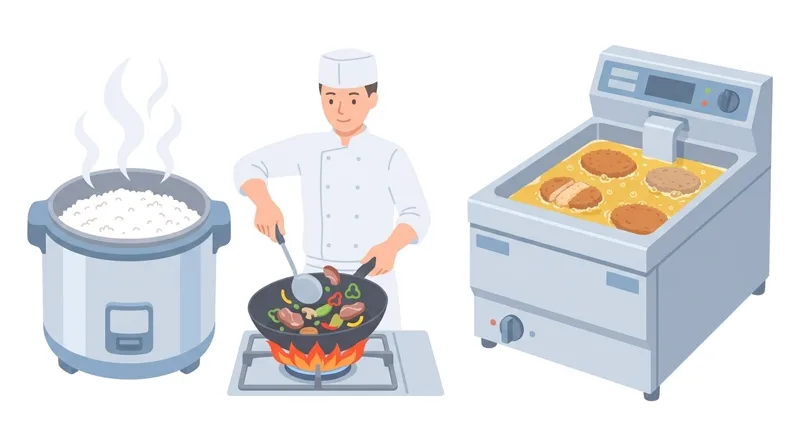
炊飯では十分な吸水と98℃前後で20分間以上の加熱・蒸らしにより、デンプンが柔らかく粘りのある状態に変わる「糊化(アルファ化)」が進みます。
In cooking rice, sufficient water absorption followed by heating at around 98℃ for 20 minutes+ and steaming causes starch gelatinization (alpha-conversion), making rice soft and sticky.
肉野菜炒めは食材の大きさを揃え、水気をよく切り、火の通りにくい肉や根菜類から先に炒めて葉菜類を後から加え、強火・短時間で仕上げて離水を防ぎます。
For stir-fried meat and vegetables, cut ingredients uniformly, drain washed vegetables well, stir-fry hard-to-cook meat and root vegetables first and leafy greens last over high heat quickly to prevent water release.
揚げ物で油温低下を防ぐには1回の投入面積を油面の3分の1以下にします(油面6,000cm²で1尾40cm²のエビなら6,000÷3÷40=最大50尾)。
When deep-frying, keep the food area per batch to 1/3 or less of the oil surface area to prevent temperature drops (for a 6,000cm² fryer and 40cm² shrimp: 6,000 ÷ 3 ÷ 40 = max 50 shrimp).
酢の物や生野菜のドレッシング和えは、浸透圧で水分が出て水っぽくなるのを防ぐため、食材と調味液を別々に冷蔵し提供直前に和えます。
For vinegared dishes (sunomono) and dressed salads, chill prepared ingredients and dressing separately and toss immediately before serving so osmosis does not draw out water.
Key points
- お米のデンプンが水と熱で柔らかくなる現象を「糊化(アルファ化)」と呼ぶ
The phenomenon where rice starch becomes soft and sticky with water and heat is called gelatinization (alpha-conversion) - 大量の野菜炒めは水気を切り、予熱した鍋で強火・短時間で炒め、調味料は仕上げ直前に加える
For large-batch vegetable stir-fries, drain moisture well, stir-fry quickly over high heat in a preheated pan, and add seasonings right before finishing - フライヤーの1回の投入量は油面面積の3分の1以下に抑え、和え物は提供直前に和える
Limit deep-fryer batches to ≤1/3 of the oil surface area, and toss dressed dishes immediately before serving
| Word | Meaning |
|---|---|
| 糊化 | Gelatinization (alpha-conversion) |
| 離水 | Water release (moisture coming out of food) |
| 根菜類 | Root vegetables |
| 油面 | Oil surface |
業務用調理機器の特性と労働安全衛生
Commercial Kitchen Equipment Characteristics and Occupational Safety
スチームコンベクションオーブンは「スチーム(蒸気)」「ホットエアー(熱風・対流)」「コンビネーション(蒸気+熱風)」の3モードで多様な加熱をおこないます。
A steam convection oven performs diverse cooking methods using 3 basic modes: Steam mode, Hot Air (convection) mode, and Combination (steam + hot air) mode.
ブラストチラー(急速冷却機)は加熱後の料理に冷風を当てて中心3℃以下へ急冷し、危険温度帯(10〜60℃)を素早く通過させます。
A blast chiller blows cold air over hot cooked dishes to rapidly chill the core to 3℃ or below, passing quickly through the danger temperature zone (10–60℃).
電磁調理器(IH)は磁力線で鍋底に渦電流を生じさせるため底が平らな磁性鍋を使い、電子レンジでは火花(スパーク)を防ぐため金属容器やアルミホイルを使いません。
Induction (IH) cookers use magnetic force lines to generate eddy currents in flat magnetic pan bottoms; in commercial microwaves, never use metal containers or aluminum foil to prevent sparks.
スライサー等の詰まり除去や分解洗浄時は必ず電源を切り電源プラグを抜いて刃の停止を確認し、重い寸胴鍋は2人で声を掛け合い膝を使って運びます。
Before clearing jams or disassembling slicers and mixers for cleaning, always turn off the power switch, unplug the power plug, and verify the blade has stopped; carry heavy stockpots with two people calling out and using their knees.
Key points
- スチコンの3基本モードはスチーム・ホットエアー・コンビネーション、急冷機はブラストチラー
The 3 modes of a steam convection oven are Steam, Hot Air, and Combination; rapid chillers are blast chillers - IHは磁力線と渦電流で鍋底を発熱させ、電子レンジでは金属容器やアルミホイルの使用厳禁
IH cookers heat pan bottoms via magnetic lines and eddy currents; metal containers and foil are strictly prohibited in microwaves - 電動機器の清掃・点検時は電源スイッチを切り、必ず電源プラグをコンセントから抜く
Always turn off the switch and unplug the power plug before cleaning or clearing jams in electric cutting machines
| Word | Meaning |
|---|---|
| 急速冷却機 | Rapid chiller (blast chiller) |
| 電磁調理器 | Induction cooker (IH cooking heater) |
| 渦電流 | Eddy current |
| 寸胴鍋 | Large cylindrical stockpot (zundonabe) |
Food and Drink Preparation
Practice this chapter in the appOfficial references
- 一般社団法人日本フードサービス協会(JF) 外食業特定技能2号技能測定試験 学習用テキスト — https://otaff.or.jp/tokutei/gaisyoku-2/materials/