 Tokutei Pass
Advanced Customer Service, Floor Operations, and Emergency Response
高度な接客サービスとフロア運営・緊急対応
Food Service (SSW 2) · 外食業(2号) · Written by Tokutei Pass based on the official study texts; not copied verbatim.
顧客満足・おもてなしの3段階・QSCAと敬語
Customer Satisfaction, 3 Levels of Omotenashi, QSCA, and Keigo
お客様が体験した実績が事前期待を上回れば顧客満足が生まれてリピーターとなり、下回れば口コミで潜在顧客も減少します。
When actual experience exceeds prior expectation, customer satisfaction is created and guests become repeaters; if it falls short, negative word-of-mouth reduces potential customers.
おもてなしの3段階(マナー・サービス・ホスピタリティ)のうち、ホスピタリティとはお客様の立場に立って心を込めた気配りを提供することです。
Among the 3 levels of omotenashi (Manner, Service, Hospitality), hospitality means standing in the customer's shoes to provide heartfelt consideration.
QSCAの「A(雰囲気)」はBGMや照明、空調、内装を整えることです。身だしなみでは爪を短く切り、髪を束ね、香水や指輪は控えます。
In QSCA, 'A (Atmosphere)' means managing BGM volume, lighting, air conditioning, and interior presentation. For grooming, keep nails short, tie hair back, and refrain from perfume and rings.
敬語では「何名様でいらっしゃいますか」「お召し上がりください」「ハンバーグでございます」「1万円お預かりいたします」やクッション言葉を正しく使います。
Use proper honorifics such as 'How many guests in your party?', 'Please enjoy while hot', 'Here is the hamburger steak', and 'I receive 10,000 yen', along with softening cushion words.
Key points
- 体験実績が事前期待を上回ると顧客満足が生まれ、心を込めた気配りをホスピタリティという
Customer satisfaction arises when actual experience exceeds prior expectation; heartfelt consideration is Hospitality - QSCAの「A(アトモスフィア)」はBGM音量・照明・空調・内装演出の管理
'A (Atmosphere)' in QSCA manages BGM volume, lighting brightness, air conditioning, and interior staging - バイト敬語を是正し、お断りやお願いの前には「恐れ入りますが」等のクッション言葉を添える
Correct improper part-timer keigo (baito-keigo) and add cushion words like 'Excuse me, but...' before refusals or requests
| Word | Meaning |
|---|---|
| 事前期待 | Prior expectation |
| 気配り | Consideration, attentiveness |
| 尊敬語 | Respectful language (sonkeigo) |
| クッション言葉 | Cushion words (softening phrases) |
予約応対・席案内・配膳と多様なお客様への配慮
Reservations, Seating, Serving, and Care for Diverse Guests
電話応対はメモを用意して3コール以内に出て店名と名前を名乗り、要件を復唱確認します。無断キャンセル防止のため受付時に規定を説明し前日等に確認連絡します。
Answer phones within 3 rings with a memo ready, state the store and your name, and repeat details to confirm. To prevent no-shows, explain the cancellation policy when booking and make a confirmation contact the day before.
客席は出入口から遠く落ち着ける奥の席が「上座」です。和食は手前左側に飯椀、手前右側に汁椀を配膳し、西洋料理の飲み物は右側から注ぎます。
The calm inner seat farthest from the entrance is the seat of honor (kamiza). In Washoku, place the rice bowl on the front-left and soup bowl on the front-right; in Western service, pour drinks from the guest's right.
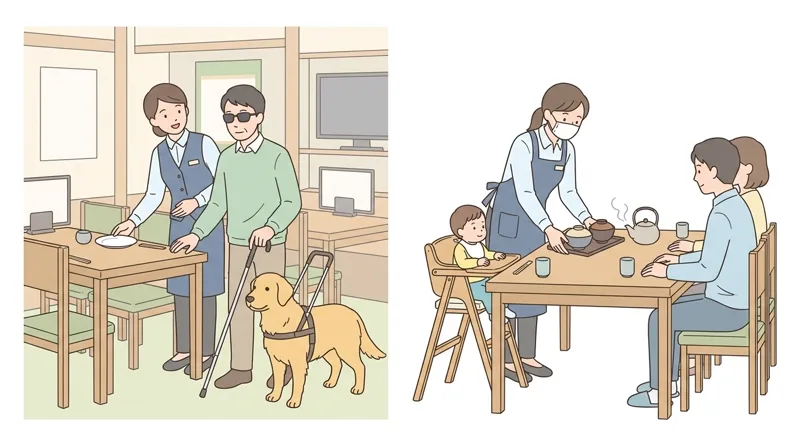
視覚障がいのあるお客様の盲導犬(補助犬)は補助犬法に基づき同伴を受け入れ、料理の位置は時計の文字盤(クロックポジション)で丁寧に説明します。
Accept guide dogs (assistance dogs) accompanying visually impaired guests under the Assistance Dogs Act, and explain dish positions politely using the clock face (clock position).
聴覚障がいの方には指差しや筆談を活用し、幼児連れや高齢者にはキッズチェア固定や段差の声かけをおこない、熱い料理や刃物類は大人の奥側へ置きます。
For guests with hearing impairments, use pointing, written notes, or tablets; for families with young children or elderly guests, check kid chair locks, call out floor steps, and place hot dishes and knives on the adult's far side.
Key points
- 上座は出入口から遠い奥の席であり、和食は手前左にご飯・手前右に汁物を配置する
The seat of honor (kamiza) is the inner seat farthest from the entrance; Washoku places rice front-left and soup front-right - 盲導犬(補助犬)の同伴を受け入れ、時計の文字盤で料理位置を説明する
Accept guide dogs (assistance dogs) and explain food arrangement using clock face positions - お子様連れの席では熱い料理や刃物類をお子様の手が届かない大人の奥側へ配膳する
At tables with young children, place hot dishes and sharp cutlery on the adult's far side out of children's reach
| Word | Meaning |
|---|---|
| 上座 | Seat of honor (upper seat - kamiza) |
| 配膳 | Arranging and serving dishes (haizen) |
| 補助犬 | Assistance dog (service/guide dog) |
| 筆談 | Written communication |
アレルギー・宗教上の配慮と受動喫煙・食品ロス対策
Allergies, Religious Dietary Needs, Passive Smoking, and Food Loss
法令で表示義務がある「特定原材料(8品目)」は、えび、かに、くるみ、小麦、そば、卵、乳、落花生です。
The 8 mandatory specified ingredients (allergens) required by law for labeling are shrimp, crab, walnut, wheat, buckwheat (soba), egg, milk, and peanuts.
ゆで釜の共有(コンタミネーション)等を聞かれた際は自己判断せず調理場と責任者に確認します。ハラールやベジタリアン対応では調味料やだしの動物性・アルコール成分も確認します。
When asked about shared noodle-boiling pots (cross-contamination), never guess—verify accurately with the kitchen and manager. For Halal or vegetarian guests, check animal-derived and alcohol ingredients in seasonings and dashi.
健康増進法により店内は原則屋内禁煙であり、喫煙室を設ける場合も標識を掲示し、客・従業員を問わず20歳未満は立入禁止とします。
Under the Health Promotion Act, restaurants are principle no-smoking indoors; if a smoking room is provided, post signs at the entrance and room, and prohibit anyone under 20 (guests or staff) from entering.
食品ロス削減のため、精度の高い発注や小盛りメニューの用意、宴会時の「3010運動」(最初30分と最後10分は自席で食事)の呼びかけをおこないます。
To reduce food loss, improve ordering accuracy, offer small-portion options, and promote the '3010 movement' at banquets (enjoying food at one's seat during the first 30 and last 10 minutes).
Key points
- 特定原材料8品目は「えび・かに・くるみ・小麦・そば・卵・乳・落花生」
The 8 mandatory specified allergen ingredients are shrimp, crab, walnut, wheat, buckwheat, egg, milk, and peanuts - ハラール対応では豚肉だけでなく豚由来エキス・ラードやみりん等のアルコール成分も正確に把握する
For Halal requests, accurately check not only pork meat but also pork extracts, lard, and alcohol such as mirin - 喫煙室には20歳未満の客やアルバイト従業員(清掃時も含む)を絶対に立ち入らせない
Strictly prohibit anyone under 20 years old (including guests and part-time staff for cleaning) from entering smoking rooms
| Word | Meaning |
|---|---|
| 特定原材料 | Specified ingredients (mandatory allergens) |
| 豚由来成分 | Pork-derived ingredients |
| 受動喫煙 | Passive smoking (secondhand smoke) |
| 食品ロス | Food loss (food waste) |
ホール業務・システム・会計精算と客席指標の計算
Floor Operations, Systems, Checkout, and Seat Metric Calculations
営業中は空いた皿を声かけして下げる中間バッシングや部分清掃のスポットクリーンをおこない、閉店後はZキー精算(1日の売上集計)とガス元栓・施錠点検をおこないます。
During business hours, perform intermediate bussing (asking before clearing empty plates) and spot cleaning; after closing, perform Z-key settlement (daily sales tally) and inspect main gas valves and locks.
オーダリングシステムや卓上のセルフオーダーシステムは注文ミスを防ぎ業務を効率化します。キャッシュレス決済導入前には操作や取消処理を全レジ担当者に練習させます。
Ordering systems and tabletop self-order terminals prevent order errors and streamline operations. Before introducing cashless payments, train all cashiers on terminal operation and cancellation procedures.
店内飲食(税率10%)2,000円と持ち帰り(軽減税率8%)1,000円の税込合計は「2,200円+1,080円=3,280円」です。釣銭ミス発覚時は直ちに店長へ正直に報告します。
The tax-included total for 2,000 yen dine-in (10% tax) and 1,000 yen takeout (8% reduced tax) is '2,200 + 1,080 = 3,280 yen'. If a change mistake is discovered, report it honestly to the manager immediately.
客層は性別・年齢の「定量的分類」と来店動機の「定性的分類」に分けます。客席稼働率は「実客数÷総客席数×100」、客席回転数は「来店客数÷客席数」です。
Customer segments are divided into quantitative classification (gender, age) and qualitative classification (visit motive). Seat occupancy = Actual seated guests ÷ Total seats × 100; Seat turnover = Guests ÷ Seats.
Key points
- スポットクリーンは営業中の部分清掃、Zキー精算は閉店後に1日の売上を集計する精算
Spot clean is partial cleaning during business hours; Z-key settlement tallies total daily sales after closing - 店内飲食は標準税率10%、持ち帰り(テイクアウト)は軽減税率8%で計算する
Calculate dine-in items at the standard 10% tax rate and takeout items at the 8% reduced tax rate - 目標売上24万円・客単価3,000円・40席なら、必要客数80人で客席回転数は2.0回転
For target sales of 240,000 yen, average spend of 3,000 yen, and 40 seats: 80 guests are needed and seat turnover is 2.0 turns
| Word | Meaning |
|---|---|
| 中間バッシング | Intermediate bussing (clearing empty dishes during a meal) |
| 軽減税率 | Reduced tax rate (8%) |
| 定量的分類 | Quantitative classification |
| 客席稼働率 | Seat occupancy rate |
クレーム対応・トラブル処理と緊急時の救命・避難誘導
Complaint Handling, Trouble Response, First Aid, and Evacuation
お叱りや異物混入のお申し出には、まず共感してお詫びし体調を気遣い、最後まで傾聴して現物を調査用に保管した上で速やかに責任者へ引き継ぎます。
When receiving a complaint or report of foreign matter, first empathize, apologize, and care for the guest's health; listen attentively to the end, keep the actual item for investigation, and hand over to the manager.
金銭を要求する脅迫・不当要求には1人で抱え込まず責任者へ報告して複数名で毅然と対応し、業務妨害が続く場合は警察へ通報します。
For threats or unreasonable monetary demands, never handle alone—report to the manager, respond resolutely with multiple staff, and call the police if obstruction of business continues.
泥酔客には水を出して酒類提供を控え複数名で制止します。客席での嘔吐発生時は介抱と周囲の席移動をおこない、手袋・マスク着用で次亜塩素酸ナトリウム処理します。
For heavily intoxicated guests causing a nuisance, serve water, stop alcohol service, and restrain calmly with multiple staff. If a guest vomits, care for the guest, relocate nearby guests, and disinfect with sodium hypochlorite wearing mask and gloves.
気道異物詰まり(チョークサイン)では119番通報とAED手配を指示しつつ背部叩打法や腹部突き上げ法をおこない、大地震発生時は安全確保・火気遮断・出口確保を優先します。
For airway choking (choke sign), instruct staff to call 119 and fetch an AED while performing back blows or abdominal thrusts; during a major earthquake, prioritize safety, shut off fire sources, and secure exits.
Key points
- クレーム初期対応は「お詫び・共感→傾聴・事実確認→責任者への引き継ぎ」が原則
Initial complaint response principle: Apologize & empathize → Listen attentively & confirm facts → Hand over to manager - 不当要求や泥酔客の迷惑行為には1人で対応せず、責任者を含む複数名で毅然と対応する
Never handle unreasonable demands or unruly drunk guests alone; respond resolutely with multiple staff including the manager - のど詰まりには背部叩打法・腹部突き上げ法、地震時は安全確保と火気遮断・避難誘導をおこなう
Perform back blows or abdominal thrusts for choking; secure safety, shut off fire sources, and guide evacuation during earthquakes
| Word | Meaning |
|---|---|
| 傾聴 | Active, attentive listening |
| 不当要求 | Unreasonable demand, extortion |
| 背部叩打法 | Back blows (choking first aid) |
| 火気遮断 | Shutting off fire sources |
Customer Service
Practice this chapter in the appOfficial references
- 一般社団法人日本フードサービス協会(JF) 外食業特定技能2号技能測定試験 学習用テキスト — https://otaff.or.jp/tokutei/gaisyoku-2/materials/