 Tokutei Pass
Hygiene Management in Restaurants
飲食店の衛生管理
Restaurant and Food Service · 外食業 · Written by Tokutei Pass based on the official study texts; not copied verbatim.
食中毒予防の3原則と主な細菌
Three Principles of Food Poisoning Prevention and Major Bacteria
食中毒の90%以上は細菌やウイルスが原因です。予防の3原則は、菌を「つけない(手洗い・器具の区分)」「増やさない(低温保存)」「やっつける(中心部までの加熱・殺菌)」です。
Over 90% of food poisoning cases are caused by bacteria or viruses. The three principles of prevention are 'Do not attach (handwashing, separating tools)', 'Do not multiply (low-temperature storage)', and 'Destroy (thorough core heating and sanitization)'.
細菌は「温度・水分・栄養」の3条件がそろうと食品中で増えますが、ウイルスは食品中では増えず人の腸内で増殖します。腸管出血性大腸菌(O157など)は牛肉や生野菜が原因となり、中心部75℃で1分間以上の加熱で死滅します。
Bacteria multiply inside food when the three conditions of 'temperature, moisture, and nutrients' are present, whereas viruses do not multiply in food but replicate inside the human intestine. Enterohemorrhagic E. coli (such as O157), found in beef and raw vegetables, is killed by heating the core to 75°C or higher for at least 1 minute.
鶏肉に多いカンピロバクターや、鶏肉・卵に多いサルモネラ属菌も十分な加熱で防ぎ、卵は割ったらすぐに調理します。魚介類に付く腸炎ビブリオは塩分を好むため、調理前に飲用適の真水(水道水)でよく洗います。
Campylobacter in chicken and Salmonella in chicken and eggs are also prevented by thorough cooking, and cracked eggs should be cooked immediately. Vibrio parahaemolyticus on seafood thrives in salt, so seafood must be washed thoroughly with potable fresh water (tap water) before preparation.
手や指の傷口(化膿巣)に多い黄色ブドウ球菌は、食品中で熱に強い毒素を作り、加熱しても消えません。手に傷がある人は絆創膏の上から使い捨て手袋を着け、直接食品に触れないようにします。
Staphylococcus aureus, abundant in infected hand wounds and cuts, produces a heat-stable toxin in food that is not destroyed by cooking. Workers with hand cuts must wear a bandage covered by disposable gloves and never touch food directly.
Key points
- 食中毒予防の3原則は「つけない・増やさない・やっつける」であり、細菌は温度・水分・栄養で増える。
The three principles of food poisoning prevention are 'Do not attach, Do not multiply, and Destroy'; bacteria grow with temperature, moisture, and nutrients. - O157やカンピロバクター・サルモネラ属菌は中心部75℃・1分間以上の加熱で防ぎ、腸炎ビブリオは真水で洗う。
Prevent O157, Campylobacter, and Salmonella by heating the core to 75°C for at least 1 minute, and wash seafood with fresh water against Vibrio parahaemolyticus. - 黄色ブドウ球菌の毒素は加熱しても消えないため、手に傷があるときは使い捨て手袋を着用する。
Because Staphylococcus aureus toxin is heat-stable, staff with hand cuts must wear disposable gloves.
| Word | Meaning |
|---|---|
| 食中毒予防の3原則 | Three Principles of Food Poisoning Prevention |
| 腸管出血性大腸菌 | enterohemorrhagic Escherichia coli (O157) |
| カンピロバクター | Campylobacter |
| サルモネラ属菌 | Salmonella species |
| 腸炎ビブリオ | Vibrio parahaemolyticus |
| 黄色ブドウ球菌 | Staphylococcus aureus |
芽胞菌・ノロウイルス・寄生虫・自然毒
Spore-Forming Bacteria, Norovirus, Parasites, and Natural Toxins
大鍋で作るカレーやシチューでは、熱に強い芽胞を作るウェルシュ菌に注意し、調理後は小分けして急冷し、再加熱は底からかき混ぜて加熱します。缶詰や真空パックで増えるボツリヌス菌や、チャーハンなどの穀類で増えるセレウス菌も芽胞を作ります。
In large-batch curries and stews, watch out for Clostridium perfringens (Welchii), which forms heat-resistant spores: divide cooked food into small portions to cool rapidly, and stir from the bottom when reheating. Clostridium botulinum in cans/vacuum packs and Bacillus cereus in grains like fried rice also form spores.
冬場に多いノロウイルスは二枚貝や感染者の便・おう吐物からうつり、二枚貝は中心部85〜90℃で90秒間以上加熱します。消毒には次亜塩素酸ナトリウムや熱湯(85℃・1分間以上)を使い、おう吐物は乾く前にマスクと手袋で処理します。
Norovirus, common in winter, spreads via bivalves like oysters or the stool and vomit of infected individuals; heat bivalves to a core temperature of 85–90°C for at least 90 seconds. Since alcohol is ineffective, disinfect with sodium hypochlorite or boiling water (85°C or higher for at least 1 minute), and clean up vomit immediately wearing a mask and gloves before it dries.
サバやイカなどにいる寄生虫のアニサキスは、酢やワサビ・しょうゆでは死なないため、目視確認・加熱、または−20℃で24時間以上冷凍して防ぎます。
The parasite Anisakis found in mackerel and squid is not killed by vinegar, wasabi, or soy sauce; prevent infection through visual inspection, thorough cooking, or freezing at −20°C for at least 24 hours.
サバやマグロなどの赤身魚を常温放置すると熱に強いヒスタミンが作られ、じんましんなどを起こします。ジャガイモの芽や緑色の皮にはソラニンが含まれるため取り除き、フグの毒(テトロドトキシン)は猛毒のため資格のない人の調理は禁止です。
Leaving red-fleshed fish like mackerel or tuna at room temperature produces heat-stable histamine, causing hives. Remove potato sprouts and green skin completely because they contain solanine, and never allow unlicensed staff to prepare pufferfish (fugu), which contains lethal tetrodotoxin.
Key points
- カレーなどのウェルシュ菌対策は「小分けして急冷」、二枚貝のノロウイルス対策は「中心部85〜90℃で90秒間以上加熱」である。
Prevent Clostridium perfringens in curry by dividing into small portions and cooling rapidly; prevent Norovirus in bivalves by heating the core to 85–90°C for at least 90 seconds. - ノロウイルスの消毒には次亜塩素酸ナトリウムまたは85℃・1分間以上の加熱が有効で、アルコールは効きにくい。
Disinfect Norovirus with sodium hypochlorite or heat at 85°C or higher for at least 1 minute, as alcohol is poorly effective. - アニサキスは酢やワサビでは死なず、加熱または−20℃・24時間以上の冷凍で死滅する。
Anisakis is not killed by vinegar or wasabi and must be destroyed by cooking or freezing at −20°C for 24 hours or longer.
| Word | Meaning |
|---|---|
| ウェルシュ菌 | Clostridium perfringens (Welchii) |
| ノロウイルス | Norovirus |
| 次亜塩素酸ナトリウム | sodium hypochlorite |
| アニサキス | Anisakis parasite |
| ヒスタミン | histamine |
| ソラニン | solanine |
原材料の受入れ・保存と温度管理
Receiving, Storing Ingredients, and Temperature Control
納品時は品名・数量・鮮度・包装の破れ・品温・期限表示(傷みやすい食品の「消費期限」と品質が保たれる「賞味期限」)を確認します。溶けかかった冷凍品を再冷凍してはいけません。
Upon delivery, inspect item names, quantities, freshness, package damage, food temperatures, and date labels ('Use-by date' for perishable foods and 'Best-before date' for quality assurance). Never refreeze frozen items that have partially thawed.
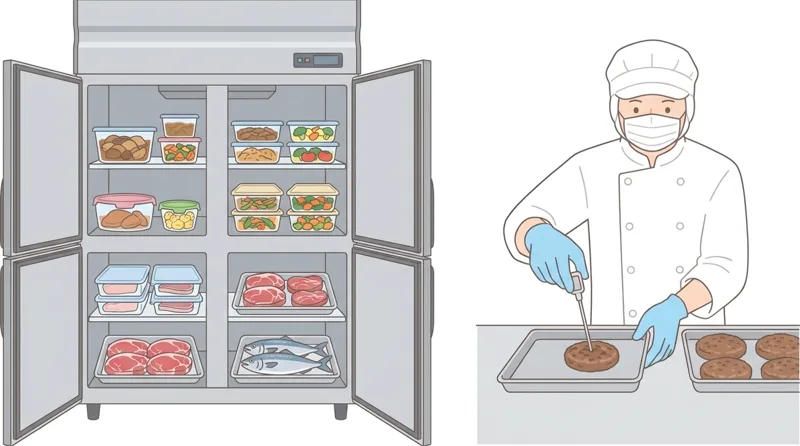
段ボール箱は虫や菌が付いているため調理場に持ち込まず、食材は床に直置きせず棚や「すのこ」の上に置きます。冷蔵庫ではドリップ(血や汁)が下の食品に落ちないよう、生の肉や魚は密閉容器に入れて一番下の段に保存します。
Do not bring cardboard boxes into the kitchen as they carry insects and bacteria, and store ingredients on shelves or racks (sunoko) rather than directly on the floor. In the refrigerator, place raw meat and fish in sealed containers on the bottom shelf so blood or juice (drip) cannot drip onto other foods.
菌が急増する10〜60℃(特に20〜50℃)は「危険温度帯」です。冷蔵は10℃以下、冷凍は−15℃以下、温蔵は65℃以上に保ち、加熱後の冷却は30分以内に中心20℃付近(または60分以内に10℃付近)まで急冷します。
The range from 10°C to 60°C (especially 20°C to 50°C), where bacteria multiply rapidly, is called the 'temperature danger zone'. Keep refrigerators at 10°C or below, freezers at −15°C or below, and hot-holding equipment at 65°C or above; cool cooked foods rapidly to around 20°C within 30 minutes (or around 10°C within 60 minutes).
冷凍品は冷蔵庫内・流水・電子レンジで解凍し、常温解凍は避けます。ハンバーグなどは消毒した中心温度計を最も厚い中心部に刺して温度を測り、冷蔵庫が18℃などの異常時は扉と食材を確認してすぐ責任者へ報告します。
Thaw frozen foods in a refrigerator, under running cold water, or in a microwave, avoiding room-temperature thawing. Measure the core temperature of hamburgers by inserting a disinfected probe into the thickest center, and if a refrigerator reads an abnormal 18°C, check the door and food and report to a supervisor immediately.
Key points
- 冷蔵庫は10℃以下、冷凍庫は−15℃以下、温蔵は65℃以上で管理し、危険温度帯(10〜60℃)を避ける。
Maintain refrigerators at 10°C or below, freezers at −15°C or below, and hot holding at 65°C or above to avoid the temperature danger zone (10–60°C). - 加熱後の冷却は「30分以内に20℃付近、または60分以内に10℃付近」まで速やかに下げる。
Cool cooked foods rapidly 'to around 20°C within 30 minutes, or to around 10°C within 60 minutes'. - 生の肉や魚はドリップによる二次汚染を防ぐため、密閉容器に入れて冷蔵庫の一番下の段に置く。
Store raw meat and fish in sealed containers on the bottom shelf of the refrigerator to prevent secondary contamination from drip.
| Word | Meaning |
|---|---|
| 消費期限・賞味期限 | use-by date (Shōhikigen) and best-before date (Shōmikigen) |
| 危険温度帯 | temperature danger zone |
| 中心温度計 | core thermometer |
| ドリップ | drip (meat/fish exuded liquid) |
| 二次汚染 | secondary contamination |
従業員の健康管理・身だしなみ・衛生的な手洗い
Employee Health, Grooming, and Hygienic Handwashing
下痢・おう吐・発熱・腹痛や手指の傷があるときは、始業前に必ず責任者へ報告し、調理作業から外れます。調理場には時計や指輪を持ち込まず、帽子は前髪や耳まで隠れるようにかぶり、粘着ローラーで白衣の毛髪やほこりを取ります。
Staff experiencing diarrhea, vomiting, fever, abdominal pain, or hand cuts must report to their supervisor before starting work and refrain from food handling. Do not bring watches or rings into the kitchen; wear caps covering bangs and ears completely, and use a sticky roller to remove hair and dust from the kitchen coat.
トイレに行くときは、必ず調理場の外で白衣やエプロンを脱ぎ、トイレ専用の履物に履き替えます。生の肉・魚・卵に触れた後や、トイレの後、ゴミに触れた後、配膳前には必ず衛生的な手洗いを行います。
Before using the restroom, always take off your kitchen coat (hakui) and apron outside the kitchen and change into restroom-only footwear. Perform hygienic handwashing before serving and after touching raw meat, fish, or eggs, using the restroom, or handling trash.
手洗いは「石けんで洗って流水ですすぐ」を2回繰り返す「2度洗い」が効果的です。汚れが残りやすい「指先・爪の間・親指の付け根・指の間・手首」を丁寧に洗い、ペーパータオルで水分を完全に拭き取ってから70〜80%のアルコールをすり込みます。
Double handwashing ('wash with soap and rinse under running water' repeated twice) is highly effective. Wash 'fingertips, under nails, base of the thumb, between fingers, and wrists' carefully, dry completely with a paper towel, and rub in 70–80% alcohol sanitizer.
Key points
- 下痢やおう吐などの体調不良時は直ちに責任者へ報告し、食品に直接触れる作業を行わない。
Report symptoms like diarrhea or vomiting immediately to a supervisor and do not engage in direct food-handling work. - トイレに入る前は白衣・エプロンを脱ぎ、トイレ専用の履物に履き替えて汚染の持ち込みを防ぐ。
Remove your kitchen coat and apron and change into dedicated restroom footwear before entering the toilet to prevent bringing contamination into the kitchen. - 手洗いは石けんと流水による「2度洗い」を行い、水分を拭き取ってからアルコールを噴霧する。
Practice double handwashing with soap and running water, dry moisture completely with a paper towel, and then apply alcohol spray.
| Word | Meaning |
|---|---|
| 粘着ローラー | sticky roller (lint roller) |
| 白衣 | white kitchen coat (hakui) |
| 2度洗い | double handwashing |
| 交差汚染 | cross-contamination |
器具の洗浄・消毒と清掃・廃棄物管理
Washing and Sanitizing Utensils, Cleaning, and Waste Management
まな板や包丁は「肉用・魚用・野菜用・調理済み食品用」に色分けして交差汚染を防ぎます。食器や器具は「水洗い→洗剤で洗浄→流水ですすぐ→消毒→乾燥」の順に洗い、熱湯消毒は80℃以上のお湯に5分間以上浸します。
Color-code cutting boards and knives for 'meat, fish, vegetables, and ready-to-eat foods' to prevent cross-contamination. Wash tableware and tools in the order of 'pre-rinse → wash with detergent → rinse with running water → sanitize → dry'; for hot-water sanitization, immerse in water at 80°C or higher for at least 5 minutes.
食洗機は残菜やつまようじを除いて皿を重ねずに並べ、洗剤量と80℃以上のすすぎ温度を毎日確認します。次亜塩素酸ナトリウムは倍率通りに薄め(水5Lに20mLなら10Lに40mL)、洗剤は専用容器に表示して食品と離して置きます。
When using an automatic dishwasher, remove food scraps and toothpicks, load plates without overlapping, and check detergent levels and the rinse temperature (80°C or higher) daily. Dilute sodium hypochlorite accurately (e.g., if 5 L of water uses 20 mL of concentrate, 10 L uses 40 mL), and store detergents in labeled containers away from food.
排水溝やグリストラップは毎日掃除し、換気扇やダクトフードも定期的に油汚れを落として引火や落下を防ぎます。ゴミ箱は「ふた付き」を使い、調理中に食器が割れたらすぐ作業を止めて破片を集め、周囲の食品は廃棄します。
Clean kitchen drains and grease traps daily to prevent odors and pests, and regularly degrease ventilation fans and duct hoods to prevent fires or dripping grease. Use lidded trash cans, and if a dish breaks during cooking, stop work immediately, collect all shards, and discard nearby uncovered food.
客席トイレの清掃にはトイレ専用のブラシやモップを使い、ドアノブや水洗レバーも消毒します。トイレ清掃用具を調理場のシンクで洗ってはいけません。
Clean customer restrooms using toilet-dedicated brushes and mops, and disinfect doorknobs and flush levers. Never wash restroom cleaning tools in kitchen sinks.
Key points
- 器具は「洗剤で洗浄→流水ですすぐ→消毒→乾燥」の順に処理し、熱湯消毒は80℃以上で5分間以上行う。
Process utensils in the order 'wash with detergent → rinse with running water → sanitize → dry', and sanitize with hot water at 80°C or higher for at least 5 minutes. - 自動食器洗浄機は食器を重ねずにセットし、すすぎ温度(80℃以上)と洗剤濃度を毎日点検する。
Load dishes into automatic dishwashers without stacking them, and check rinse temperature (80°C or higher) and detergent concentration daily. - 調理中にガラスや陶器が割れたときは作業を中止し、破片が混入したおそれのある周囲の食品を廃棄する。
If glass or ceramic breaks during preparation, stop work immediately and discard any surrounding food that may contain shards.
| Word | Meaning |
|---|---|
| 熱湯消毒 | hot-water sanitization |
| 自動食器洗浄機 | automatic dishwasher |
| グリストラップ | grease trap |
| ダクトフード | exhaust duct hood |
HACCPの重要管理とアレルギー・食中毒発生時対応
HACCP Critical Control, Allergens, and Food Poisoning Response
飲食店の「HACCPの考え方を取り入れた衛生管理」では、料理を3つのグループに分けて温度と時間を管理し、毎日の結果を記録・保管します。
Under 'Hygiene Management Incorporating HACCP Concepts' in restaurants, dishes are divided into three groups to control temperature and time, and daily inspection results are recorded and retained.
第1群「非加熱のもの(刺身・冷奴・サラダなど)」は提供直前まで冷蔵し、第2群「加熱するもの(ステーキ・天ぷらなど)」は中心部まで加熱し、第3群「加熱と冷却をくりかえすもの(カレー・スープなど)」は急冷と再加熱を徹底します。
Group 1 'Non-heated foods (sashimi, chilled tofu, salad, etc.)' must be prepared with clean tools and kept refrigerated until just before serving. Group 2 'Heated foods (steak, tempura, hamburger, etc.)' must be cooked thoroughly to the center, and Group 3 'Foods repeatedly heated and cooled (curry, soup, sauces, etc.)' must be cooled rapidly and reheated thoroughly.
表示義務のある特定原材料8品目(えび・かに・くるみ・小麦・そば・卵・乳・落花生)は加熱してもアレルゲンが消えないため、専用器具と別の油を使います。食中毒の疑いがあるときはすぐ責任者へ報告し、食材を保管して保健所の指示に従います。
Because the allergens in the 8 mandatory specific raw materials (shrimp, crab, walnut, wheat, buckwheat, egg, milk, peanut) are not destroyed by heat, use washed dedicated utensils and separate frying oil. If food poisoning is suspected, report to the manager immediately, preserve leftover ingredients and food samples without discarding them, and follow the instructions of the public health center (Hokenjo).
Key points
- HACCPでは料理を「非加熱」「加熱」「加熱と冷却をくりかえすもの」の3グループに分けて管理し、毎日記録する。
Under restaurant HACCP, classify dishes into three groups—'Non-heated', 'Heated', and 'Repeatedly heated and cooled'—and record daily monitoring results. - 特定原材料8品目のアレルゲンは加熱では消えないため、専用器具と別の揚げ油で調理する。
Allergens of the 8 mandatory specific ingredients are not eliminated by heat, so cook with dedicated tools and separate frying oil. - 食中毒の疑いがあるときは直ちに責任者へ報告し、残った食材を保管して保健所の指示に従う。
If food poisoning is suspected, report to a supervisor immediately, preserve remaining ingredients, and follow the public health center's instructions.
| Word | Meaning |
|---|---|
| HACCP | HACCP hygiene management system |
| 非加熱のもの | non-heated food items (Group 1) |
| 特定原材料 | mandatory specific raw materials (8 allergens) |
| アレルゲン | allergen |
| 保健所 | public health center (Hokenjo) |
Hygiene Management
Practice this chapter in the appOfficial references
- 一般社団法人日本フードサービス協会 外食業特定技能1号技能測定試験 学習用テキスト【衛生管理】 — https://www.jfnet.or.jp/wp/wp-content/uploads/2025/09/jf_hygiene_controls_text_ja_v1.2.pdf