Occupational Safety and Health, Environmental Protection, and 5S
安全衛生・環境保全・5S
Industrial Manufacturing (SSW 2) · 製造分野(2号) · Written by Tokutei Pass based on the official study texts; not copied verbatim.
5S活動・ハインリッヒの法則とリスクアセスメント
5S Activities, Heinrich's Law, and Risk Assessment
職場の「5S」とは、整理(不要なものを捨てる)・整頓(すぐ取り出せるよう配置・表示する)・清掃・清潔・しつけの5つです。
Workplace '5S' consists of Sort (Seiri: discard unneeded items), Set in Order (Seiton: arrange and label for easy access), Shine (Seisou), Standardize (Seiketsu), and Sustain (Shitsuke).
ハインリッヒの法則は「1件の重大災害の背景に29件の軽微な災害と300件のヒヤリ・ハットがある」ことを示しています。
Heinrich's Law states that behind 1 major injury lie 29 minor injuries and 300 near-misses (Hiyari-Hatto).
危険予知活動(KY活動)では作業前に潜む危険と対策を共有し、指差呼称(「○○ヨシ!」)でヒューマンエラーを防ぎます。
Hazard Prediction (KY) activities identify risks and countermeasures before work, while Pointing and Calling ('... OK!') prevents human error.
リスクアセスメントで危険源を特定したときは、「本質的安全設計→工学的対策(安全装置)→管理的対策→個人用保護具」の優先順でリスクを低減します。
In Risk Assessment, risk reduction follows the hierarchy of controls: Inherently safe design -> Engineering controls (guards/interlocks) -> Administrative controls -> Personal Protective Equipment (PPE).
Key points
- 【○正しい】ハインリッヒの法則の比率は「1:29:300」であり、ヒヤリ・ハット段階で対策することが重大災害防止につながる。
(○ True) Heinrich's Law ratio is '1 : 29 : 300'; addressing near-misses prevents major accidents. - 【○正しい】リスク低減措置は本質的安全設計や安全装置を最優先とし、保護具(PPE)は最後の補完的対策とする。
(○ True) Risk reduction prioritizes inherently safe design and engineering guards first, with PPE as the last supplementary measure. - 【×誤り】整理を「不要品もすべて並べて保管すること」としたり、保護具着用をリスク低減の最優先対策とするのは誤り。
(× False) Defining Sort (Seiri) as 'neatly storing unneeded items' or making PPE the highest-priority risk reduction measure is FALSE.
| Word | Meaning |
|---|---|
| 整理・整頓 | Sort and Set in Order |
| ハインリッヒの法則 | Heinrich's Law |
| ヒヤリ・ハット | near-miss incident (Hiyari-Hatto) |
| リスクアセスメント | risk assessment |
| 指差呼称 | pointing and calling |
機械安全(フェールセーフ・フールプルーフ・インターロック・LOTO)
Machine Safety (Fail-Safe, Fool-Proof, Interlock, and Lockout/Tagout)
機械や部品が故障・停電したときでも必ず安全側(停止側)に働く設計思想を「フェールセーフ(Fail-safe)」といいます。
A design principle ensuring a machine defaults to a safe (stopped) state when a component fails or power is lost is called 'Fail-safe'.
作業者が誤操作しても危険が生じない仕組みを「フールプルーフ(Fool-proof)」、安全カバーが開いていると起動しない仕組みを「インターロック」といいます。
Preventing hazards even if an operator makes a mistake is 'Fool-proof', and preventing machine operation while a safety guard is open is an 'Interlock'.
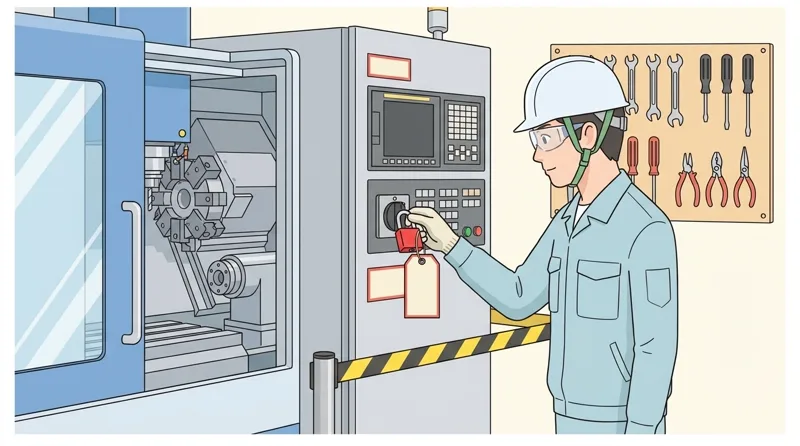
機械の点検・修理・清掃時には、第三者による誤起動を防ぐため、電源を切って施錠し表示札を付ける「ロックアウト・タグアウト(LOTO)」を行います。
During maintenance, repair, or cleaning inside a machine, perform 'Lockout/Tagout' (LOTO) by shutting off power, locking the switch, and attaching a warning tag.
ボール盤などの回転機械では、手袋がドリルに巻き込まれる重大災害を防ぐため、軍手などの手袋を着けて作業してはいけません。
When operating rotating machinery such as a drill press, never wear cotton work gloves because they can get caught and pulled into the rotating spindle.
Key points
- 【○正しい】故障時に安全側(停止)へ働く設計は「フェールセーフ」、誤操作を防ぐ仕組みは「フールプルーフ」である。
(○ True) Designing equipment to fail into a safe stopped state is 'Fail-safe', and preventing operator misoperation is 'Fool-proof'. - 【○正しい】点検・修理時は電源遮断+施錠+表示札の「ロックアウト・タグアウト(LOTO)」を行い、ボール盤作業では手袋を使用しない。
(○ True) Perform Lockout/Tagout (shut off power, lock, and tag) during maintenance, and never wear gloves when operating a drill press. - 【×誤り】作業効率を上げるために安全扉のインターロックや光線式安全装置を無効化して運転するのは厳禁。
(× False) Disabling safety door interlocks or light curtains to increase work speed is strictly prohibited.
| Word | Meaning |
|---|---|
| フェールセーフ | fail-safe |
| フールプルーフ | fool-proof |
| インターロック | interlock |
| ロックアウト・タグアウト | lockout/tagout (LOTO) |
化学物質管理(SDS・GHS・局所排気)と酸素欠乏症防止
Chemical Management (SDS, GHS, Local Exhaust) and Oxygen Deficiency Prevention
有機溶剤や薬品を取り扱う前には、必ず「SDS(安全データシート)」で有害性・保護具・応急措置を確認し、容器のGHS絵表示に従います。
Before handling organic solvents or chemicals, always check the 'SDS (Safety Data Sheet)' and GHS pictograms for hazards, required PPE, and first-aid procedures.
有機溶剤作業では局所排気装置を稼働させ、有機ガス用防毒マスク(粉じんマスクや破過した吸収缶は無効)を着用します。
During organic solvent work, operate local exhaust ventilation and wear an organic-gas respirator (dust masks or saturated canisters beyond breakthrough do not block solvent vapors).
ピットやタンク内部などの密閉空間に入る前には、酸素濃度が「18%以上」(有毒ガスがないこと)であることを測定器で確認します。
Before entering a confined space such as a pit or tank, measure the atmosphere to verify that oxygen concentration is at least '18%' (and hydrogen sulfide is 10 ppm or less).
フォークリフトの運転や玉掛け(1t以上)などの就業制限業務は、法定の技能講習修了者等(有資格者)でなければ行えません。
Restricted operations such as operating a forklift or slinging loads of 1 ton or more (Tamagake) may only be performed by workers holding the legally required skill training certificate.
Key points
- 【○正しい】化学物質使用前は「SDS(安全データシート)」を確認し、有機溶剤作業では局所排気装置と有機ガス用防毒マスクを使う。
(○ True) Check the SDS before using chemicals, and use local exhaust ventilation and an organic-gas respirator for organic solvent work. - 【○正しい】酸欠危険場所の入場前には酸素濃度「18%以上」を確認し、フォークリフトや玉掛けは有資格者が行う。
(○ True) Verify oxygen concentration is '18% or higher' before entering confined spaces, and ensure only certified operators perform forklift or slinging work. - 【×誤り】有機溶剤作業で防じんマスクを使ったり、破過時間を超えた吸収缶をそのまま使い続けるのは誤り。
(× False) Using a dust mask for organic solvent vapors or continuing to use a respirator canister past its breakthrough time is FALSE.
| Word | Meaning |
|---|---|
| 安全データシート(SDS) | Safety Data Sheet (SDS) |
| 有機ガス用防毒マスク | organic-gas respirator |
| 局所排気装置 | local exhaust ventilation |
| 酸素欠乏症 | oxygen deficiency |
| 玉掛け | slinging / rigging (Tamagake) |
感電防止・熱中症対策・腰痛予防と環境保全(3R・産業廃棄物)
Electric Shock Prevention, Heatstroke, Back Pain Prevention, and Environmental Protection (3R)
電気機器には漏電遮断器とアース(接地)を設け、ぬれた手で操作せず、電線を束ねたまま大電流を流さないようにします(発熱・火災防止)。
Equip electrical tools with earth leakage breakers and grounding, never touch switches with wet hands, and never pass high current through bundled cords (to prevent overheating and fire).
高温環境ではWBGT(暑さ指数)を監視してこまめに水分と塩分を補給し、重量物を持つときは荷物に体を近づけて膝を曲げ、腰ではなく脚力で持ち上げます。
Monitor the WBGT heat index and replenish water and salt regularly; when lifting heavy loads, stand close, bend your knees, and lift with leg muscles to prevent lower back injury.
騒音職場(85dB以上)では耳栓などの防音保護具を着け、油火災や電気火災には水をかけず粉末消火器や二酸化炭素消火器を使います。
Wear hearing protection in noisy areas (85 dB or above); for oil or electrical fires, never use water—use dry chemical powder or CO2 fire extinguishers.
環境保全の「3R」はリデュース(発生抑制)・リユース(再使用)・リサイクル(再資源化)の順で優先し、廃油などの産業廃棄物は分別保管してマニフェスト(管理票)で適正委託処理します。
Environmental '3R' prioritizes Reduce -> Reuse -> Recycle; industrial waste such as waste oil must be segregated and consigned to licensed processors using a manifest tracking slip.
Key points
- 【○正しい】重量物は膝を曲げて体の近くで持ち上げ、高温職場ではWBGTを把握して水分と塩分を一緒に補給する。
(○ True) Bend your knees and hold heavy loads close to your body; monitor WBGT and replenish both water and salt in hot workplaces. - 【○正しい】3Rの最優先は「リデュース(発生抑制)」であり、産業廃棄物はマニフェスト(産業廃棄物管理票)で最終処分まで確認する。
(○ True) The top priority in 3R is 'Reduce (waste reduction)', and industrial waste disposal must be tracked using a manifest system. - 【×誤り】切削油などの油火災や通電中の電気火災に水をバケツでかけて消火するのは火災拡大や感電の危険があるため誤り。
(× False) Pouring buckets of water onto an oil fire or an energized electrical fire is FALSE because it spreads the fire and causes electric shock.
| Word | Meaning |
|---|---|
| 漏電遮断器 | earth leakage circuit breaker (ELCB) |
| 暑さ指数(WBGT) | Wet Bulb Globe Temperature (WBGT) |
| リデュース(発生抑制) | Reduce (waste prevention) |
| マニフェスト(管理票) | industrial waste manifest |
Safety, Pollution Prevention and KYT
Practice this chapter in the appOfficial references
- 製造分野特定技能2号評価試験(経済産業省・JAIM) — https://www.jaim-skill.or.jp/exam/about-ssw2/
- 製造分野特定技能評価試験 試験基準(別紙) — https://www.jaim-skill.or.jp/assets/files/exam/top/exam_criteria.pdf