 Tokutei Pass
Occupational Safety and Health
安全衛生
Industrial Manufacturing - Machinery and Electronics · 製造分野 · Written by Tokutei Pass based on the official study texts; not copied verbatim.
作業前の安全確認(指差呼称・KY活動・ヒヤリハット)
Pre-Work Safety Checks (Point-and-Call, KY, Near-Misses)
作業前や操作時に行う指差呼称は、確認対象を指で差し声に出して確認することでミスを防ぎます。
Point-and-call (Shisa koshou) before work involves pointing at the target and calling out aloud to prevent human error.
作業を始める前に「どんな危険があるか」をみんなで話し合い対策を決める活動を危険予知活動(KY活動)といいます。
Discussing potential hazards with coworkers before starting work to decide on countermeasures is called Hazard Prediction (KY) activity.
事故やケガには至らなかったものの「ヒヤリ」とした出来事をヒヤリハットといいます。
An incident that nearly caused an injury or accident is called a near-miss (Hiyari-hatto).
ヒヤリハットは重大な事故を防ぐため、個人の記録にとどめず必ず上司や職場に報告して共有します。
Never keep near-misses only in personal notes; always report and share them with supervisors and the workplace to prevent serious accidents.
Key points
- 【○正しい】指差呼称は対象を指で差し、声に出して確認することで誤操作を防ぐ。
(○ True) Point-and-call prevents mistakes by pointing at the target with your finger and calling out aloud to confirm. - 【○正しい】作業前に全員で危険を予測して話し合う活動を危険予知活動(KY活動)という。
(○ True) Discussing potential hazards together before starting work is called Hazard Prediction Activity (KY activity). - 【×誤り】ヒヤリハットは事故にならなかったからといって報告せず隠してはならない(再発防止のため必ず報告する)。
(× False) Keeping a near-miss (Hiyari-hatto) in personal notes without reporting it is FALSE (always report it to prevent recurrence).
| Word | Meaning |
|---|---|
| 指差呼称 | point-and-call confirmation |
| 危険予知活動 | hazard prediction activity (KY) |
| ヒヤリハット | near-miss incident (Hiyari-hatto) |
| 再発防止 | recurrence prevention |
| 安全確認 | safety confirmation |
保護具の着用と回転機械の安全
Personal Protective Equipment and Rotating Machinery Safety
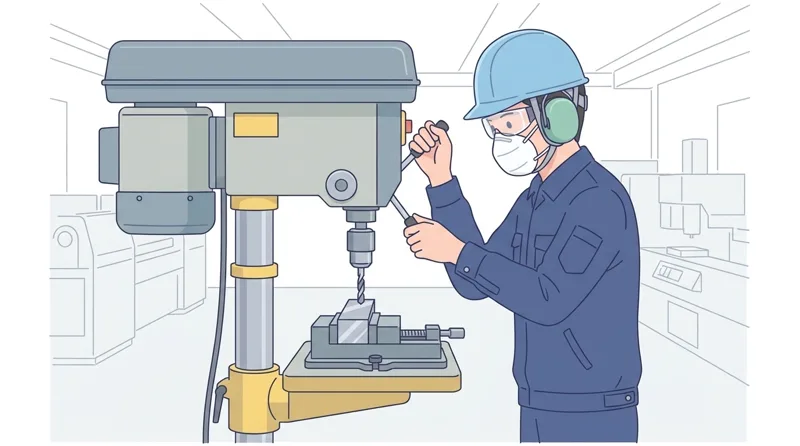
ボール盤などの回転する機械で穴あけ作業をするときは、巻き込まれ防止のため手袋を着けずバイスで工作物を固定します。
When drilling with a bench drill press, never wear gloves to avoid entanglement, and clamp the workpiece securely in a vise.
研削作業の飛散物には耐衝撃性の保護めがね、粉じんには防じんマスク、大きな騒音には耳栓やイヤーマフを使います。
Wear impact-resistant safety glasses against flying chips, a dust mask against grinding dust, and earplugs or earmuffs in high-noise areas.
ベルトや歯車などの回転部にある安全カバーは、運転中は絶対に外してはいけません。
Safety covers on rotating parts such as belts and gears must never be removed while the machine is running.
点検や給油・清掃作業を行うときは、必ず機械を完全に停止させてから行います。
Always stop the machine completely before performing inspection, lubrication, or cleaning.
Key points
- 【○正しい】ボール盤作業では手袋を着けず、工作物をバイスなどで確実に固定する。
(○ True) When operating a drill press, do not wear gloves and clamp the workpiece securely with a vise. - 【×誤り】研削作業で耐衝撃性の保護めがねではなく日常用のサングラスを使うのは誤り。
(× False) Wearing everyday sunglasses instead of impact-resistant safety glasses, or only earplugs instead of a dust mask during grinding, is FALSE. - 【×誤り】回転部の安全カバーを運転中に外して点検・給油を行ってはならない。
(× False) Temporarily removing a safety cover on rotating parts while the machine is running for inspection or oiling is FALSE.
| Word | Meaning |
|---|---|
| ボール盤 | bench drill press |
| バイス | vise |
| 保護めがね | safety glasses |
| 防じんマスク | dust mask |
| 安全カバー | safety cover (guard) |
電気・空圧設備の保守点検とロックアウト
Electrical & Pneumatic Maintenance and Lockout/Tagout
電気設備や機械を修理・点検する前は、必ず電源を遮断し、無電圧や残留エネルギーの処理を確認します。
Before repairing electrical equipment, shut off the power, prevent re-energizing with locks and tags, and verify zero voltage and residual energy release.
他の人が誤って電源を入れないよう、スイッチに施錠(ロックアウト)し「操作禁止」の表示札(タグアウト)を付けます。
Attach a lock (Lockout) and a 'Do Not Operate' tag (Tagout) to the switch so others cannot accidentally turn the power back on.
「操作禁止」の表示札は、札を付けた本人や責任者の確認なしに他の人が外したり無視したりしてはいけません。
A 'Do Not Operate' tag must never be removed or ignored by anyone else without confirmation from the person who attached it or the supervisor.
停止させた空圧機器に残圧があるときは、権限のある人が手順に従って供給源を隔離し残圧を除去します。
If residual pressure remains in stopped pneumatic equipment, an authorized person must isolate the supply source and safely bleed the residual pressure.
Key points
- 【○正しい】修理前は電源を遮断し、施錠と表示札で再投入を防ぎ、無電圧を確認する。
(○ True) Before electrical repair, cut off power, lock and tag the switch, and verify zero voltage and discharged residual energy. - 【○正しい】「操作禁止」の表示札は、本人や責任者の確認なしに他人が外してはならない。
(○ True) Other workers must never remove or ignore a 'Do Not Operate' tag without confirmation from the installer or supervisor. - 【○正しい】空圧機器の残圧は、権限のある人が手順に従い供給源を隔離して安全に抜く。
(○ True) Residual air pressure in stopped pneumatic equipment must be safely released by an authorized person after isolating the supply.
| Word | Meaning |
|---|---|
| 電源遮断 | power shutoff |
| 施錠 | locking (Lockout) |
| 表示札 | warning tag (Tagout) |
| 無電圧 | zero voltage |
| 残圧 | residual pressure |
化学物質・局所排気装置と安全色・通路
Chemical Safety, Local Exhaust, Safety Colors, and Walkways
化学物質や有機溶剤を使う前は、安全データシート(SDS)で危険性や有害性・取扱方法を確認します。
Before handling chemicals or organic solvents, check the Safety Data Sheet (SDS) to understand hazards and proper handling procedures.
有機溶剤作業場で局所排気装置が故障しているときは、作業を始めずに責任者へ報告し安全対策が整うまで待ちます。
If a required local exhaust ventilation system breaks down in an organic solvent work area, do not start work; report to the supervisor and wait.
JISの安全色において、「禁止」「停止」「防火」を表す色は赤です(注意は黄、安全は緑)。
Under JIS safety colors, red represents 'Prohibition', 'Stop', and 'Fire Protection' (yellow for caution, green for safety).
工場の床に油や水がこぼれたときは転倒防止のためすぐに拭き取り、通路の配線には保護カバーをかけます。
Wipe up spilled oil on factory floors immediately and cover cables crossing walkways to prevent slips and trips.
Key points
- 【×誤り】化学物質の危険性を確認する文書は「出荷検査成績書」ではなく「安全データシート(SDS)」である。
(× False) The document used to check chemical hazards before use is the Safety Data Sheet (SDS), NOT an outgoing inspection certificate. - 【○正しい】局所排気装置が故障しているときは作業を始めず、責任者に報告して指示を待つ。
(○ True) If a local exhaust system is out of order, do not begin work; report to the person in charge and wait until safety measures are restored. - 【○正しい】JISの安全色で「禁止・停止・防火」は赤色で表し、床のこぼれた油は放置せず直ちに拭き取る。
(○ True) In JIS safety colors, red indicates 'Prohibition, Stop, and Fire Protection'; oil spilled on the floor must be wiped up immediately.
| Word | Meaning |
|---|---|
| 有機溶剤 | organic solvent |
| 局所排気装置 | local exhaust ventilation system |
| 安全色 | safety colors |
| 転倒防止 | fall (slip/trip) prevention |
運搬作業(クレーン・フォークリフト)と健康管理
Material Handling (Cranes, Forklifts) and Health Management
クレーン作業では、つり荷の下には絶対に入らず、玉掛け用ワイヤーロープは素線の切断やキンク(ねじれ)を事前点検します。
During crane operations, never step under a suspended load, and inspect wire ropes before slinging for broken wires, kinks, wear, or corrosion.
工場内でフォークリフトが走行しているときは、死角に入らず歩行者用通路を歩き、運転者とアイコンタクトをとります。
When forklifts are operating, pedestrians must stay out of blind spots, walk in designated pedestrian walkways, and make eye contact with the driver.
重い物を床から持ち上げるときは、荷物に近づいて膝を曲げて腰を落とし、背筋を伸ばして持ち上げます。
When lifting a heavy object from the floor, stand close to the load, bend your knees to lower your hips, and lift with a straight back.
熱中症予防のため、のどが渇く前からこまめに水分と塩分をとり、適度に休憩をとります。
To prevent heatstroke, drink water and take salt regularly before feeling thirsty, and take appropriate rest breaks.
Key points
- 【○正しい】クレーンのつり荷の下には絶対に入らず、ワイヤーロープに切断やキンクがあれば使用しない。
(○ True) Never enter under a crane's suspended load, and never use a wire rope with broken strands, kinks, or severe wear. - 【○正しい】フォークリフトの近くでは歩行者用通路を歩き、運転者とアイコンタクトで安全を確認する。
(○ True) Around forklifts, walk inside designated pedestrian walkways, avoid blind spots, and make eye contact with the operator. - 【○正しい】重い荷物は膝を曲げて腰を落として持ち上げ、熱中症予防には渇く前に水分・塩分をとる。
(○ True) Lift heavy loads by bending knees and keeping your back straight, and take water and salt before feeling thirsty to prevent heatstroke.
| Word | Meaning |
|---|---|
| つり荷 | suspended load |
| 玉掛け | slinging work (rigging) |
| キンク | kink (wire rope twist) |
| 死角 | blind spot |
| 熱中症 | heatstroke |
Workplace Safety and Health
Practice this chapter in the appOfficial references
- 製造分野特定技能1号評価試験(経済産業省・JAIM) — https://www.jaim-skill.or.jp/exam/about-ssw1/
- 製造分野特定技能評価試験 試験基準(別紙) — https://www.jaim-skill.or.jp/assets/files/exam/top/exam_criteria.pdf