 Tokutei Pass
Fundamentals of Nursing Care
介護の基本
Nursing Care · 介護 - Kaigo · Written by Tokutei Pass based on the official study texts; not copied verbatim.
尊厳の保持と自立支援
Preserving Dignity and Supporting Independence
介護の基本は、利用者の尊厳を守り、その人らしい生活を支えることです。
The foundation of nursing care is protecting the dignity of care users and supporting a lifestyle true to who they are.
利用者主体の考え方に立ち、本人の意思や自己決定を尊重します。
Based on user-centered care, caregivers respect each person's wishes and right to self-determination.
できることは自分でしてもらい、できない部分だけを支える自立支援が大切です。
Independence support means encouraging users to do what they can by themselves and assisting only where needed.
趣味や生きがいを大切にして生活の質(QOL)を高め、地域で暮らすノーマライゼーションを実現します。
Respecting hobbies and purpose in life improves Quality of Life (QOL) and realizes normalization in the local community.
Key points
- 名前を呼ぶときは敬意を持ち、子供扱いせず一りの人として接する。
Address users respectfully by name and treat them as independent adults rather than children. - 時間がかかっても見守り、残存機能を活かす支援を行う。
Watch over users patiently even when tasks take time, making full use of their remaining abilities. - 居室に入る前はノックをして名乗り、カーテンやタオルでプライバシーを守る。
Knock and state your name before entering a resident's room, and protect privacy with curtains and towels.
| Word | Meaning |
|---|---|
| 尊厳 | dignity |
| 自立支援 | independence support |
| 利用者主体 | user-centered care |
| 生活の質 | quality of life (QOL) |
| 生きがい | purpose in life (ikigai) |
権利擁護・身体拘束と虐待防止
Advocacy, Physical Restraint, and Abuse Prevention
意思を伝えにくい利用者の思いを代弁し、権利を守ることを権利擁護といいます。
Advocacy (protection of rights) means speaking on behalf of users who have difficulty expressing their wishes and protecting their rights.
ひもやベルトで体を固定する行為や、「立たないで」と強く言うスピーチロックは身体拘束です。
Tying a user with belts or cords, or stopping movement with harsh commands like 'Wait, do not stand up' (speech lock), constitutes physical restraint.
身体拘束は原則禁止で、緊急時も切迫性・非代替性・一時性の3要件が必要です。
Physical restraint is prohibited in principle; emergency exceptions require three conditions: imminence, non-substitutability, and temporariness.
高齢者虐待には身体的・心理的・経済的・性的・介護放棄の5つがあります。
Elder abuse consists of five types: physical, psychological, financial, sexual abuse, and neglect (abandonment of care).
Key points
- ネグレクト(介護放棄)は、必要な食事や排泄介助をせず放置すること。
Neglect means leaving a user unattended without providing necessary meals, bathing, or toileting assistance. - 経済的虐待は、本人の同意なく年金や預金を勝手に使うこと。
Financial abuse means using a user's pension or savings without their consent. - 虐待を見たり疑ったりしたときは、すぐに上司へ報告する。
If you witness or suspect elder abuse, report it immediately to your supervisor and follow facility procedures.
| Word | Meaning |
|---|---|
| 権利擁護 | advocacy (protection of rights) |
| 身体拘束 | physical restraint |
| 切迫性 | imminence (urgency) |
| 介護放棄 | abandonment of care (neglect) |
| 経済的虐待 | financial abuse |
職業倫理・制度と介護過程
Professional Ethics, Care Insurance, and the Care Process
介護職には守秘義務があり、仕事を辞めたあとも個人情報を漏らしてはいけません。
Care workers have a duty of confidentiality not to disclose personal information even after leaving the job, keeping records locked.
介護保険を利用するときは市町村で要介護認定を受け、地域包括ケアシステムで暮らしを支えます。
To use Long-Term Care Insurance services, applicants apply to their municipality for care need certification within the Community-based Integrated Care System.
ICF(国際生活機能分類)では、手すりや介護者の支援は環境因子にあたります。
In the WHO International Classification of Functioning (ICF), handrails, ramps, and caregiver support are classified as environmental factors.
介護過程は、アセスメント・計画立案・実施・評価の順に進めます。
The care process proceeds through four stages: Assessment, Care Planning, Implementation, and Evaluation.
Key points
- 利用者から現金や品物を渡されたときは、丁寧に断り上司に報告する。
When offered cash or gifts by a user, politely decline according to facility rules and report the fact to your supervisor. - 訪問介護では、同居家族全員分の調理やペットの世話・草むしりはできない。
In home-visit care, tasks not directly for the user—such as cooking for the whole family, walking pets, or weeding—are not permitted. - ケアカンファレンスで多職種が目標を共有し、状態変化時は計画を見直す。
Share goals across professions in care conferences, and report changes in a user's condition to review the care plan.
| Word | Meaning |
|---|---|
| 守秘義務 | duty of confidentiality |
| 要介護認定 | care need certification |
| 環境因子 | environmental factors |
| 介護過程 | care process |
| 多職種連携 | interprofessional collaboration |
感染症対策と食中毒予防
Infection Control and Food Poisoning Prevention
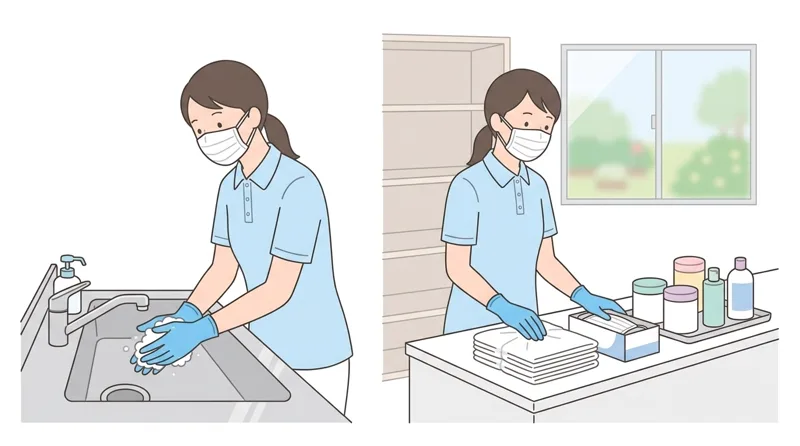
標準予防策では、すべての血液・体液・排泄物に感染の可能性があると考えます。
Under Standard Precautions, all blood, body fluids, and excretions are treated as potentially infectious regardless of diagnosis.
ケアの前後や手袋を外したあとは必ず手洗いをし、手袋はケアごとに交換します。
Wash hands before and after care and immediately after removing disposable gloves, changing to a fresh pair for each care task.
空気感染には結核・麻しん・水痘があり、飛沫感染にはインフルエンザがあります。
Airborne infections include tuberculosis, measles, and chickenpox, while droplet infections include influenza.
ノロウイルスの嘔吐物は外側から内側へ拭き取り、次亜塩素酸ナトリウムで消毒します。
Wipe Norovirus vomit from the outside inward wearing gloves and a mask, seal it in a bag, and disinfect with diluted sodium hypochlorite.
Key points
- 血液や排泄物がついた洗濯物は、手袋を着けて他と分け、消毒してから洗う。
Handle laundry soiled with blood or excretions with gloves, separate it from other laundry, and disinfect before washing. - 手すりや車いすのグリップなど共有物品は定期的に消毒し、こまめに換気する。
Regularly disinfect shared items such as handrails and wheelchair grips, and ventilate rooms to prevent odors and contact infection. - 食中毒予防の三原則は、菌を「つけない・増やさない・やっつける」である。
The three principles of food poisoning prevention are: do not attach, do not multiply, and destroy bacteria.
| Word | Meaning |
|---|---|
| 標準予防策 | Standard Precautions |
| 空気感染 | airborne infection |
| 飛沫感染 | droplet infection |
| 次亜塩素酸ナトリウム | sodium hypochlorite |
| 嘔吐物 | vomit |
医療連携・服薬と緊急時対応
Medical Collaboration, Medication, and Emergency Response
爪や皮膚に異常がない場合の爪切りは、日常のケアとして介護職が行えます。
Care workers may perform routine nail clipping when there is no abnormality or inflammation in the nail or surrounding skin.
喀痰吸引や経管栄養は、所定の研修を受け、医師の指示と看護師連携で行います。
Sputum suction and tube feeding may be performed only after completing certified training, under a doctor's instruction and nurse collaboration.
服薬介助では名前・薬・量・時間を確認し、飲み込むまで見届けて誤薬を防ぎます。
To prevent medication errors, verify the user's name, medication, dose, and time, and watch until the medication is swallowed.
転倒時はむやみに動かさず意識を確認して医療職を呼び、浴槽での急変時はすぐ栓を抜きます。
If a user falls, check consciousness without moving them carelessly and call a nurse; if unconscious in a bathtub, pull the drain plug immediately.
Key points
- 誤薬が起きたときはすぐに看護師や上司へ報告し、経過を観察して事故報告書を書く。
If a medication error occurs, report immediately to a nurse and supervisor, observe the user closely, and write an accident report. - ヒヤリ・ハット報告は、重大な事故が起きる前に原因を分析し再発を防ぐために行う。
Near-miss (Hiyari-hatto) reports are used to analyze causes before serious accidents occur and prevent recurrence. - 火災時はエレベーターを使わず階段やスロープで避難し、地震時はまず頭を守る。
During a fire, evacuate via stairs or ramps without using elevators; during an earthquake, protect the user's head first.
| Word | Meaning |
|---|---|
| 喀痰吸引 | sputum suction |
| 経管栄養 | tube feeding |
| 誤薬 | medication error |
| 避難誘導 | evacuation guidance |
| 事故報告書 | accident report |
安全衛生・身だしなみと看取り
Occupational Safety, Grooming, and End-of-Life Care
利用者の皮膚を傷つけないよう爪を短く切り、指輪や腕時計は外します。
To avoid scratching users' skin, keep fingernails short, remove rings and wristwatches, and avoid strong perfume.
腰痛予防のため、ベッドの高さを腰に合わせ、ボディメカニクスや福祉用具を活用します。
To prevent lower back pain, adjust bed height to waist level and use body mechanics and assistive devices.
出勤前に発熱や下痢があるときは電話で上司に連絡し、ストレスは早めに相談します。
If you have a fever or diarrhea before work, call your supervisor for instructions; manage mental health through rest and early consultation.
人生の最終段階を支える看取りケアでは、苦痛を和らげ本人と家族の思いに寄り添います。
In end-of-life care, alleviate physical and emotional pain while supporting the wishes of both the user and their family.
Key points
- 職場の5S活動は「整理・整頓・清掃・清潔・しつけ」の5項目である。
Workplace 5S activities consist of Sort (Seiri), Set in order (Seiton), Shine (Seisou), Standardize (Seiketsu), and Sustain (Shitsuke). - 車いすを使う前はブレーキの効きやタイヤの空気圧を点検する。
Before using a wheelchair, inspect brake effectiveness and tire air pressure. - 夜間巡視では物音を立てず、懐中電灯の光を直接顔に当てずに呼吸を確認する。
During night rounds, enter quietly and check breathing without shining a flashlight directly onto the user's face.
| Word | Meaning |
|---|---|
| 腰痛 | lower back pain |
| 福祉用具 | assistive devices (welfare equipment) |
| 看取りケア | end-of-life care |
| 整理・整頓 | sorting and setting in order |
| 巡視 | night rounds (patrol) |
Basics of Caregiving
Practice this chapter in the appOfficial references
- 厚生労働省 介護分野における特定技能外国人の受入れについて — https://www.mhlw.go.jp/stf/newpage_000117702.html
- 厚生労働省 介護技能評価試験・介護日本語評価試験 出題基準 — https://www.mhlw.go.jp/content/001706488.pdf
- 公益社団法人日本介護福祉士会 介護の特定技能評価試験 学習テキスト