 Tokutei Pass
Structure and Function of Mind and Body
こころとからだのしくみ
Nursing Care · 介護 - Kaigo · Written by Tokutei Pass based on the official study texts; not copied verbatim.
基本的欲求と加齢による変化
Basic Needs and Age-Related Changes
マズローの欲求階層説では、食事・排泄・睡眠などは生命を保つ生理的欲求です。
In Maslow's hierarchy of needs, eating, excretion, and sleep are physiological needs essential to sustain life.
加齢により、老視で近くの文字が見えにくくなり、白内障では水晶体が濁ってまぶしく感じます。
With aging, presbyopia makes near print hard to focus on, while cataracts cloud the lens and cause blurry vision and glare.
聴覚は高い音から聞こえにくくなり、唾液が減って濃い味を好みやすくなります。
Hearing loss begins with high-pitched electronic sounds, and reduced saliva causes dry mouth and a preference for stronger flavors.
皮膚は乾燥して傷つきやすく、夜中に目が覚める中途覚醒や早朝覚醒が増えます。
Skin loses sebum and moisture, becoming dry and fragile, while shallow sleep increases middle-of-the-night and early-morning awakenings.
Key points
- 肺活量や咳反射が低下するため、気道に痰がたまりやすくなる。
Decreased vital capacity and cough reflex make phlegm more likely to accumulate in the airways. - 腸のぜん動運動が弱まり便秘になりやすく、夜間の排尿回数が増えやすい。
Weaker intestinal peristalsis leads to constipation, while reduced bladder capacity increases nighttime urination. - 高齢者のうつ状態は頭痛や不眠など体の不調を訴えることが多い。
Depression in older adults often presents with physical complaints like headaches or insomnia and is easily mistaken for dementia.
| Word | Meaning |
|---|---|
| 生理的欲求 | physiological needs |
| 白内障 | cataract |
| 中途覚醒 | middle-of-the-night awakening |
| 咳反射 | cough reflex |
| ぜん動運動 | peristalsis |
バイタルサインと観察のポイント
Vital Signs and Observation Points
バイタルサインの基本は、体温・脈拍・血圧・呼吸(および意識)です。
The four basic vital signs are body temperature, pulse, blood pressure, and respiration (along with consciousness).
成人の安静時の目安は、脈拍が1分間に60〜100回、呼吸数が12〜20回です。
Normal resting values for adults are a pulse of 60 to 100 beats per minute and a respiratory rate of 12 to 20 breaths per minute.
高血圧の基準は、収縮期血圧140mmHg以上または拡張期血圧90mmHg以上です。
Adult hypertension is defined as systolic blood pressure of 140 mmHg or higher, or diastolic blood pressure of 90 mmHg or higher.
冬場の急激な温度差で血圧が大きく変動するヒートショックにも注意します。
In winter, sudden temperature differences between warm rooms and cold bathrooms can cause dangerous blood pressure swings known as heat shock.
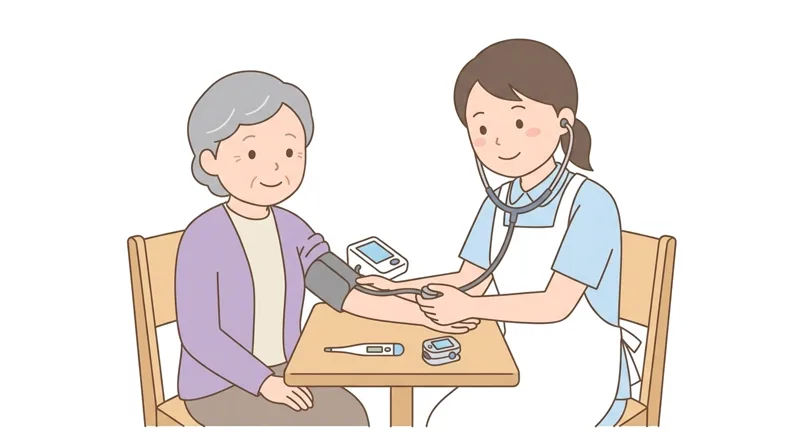
Key points
- わきの下で体温を測るときは汗を拭き、体温計を下から斜め上に向けてはさむ。
When measuring axillary temperature, wipe away sweat and angle the thermometer tip upward into the center of the armpit. - 血圧測定は安静後にカフを心臓と同じ高さに巻き、急に立つと起こる起立性低血圧に注意する。
Measure blood pressure after rest with the cuff at heart level, and watch for orthostatic hypotension when standing up suddenly. - パルスオキシメーター(SpO2測定)は、指先の冷えやマニキュアで正しく測れなくなる。
Pulse oximeter (SpO2) readings become inaccurate if fingertips are very cold or covered with nail polish.
| Word | Meaning |
|---|---|
| 脈拍 | pulse |
| 収縮期血圧 | systolic blood pressure |
| 起立性低血圧 | orthostatic hypotension |
| 呼吸数 | respiratory rate |
| 安静 | rest (quiet state) |
高齢期に多い疾患と緊急症状
Common Geriatric Diseases and Emergency Symptoms
片麻痺の最も多い原因は脳卒中で、突然のろれつ困難や顔のゆがみはすぐ救急要請します。
Stroke is the leading cause of hemiplegia; sudden slurred speech, facial droop, or one-sided arm weakness requires rest and immediate emergency call.
心不全では息切れや足の浮腫(むくみ)が出て、横になると苦しく上体を起こすと楽になります。
Heart failure causes shortness of breath on exertion, leg edema, and breathing difficulty when lying flat that eases when sitting upright.
糖尿病で冷や汗や手の震えが出たときは低血糖を疑い、ブドウ糖を補給し看護師へ連絡します。
Cold sweat and hand tremors in a diabetic user using insulin suggest hypoglycemia; report to a nurse immediately and give glucose if conscious.
骨粗しょう症では転倒で大腿骨頸部骨折を起こしやすく、寝たきりの原因になります。
Osteoporosis weakens bones so even minor falls easily cause femoral neck fractures that can lead to becoming bedridden.
Key points
- 糖尿病は神経障害や血流障害で足の傷が壊疽に進行しやすいため、フットケアが大切。
Diabetic users need careful foot care because neuropathy and poor blood flow make foot wounds prone to severe gangrene. - パーキンソン病では前かがみの小刻み歩行やすくみ足がみられ、変形性膝関節症では正座を避ける。
Parkinson's disease causes shuffling gait and freezing of gait; knee osteoarthritis requires chairs and handrails instead of sitting on the floor. - ヒゼンダニが原因の疥癬は、指の間や陰部などに夜間強いかゆみが出る。
Scabies, caused by Sarcoptes mites, produces intense nighttime itching between fingers, underarms, and the groin.
| Word | Meaning |
|---|---|
| 脳卒中 | stroke (cerebrovascular disease) |
| 心不全 | heart failure |
| 低血糖 | hypoglycemia |
| 大腿骨頸部骨折 | femoral neck fracture |
| 疥癬 | scabies |
脱水・誤嚥と排泄のしくみ
Dehydration, Aspiration, and Excretion Mechanisms
高齢者は暑さや渇きを感じにくいため、時間を決めてこまめに水分をすすめ脱水や熱中症を防ぎます。
Older adults sense heat and thirst poorly, so offer fluids regularly and adjust room temperature to prevent dehydration and heatstroke.
食べ物が気管に入ることを誤嚥といい、誤嚥性肺炎は高熱が出にくく元気や食欲低下で進行します。
Food or saliva entering the trachea is called aspiration; aspiration pneumonia in seniors often progresses with low energy and poor appetite rather than high fever.
餅やパサパサしたパン・ゆで卵は詰まりやすく、むせやすい水分にはとろみ剤を使います。
Sticky mochi, dry bread, and boiled eggs pose high choking risks; use thickening agents for users who easily choke on thin liquids.
朝食後は胃・結腸反射で便意が起きやすく、水分と食物繊維・運動で便秘を防ぎます。
After breakfast, the gastrocolic reflex stimulates bowel movements; adequate water, dietary fiber, and activity help prevent constipation.
Key points
- 口や皮膚の乾燥、尿量減少・濃縮、ぼんやりした様子は脱水のサインである。
Dry mouth and skin, decreased dark urine, and drowsiness are warning signs of dehydration. - 咳やお腹に力が入ると漏れるのは腹圧性尿失禁、強い尿意で我慢できないのは切迫性尿失禁。
Leaking urine when coughing is stress incontinence, while sudden unstoppable urgency is urge incontinence. - 歩行困難や認知症でトイレに間に合わないものは機能性尿失禁という。
Incontinence caused by slow walking or inability to find the toilet due to dementia despite normal bladder function is functional incontinence.
| Word | Meaning |
|---|---|
| 脱水 | dehydration |
| 誤嚥性肺炎 | aspiration pneumonia |
| 胃・結腸反射 | gastrocolic reflex |
| 腹圧性尿失禁 | stress urinary incontinence |
| 機能性尿失禁 | functional urinary incontinence |
廃用症候群と褥瘡(床ずれ)
Disuse Syndrome and Pressure Ulcer Prevention
過度な安静が続くと筋力低下や関節拘縮などが起こる廃用症候群になります。
Prolonged excessive bed rest leads to disuse syndrome, causing muscle weakness, joint contractures, and physical or mental decline.
同じ姿勢が続いて骨の出た部分が圧迫されると、血流が悪くなり褥瘡ができます。
Sustained pressure on bony prominences impairs blood flow and causes pressure ulcers (bedsores).
仰向けでは仙骨部、横向き(側臥位)では大転子部、座位では坐骨部にできやすいです。
Pressure ulcers most commonly form on the sacrum when supine, the greater trochanter when lying on the side, and the ischium when seated.
定期的な体位変換やクッションでの体圧分散、皮膚の清潔保持で予防します。
Prevent pressure ulcers through regular repositioning, pressure-dispersing cushions, clean skin, and proper nutrition.
Key points
- 関節拘縮の予防には、着替えや入浴時に痛みのない範囲で関節を優しく動かす。
To prevent joint contractures, gently move joints within a pain-free range during dressing and bathing. - 日中に日光を浴びてできる範囲で体を動かすことは、夜間の良眠にもつながる。
Getting sunlight and moderate activity during the day helps promote sound sleep at night. - 皮膚の赤みが消えないときは初期の褥瘡を疑い、すぐに医療職へ報告する。
Persistent skin redness that does not fade indicates an early pressure ulcer and must be reported to medical staff.
| Word | Meaning |
|---|---|
| 廃用症候群 | disuse syndrome |
| 関節拘縮 | joint contracture |
| 褥瘡 | pressure ulcer (bedsore) |
| 仙骨部 | sacral region |
| 大転子部 | greater trochanter region |
認知症とせん妄の理解
Understanding Dementia and Delirium
認知症には記憶障害や見当識障害などの中核症状と、不安などによる行動・心理症状(BPSD)があります。
Dementia involves core symptoms (memory loss, disorientation) and behavioral and psychological symptoms (BPSD) triggered by anxiety or discomfort.
アルツハイマー型はもの忘れからゆっくり進行し、血管性はまだら認知症や階段状の進行が特徴です。
Alzheimer's dementia begins with forgetfulness and progresses slowly, while vascular dementia shows uneven deficits and stepwise progression.
レビー小体型では具体的な幻視や転倒がみられ、前頭側頭型では常同行動や脱抑制が現れます。
Lewy body dementia features vivid visual hallucinations and falls, while frontotemporal dementia shows repetitive behavior and disinhibition.
脱水や薬・環境変化などで一時的に意識が混乱する状態をせん妄といいます。
Delirium is a temporary state of acute confusion triggered by dehydration, infection, medication, or environmental changes.
Key points
- 見当識障害には時計やカレンダーを見やすい場所に置き、さりげなく日時を伝える。
For disorientation, place clocks and calendars in visible spots and naturally mention the date and place in conversation. - 財布を盗まれたと訴えるときは否定せず、不安を受け止めて一緒に探す。
If a user with dementia claims their wallet was stolen, accept their anxiety without denial and look for it together. - BPSDを和らげるには、痛みや便秘・環境変化など不快の原因を探して取り除く。
To ease BPSD, identify and remove underlying causes of discomfort such as pain, constipation, or environmental changes.
| Word | Meaning |
|---|---|
| 見当識障害 | disorientation |
| 中核症状 | core symptoms |
| 幻視 | visual hallucination |
| 常同行動 | stereotypic (repetitive) behavior |
| せん妄 | delirium |
Mind and Body Mechanisms
Practice this chapter in the appOfficial references
- 厚生労働省 介護分野における特定技能外国人の受入れについて — https://www.mhlw.go.jp/stf/newpage_000117702.html
- 厚生労働省 介護技能評価試験・介護日本語評価試験 出題基準 — https://www.mhlw.go.jp/content/001706488.pdf
- 公益社団法人日本介護福祉士会 介護の特定技能評価試験 学習テキスト