 Tokutei Pass
Communication Skills
コミュニケーション技術
Nursing Care · 介護 - Kaigo · Written by Tokutei Pass based on the official study texts; not copied verbatim.
傾聴・受容・共感と質問の技法
Active Listening, Acceptance, Empathy, and Questioning
介護職が自分の性格や考え方の癖に気づき、偏見なく接することを自己覚知といいます。
Self-awareness means recognizing your own personality, habits of thought, and emotions so you can interact with users without bias.
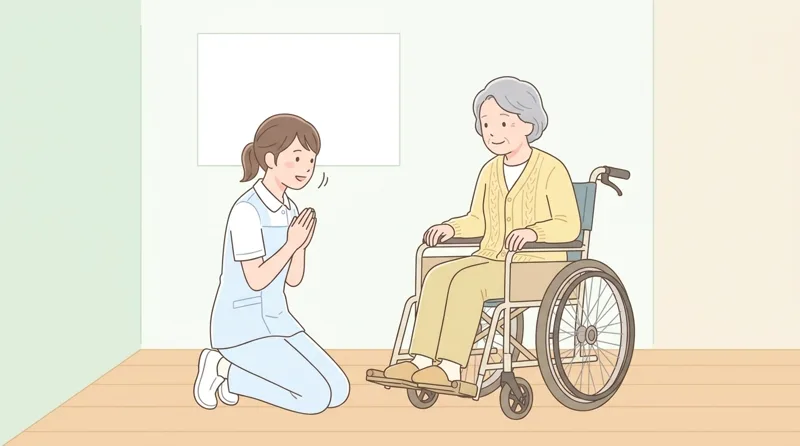
車いすの利用者とは正面で目線の高さを合わせ、うなずきながら最後まで傾聴します。
When speaking with a wheelchair user, kneel in front to match eye level and practice active listening while nodding to the end.
相手の気持ちを否定せず受け止める受容と、相手の立場に立つ共感が信頼を築きます。
Acceptance (receiving feelings without denial) and empathy (understanding from the user's standpoint) build trust.
自由に話せる開かれた質問と、「はい・いいえ」で答える閉じられた質問を使い分けます。
Use open questions for free expression and closed questions ('yes/no') when confirming intentions with someone who has difficulty speaking.
Key points
- 質問は一度に一つずつ尋ね、相手が黙ったときも沈黙を大切にしてあわてず待つ。
Ask one question at a time to avoid confusion, and wait patiently during silence while the user organizes their thoughts. - ケアの前には必ず目的と内容を説明し、本人の同意を得てから行う。
Always explain the purpose and content of care clearly and obtain the user's consent before starting. - 服を選ぶときは2〜3枚を実際に見せ、文化や生活習慣の違いも尊重する。
When helping choose clothes, show 2 to 3 actual garments and respect differences in culture, lifestyle, and values.
| Word | Meaning |
|---|---|
| 自己覚知 | self-awareness |
| 傾聴 | active listening |
| 受容 | acceptance |
| 共感 | empathy |
| 開かれた質問 | open question |
非言語コミュニケーションと環境づくり
Nonverbal Communication and Environment Setup
表情や視線、声の調子、身振りなど言葉以外で伝えるものを非言語コミュニケーションといいます。
Nonverbal communication conveys feelings through facial expressions, eye contact, tone of voice, and gestures rather than words.
口では「大丈夫」と言いながら顔をしかめているときは、非言語サインに気づいて声をかけます。
If a user says 'I am fine' while grimacing and holding their stomach, notice the nonverbal sign and gently ask about their pain.
手や背中に優しく触れるタッチングは安心感を与えますが、嫌がる人や急な接触は避けます。
Gentle touching on the hand or back provides reassurance, but avoid sudden contact or touching users who dislike physical contact.
会話するときはテレビなどの騒音を減らし、明るく静かで安心できる環境を整えます。
Create a bright, quiet conversation environment by reducing background noise such as television.
Key points
- 痛みをうまく言葉にできない人の異変には、日頃から表情や食欲など「いつもとの違い」で気づく。
To detect illness early in users who cannot express pain well, observe daily facial expressions and appetite for any 'differences from usual'. - 相手の大切な言葉を繰り返し、適度なあいづちを入れると安心して話しやすくなる。
Repeating key words and giving timely nods reassures users that their feelings are understood. - ケア中にイライラしたときは深呼吸をして落ち着き、必要なら他の職員に代わってもらう。
If you feel frustrated during care, take a deep breath to calm down or ask a coworker to take over if needed.
| Word | Meaning |
|---|---|
| 非言語 | nonverbal |
| 表情 | facial expression |
| 身体接触 | physical contact (touching) |
| 騒音 | noise |
| 安心感 | sense of reassurance |
障害特性に応じたコミュニケーション
Communication Tailored to Disability Characteristics
耳が遠い方には正面から顔が見える位置で、はっきりとややゆっくり話しかけます。
For users who are hard of hearing, speak clearly and slightly slowly from the front where your face is visible.
補聴器はスイッチや電池・装着状態を確認し、聴覚障害には筆談や手話・口話を活用します。
Check that hearing aids are switched on, have working batteries, and fit snugly; use writing, sign language, or lip reading as needed.
視覚障害の方には触れる前に名乗り、食事の位置は時計の文字盤に例えるクロックポジションで伝えます。
For visually impaired users, state your name before approaching and explain meal placement using the clock position method.
発音しにくい構音障害や言葉が出にくい失語症の方には、文字盤や絵・身振りを交えます。
For users with dysarthria or aphasia, listen calmly and use letter boards, pictures, or gestures.
Key points
- 補聴器をつけた耳元で大声を出したり、水洗いしたりしてはいけない。
Never shout directly into an ear wearing a hearing aid, and never wash a hearing aid with water. - 言葉が出にくい運動性失語の方には、「はい・いいえ」で答えられる短い質問をして待つ。
For motor aphasia (difficulty speaking words), ask short questions that can be answered with 'yes' or 'no' and wait patiently. - 言葉の意味が理解しにくい感覚性失語の方には、実物や写真・身振りを見せて伝える。
For sensory aphasia (difficulty understanding spoken words), combine real objects, photos, illustrations, and gestures.
| Word | Meaning |
|---|---|
| 補聴器 | hearing aid |
| 筆談 | written communication |
| 視覚障害 | visual impairment |
| 構音障害 | dysarthria (articulation disorder) |
| 失語症 | aphasia |
認知症のある方と家族への対応
Interacting with Users with Dementia and Their Families
認知症のある人を一りの人として尊重し、その立場に立つパーソン・センタード・ケアを行います。
Practice Person-Centered Care by respecting each person with dementia as an individual and standing in their shoes.
夕方に「帰ります」と言うときや「まだ食べていない」と言うときは、否定せず気持ちを受け止めます。
When a user says 'I am going home' in the evening or 'I have not eaten lunch yet' after eating, accept their feelings without denial.
同じ質問を繰り返すときも初めて聞かれたように穏やかに答え、入浴は短く具体的に誘います。
Answer repeated questions calmly each time as if asked for the first time, and invite them to bathe using short, concrete phrases.
家族からの相談や苦情は誠実に受け止め、上司へ報告して職場全体で改善につなげます。
Receive family concerns and complaints sincerely, apologize where appropriate, and report to supervisors for workplace-wide improvement.
Key points
- 亡くなった家族の話や事実と違う話も訂正せず、本人の世界や思いに寄り添って聴く。
Do not correct stories about deceased relatives or joyful memories that differ from fact; empathize with the user's emotional world. - 入浴やレクリエーションを嫌がるときは理由や体調を確かめ、無理強いせず時間をおいて誘う。
If a user refuses bathing or recreation, ask their reason and check their health without forcing them, then invite them again later. - 利用者同士が言い争ったときは安全を確保して距離を離し、双方の話を落ち着いて聴く。
If users argue with each other, ensure safety by creating distance between them, listen calmly to each person, and report to a supervisor.
| Word | Meaning |
|---|---|
| 否定 | denial |
| 無理強い | forcing (coercion) |
| 苦情 | complaint |
| 言い争い | argument, quarrel |
| 穏やか | calm, gentle |
報告・連絡・相談と介護記録
Reporting, Communicating, Consulting, and Care Records
チームケアではホウレンソウ(報告・連絡・相談)を行い、指示は復唱して確認します。
In team care, practice Hou-Ren-Sou (Report, Communicate, Consult) and repeat back instructions for confirmation.
報告は結論を先に述べ、5W1Hを意識して事実と自分の意見を分けて伝えます。
When reporting, state the conclusion first, follow 5W1H, and clearly separate objective facts from personal opinions.
介護記録では、本人の訴え(主観的情報)と測定値や観察結果(客観的情報)を区別します。
In care records, distinguish subjective information (the user's own words) from objective information (measurements and observations).
消えないボールペンでケア後すぐに書き、間違えたときは修正液を使わず二重線で訂正します。
Write records promptly after care using an indelible ballpoint pen; correct paper mistakes with a double line rather than correction fluid.
Key points
- 体調変化を医療職へ報告するときは、いつから・症状・バイタル数値・普段との違いを伝える。
When reporting a health change to medical staff, specify when it started, symptoms, vital sign readings, and differences from usual. - 電話対応では施設名と名前を名乗ってメモを取り、専門的な判断は担当者に代わる。
When answering the phone, state the facility name and your name, take notes, and transfer to the person in charge for professional judgments. - 申し送り中でもナースコールが鳴ったら、利用者の安全を優先してすぐに応答・訪室する。
If a nurse call rings during a staff handover, prioritize user safety and assign staff to respond and visit the room immediately.
| Word | Meaning |
|---|---|
| 復唱 | repeating back for confirmation |
| 客観的情報 | objective information |
| 主観的情報 | subjective information |
| 申し送り | shift handover |
| 二重線 | double line |
Communication Skills
Practice this chapter in the appOfficial references
- 厚生労働省 介護分野における特定技能外国人の受入れについて — https://www.mhlw.go.jp/stf/newpage_000117702.html
- 厚生労働省 介護技能評価試験・介護日本語評価試験 出題基準 — https://www.mhlw.go.jp/content/001706488.pdf
- 公益社団法人日本介護福祉士会 介護の特定技能評価試験 学習テキスト