 Tokutei Pass
Life Support Skills
生活支援技術
Nursing Care · 介護 - Kaigo · Written by Tokutei Pass based on the official study texts; not copied verbatim.
ボディメカニクスと体位変換・移乗
Body Mechanics, Repositioning, and Transfer Assistance
ボディメカニクスでは、足を肩幅に開いて膝を曲げ、重心を低くして利用者に近づきます。
In body mechanics, spread your feet shoulder-width apart, bend your knees to lower your center of gravity, and stand close to the user.
仰向けの利用者を横向きや上方へ動かすときは、両膝を立ててベッドとの摩擦を減らします。
Before turning a supine user onto their side or moving them toward the head of the bed, bend both knees and cross their arms to reduce friction.
片麻痺の方が起き上がるときは、麻痺のない健側を下にして横向きになり上体を起こします。
When a user with hemiplegia sits up from supine, have them turn onto their unaffected side first and push up while lowering both legs.
ベッドから車いすへの移乗では、健側に車いすを斜めに置き、ブレーキをかけてフットサポートを上げます。
For bed-to-wheelchair transfers, place the wheelchair at an angle on the unaffected side, lock the brakes, and raise the foot supports.
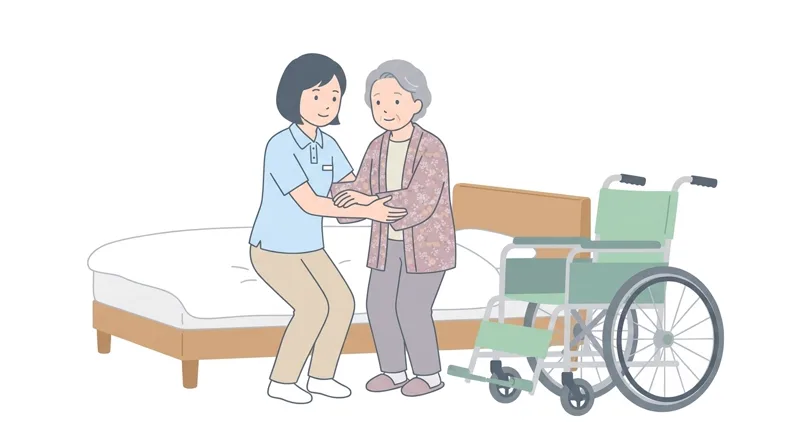
Key points
- ベッドの端へ水平移動するときは、上半身と下半身の2回に分けて手前へ引き寄せる。
When moving a supine user horizontally to the edge of the bed, shift the upper body and lower body in two separate steps. - 体とマットレスの隙間にクッションを入れて体圧を分散させることをポジショニングという。
Placing cushions into gaps between the body and mattress to disperse body pressure and maintain comfort is called positioning. - 車いすではお尻を奥まで深く座り直してもらい、背もたれに背中をつけて足を乗せる。
If a user slides forward in a wheelchair, help them sit back deeply against the backrest with feet resting on the foot supports.
| Word | Meaning |
|---|---|
| 重心 | center of gravity |
| 体位変換 | repositioning (turning in bed) |
| 移乗 | transfer |
| 健側 | unaffected side |
| 患側 | affected (paralyzed) side |
歩行と車いす移動の介助
Walking and Wheelchair Mobility Assistance
杖の長さは、立ったときに握りが大転子の高さにあり、肘が軽く曲がる位置に合わせます。
Adjust cane length so the grip is at the height of the greater trochanter when standing, with the elbow slightly bent.
片麻痺の方は健側の手に杖を持ち、介助者は患側(麻痺側)の斜め後ろに立ちます。
A user with hemiplegia holds the cane in their unaffected hand while the caregiver stands diagonally behind the affected side.
階段を上るときは「杖・健側・患側」、下りるときは「杖・患側・健側」の順に足を出します。
When climbing stairs with a cane, move in the order 'cane → unaffected leg → affected leg'; when descending, 'cane → affected leg → unaffected leg'.
車いすで段差を上がるときは前輪を上げて乗せ、段差や下り坂を下りるときは後ろ向きで進みます。
With a wheelchair, tip the front casters up to mount a step forward, and go backward slowly when descending steps or slopes.
Key points
- 手すりを使う階段でも、上りは健側の足から、下りは患側の足から先に踏み出す。
When using a stair handrail without a cane, step up with the unaffected leg first and step down with the affected leg first. - 視覚障害の方の歩行介助では、介助者の肘の少し上を持ってもらい、半歩前に立って案内する。
When guiding a visually impaired user, have them hold slightly above your elbow while you walk half a step ahead and describe surroundings. - 歩行中にバランスを崩して倒れそうなときは、自分の体で支えて頭を守りながらゆっくり床に座らせる。
If a user loses balance while walking, support them with your body and legs while protecting their head and lower them gently to the floor.
| Word | Meaning |
|---|---|
| 杖 | cane (walking stick) |
| 歩行器 | walker |
| 段差 | step, level difference |
| 前輪 | front wheels (casters) |
| 後輪 | rear wheels |
食事と口腔ケアの介助
Meal and Oral Care Assistance
食事前に排泄と手洗いを済ませ、テレビを消した明るい環境で口腔体操を行います。
Before meals, assist with toileting and handwashing, turn off the TV for a bright, focused environment, and perform oral exercises.
誤嚥を防ぐため上体を起こしてあごを軽く引き、介助者は斜め前に座って同じ目線で介助します。
To prevent aspiration, seat the user upright with the chin slightly tucked, and sit diagonally in front at the same eye level.
片麻痺の方には健側からスプーンを入れ、飲み込んだことを確認してから次の一口をすすめます。
For a user with hemiplegia, place the spoon into the unaffected side of the mouth and confirm swallowing before offering the next bite.
食後30分程度は上体を起こした姿勢を保ち、麻痺側に食べかすが残っていないか丁寧に口腔ケアをします。
Keep the upper body upright for about 30 minutes after meals, and carefully check the affected cheek for food residue during oral care.
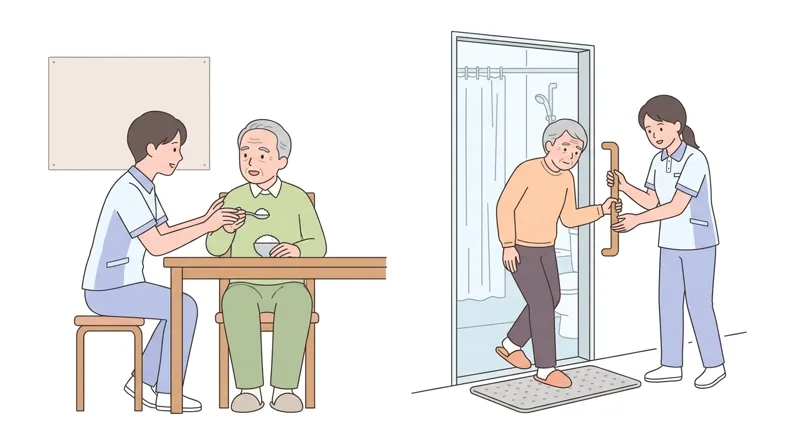
Key points
- 噛む力や飲み込む力に合わせて、軟らかさやとろみを調整した嚥下調整食を提供する。
Provide texture-modified meals adjusted in softness, shape, and thickness according to each user's chewing and swallowing ability. - 歯ブラシは歯と歯ぐきの境目に軽い力で小刻みに動かし、舌苔は奥から手前へ優しく取る。
Brush the gumline gently with short strokes, and wipe tongue coating gently from the back of the tongue toward the front. - 外した義歯(入れ歯)は流水下で専用ブラシで洗い、乾燥しないよう水や洗浄剤入りの容器で保管する。
Wash removed dentures under running water with a denture brush and store them in a container filled with water or cleanser to prevent drying.
| Word | Meaning |
|---|---|
| 誤嚥 | aspiration |
| 嚥下調整食 | texture-modified meal (swallowing-adjusted diet) |
| 口腔ケア | oral care |
| 舌苔 | tongue coating |
| 義歯 | dentures |
入浴と身体清潔の介助
Bathing and Personal Hygiene Assistance
入浴前にはバイタルサインや体調を確認し、食事直後・飲酒後・発熱時の入浴は控えます。
Check vital signs and physical condition before bathing; avoid bathing right after meals or alcohol, or when feverish.
お湯の温度は38〜41℃程度とし、シャワーのかけ湯は心臓から遠い足先から始めます。
Keep bath water around 38 to 41 degrees Celsius, and start shower rinsing from the toes farthest from the heart.
浴槽に入るときは手すりをつかみ、麻痺のない健側の足から先に入ってもらいます。
When entering the bathtub, have the user hold the handrail and step in with their unaffected leg first.
入浴できないときは、温かいタオルで拭く清拭や、血行と睡眠を促す足浴を行います。
When bathing is not possible, provide a bed bath exposing only the part being wiped, or a foot bath to promote circulation and sleep.
Key points
- 洗髪では先に自分の手でお湯の温度を確かめ、耳にお湯が入らないよう指の腹で優しく洗う。
When washing hair, check water temperature with your own hand first and wash gently with the pads of your fingers while keeping water out of the ears. - 清拭では室温を整えて拭く部分だけを出し、入浴後は早めに水分を拭いて保湿と水分補給をする。
After bathing, dry the skin promptly to prevent chilling, apply moisturizer, and offer fluids. - 着替え時に新しい青あざ(内出血)を見つけたときは、痛みを確認して看護師や上司へ報告する。
If you find a new bruise during undressing, check for pain, report to a nurse and supervisor, and record it.
| Word | Meaning |
|---|---|
| かけ湯 | pouring warm water before bathing |
| 浴槽 | bathtub |
| 清拭 | bed bath (wiping the body) |
| 足浴 | foot bath |
| 保湿 | moisturizing |
排泄の介助
Toileting Assistance
トイレ介助では手すりにつかまり立位が安定してからズボンを下ろし、便座にしっかり座ってもらいます。
In the toilet, confirm that the user is standing stably while holding the handrail before lowering their pants and seating them securely.
ポータブルトイレは足裏が床につく高さに合わせ、カーテンなどでプライバシーを守ります。
Adjust a portable toilet so the soles of the feet touch the floor, and use curtains to protect privacy.
ベッド上の差し込み便器はあらかじめ温め、ベッドの背を少し上げてお腹に力が入りやすくします。
When using a bedpan in bed, warm it beforehand and slightly raise the backrest so the user can apply abdominal pressure more easily.
おむつ交換時、陰部は尿道口から肛門へ(前から後ろへ)向かって拭きます。
During diaper changes, wipe the genital area from front to back (from the urethral opening toward the anus).
Key points
- おむつや尿とりパッドは体のサイズに合わせ、立体ギャザーを立てて足の付け根に沿わせる。
Choose diapers and pads that fit the body size, and stand up the inner gathers snugly along the groin to prevent leakage. - 真っ黒な便(タール便)が出たときは、流さずに状態を残してすぐに看護師へ報告する。
If you notice black tarry stool, do not flush it; leave it for inspection and report immediately to a nurse. - 排泄後は皮膚を清潔に保ち、換気や汚物の密閉処理で臭気を防ぐ。
After excretion, keep the skin clean and prevent odors by ventilating the room and sealing soiled diapers.
| Word | Meaning |
|---|---|
| 立位 | standing posture |
| 差し込み便器 | bedpan |
| 尿道口 | urethral opening |
| 肛門 | anus |
| タール便 | tarry stool (melena) |
衣類の着脱・整容と環境整備
Dressing, Grooming, and Living Environment Maintenance
片麻痺の方の上着は「着るときは患側(麻痺側)から、脱ぐときは健側から」が基本です。
For users with hemiplegia, the rule for jackets is: 'put on the affected sleeve first, take off the unaffected sleeve first'.
かぶりシャツを着るときは「患側の袖→健側の袖→頭」の順に通し、寝たままのズボン着脱は側臥位で行います。
Put on pullover shirts in the order 'affected sleeve → unaffected sleeve → head', and change pants in bed by turning the user onto each side.
整容では、目やには目頭(内側)から目尻(外側)へ拭き、ひげそりは皮膚を伸ばして毛の流れに逆らって当てます。
In grooming, wipe eye discharge from the inner corner to the outer corner, and use an electric shaver against the hair grain while stretching the skin.
シーツは褥瘡を防ぐためしわなく張り、床の物を片づけて夜間も足元の明るさを確保します。
Pull bedsheets taut without wrinkles to prevent pressure ulcers, clear floor clutter, and ensure foot-level lighting at night.
Key points
- 爪切りは入浴後など爪が軟らかいときに少し白い部分を残して切り、耳掃除は入り口付近だけにする。
Clip nails after bathing when soft, leaving a small white edge, and clean ears gently only near the entrance of the ear canal. - エアコンの風は利用者に直接当てないようにし、居室の物は勝手に捨てたり配置を変えたりしない。
Adjust air conditioner vents so air does not blow directly on the user, and never discard or move personal belongings without asking. - 整容や着替えでは本人の好みや習慣を尊重し、できることは自分でしてもらう。
Respect the user's preferences and habits in grooming and dressing, encouraging them to do what they can by themselves.
| Word | Meaning |
|---|---|
| 着脱 | dressing and undressing |
| 側臥位 | lateral (side-lying) position |
| 整容 | grooming |
| 目頭 | inner corner of the eye |
| 深爪 | cutting nails too short |
Daily Life Support Techniques
Practice this chapter in the appOfficial references
- 厚生労働省 介護分野における特定技能外国人の受入れについて — https://www.mhlw.go.jp/stf/newpage_000117702.html
- 厚生労働省 介護技能評価試験・介護日本語評価試験 出題基準 — https://www.mhlw.go.jp/content/001706488.pdf
- 公益社団法人日本介護福祉士会 介護の特定技能評価試験 学習テキスト