
Home › Sample questions › Food and Beverage Manufacturing
Food and Beverage Manufacturing sample exam questions – 10 questions with answers
飲食料品製造業
10 sample questions in the real exam format, with furigana, English translation, answers and explanations. Tap "Show answer" under each question. For the full question bank and realistic mock exams, open the free app.
Question 1
食中毒を予防するための三原則として、正しいものはどれですか。
Which is the correct set of three principles for preventing food poisoning?
- A. 洗う・冷やす・温めるの3原則
The three principles of washing, cooling, and warming - B. つけない・増やさない・やっつける
Do not let bacteria get on food, do not let bacteria grow, kill bacteria - C. 入れない・残さない・持ち込まないこと
Do not let them in, do not leave them behind, do not bring them in
Show answer
Correct answer: B
The three principles for preventing bacterial food poisoning are: do not let bacteria get on food, do not let them grow, and kill them. Washing, cooling, and warming are specific actions rather than the three principles, while not letting in, leaving behind, or bringing in refers to pest and foreign-matter control.
| Word | Meaning |
|---|---|
| 食中毒 | food poisoning |
| 予防 | prevention |
| 三原則 | three principles |
Question 2
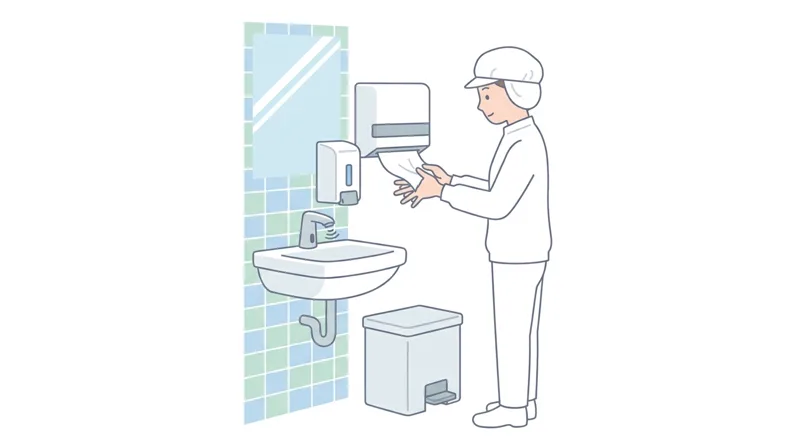
食品を扱う作業で、トイレの後の手洗いとして、正しい方法はどれですか。
When working with food, what is the correct way to wash your hands after using the toilet?
- A. 流水で手首まですすぎ、清潔なタオルで拭き取る。
Rinse carefully up to the wrists with running water and wipe dry with a clean towel. - B. アルコールを手全体にすり込み、新しい手袋を着ける。
Rub alcohol disinfectant over the whole hands and put on a new pair of gloves. - C. せっけんで指や爪の周りを洗い、流水ですすいで乾かす。
Wash fingers and around nails with soap, rinse under running water, and dry.
Show answer
Correct answer: C
After using the toilet, you must wash carefully with soap around the fingers and nails, rinse under running water, and dry your hands before disinfecting. Rinsing with water alone without soap or only rubbing alcohol disinfectant before putting on new gloves does not remove dirt and germs adequately.
| Word | Meaning |
|---|---|
| 食品 | food |
| 作業 | work, task |
| 手洗い | hand washing |
| 方法 | method |
Question 3
一般的な食中毒菌を減らすため、肉を加熱するときの中心温度と時間の目安はどれですか。
To reduce common food poisoning bacteria, what is the general guideline for the core temperature and time when heating meat?
- A. 中心温度75℃で1分間以上加熱する。
Heat at a core temperature of 75°C for at least 1 minute. - B. 中心温度65℃で30秒間以上加熱する。
Heat at a core temperature of 65°C for at least 30 seconds. - C. 表面の温度を85℃で1分間以上加熱する。
Heat at a surface temperature of 85°C for at least 1 minute.
Show answer
Correct answer: A
A standard guideline for reducing common food poisoning bacteria when heating meat is a core temperature of 75°C for at least 1 minute. A core temperature of 65°C for 30 seconds is insufficient, and measuring only a surface temperature of 85°C does not guarantee that the center of the meat is heated thoroughly.
| Word | Meaning |
|---|---|
| 食中毒菌 | food poisoning bacteria |
| 加熱 | heating |
| 中心温度 | core temperature |
| 目安 | guideline |
Question 4
食品の保存で、一般的な冷蔵と冷凍の温度の目安として、正しい組み合わせはどれですか。
Which is the correct pair of general guideline temperatures for refrigerated and frozen food storage?
- A. 冷蔵15℃以下、冷凍は−5℃以下にする。
Keep refrigerated storage at 15°C or below, and frozen at -5°C or below. - B. 冷蔵は5℃以下、冷凍は−10℃以下にする。
Keep refrigerated storage at 5°C or below, and frozen at -10°C or below. - C. 冷蔵は10℃以下、冷凍は−15℃以下。
Refrigerated: 10°C or below; frozen: -15°C or below.
Show answer
Correct answer: C
The general guideline in food hygiene management is 10°C or below for refrigerated storage and -15°C or below for frozen storage. The combinations of 15°C / -5°C and 5°C / -10°C do not match the standard temperature guidelines (frozen storage requires -15°C or below).
| Word | Meaning |
|---|---|
| 保存 | storage |
| 冷蔵 | refrigerated storage |
| 冷凍 | frozen storage |
| 温度 | temperature |
Question 5
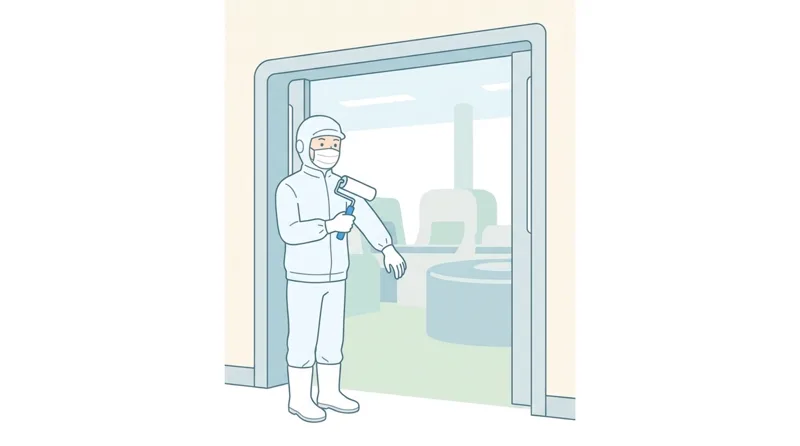
食品への異物混入を防止するため、製造室に入る前の行動として、正しいものはどれですか。
To prevent foreign matter from getting into food, what is the correct action before entering the production room?
- A. 指輪の上から手袋を着け、腕時計は袖口に隠して入る。
Put gloves on over rings and hide your wristwatch inside the sleeve cuff before entering. - B. 指輪や腕時計を外し、毛髪を帽子の中に入れる。
Take off rings and wristwatches, and put all your hair inside your cap. - C. 帽子の後ローラーをかけ、指輪は着けて入る。
Use a sticky roller after putting on your cap, and enter without taking off your ring.
Show answer
Correct answer: B
Before entering the production room, you must remove rings, wristwatches, and jewelry, and tuck all hair inside your cap to prevent foreign matter contamination. Wearing gloves over rings can tear the gloves, and hiding a watch under a cuff or using a roller while keeping a ring on still leaves a foreign-matter risk.
| Word | Meaning |
|---|---|
| 異物混入 | foreign matter getting in |
| 防止 | prevention |
| 製造室 | production room |
| 食品 | food |
Question 6
HACCPの重要管理点(CCP)について、正しい説明はどれですか。
Which statement about a HACCP critical control point (CCP) is correct?
- A. 製品の味や見た目を良くするため特に注意する工程。
A manufacturing step given special attention to improve the taste and appearance of the product. - B. 設備の清掃や手洗いなど衛生を保つ基本の工程。
A basic daily hygiene step such as cleaning facilities and equipment and washing hands. - C. 食品の危害要因を除去・低減する特に重要な工程。
An especially important step to remove or reduce hazards in food.
Show answer
Correct answer: C
A critical control point (CCP) is an especially important process step used to remove or reduce a food safety hazard to an acceptable level, such as heat sterilization or metal detection. Improving taste and appearance is quality management, while daily cleaning and hand washing belong to general hygiene management (prerequisite programs).
| Word | Meaning |
|---|---|
| 重要管理点 | critical control point |
| 危害要因 | hazard |
| 工程 | process step |
| 除去 | removal |
Question 7
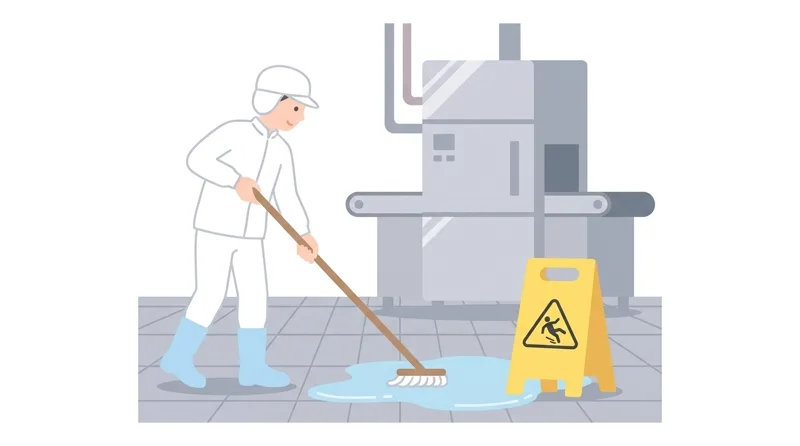
床に水や油がこぼれているのを見つけました。転倒事故を防ぐための対応として、正しいものはどれですか。
You find water or oil spilled on the floor. What is the correct action to prevent a slip and fall accident?
- A. 作業の切り替わりまで待ち、休憩前に床を拭き取る。
Wait until a task changeover and wipe the floor all at once before taking a break. - B. すぐに拭き取るか、注意表示を出して責任者に知らせる。
Wipe it up right away, or put up a warning sign and tell the person in charge. - C. 水で流して広げ、乾くまで周囲を通行止めにする。
Flush it with water to spread it out and close the area until it dries naturally.
Show answer
Correct answer: B
When water or oil is spilled on the floor, you must wipe it up immediately, or put up a warning sign and inform the person in charge to prevent slip-and-fall accidents. Waiting until a changeover or break leaves the hazard in place, and flushing oil with water spreads the slick surface and increases slip risks.
| Word | Meaning |
|---|---|
| 転倒事故 | fall accident |
| 拭き取る | wipe up |
| 注意表示 | warning sign |
| 責任者 | person in charge |
Question 8
細菌が食品の中で増えるために必要な条件の組み合わせとして、正しいものはどれですか。
Which is the correct set of conditions bacteria need to grow in food?
- A. 栄養・水分・温度
Nutrients, moisture, temperature - B. 酸素・光・塩分の3つ
The three factors of oxygen, light, and salt content - C. 糖分・酸味・乾燥度
Sugar content, acidity, degree of dryness
Show answer
Correct answer: A
The three basic conditions bacteria need to grow in food are nutrients, moisture (water), and a suitable temperature. Light, high salt or sugar content, acidity, and dryness are not the three growth conditions and often inhibit bacterial growth.
| Word | Meaning |
|---|---|
| 細菌 | bacteria |
| 栄養 | nutrients |
| 水分 | moisture |
| 条件 | condition |
Question 9
HACCPのモニタリングについて、正しい説明はどれですか。
Which statement about HACCP monitoring is correct?
- A. 出荷前に最終製品を抜き取り、細菌検査を行って記録すること。
Sampling final products before shipping to perform bacterial tests and record the results. - B. 製造を始めるときと終わるときだけ管理基準を測定し記録すること。
Measuring and recording the control standard only at the start and end of production. - C. 管理基準が守られているかを、決められた頻度で測定・観察し記録すること。
Measuring or observing at a set frequency to check the control standard, and recording it.
Show answer
Correct answer: C
HACCP monitoring means measuring or observing a CCP continuously or at a predetermined frequency to confirm that the control standard (critical limit) is met, and recording the results. Sampling finished products for bacterial testing is part of verification, and measuring only at the start and end can miss deviations during production.
| Word | Meaning |
|---|---|
| 管理基準 | control standard (CL) |
| 測定 | measurement |
| 観察 | observation |
| 頻度 | frequency |
Question 10
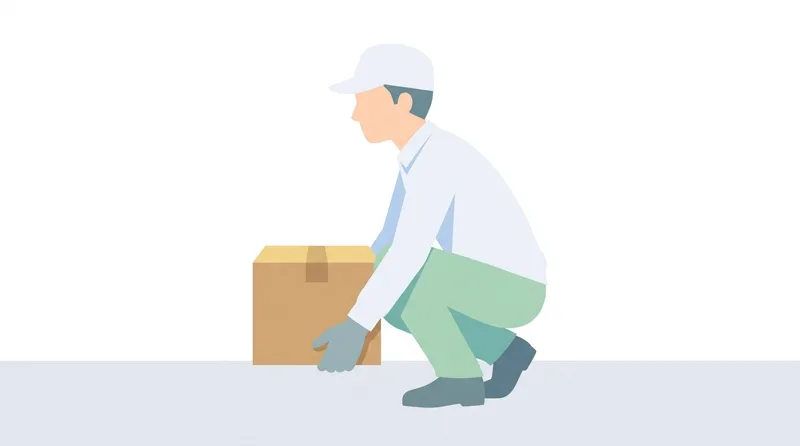
重い荷物を床から持ち上げるとき、腰を痛めないための方法として、正しいものはどれですか。
When lifting a heavy load from the floor, what is the correct way to avoid hurting your back?
- A. 荷物に近づき、膝を曲げて腰を落とし、背筋を伸ばして持ち上げる。
Get close to the load, bend knees and lower hips, and lift up with a straight back. - B. 膝を伸ばして足を広げ、上体を前に倒して腰の力で持ち上げる。
Keep knees straight with feet apart, bend your upper body forward, and lift using lower-back strength. - C. 荷物を体から少し離し、腕と背中の力でゆっくり持ち上げる。
Hold the load slightly away from your body and lift it slowly using the strength of your arms and back.
Show answer
Correct answer: A
To prevent lower-back injury when lifting a heavy load, stand close to the load, bend your knees to lower your hips, keep your back straight, and lift with your legs. Keeping your knees straight while bending forward or holding the load away from your body places excessive strain on the lower spine.
| Word | Meaning |
|---|---|
| 荷物 | load, cargo |
| 腰 | lower back |
| 膝 | knee |
| 持ち上げる | lift up |