
Home › Sample questions › Food Service (SSW 2)
Food Service (SSW 2) sample exam questions – 10 questions with answers
外食業(2号)
10 sample questions in the real exam format, with furigana, English translation, answers and explanations. Tap "Show answer" under each question. For the full question bank and realistic mock exams, open the free app.
Question 1
「HACCPに沿った衛生管理」を実施するうえで、すべての営業者がおこなわなければならないこととして、誤っているものはどれか。
When carrying out "hygiene management based on HACCP," which of the following is WRONG as something every food business operator must do?
- A. 基準に基づいて衛生管理計画を作成し、従業員に周知徹底を図る。
Create a hygiene management plan based on the standards and make sure all employees know it thoroughly. - B. 衛生管理の実施状況を毎日記録し、問題がなかった日の分は当日中に破棄する。
Record how hygiene management was carried out every day, and discard the records of days with no problems on the same day. - C. 衛生管理計画と手順書の効果を定期的に検証し、必要に応じて内容を見直す。
Regularly verify the effectiveness of the hygiene management plan and procedure manuals, and review them when necessary.
Show answer
Correct answer: B
Under HACCP-based hygiene management, every business operator must do four things: make a hygiene management plan, make procedure manuals (when needed), keep records, and regularly verify and review. Daily records must be kept even for normal days, to prove safety and to trace the cause when a problem occurs. They must not be thrown away on the same day. (Textbook: JF2号テキスト 衛生管理 第3章(2))
| Word | Meaning |
|---|---|
| 衛生管理計画 | hygiene management plan (衛生管理計画) |
| 周知徹底 | making sure everyone knows thoroughly (周知徹底) |
| 検証 | verification (検証) |
Question 2
一般的な衛生管理の基準における食品衛生責任者の役割と責務について、正しいものはどれか。
Which statement is CORRECT about the role and duties of the food sanitation supervisor (食品衛生責任者) under the general hygiene management standards?
- A. 公衆衛生上必要な措置の遵守のため、営業者に対し必要な意見を述べるよう努める。
They try to give the business operator the opinions needed so that measures required for public health are followed. - B. 都道府県知事などが認める実務講習会は、選任後5年ごとに1回だけ受講するよう定められている。
The practical training session approved by the prefectural governor is set to be taken only once every 5 years after appointment. - C. 調理師や栄養士の資格を持っている者であっても、養成講習会を受講しなければ選任できない。
Even a person who holds a cook or dietitian license cannot be appointed unless they also take a separate training course.
Show answer
Correct answer: A
The food sanitation supervisor (食品衛生責任者) must follow the operator's instructions, regularly attend practical training sessions (実務講習会) to keep knowledge up to date, and give the operator necessary notes and opinions. A person with a cook (調理師) or dietitian (栄養士) license already qualifies to be appointed without taking the basic training course. (Textbook: JF2号テキスト 衛生管理 第4章(1))
| Word | Meaning |
|---|---|
| 食品衛生責任者 | food sanitation supervisor |
| 責務 | duty, responsibility |
| 遵守 | compliance, observing |
Question 3
厨房の熱機器の使用および管理に関する記述として、正しいものはどれか。
Which statement is CORRECT about the use and management of heating equipment in the kitchen?
- A. グリドルの端と中央部の温度差が25℃以上のときのみ、バーナーを調整する。
Adjust the gas burner only when the temperature difference between the edge and the center of the griddle reaches 25°C or more. - B. スチームコンベクションオーブンは、庫内を80℃まで下げてから蒸気で庫内を洗う。
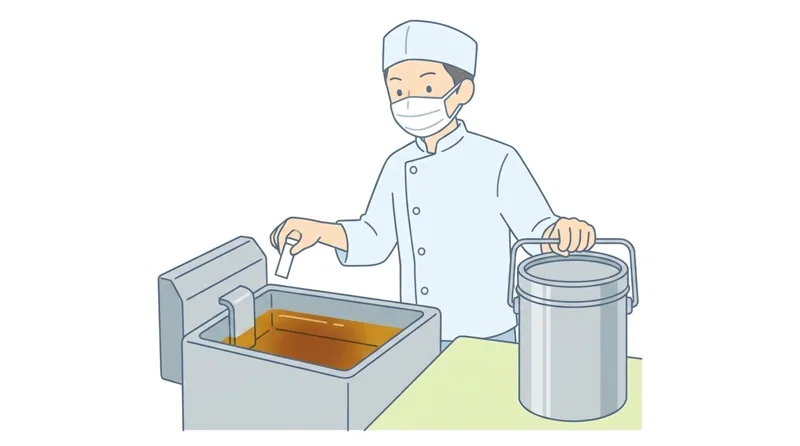
For the steam convection oven, after lowering the inside temperature to 80°C, clean the interior using the steam function. - C. フライヤーの油の酸化値(AV値)を確認し、3.0以上であればその日の営業終了時に油を交換する。
Check the acid value (AV value) of the fryer oil, and if it is 3.0 or higher, change the oil at the end of business that day.
Show answer
Correct answer: C
A fryer oil acid value (AV) below 3.0 is normal. If it reaches 3.0 or higher, the oil must be changed at the end of that day's business. For a griddle (グリドル), if the temperature difference between the edge and the center is 10°C or more, it must be adjusted right away. For a steam convection oven (スチームコンベクションオーブン), lower the inside temperature and turn off the power before cleaning, to avoid steam burns. (Textbook: JF2号テキスト 飲食物調理 第4章(1))
| Word | Meaning |
|---|---|
| 熱機器 | heating equipment |
| 酸化値 | acid value |
| 温度差 | temperature difference |
Question 4
接客人員が少なく、複数のサービスが同時に発生した場合の優先順位として、正しいものはどれか。
When there are few service staff and several services occur at the same time, which priority order is CORRECT?
- A. 1番目にご案内、2番目に注文受け、3番目に料理提供の順におこなう。
First guide guests to a table, second take orders, third serve dishes. - B. 1番目に料理提供、2番目にレジ精算、3番目にご案内の順におこなう。
First serve dishes, second handle payment at the register, third guide guests to a table. - C. 1番目にレジ精算、2番目にご案内、3番目に料理提供の順におこなう。
First handle payment at the register, second guide guests to a table, third serve dishes.
Show answer
Correct answer: B
When staff are short and tasks overlap, the service priority is: (1) serving dishes, (2) payment at the register, (3) guiding guests, (4) taking orders, (5) serving dessert and drinks, (6) clearing tables. Serving dishes comes first because food that waits gets cold and loses its taste, so guests may not come back. Guests waiting to pay will usually understand if staff apologize first. (Textbook: JF2号テキスト 接客全般 第1章(7))
| Word | Meaning |
|---|---|
| 優先順位 | priority order |
| 料理提供 | serving dishes (料理提供) |
| 精算 | payment (精算) |
Question 5
食物アレルギーへの対応と特定原材料に関する記述として、正しいものはどれか。
Which statement is CORRECT about dealing with food allergies and the specified ingredients?
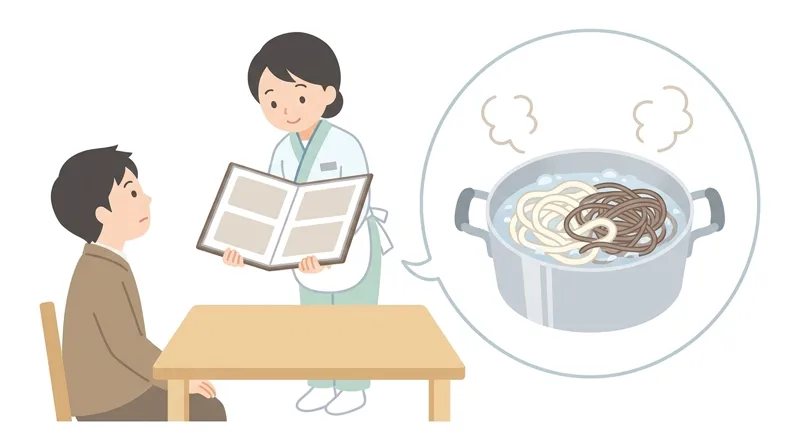
- A. そばとうどんを同じ釜でゆでている店舗では、混入のおそれがあることをお客様に伝える。
At a shop that boils soba and udon noodles in the same pot, tell customers that there is a risk of mixing. - B. 食品表示法で表示義務のある特定原材料8品目には、大豆、ごま、鶏肉、豚肉が含まれている。
The 8 specified ingredients that must be labeled under the Food Labeling Act include soybeans, sesame, chicken, and pork. - C. レストランなどの対面販売の飲食店でも、容器包装された加工食品と同じアレルゲン表示が法律で義務づけられている。
Even restaurants that sell face-to-face are legally required to give the same allergen labeling as packaged processed foods.
Show answer
Correct answer: A
At a restaurant, if soba and udon are boiled in the same pot, or several dishes are made in the same kitchen area, customers must be clearly told about the risk of cross-contamination. The 8 mandatory specified ingredients (特定原材料) for packaged food are shrimp, crab, wheat, buckwheat (soba), egg, milk, peanuts, and walnuts. Soybeans, sesame, chicken, and pork belong to the 20 recommended items. Restaurants are not legally required to label, but they are encouraged to give information on the menu. (Textbook: JF2号テキスト 接客全般 第2章(1))
| Word | Meaning |
|---|---|
| 特定原材料 | specified ingredients (allergens) |
| 混入 | mixing in, contamination |
| 表示義務 | labeling obligation |
Question 6
店舗運営の計数管理における「労働分配率」の説明として、正しいものはどれか。
Which explanation is CORRECT about the "labor distribution ratio (労働分配率)" in store operation figure management?
- A. 売上高に占める人件費の割合(人件費÷売上高)であり、フードサービス業の適正値は50〜60%である。
It is the share of labor costs in sales (labor costs ÷ sales), and the proper value in the food service industry is 50 to 60%. - B. 売上高に占める食材原価の割合(原価÷売上高)であり、フードサービス業の適正値は65〜70%である。
It is the share of food ingredient cost in sales (cost ÷ sales), and the proper value in the food service industry is 65 to 70%. - C. 粗利益に占める人件費の割合(人件費÷粗利益)であり、フードサービス業の適正値は35〜40%である。
It is the share of labor costs in gross profit (labor costs ÷ gross profit), and the proper value in the food service industry is 35 to 40%.
Show answer
Correct answer: C
The labor distribution ratio (労働分配率) is the percentage of labor costs in gross profit (labor costs ÷ gross profit), not divided by sales. In food service, the proper level is 35 to 40% (each store should keep it at 40% or below). If it goes over 45 to 50%, the business is in a dangerous state. (Textbook: JF2号テキスト 店舗運営 第2章(1))
| Word | Meaning |
|---|---|
| 労働分配率 | labor distribution ratio |
| 粗利益 | gross profit |
| 人件費 | labor costs |
Question 7
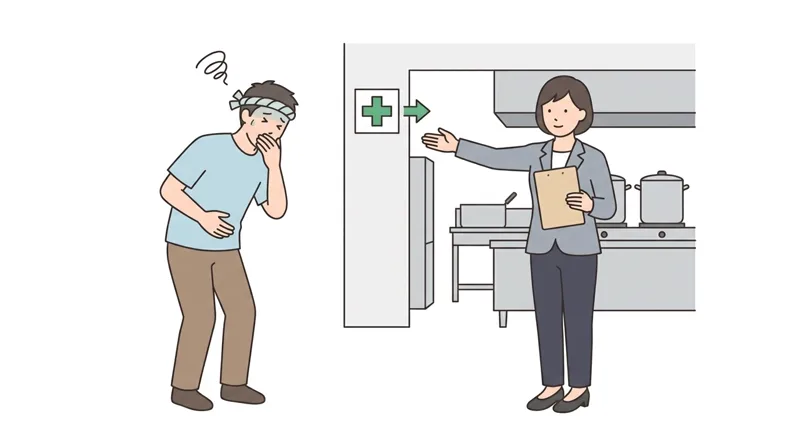
出勤時の健康チェックで、調理スタッフから「今朝から下痢と軽い吐き気がある」と報告があった。店舗責任者の判断として、最も適切なものはどれか。
During the health check at the start of work, a kitchen staff member reports, "I have had diarrhea and slight nausea since this morning." What is the MOST appropriate judgment of the store manager?
- A. 使い捨て手袋とマスクを着用させたうえで、加熱調理の工程に限って作業に従事させる。
Have them wear disposable gloves and a mask, and let them work only in the cooking (heating) process. - B. 食品を取り扱う作業には従事させず、医療機関の受診を指示して代替要員を手配する。
Do not let them do any work handling food, tell them to see a doctor, and arrange a replacement staff member. - C. 調理場での作業は中止させ、当日はホールでの配膳とドリンク作成の業務に配置転換する。
Stop their work in the kitchen and move them that day to serving dishes and making drinks in the dining hall.
Show answer
Correct answer: B
When a food handler has symptoms of intestinal infection such as diarrhea, vomiting, or nausea, they must not do any work that touches food or serves food, to avoid spreading norovirus or food poisoning bacteria. The manager must take them off food work, tell them to see a doctor, and arrange a replacement under the backup plan. (Textbook: JF2号テキスト 衛生管理 第4章(7))
| Word | Meaning |
|---|---|
| 下痢 | diarrhea |
| 受診 | seeing a doctor |
| 代替要員 | replacement staff |
Question 8
1人前にむきエビを60g使用するメニューを80食分調理する計画を立てている。冷凍エビは解凍および下処理で重量が20%減少(歩留まり80%)する場合、解凍すべき冷凍エビの必要量はいくらか。
You are planning to cook 80 portions of a dish that uses 60 g of peeled shrimp per portion. Frozen shrimp lose 20% of their weight when thawed and prepped (yield rate 80%). How much frozen shrimp must be thawed?
- A. 4,800g
4,800 g - B. 5,760g
5,760 g - C. 6,000g
6,000 g
Show answer
Correct answer: C
The total amount of finished peeled shrimp needed for 80 portions is 60 g × 80 = 4,800 g. The yield rate (歩留まり) after thawing and prepping is 80% (0.8), so the amount of frozen shrimp needed before prepping is 4,800 g ÷ 0.8 = 6,000 g (6 kg). (Textbook: JF2号テキスト 飲食物調理 第3章(1)・衛生管理 第5章(2))
| Word | Meaning |
|---|---|
| 下処理 | preparation (prepping) |
| 歩留まり | yield rate |
| 必要量 | required amount |
Question 9
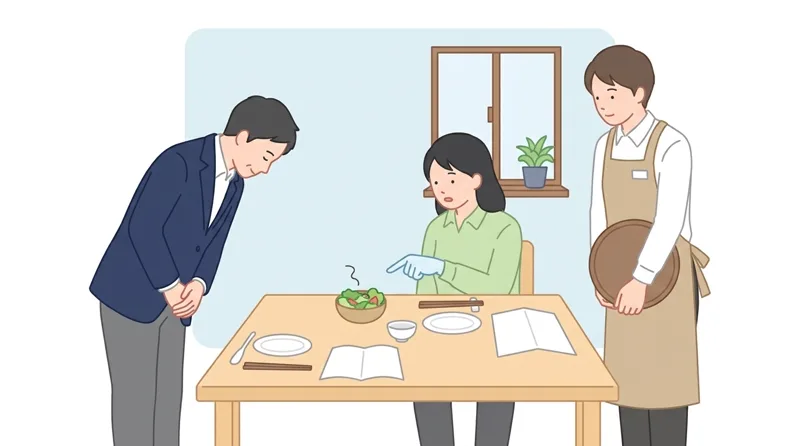
お客様から「提供されたサラダに髪の毛が入っている」と苦情があり、ホールスタッフから報告を受けた。店長の対応として、最も適切なものはどれか。
A customer complains, "There is a hair in the salad you served," and the dining hall staff reports it to you. What is the MOST appropriate response of the store manager?
- A. 直接テーブルへ出向いてお詫びし、作り直しの可否を確認したうえで混入経路を調べる。
Go directly to the table to apologize, ask whether the customer wants the dish remade, and then investigate how the hair got in. - B. 担当スタッフにお詫びと新しいサラダの提供を任せ、店長は会計時にレジで謝罪する。
Leave the apology and a new salad to the staff in charge, and the manager apologizes at the register when the customer pays. - C. 先に厨房内で混入経路と責任者を特定してから、お客様のテーブルへ説明に行く。
First find out in the kitchen how it got mixed in and who is responsible, and then go to the customer's table to explain.
Show answer
Correct answer: A
For every customer complaint (especially foreign matter such as a hair), the store manager must quickly go to the table in person and apologize right away, ask the customer whether they want the dish remade (or remove it from the bill if they no longer want it), then investigate the cause and make sure all staff prevent it from happening again. When the customer leaves, the manager and the staff in charge apologize once more. (Textbook: JF2号テキスト 接客全般 第4章(2))
| Word | Meaning |
|---|---|
| 苦情 | complaint |
| お詫び | apology |
| 混入経路 | route of contamination |
Question 10
1日の売上高が600,000円、粗利益率が60%、1日の総労働時間数が120時間の店舗がある。この日の「人時売上高」と「人時生産性」の組み合わせとして、正しいものはどれか。
A store has daily sales of 600,000 yen, a gross profit rate of 60%, and 120 total labor hours per day. Which combination of "sales per labor hour (人時売上高)" and "productivity per labor hour (人時生産性)" is CORRECT for that day?
- A. 人時売上高:3,000円 / 人時生産性:5,000円
Sales per labor hour: 3,000 yen / Productivity per labor hour: 5,000 yen - B. 人時売上高:5,000円 / 人時生産性:3,000円
Sales per labor hour: 5,000 yen / Productivity per labor hour: 3,000 yen - C. 人時売上高:5,000円 / 人時生産性:2,000円
Sales per labor hour: 5,000 yen / Productivity per labor hour: 2,000 yen
Show answer
Correct answer: B
Sales per labor hour = daily sales ÷ total labor hours = 600,000 yen ÷ 120 hours = 5,000 yen. Daily gross profit = 600,000 yen × 60% = 360,000 yen, so productivity per labor hour = gross profit ÷ total labor hours = 360,000 yen ÷ 120 hours = 3,000 yen (or 5,000 yen × 60% = 3,000 yen). (Textbook: JF2号テキスト 店舗運営 第2章(参考2))
| Word | Meaning |
|---|---|
| 人時売上高 | sales per labor hour |
| 人時生産性 | productivity per labor hour |
| 総労働時間数 | total labor hours |