Health Management, Preventing Fatigue/Drunk Driving, and Accident & Disaster Response
健康管理・過労や飲酒運転防止と事故・災害時の救護対応
Automobile Transportation · 自動車運送業 · Written by Tokutei Pass based on the official study texts; not copied verbatim.
過労運転・居眠り運転の防止と睡眠時無呼吸症候群(SAS)
Preventing Fatigued/Drowsy Driving and Sleep Apnea Syndrome (SAS)
道路交通法(第66条)により、過労・病気・薬物の影響その他の理由により正常な運転ができないおそれがある状態で車両等を運転することは固く禁止されています。
Under Article 66 of the Road Traffic Act, operating any vehicle while in a condition where normal driving may be impaired due to overwork (fatigue), illness, medication, or other reasons is strictly prohibited.
運転中に強い眠気や体のだるさ、目のかすみ、あくびを感じたときは、気合いやカフェイン飲料だけで我慢して走り続けてはならず、早めにサービスエリアやパーキングエリア、安全な駐車場所に車を止めて仮眠や休憩をとらなければなりません。
If you feel strong drowsiness, sluggishness, blurred vision, or frequent yawning while driving, never try to push through using willpower or caffeinated drinks alone; promptly pull into an expressway SA/PA or safe parking area to take a short nap or break.
特に人間の生体リズム(サーカディアンリズム)により、深夜から明け方(午前2時〜午前4時頃)および昼食後の午後2時頃は最も眠気が強まり、重大な居眠り追突事故が多発する時間帯です。
Due to the human circadian rhythm, drowsiness peaks between late night and early morning (around 2:00 a.m. to 4:00 a.m.) and in the early afternoon (around 2:00 p.m.), when severe drowsy-driving rear-end crashes occur most frequently.
また、夜間に十分な睡眠時間をとっているはずなのに昼間の運転中に耐えがたい眠気に襲われる場合は、睡眠中に呼吸が何度も止まって深い眠りが妨げられる「睡眠時無呼吸症候群(SAS)」が疑われます。
If you experience overwhelming daytime sleepiness while driving despite getting enough hours of sleep at night, 'Sleep Apnea Syndrome (SAS)'—in which breathing repeatedly stops during sleep and prevents deep rest—should be suspected.
大きないびき、起床時の頭痛や熟睡感の欠如などの症状がある場合は、速やかにSASのスクリーニング検査や専門医の診察を受け、CPAP(シーパップ=経鼻的持続陽圧呼吸療法)などの適切な治療を継続することが重要です。
Drivers with symptoms such as loud snoring, morning headaches, or unrefreshing sleep should promptly undergo SAS screening and medical evaluation and continue appropriate treatment such as CPAP therapy.
Key points
- 過労・病気・薬物等により正常な運転ができないおそれがあるときは運転禁止(道交法第66条)
Driving when normal operation may be impaired by fatigue, illness, or medication is prohibited (Road Traffic Act Article 66) - 眠気を感じたら我慢して走り続けず、早めに安全な場所に駐車して仮眠・休憩をとる
When feeling drowsy, never push on—stop early in a safe parking place to take a nap or break - 十分に寝ても昼間に強い眠気があるときは睡眠時無呼吸症候群(SAS)の検査・治療を受ける
If severe daytime sleepiness persists despite sufficient sleep hours, get screened and treated for Sleep Apnea Syndrome (SAS)
| Word | Meaning |
|---|---|
| 睡眠時無呼吸症候群 | Sleep Apnea Syndrome (SAS) |
| 居眠り運転 | drowsy / falling-asleep driving |
| 仮眠 | short nap |
| スクリーニング検査 | screening test |
健康起因事故(脳・心臓疾患)の予防と服薬・体調申告
Preventing Health-Related Accidents (Cerebrovascular & Heart Disease), Medication, and Reporting
運転中に運転者が突然意識を失ったり操縦不能に陥ったりする「健康起因事故」の主な原因には、脳血管疾患(脳梗塞・脳出血・くも膜下出血)や心臓疾患(心筋梗塞・狭心症・大動脈瘤破裂など)があります。
The main causes of 'health-related accidents'—in which a driver suddenly loses consciousness or control at the wheel—are cerebrovascular diseases (cerebral infarction, cerebral hemorrhage, subarachnoid hemorrhage) and heart diseases (myocardial infarction, angina, aortic aneurysm rupture).
これらの重大な疾患を早期発見するため、事業者は運転者に対して年1回(深夜業務従事者等は年2回)の定期健康診断を受診させ、血圧や血糖値・脂質等に異常所見があるときは再検査・精密検査や治療を受けさせなければなりません。
To detect these serious conditions early, operators must have drivers undergo periodic health checkups once a year (twice a year for late-night shift workers) and ensure follow-up testing and treatment whenever abnormal blood pressure, blood sugar, or lipid findings appear.
もし乗務前や運転中に「胸の強い痛みや圧迫感」「激しい頭痛」「手足の片側のしびれや麻痺」「ろれつが回らない」「めまいや視野の異常」などの前兆を感じたときは、直ちに安全な場所に停車して運行管理者へ連絡し、119番で救急車を呼びます。
If you notice warning signs before or during driving—such as severe chest pain or pressure, sudden intense headache, numbness or paralysis on one side of the body, slurred speech, or dizziness/vision loss—stop immediately in a safe place, contact the Operation Manager, and call 119 for an ambulance.
また、かぜ薬や鼻炎薬(花粉症の薬)、睡眠導入剤・抗不安薬などには、眠気や注意力低下を引き起こす成分(抗ヒスタミン剤等)が含まれているものが多くあります。
Many cold medicines, allergy/hay-fever medications, and sleep or anti-anxiety drugs contain ingredients (such as antihistamines) that cause drowsiness and reduced alertness.
病院や薬局で薬をもらうときは必ず医師や薬剤師に「職業運転者であること」を伝えて眠気の出ない薬を処方してもらい、「運転禁止」の記載がある薬を服用したときは絶対に運転してはなりません。
Whenever receiving medication from a doctor or pharmacist, always inform them that you are a professional driver so non-drowsy medication can be prescribed, and never drive after taking any medicine labeled 'Do not operate vehicles.'
Key points
- 健康起因事故の主原因は脳血管疾患や心臓疾患であり、定期健康診断(深夜業務は年2回)が重要
Cerebrovascular and heart diseases are the main causes of health-related crashes; periodic checkups (twice yearly for night shifts) are vital - 胸の痛み・激しい頭痛・片側のしびれ・ろれつ異常等があれば直ちに安全な場所へ停車し119番通報する
Stop immediately in a safe place and call 119 if you experience chest pain, sudden severe headache, one-sided numbness, or slurred speech - 薬の処方時は医師・薬剤師に運転業務を伝え、眠気の出る薬を飲んで運転しない
Always tell your doctor or pharmacist that you drive professionally and never drive after taking drowsy medication
| Word | Meaning |
|---|---|
| 健康起因事故 | health-related traffic accident |
| 脳血管疾患 | cerebrovascular disease (stroke) |
| 心臓疾患 | heart / cardiovascular disease |
| 定期健康診断 | periodic health checkup |
飲酒運転の根絶(二日酔い防止)と夏場の熱中症対策
Eradicating Drunk Driving (Next-Morning Residual Alcohol) and Summer Heatstroke Prevention
道路交通法(第65条)により、酒気を帯びて車両等を運転することは厳しく禁止されており、運転者本人だけでなく、車両や酒類を提供した者、飲酒運転を知りながら同乗した者にも重い刑事罰と行政処分が科されます。
Under Article 65 of the Road Traffic Act, driving any vehicle under the influence of alcohol is strictly prohibited, and severe criminal and administrative penalties apply not only to the driver but also to anyone who provides a vehicle or alcohol or rides along knowing the driver has been drinking.
体の中に入ったアルコールが肝臓で分解される速度には個人差がありますが、一般的に純アルコール約20グラム(ビール中瓶1本=500ml、または日本酒1合=180ml程度)を分解するのに「約4時間以上」かかるとされています。
Although alcohol metabolism varies by individual, it generally takes 'about 4 hours or more' for the liver to break down roughly 20 grams of pure alcohol (equivalent to one 500 ml medium bottle of beer or 180 ml of sake).
さらに睡眠中はアルコールの分解速度が遅くなるため、前夜に遅くまで飲酒したり多量に飲んだりすると、翌朝になっても体内にアルコールが残り、業務前点呼のアルコール検知器で検知される「二日酔い(残酒)運転」となります。
Moreover, alcohol breakdown slows down during sleep; drinking late or heavily the night before leaves residual alcohol in the body the next morning, which will be detected at the pre-shift roll call and constitutes drunk driving.
そのため、乗務前日は飲酒を控えるか飲酒量・飲酒終了時刻を厳格に管理し、少しでもアルコールが残っているおそれがあるときは絶対にハンドルを握らず会社へ報告しなければなりません。
Therefore, abstain from alcohol or strictly manage the amount and cutoff time the day before duty, and if there is any chance alcohol remains in your system, never get behind the wheel—report immediately to your company.
また、夏場の荷役作業中や乗務中には「熱中症」によるめまい・意識障害が重大事故につながるため、喉の渇きを感じる前にこまめに水分と塩分(ナトリウム)を補給し、エアコンの適切な使用と涼しい場所での休憩を心がけます。
In summer, 'heatstroke (netchusho)' during cargo handling or driving can cause dizziness and loss of consciousness leading to serious accidents; replenish water and salt (sodium) frequently before feeling thirsty and use air conditioning and shaded rest areas.
Key points
- 飲酒運転は運転者だけでなく車両提供者・酒類提供者・同乗者も厳罰に処される
Strict penalties for drunk driving apply not only to the driver but also to vehicle providers, alcohol servers, and passengers - ビール中瓶1本(500ml)のアルコール分解には約4時間以上かかり、睡眠中はさらに分解が遅くなる
Breaking down one 500 ml bottle of beer takes at least 4 hours, and alcohol metabolism slows even further during sleep - 夏場の熱中症予防のため、喉が渇く前にこまめに水分と塩分の両方を補給する
To prevent heatstroke in summer, frequently replenish both water and salt before you feel thirsty
| Word | Meaning |
|---|---|
| 飲酒運転 | drunk driving / driving under the influence |
| 二日酔い | hangover / next-day residual alcohol |
| 熱中症 | heatstroke / heat illness |
| 塩分補給 | salt / sodium replenishment |
交通事故発生時の法的義務(運転停止・負傷者救護・危険防止・通報)
Legal Duties After a Traffic Accident (Stop, Aid the Injured, Prevent Secondary Crashes, Report)
万が一交通事故を起こしたときは、道路交通法(第72条)により運転者が直ちに行わなければならない4つの義務が定められており、その優先順位を正確に守って行動しなければなりません。
In the event of a traffic accident, Article 72 of the Road Traffic Act establishes four mandatory duties that the driver must carry out immediately in the proper order of priority.
第1に「ただちに車両の運転を停止すること」、第2に「負傷者を救護すること(最優先)」、第3に「道路における危険を防止する措置(二次事故防止)をとること」、第4に「警察官(110番)に報告すること」です。
First, 'immediately stop driving the vehicle'; second, 'aid any injured persons (highest human-life priority)'; third, 'take measures to prevent danger on the road (prevent secondary accidents)'; and fourth, 'report the accident to the police (call 110).'
負傷者がいるときは何よりも人命救助を最優先し、救急車(119番)を要請するとともに応急手当を行います。このとき、後続車にはねられる二次事故のおそれがある場合を除き、頭や首を強く打っている負傷者をむやみに動かしてはなりません。
If anyone is injured, saving human life comes first: call an ambulance (119) and provide first aid. Unless there is an immediate danger of a secondary collision or fire, do not carelessly move an injured person who may have suffered a head or neck injury.
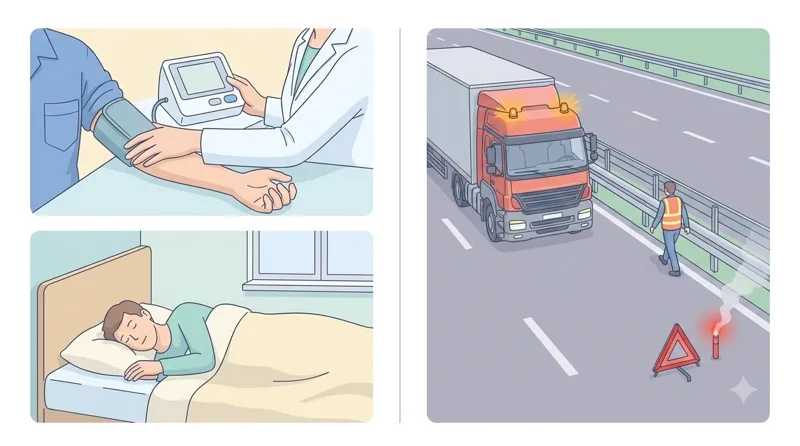
二次事故防止のため、ハザードランプを点灯し、停止表示器材(三角表示板)や発炎筒を後続車から見えやすい後方に設置して周囲に事故を知らせ、乗客がいる場合は安全な場所へ避難誘導します。
To prevent secondary accidents, turn on the hazard lights, set up a warning triangle and emergency flare well behind the vehicle, and evacuate any passengers to a safe location.
いかに軽微な接触事故や物損事故であっても、当事者間の話し合い(現場での示談交渉)だけで済ませて警察への110番通報を怠ることは法律違反であり、また自己判断でその場で示談金の約束をしてはならず、必ず営業所の運行管理者へ連絡して指示を受けます。
No matter how minor a collision or property-damage accident may seem, settling it privately on the spot without reporting to the police (110) is illegal; never make private settlement promises (jidan) on your own—always report to your depot's Operation Manager.
Key points
- 事故発生時の対応順序:①運転停止→②負傷者救護(119番)→③二次事故防止措置→④警察通報(110番)
Accident response order: (1) Stop vehicle -> (2) Aid the injured (call 119) -> (3) Prevent secondary crashes -> (4) Report to police (call 110) - 頭部や首を損傷している負傷者は、二次事故の危険がない限りむやみに動かさない
Do not move a victim with suspected head or neck injuries unless there is immediate danger of a secondary collision - どんなに軽微な事故でも必ず警察と運行管理者へ報告し、現場で勝手に示談約束をしない
Report even minor accidents to the police and Operation Manager, and never make private settlement promises at the scene
| Word | Meaning |
|---|---|
| 負傷者救護 | aiding the injured |
| 二次事故防止 | prevention of secondary accidents |
| 物損事故 | property-damage accident |
| 示談 | out-of-court private settlement |
応急手当と救命処置(胸骨圧迫・AEDの使用・止血法)
First Aid and Basic Life Support (Chest Compressions, AED Use, and Bleeding Control)
負傷者の救護にあたっては、まず周囲の安全を確認したうえで負傷者の肩を軽くたたきながら大きな声で呼びかけて「意識(反応)の有無」を確かめます。
When aiding an injured person, first confirm the scene is safe, then gently tap the person's shoulders while calling out loudly to check for consciousness (response).
反応がないときは、大声で周囲の人に協力を求めて「119番通報」と「AED(自動体外式除細動器)の手配」を依頼し、胸とお腹の動きを見て「普段通りの呼吸」があるかを10秒以内で確認します。
If there is no response, call loudly for help from bystanders to dial 119 and bring an AED (Automated External Defibrillator), and look at the chest and abdomen for no more than 10 seconds to check for normal breathing.
普段通りの呼吸がない(または判断に迷う)ときは、ただちに胸の真ん中(胸骨の下半分)を両手で重ねて、「約5センチメートル沈む強さ(深さ)」「1分間に100〜120回のテンポ」で絶え間なく押す「胸骨圧迫(心臓マッサージ)」を開始します。
If there is no normal breathing, immediately place overlapping hands in the center of the chest (lower half of the breastbone) and begin continuous 'chest compressions' pushing down 'about 5 cm deep' at a rate of '100 to 120 compressions per minute.'
AEDが届いたらすぐに電源を入れ、音声メッセージの指示にしたがって電極パッドを負傷者の素肌(右胸の上部と左胸の下部外側)にしっかり貼り付けます。心電図の解析中および電気ショックを行うときは、負傷者の体に誰も触れていないことを確認します。
As soon as the AED arrives, turn it on and follow its voice prompts to attach the electrode pads firmly to the victim's bare chest (upper right chest and lower left side). Ensure nobody touches the victim while the AED analyzes the heart rhythm or delivers an electric shock.
また、大出血があるときは、清潔なガーゼやハンカチ・タオルなどを傷口に直接当てて手で強く押さえる「直接圧迫止血法」を行い、救急隊に引き継ぐまで処置を続けます。
For severe bleeding, perform 'direct pressure hemostasis' by pressing a clean gauze pad, handkerchief, or towel firmly and directly onto the wound until paramedics take over.
Key points
- 意識・普段通りの呼吸がないときは、119番通報とAED手配を行い直ちに胸骨圧迫を開始する
If a victim is unresponsive and not breathing normally, call 119, request an AED, and start chest compressions immediately - 胸骨圧迫は胸の真ん中を「深さ約5cm」「1分間に100〜120回」のテンポで絶え間なく行う
Perform chest compressions in the center of the chest about 5 cm deep at a tempo of 100 to 120 per minute - AEDの心電図解析中と電気ショック時は負傷者から離れ、出血には直接圧迫止血法を行う
Stand clear of the victim during AED analysis and shock delivery, and control bleeding with direct pressure on the wound
| Word | Meaning |
|---|---|
| 胸骨圧迫 | chest compressions (CPR) |
| 自動体外式除細動器 | Automated External Defibrillator (AED) |
| 直接圧迫止血法 | direct pressure hemostasis (bleeding control) |
| 応急手当 | first aid |
踏切内での立往生・車両火災時の緊急対応
Emergency Response for Stalling on a Railway Crossing or Vehicle Fire
踏切を通過するときは、踏切の手前(停止線)で必ず一時停止し、窓を開けて自分の目と耳で左右の安全と踏切の先に自車が入るスペースがあることを確かめ、踏切内ではエンストを防ぐため変速操作(ギアチェンジ)をせずに一気に通過します。
When crossing a railway crossing, come to a complete stop before the stop line, open the window to look and listen both ways, confirm there is enough space on the far side for your vehicle to clear the tracks, and cross in one go without shifting gears on the tracks to prevent stalling.
もし踏切内で脱輪や故障により車が動かせなくなったときは、乗客がいれば直ちに踏切外へ避難させると同時に、踏切の柱にある「非常押しボタン(踏切支障報知装置)」を迷わず強く押して列車に危険を知らせます。
If your vehicle becomes stuck or stalls inside a railway crossing, immediately evacuate any passengers clear of the tracks and press the 'emergency push button (crossing obstruction alarm)' on the crossing post without hesitation to alert approaching trains.
非常押しボタンがない場合や押したあとも、車に備え付けの「発炎筒」や煙が出るもの・赤い布等を使って、列車が近づいてくる方向へ走りながら大きく振って運転士に急停止の合図を送ります。
If there is no emergency button or even after pressing it, light the vehicle's 'emergency flare (hatsuento)' and wave it visibly toward the direction of the approaching train to signal the train driver.
もし踏切の中で遮断機(遮断桿)が下りてきて閉じ込められたときは、そのまま止まらずに遮断桿を車体で押し上げる(または突破する)ようにして踏切の外へ脱出します。
If the crossing gates (barriers) come down and trap your vehicle inside the crossing, do not stay on the tracks—drive forward to push up or break through the barrier bar and escape clear of the crossing.
また、走行中に異臭や煙などの車両火災の兆候に気づいたときは、直ちに安全な場所に停車してエンジンを切り、乗客を風上側の安全な場所へ避難誘導したうえで、119番通報および車載消火器による初期消火(無理のない範囲)を行います。
If you notice smoke or a burning smell indicating a vehicle fire while driving, immediately stop in a safe place, shut off the engine, evacuate passengers to a safe upwind location, call 119, and perform initial firefighting with the onboard fire extinguisher if safe to do so.
Key points
- 踏切手前では窓を開けて目と耳で安全確認・一時停止し、踏切内では変速操作(ギアチェンジ)をしない
Before a railway crossing, stop completely and open the window to look and listen; never shift gears while on the tracks - 踏切内で動けなくなったときは乗客避難→非常押しボタン→発炎筒の順で列車に急報する
If stalled on the tracks: evacuate passengers -> press the emergency button -> light the emergency flare to warn trains - 遮断機に閉じ込められたら遮断桿を押し上げて脱出し、車両火災時は風上側へ避難誘導する
If trapped by lowered crossing gates, push through the gate bar to escape; in a vehicle fire, evacuate passengers upwind
| Word | Meaning |
|---|---|
| 非常押しボタン | emergency push button (at railway crossing) |
| 遮断桿 | railway crossing barrier bar |
| 風上 | upwind |
| 初期消火 | initial firefighting |
大地震・津波・集中豪雨・大雪等の自然災害時の行動
Actions During Natural Disasters: Major Earthquakes, Tsunamis, Heavy Rain, and Heavy Snow
運転中に大地震(緊急地震速報や強い揺れ)が発生したときは、急ハンドルや急ブレーキを避け、ハザードランプを点灯して周囲に注意を促しながら徐々に速度を落とし、道路の左側(高速道路では路肩)に寄せて安全に停車します。
If a major earthquake occurs while driving, avoid sharp steering or hard braking; turn on your hazard lights, gradually reduce speed, pull over to the left side of the road (or onto the shoulder on an expressway), and come to a safe stop.
停車後はエンジンを止め、揺れが収まるまで車内で待機しながらカーラジオやスマートフォン等で正確な地震情報・津波情報・交通情報を収集します。
After stopping, shut off the engine, wait inside the vehicle until the shaking subsides, and gather accurate earthquake, tsunami, and traffic information via the car radio or smartphone.
もし津波警報が発表されるなど車を置いて徒歩で高台へ避難するときは、緊急通行車両(消防車・救急車・自衛隊車両等)の通行の妨げにならないよう道路の左端に寄せ、エンジンを止め、窓を閉めたうえで、「エンジンキーはつけたままで(スマートキーは車内のわかりやすい場所に置き)、ドアロックをせずに」避難します。
If a tsunami warning or evacuation order requires you to abandon your vehicle and evacuate on foot to higher ground, pull over to the far left edge so as not to block emergency vehicles, shut off the engine, close the windows, 'leave the ignition key in the ignition (or place the smart key in a visible spot inside), and leave the doors UNLOCKED' before evacuating.
これは、あとから到着した警察官や消防隊員が緊急車両の通路をあけるために車両を移動できるようにするための極めて重要なルールです。
This is a critical rule so that police officers or firefighters arriving later can move the vehicle out of the way to clear a path for emergency response vehicles.
また、大雪による立ち往生でやむを得ず車内で待機するときは、マフラー(排気管)の出口が雪でふさがれると排気ガスが車内に逆流して「一酸化炭素中毒」による死亡事故となるため、原則エンジンを切り、やむを得ず暖房を使うときも定期的にマフラー周辺の除雪と換気を行います。
Furthermore, if stranded in heavy snow and forced to wait inside the vehicle, snow blocking the exhaust pipe (muffler) causes exhaust gas to back up into the cabin and leads to fatal 'carbon monoxide poisoning'; keep the engine off in principle, or regularly clear snow from around the tailpipe and ventilate the cabin.
Key points
- 大地震発生時は急操作を避け、ハザードランプを点灯して徐々に減速し道路左側に停車する
During a major earthquake, avoid sudden inputs, turn on hazard lights, slow down gradually, and pull over to the left - 車を置いて避難するときは左側に寄せ、窓を閉め、「キーをつけたまま・ドアロックせず」に離れる
When abandoning a vehicle to evacuate: pull to the left, close windows, leave the key inside, and leave the doors unlocked - 大雪での車内待機時はマフラーが雪で塞がれることによる一酸化炭素中毒に厳重注意する
When waiting in a snowbound vehicle, guard against carbon monoxide poisoning caused by snow blocking the exhaust pipe
| Word | Meaning |
|---|---|
| 緊急通行車両 | emergency passage vehicle |
| 津波警報 | tsunami warning |
| 一酸化炭素中毒 | carbon monoxide (CO) poisoning |
| 排気管 | exhaust pipe (muffler) |
Health, Fatigue Prevention and Accident Response
Practice this chapter in the appOfficial references
- JTA 特定技能1号 共通科目(トラック・タクシー・バス)学習用テキスト 健康管理・事故対応 — https://jta.or.jp/member/shien/tokuteiginou.html
- 国土交通省 事業用自動車の運転者の健康管理マニュアル・SAS対策 — https://www.mlit.go.jp/jidosha/anzen/03safety/health.html