Daily Vehicle Inspection/Maintenance and Operation Management & Roll-Call (Tenko)
日常点検整備と運行管理・点呼の実務
Automobile Transportation · 自動車運送業 · Written by Tokutei Pass based on the official study texts; not copied verbatim.
日常点検の法的義務と運行前実施の原則
Legal Duty of Daily Vehicle Inspection and Pre-Operation Implementation
道路運送車両法(第47条の2)により、事業用自動車(トラック・タクシー・バス)の使用者またはこれを運行する者(運転者)は、「1日1回、その運行の開始前」に規定の日常点検を行うことが法律で義務づけられています。
Under Article 47-2 of the Road Transport Vehicle Act, users or drivers of commercial motor vehicles (trucks, taxis, and buses) are legally required to perform prescribed daily vehicle inspections 'once a day, before starting operations.'
自家用乗用車とは異なり、長距離を走行し多くの荷物や乗客を運ぶ営業用自動車(緑ナンバー)では、わずかな整備不良が大惨事につながるため、毎日の運行前点検を省略することは絶対に許されません。
Unlike private passenger cars, commercial vehicles (green plates) travel long distances carrying heavy cargo or passengers, where even a minor mechanical defect can cause a major disaster; skipping the daily pre-trip inspection is never permitted.
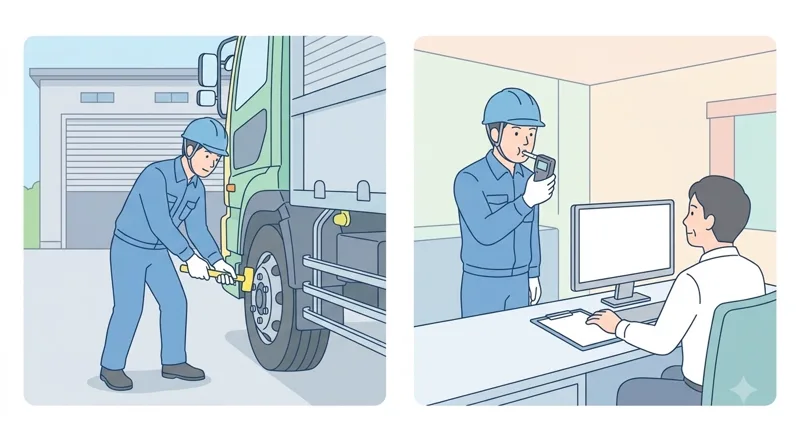
日常点検は、日常点検基準(点検表)にしたがって、自分の「目で見る」「耳で異音を聞く」「鼻で異臭をかぐ」「手や足で触れて動きや感触を確かめる」という五感と点検器具(点検ハンマーやエアゲージ等)を用いて丁寧に行います。
Daily inspection is carried out carefully according to the daily inspection checklist using your senses—looking with your eyes, listening for abnormal sounds, smelling for unusual odors, and feeling movement with your hands and feet—along with tools such as an inspection hammer and tire pressure gauge.
点検を行うときは、平坦で安全な場所に車両を止め、パーキングブレーキを確実に引いて輪止め(車輪止め)を装着し、車両が動き出さない状態にしてから開始します。
Before starting the inspection, park the vehicle on a flat, safe surface, firmly apply the parking brake, and place wheel chocks so the vehicle cannot roll.
点検の結果、ランプの不点灯やタイヤの損傷、オイル漏れ・エア漏れなどの異常を発見したときは、そのまま出庫せず直ちに運行管理者および整備管理者へ報告し、整備や車両交換の指示を仰がなければなりません。
If you find any abnormality such as a burned-out lamp, tire damage, or an oil or air leak, never depart as is; immediately report to the Operation Manager and Maintenance Manager for repair or vehicle replacement instructions.
Key points
- 事業用自動車の日常点検は「1日1回、運行開始前」に行うことが法的義務
Daily inspection of commercial vehicles is a legal duty required 'once a day, before starting operations' - 平坦な場所でパーキングブレーキを引き、輪止めをしてから五感と器具で点検する
Park on level ground, set the parking brake, apply wheel chocks, and inspect using your senses and proper tools - 異常発見時は出庫せず、運行管理者・整備管理者へ直ちに報告する
If any defect is found, do not depart—immediately report to the Operation Manager and Maintenance Manager
| Word | Meaning |
|---|---|
| 日常点検 | daily vehicle inspection |
| 道路運送車両法 | Road Transport Vehicle Act |
| 整備管理者 | maintenance manager |
| 輪止め | wheel chock |
エンジンルーム等の点検(オイル・冷却水・ブレーキ液・ベルト・バッテリー)
Engine Compartment Inspection (Oil, Coolant, Brake Fluid, Belts, and Battery)
エンジンルームの点検では、まずエンジン始動前にオイルレベルゲージ(油量計)を抜き取ってウエスで拭き、もう一度奥まで差し込んでから引き抜き、エンジンオイルの量が上限(MAX)と下限(MIN)の間にあるか、汚れや油漏れがないかを確かめます。
When inspecting the engine compartment before starting the engine, pull out the oil dipstick, wipe it clean with a cloth, reinsert it fully, and pull it out again to check that the engine oil level is between the upper (MAX) and lower (MIN) marks and free of leaks or severe contamination.
冷却水(クーラント)は、エンジンが冷えている状態でリザーブタンク(補助タンク)の外側から液面がFULL(上限)とLOW(下限)の間にあるかを確認します。冷却水不足はエンジンのオーバーヒートや火災の直接原因となります。
Check the engine coolant level while the engine is cold by looking at the reserve tank from the outside to verify that the fluid is between FULL and LOW. Low coolant directly causes engine overheating and vehicle fires.
エンジンが熱いときにラジエーターキャップをいきなり開けると、高温高圧の蒸気や熱湯が噴き出して大やけどを負うため、絶対にそのまま開けてはなりません。
Never open the radiator cap while the engine is hot, because high-pressure steam and boiling water will spray out and cause severe burns.
ブレーキリザーブタンクのブレーキ液(フルード)の量が規定範囲内にあるか、またウインド・ウォッシャ液の量が十分かを目視で点検します。ブレーキ液が急に減っているときは配管からの液漏れの危険があります。
Visually inspect the brake fluid level in the brake reservoir tank and the windshield washer fluid level. A sudden drop in brake fluid indicates a dangerous leak in the brake lines.
さらに、ファンベルトの張り具合(指で押したときのたわみ量)や亀裂・損傷の有無を調べ、バッテリーの液量および端子部分の緩みや腐食がないかもあわせて確認します。
Also check the fan belt tension (deflection when pressed with a finger) and inspect for cracks or fraying, and check the battery fluid level as well as terminal tightness and corrosion.
Key points
- エンジンオイル量は始動前にオイルレベルゲージを抜いて拭き、再挿入して上限と下限の間か確かめる
Check engine oil before starting by wiping and reinserting the dipstick to verify the level is between MAX and MIN - 冷却水はリザーブタンクのFULLとLOWの間か確認し、加熱時にラジエーターキャップを開けない
Check coolant between FULL and LOW on the reserve tank, and never open the radiator cap while hot - ブレーキ液の量・ファンベルトの張り具合と損傷・ウォッシャ液とバッテリー液量を点検する
Inspect brake fluid level, fan belt tension and wear, windshield washer fluid, and battery fluid level
| Word | Meaning |
|---|---|
| オイルレベルゲージ | oil dipstick (oil level gauge) |
| 冷却水 | engine coolant |
| リザーブタンク | reserve tank / reservoir |
| ファンベルト | fan belt |
車両周囲の点検:灯火装置とタイヤ(空気圧・亀裂・溝の深さ)
Walk-Around Inspection: Lights and Tires (Air Pressure, Cracks, and Tread Depth)
車両の周りを一巡しながら、ヘッドライト(前照灯)、ウインカー(方向指示器)、ブレーキランプ(制動灯)、テールランプ(尾灯)、バックランプ(後退灯)、ハザードランプ、番号灯がすべて正常に点灯・点滅し、レンズに汚れや破損がないかを確かめます。
Walk all the way around the vehicle to verify that headlights, turn signals, brake lamps, taillights, backup lamps, hazard lights, and license plate lamps all illuminate or flash properly and that their lenses are clean and unbroken.
タイヤの点検では、まず空気圧が規定値に保たれているかをエアゲージや点検ハンマーで確かめ、タイヤの接地面(トレッド)や側面(サイドウォール)に亀裂・損傷、釘や石などの異物が刺さっていないか、偏摩耗(片減り)がないかを調べます。
When inspecting tires, check with an air gauge or inspection hammer that tire pressure is at the specified level, and inspect the tread and sidewalls for cracks, damage, embedded nails or stones, and uneven wear.
大型トラックやバスなどのダブルタイヤ(複輪)では、内側のタイヤのパンクや空気圧不足が見落とされやすいため、点検ハンマーで叩いたときの音と跳ね返り、およびタイヤとタイヤの間に挟まった石がないかを特に念入りに点検します。
On dual tires (double tires) used on large trucks and buses, low pressure or a puncture in the inner tire is easily overlooked, so carefully check the sound and rebound with an inspection hammer and ensure no stones are wedged between the two tires.
タイヤの溝の深さが不足して「スリップサイン」が現れたタイヤでの走行は法令違反であり、雨天時にスリップやハイドロプレーニング現象を起こすため絶対に使用してはなりません。
Driving on tires worn down until the 'tread wear indicator (slip sign)' appears is illegal and causes skidding and hydroplaning in the rain, so such tires must never be used.
道路運送車両の保安基準におけるタイヤの溝の深さの下限(残溝基準)は、一般道路で普通乗用車等が「1.6ミリメートル以上」(高速道路では普通乗用車2.4mm以上、大型バス・大型トラック等は3.2mm以上)、冬用タイヤは新品時の溝の50%(プラットフォーム露出前)が基準です。
Under vehicle safety standards, minimum remaining tread depth is 1.6 mm on general roads for standard vehicles (on expressways: 2.4 mm for passenger cars and 3.2 mm for large buses and large trucks), while winter tires require at least 50% of original tread depth (before the platform indicator is exposed).
Key points
- 前照灯・方向指示器・制動灯・尾灯・後退灯の点灯や点滅とレンズの破損を確かめる
Check operation and lens condition of headlights, turn signals, brake lamps, taillights, and backup lamps - タイヤの空気圧・亀裂・異物・偏摩耗およびダブルタイヤの内輪・石噛みを点検する
Inspect tire pressure, cracks, foreign objects, uneven wear, and inner dual tires / stones wedged between duals - スリップサインが出たタイヤは使用禁止(高速道路では大型トラック・バスは残溝3.2mm以上必要)
Never use tires showing slip signs (on expressways, large trucks and buses require at least 3.2 mm of tread depth)
| Word | Meaning |
|---|---|
| 灯火装置 | lighting and signaling devices |
| 偏摩耗 | uneven tire wear |
| スリップサイン | tread wear indicator (slip sign) |
| 複輪 | dual tires (double wheels) |
大型車の車輪脱落事故防止(ホイールナットの点検と増し締め)
Preventing Wheel Detachment on Large Vehicles (Lug Nut Inspection and Retorquing)
大型トラックや大型バスでは、走行中にホイールボルトが折損したりホイールナットが緩んで脱落したりし、外れた大きなタイヤが歩行者や対向車に直撃する重大な「車輪脱落事故」が冬場を中心に多発しています。
On large trucks and buses, serious 'wheel detachment accidents'—where wheel bolts snap or lug nuts loosen while driving and a massive runaway wheel strikes pedestrians or oncoming cars—occur frequently, especially in winter.
特に現在主流の「ISO方式ホイール(平面座ナット)」は、以前のJIS方式(球面座ナット)と異なり、すべての車輪が「右ねじ(時計回りで締まる)」となっており、初期なじみによる緩みを防ぐための適切な管理が不可欠です。
In particular, modern 'ISO-type wheels (flat-seat lug nuts)' differ from older JIS-type wheels (spherical-seat nuts) in that all wheels use right-hand threads (clockwise to tighten), requiring proper maintenance to prevent initial settling looseness.
日常点検では、ホイールナットに点検ハンマーを当てて叩いたときの「音の違い(澄んだ音か濁った音か)」やナットに指を添えたときの「振動の違い」によって緩みがないかを1本ずつ確かめます。
During daily inspection, tap each lug nut individually with an inspection hammer while touching it with your finger to check for any 'difference in sound (clear vs. dull tone)' or 'abnormal vibration.'
あわせて、隣り合うナットに装着された「ホイールナットマーカー(インジケーター)」の矢印の向きがずれていないか、またナットやホイールの周辺から「赤さびを含んだ雨水の垂れ跡(さび汁)」が出ていないかを目視で確認します。
At the same time, visually check whether the arrows on 'wheel nut indicators (markers)' have shifted out of alignment and whether any 'reddish rust-streaked water trails (sabijiru)' are seeping from around the nuts or wheel hub.
冬用タイヤへの交換後に脱落事故が集中的に起きているため、タイヤ交換後は「50〜100キロメートル走行後」に必ずトルクレンチを使って規定トルクでの「増し締め」を実施しなければなりません。
Because wheel detachment accidents spike right after switching to winter tires, you must always perform 'retorquing (mashi-jime)' to the specified torque with a torque wrench 'after driving 50 to 100 km' following any tire change.
Key points
- ホイールナットは点検ハンマーの音・指先の振動・ナットマーカーのずれ・さび汁の有無で点検する
Inspect lug nuts using hammer sound, fingertip vibration, nut marker alignment, and signs of rust streaks (sabijiru) - 現在主流のISO方式ホイールは左右輪とも「右ねじ(時計回り締め)」である
Modern ISO-standard wheels use right-hand threads (clockwise to tighten) on both left and right sides of the vehicle - タイヤ交換後は「50〜100km走行後」にトルクレンチで規定トルクの増し締めを行う
Always retorque lug nuts with a torque wrench after driving 50 to 100 km following a tire change
| Word | Meaning |
|---|---|
| 車輪脱落事故 | wheel detachment accident |
| 点検ハンマー | inspection hammer |
| さび汁 | rust streaks / rust-stained seepage |
| 増し締め | retorquing / retightening |
運転席での点検(ブレーキ・エアタンク凝水・ハンドル・計器類)
Driver's Seat Inspection (Brakes, Air Tank Drain, Steering, and Instruments)
運転席に乗り込んだら、エンジンを始動して異音がなくスムーズにかかるか、メーターパネルの警告灯(油圧警告灯・充電警告灯・ブレーキ警告灯・ABS警告灯等)が消灯するかを確かめます。
After getting into the driver's seat, start the engine to verify smooth starting without abnormal noise, and confirm that dashboard warning lights (oil pressure, battery charge, brake warning, ABS warning, etc.) go out properly.
大型トラックや大型バスに用いられる「空気式ブレーキ(エアブレーキ)」では、エアタンクの圧力計(空気圧計)の指針が規定の範囲内まで順調に上昇するか、ブレーキバルブから空気漏れ(エア漏れ)の音がしないかを必ず確認します。
On large trucks and buses equipped with air brakes, always check that the air pressure gauge needle rises smoothly into the specified green range and listen for any air leaks from the brake valve.
また、エアタンク内に水分(ドレン・凝水)がたまるとブレーキバルブの腐食や冬場の凍結によるブレーキ不良を引き起こすため、毎日ドレンコックを引いてエアタンク内の凝水を抜く作業(水抜き)を行います。
Because moisture (condensation / drain water) collecting inside the air tank causes valve corrosion and winter freezing that can disable the brakes, pull the drain cock daily to drain condensed water from the air tank.
ブレーキペダルを踏んだときの「遊び」の量と、強く踏み込んだときの床板とのすき間(踏みしろ)・踏みごたえ、およびパーキングブレーキレバーの引きしろ(ノッチ数)や効き具合を点検します。
Depress the brake pedal to check pedal free play (asobi), reserve travel from the floorboard when pressed hard (fumishiro), and pedal feel, and verify parking brake lever travel and holding power.
さらに、ハンドルの遊びやがたつき、ウインド・ウォッシャ液の噴射状態とワイパーの拭き取り状態、バックミラー・アンダーミラーの角度、ホーン(警音器)やデフロスターの作動も出庫前に確かめます。
Also check steering wheel free play and looseness, windshield washer spray and wiper operation, mirror angles (including under-mirrors), horn operation, and defroster function before leaving the depot.
Key points
- エアブレーキ車は空気圧計の上昇具合とエア漏れを調べ、エアタンクの凝水(水抜き)を行う
On air-brake vehicles, check air pressure buildup and air leaks, and drain condensed water (gyosui) from the air tank - ブレーキペダルの「遊び」と床板とのすき間(踏みしろ)、パーキングブレーキの引きしろを確かめる
Verify brake pedal free play (asobi), floor clearance (fumishiro), and parking brake lever travel - メーターの警告灯の消灯、ハンドルの遊び、ワイパー・ミラー・デフロスターの作動を確認する
Confirm that dashboard warning lights go out and check steering play, wipers, mirrors, and defroster
| Word | Meaning |
|---|---|
| 凝水 | condensed water (in air brake tank) |
| 遊び | free play (of pedal or steering wheel) |
| 踏みしろ | pedal reserve travel / floor clearance |
| 警告灯 | warning light / indicator |
運行管理者による業務前・業務後点呼とアルコール検知器
Pre-Shift and Post-Shift Roll Calls (Tenko) by the Operation Manager and Alcohol Detectors
自動車運送事業者は、営業所ごとに国家資格を持つ「運行管理者」を選任し、運転者の乗務割りの作成、休憩・睡眠施設の管理、指導監督、および乗務前後の「点呼」を行わせなければなりません。
Motor transport operators must appoint a nationally certified 'Operation Manager (Unko Kanrisha)' at each depot to prepare driver rosters, manage rest facilities, supervise drivers, and conduct pre-shift and post-shift 'roll calls (tenko).'
運転者は乗務開始前に原則「対面」(または認定を受けた遠隔点呼・自動点呼機器)で「業務前点呼」を受け、①日常点検の結果、②酒気帯びの有無、③疾病・疲労・睡眠不足等により安全運転ができないおそれがないかを報告・確認します。
Before starting duty, drivers must undergo a 'pre-shift roll call' in person in principle (or via approved remote/automated roll-call systems) to report and confirm: (1) daily vehicle inspection results, (2) absence of alcohol, and (3) absence of illness, fatigue, or sleep deprivation.
酒気帯びの確認にあたっては、運行管理者が運転者の顔色や呼気の臭い、応答の声の調子等を目視等で確かめるとともに、「アルコール検知器」を用いて測定することが法律で義務づけられています。
When checking for alcohol, the law requires the Operation Manager both to observe the driver's complexion, breath odor, and voice and to test the driver with an 'alcohol detector (breathalyzer).'
アルコール検知器は常に有効に保持(正常に作動し故障がない状態に管理)しなければならず、1ミリリットルあたり0.01ミリグラムでもアルコールが検知されたり酒気帯びが確認されたりした運転者を乗務させることは絶対に禁止されています。
Alcohol detectors must be kept in working order at all times, and if any alcohol whatsoever is detected on a driver's breath, allowing that driver on duty is strictly prohibited.
乗務終了後には「業務後点呼」を受け、再度アルコール検知器で酒気帯びがないことを確認するとともに、自動車・道路および運行の状況や、他の運転者と交替した場合の「通告(引き継ぎ事項)」を確実に報告します。
After finishing duty, the driver undergoes a 'post-shift roll call,' is tested again with the alcohol detector, and reports on the vehicle, road, and operating conditions as well as any handover notifications (tsukoku) if relieved by another driver.
Key points
- 業務前点呼では①日常点検結果、②酒気帯びの有無、③疾病・疲労・睡眠不足の有無を確認する
Pre-shift roll call confirms: (1) daily inspection results, (2) absence of alcohol, and (3) absence of illness, fatigue, or lack of sleep - 酒気帯び確認は目視等と「常に有効に保持されたアルコール検知器」の両方で行う義務がある
Alcohol checks must be performed using both visual observation and a properly maintained alcohol detector - 業務後点呼ではアルコール測定とともに車両・道路・運行状況および交替時の通告を報告する
Post-shift roll call includes an alcohol test plus reporting on vehicle, road, and operating conditions and driver handovers
| Word | Meaning |
|---|---|
| 運行管理者 | operation manager |
| 点呼 | roll call / safety check (tenko) |
| 酒気帯び | under the influence of alcohol / alcohol on breath |
| アルコール検知器 | alcohol detector (breathalyzer) |
乗務記録(運転日報)・運行指示書・運行記録計(デジタコ)
Driver's Log (Unten Nippo), Operation Instruction Sheet, and Tachograph
運転者が乗務したときは、運転者名・自動車登録番号・乗務の開始および終了の地点と日時・主な経過地点・運転距離・休憩や睡眠をとった場所と時間などを「乗務記録(運転日報)」に正確に記録しなければなりません。
Whenever a driver goes on duty, they must accurately record in the 'driver's log (jomu kiroku / unten nippo)' the driver's name, vehicle registration number, start and end locations and times, main waypoints, distance driven, and break/sleep locations and times.
トラックで一定の中間点呼が対面で行えない運行や、貸切バス(一般貸切旅客自動車運送事業)の運行では、運行経路や主な経過地の発着日時・休憩地点などを記した「運行指示書」を携行して運行します。
On truck runs where in-person intermediate roll calls cannot be conducted and on all chartered bus operations, the driver must carry and follow an 'Operation Instruction Sheet (Unko Shijisho)' specifying the route, arrival/departure times, and rest stops.
運行途中で天候急変や通行止め、荷主・乗客の都合等により運行指示書の経路や休憩場所を変更する必要が生じたときは、運転者の一存で勝手に変更せず、必ず運行管理者へ連絡してその指示を仰ぎます。
If severe weather, road closures, or shipper/passenger requests require changing the route or rest stops listed on the Operation Instruction Sheet, never change them on your own; always contact the Operation Manager for instructions.
対象となる事業用自動車には、走行速度・走行距離・運行時間を自動的に記録する「運行記録計(タコグラフ/デジタルタコグラフ)」の装着と記録保存が義務づけられています。
Applicable commercial vehicles are legally required to be equipped with an 'operation recorder (tachograph / digital tachograph)' that automatically records driving speed, distance, and operating time.
さらに、前方および車内等の映像・音声を記録する「ドライブレコーダー」は、事故発生時の正確な原因究明だけでなく、ヒヤリ・ハット映像を用いた運転者の安全教育や防犯対策にも幅広く活用されています。
In addition, 'drive recorders (dashcams)' that record video and audio ahead of and inside the vehicle are widely used not only to determine exact accident causes but also for driver safety training using near-miss footage and crime prevention.
Key points
- 乗務記録(運転日報)には発着地点・日時・走行距離・休憩場所と時間等を正確に記入する
Accurately record start/end locations and times, distance driven, and break locations/times in the driver's log (unten nippo) - 運行指示書の経路や休憩地点を変更するときは、必ず運行管理者の指示を仰ぐ
Always obtain instructions from the Operation Manager before changing any route or rest stop on the Operation Instruction Sheet - 運行記録計(タコグラフ)は速度・距離・時間を記録し、ドライブレコーダーは安全教育にも役立つ
Tachographs record speed, distance, and time, while drive recorders also support near-miss safety education
| Word | Meaning |
|---|---|
| 乗務記録 | driver's log / duty record |
| 運行指示書 | operation instruction sheet |
| 運行記録計 | operation recorder (tachograph) |
| ドライブレコーダー | drive recorder (dashcam) |
Daily Inspection and Roll Call (Tenko)
Practice this chapter in the appOfficial references
- JTA 特定技能1号 共通科目(トラック・タクシー・バス)学習用テキスト 日常点検・点呼 — https://jta.or.jp/member/shien/tokuteiginou.html
- 国土交通省 自動車の点検及び整備に関する手引・大型車の車輪脱落事故防止 — https://www.mlit.go.jp/jidosha/jidosha_fr9_000014.html