Truck Body Types, Cargo Loading Methods, Lashing, and Preventing Load Shift
トラックの車種特性・積載方法・固縛と荷崩れ防止
Automobile Transportation · 自動車運送業 · Written by Tokutei Pass based on the official study texts; not copied verbatim.
トラックの車種特性(バン・ウイング・平ボディ・冷凍車)と緑ナンバーの使命
Truck Body Types (Van, Wing, Flatbed, Refrigerated) and Green-Plate Responsibilities
貨物自動車運送事業(トラック運送業)は、荷主から運賃を受け取って営業用トラック(緑ナンバー、軽貨物は黒ナンバー)で大切な貨物を安全・確実に届ける日本の物流と経済を支える基幹産業です。
The motor truck cargo transport industry receives freight charges from shippers and uses commercial trucks (green plates; black plates for light cargo vehicles) to deliver goods safely and reliably, serving as a vital backbone of Japan's logistics and economy.
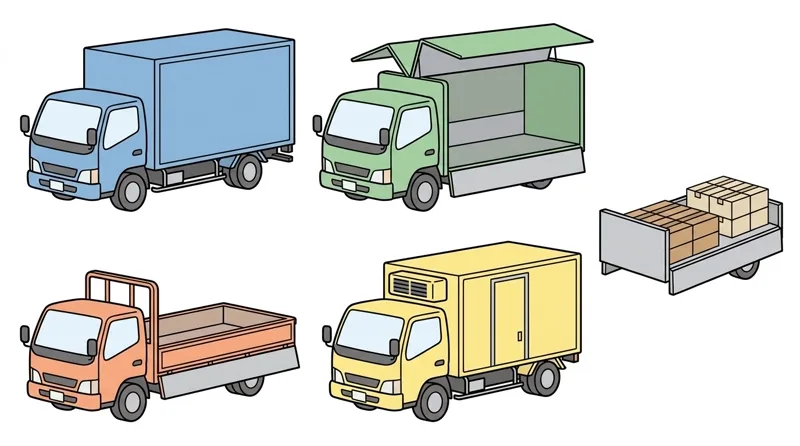
トラックの荷台には用途に応じてさまざまな構造があり、屋根のない「平ボディ」は上方からのクレーン作業や長尺物の積載に適し、箱型の「バンボディ」は雨風や盗難から荷物を守るのに適しています。
Truck cargo beds come in various body styles depending on use: open 'flatbeds (hira-body)' suit overhead crane loading and long items, while enclosed 'box vans (van-body)' protect cargo from rain, wind, and theft.
また、荷台の左右側面が鳥の翼のように開閉する「ウイングボディ」はフォークリフトによるパレット荷役がしやすいため広く普及していますが、ウイングを開閉するときは上部や周囲の看板・電線・屋根などに接触しないよう事前確認が不可欠です。
'Wing-body' trucks whose side panels open upward like bird wings are widely used because they allow easy forklift pallet loading from either side; however, before opening the wings you must always check above and around the truck for signs, overhead wires, or low roofs.
走行前には、ウイングや後部扉(観音扉)、平ボディの「あおり」が確実に閉まってロックされているかを必ず点検します。ウイングや扉を開けたまま走行すると、荷物の落下や歩行者・建造物への激突を招きます。
Before driving off, always verify that the wing panels, rear barn doors, or flatbed side gates (aori) are completely closed and latched. Driving with unlatched wings or doors causes falling cargo and severe collisions with pedestrians or structures.
さらに、トラックは乗用車に比べて車体が大きく車高も高いため、空車時と実車時(積載時)とで制動距離や重心の高さが大きく変化することを常に頭に入れて運転しなければなりません。
Furthermore, because trucks are much larger and taller than passenger cars, drivers must always keep in mind how dramatically braking distance and center-of-gravity height change between an empty truck (kusha) and a loaded truck (jissha).
Key points
- ウイングボディを開閉する前には、上空や周囲の電線・屋根・看板等との接触がないか確認する
Before opening or closing wing-body panels, check overhead and around the vehicle for wires, roofs, or signs - 発進前にはウイング・後部扉・あおりのロックが確実にかかっているかを必ず点検する
Always verify before departure that wing panels, rear doors, and side gates (aori) are securely locked - 空車時と実車時(積載時)とでは制動距離や重心位置が大きく変わることを意識する
Keep in mind the major differences in braking distance and center of gravity between empty (kusha) and loaded (jissha) conditions
| Word | Meaning |
|---|---|
| 平ボディ | flatbed truck with drop sides |
| ウイングボディ | wing-body truck |
| あおり | drop-side gate / side board (of a flatbed) |
| 実車 | loaded vehicle (carrying cargo or passengers) |
積載制限(重量・長さ・幅・高さ)と過積載の絶対禁止
Loading Limits (Weight, Length, Width, and Height) and Strict Prohibition of Overloading
自動車に積むことができる荷物の重量は、自動車検査証(車検証)および車両後部に表示された「最大積載量」を決して超えてはなりません。
The weight of cargo loaded onto a motor vehicle must never exceed the 'maximum payload capacity (saidai sekisairyo)' stated on the vehicle inspection certificate (shakensho) and displayed on the rear of the truck.
また、道路交通法施行令により、積載物の大きさの制限は、原則として「高さは地上から3.8メートル以下(指定道路では4.1メートル以下)」「長さは自動車の長さの1.2倍以下(はみ出しは車長の10分の1以下)」「幅は自動車の幅の1.2倍以下(左右のはみ出しは車幅の10分の1以下)」と定められています。
Under the Road Traffic Act Enforcement Order, cargo size limits in principle are: 'height of 3.8 m or less from the ground (4.1 m or less on designated height-cleared roads),' 'length up to 1.2 times vehicle length (protrusion no more than 1/10 of vehicle length),' and 'width up to 1.2 times vehicle width (protrusion on each side no more than 1/10 of vehicle width).'
最大積載量を超えて荷物を積む「過積載」を行うと、制動距離が著しく伸びて追突事故を起こしやすくなるほか、重心が高くなってカーブでの横転や、ブレーキ・タイヤ・車軸の破損、道路や橋梁の劣化を引き起こします。
'Overloading (kasekisai)' beyond maximum payload capacity drastically lengthens braking distance, raises the center of gravity to cause rollovers on curves, damages brakes, tires, and axles, and deteriorates roads and bridges.
過積載運転は、運転者本人だけでなく、過積載を命じたり容認したりした運送事業者や荷主に対しても重い罰則・行政処分・荷主勧告制度が適用されます。
Overloaded driving carries severe criminal and administrative penalties not only for the driver, but also for the transport operator and the shipper (under the Shipper Recommendation System).
もし集荷先で荷主から最大積載量を超える荷物の積み込みを求められたときは、運転者の一存で積み込んで出発してはならず、直ちに営業所の運行管理者へ連絡して増車手配等の指示を仰ぎます。
If a shipper asks you at a pickup site to load cargo exceeding your truck's maximum payload capacity, never load it and depart on your own; immediately contact your Operation Manager for instructions such as dispatching an additional truck.
Key points
- 最大積載量を超える「過積載」は制動距離増大や横転・車両破損を招く重大な違反
'Overloading (kasekisai)' beyond maximum payload is a serious violation that lengthens braking distance and causes rollovers - 高さ制限は原則地上から3.8m以下(指定道路は4.1m以下)、前後左右のはみ出し制限も厳守する
The height limit is 3.8 m from the ground in principle (4.1 m on designated roads), alongside strict overhang limits - 荷主から過積載を求められたときは断り、直ちに運行管理者へ連絡して指示を仰ぐ
If a shipper requests overloading, refuse to depart overloaded and immediately contact the Operation Manager for instructions
| Word | Meaning |
|---|---|
| 最大積載量 | maximum payload capacity |
| 過積載 | overloading |
| 自動車検査証 | motor vehicle inspection certificate (shakensho) |
| 荷主 | shipper / consignor |
荷崩れ・横転を防ぐ積み付けの基本原則(低重心と均等配置)
Basic Cargo Stowage Principles to Prevent Load Shift and Rollover (Low Center of Gravity & Balance)
トラックへの荷物の積み付けが不適切だと、走行中の振動やブレーキ・カーブの遠心力によって「荷崩れ」が起き、貨物が破損するだけでなく車両のバランスが崩れて横転事故を引き起こします。
Improperly stowing cargo on a truck allows road vibration, braking forces, or centrifugal force on curves to cause 'load shift / cargo collapse (nikuzure),' which not only damages goods but also destabilizes the truck and causes rollovers.
積み付けの第1の原則は「重い荷物を下に、軽い荷物を上に積む」ことです。これにより車両全体の「重心」をできるだけ低く保ち、上段の荷物による下段の荷潰れ(箱潰れ)を防ぐことができます。
The first rule of loading is to 'place heavy cargo on the bottom and light cargo on top.' This keeps the vehicle's overall center of gravity as low as possible and prevents upper cargo from crushing boxes on the bottom layer.
第2の原則は「荷台全体にバランスよく均等に配置し、前方(鳥居・前壁側)からすき間なく詰めて積む」ことです。前壁との間にすき間があると、急ブレーキをかけたときに荷物が前方へ滑り出して大きな衝撃が生じます。
The second rule is to 'distribute weight evenly across the cargo bed and pack tightly from the front bulkhead (headboard / torii) with no gaps.' Any gap between the cargo and the front wall allows the load to slam forward under hard braking.
左右のどちらかに重量が偏る「片荷(偏荷重)」になると、カーブで遠心力が働いたときに重い側へ急激に傾いて横転しやすくなります。
Loading weight unevenly to the left or right ('off-center loading / katani') causes the truck to lean sharply toward the heavy side under centrifugal force on curves, easily leading to a rollover.
また、荷台の後方ばかりに重い荷物を積む「後ろ荷」にすると、前輪が浮き上がり気味になって前輪荷重が減り、ハンドルが軽くなって操縦安定性(舵の効き)が著しく悪化するため絶対に避けなければなりません。
Furthermore, concentrating heavy cargo at the rear of the bed ('rear-heavy loading / ushironi') lifts weight off the front axle, making the steering wheel light and severely degrading steering stability and front-wheel grip.
Key points
- 「重いものを下、軽いものを上」に積んで重心を低くし、荷台前方からすき間なく詰める
Place heavy items on the bottom and light items on top to lower the center of gravity, packing tightly from the front wall - 左右に偏る「片荷(偏荷重)」はカーブでの横転事故の直接原因となる
Uneven left-right loading ('katani') is a direct cause of rollover accidents on curves - 後部に重い荷を集める「後ろ荷」は前輪荷重が減りハンドルが効かなくなるため厳禁
Rear-heavy loading ('ushironi') is strictly prohibited because it reduces front-axle load and causes loss of steering control
| Word | Meaning |
|---|---|
| 荷崩れ | load shift / cargo collapse |
| 重心 | center of gravity |
| 片荷 | uneven / off-center load (katani) |
| 緩衝材 | cushioning / dunnage material |
固縛作業(ラッシングベルト・ロープ・コーナープロテクター)とシートがけ
Cargo Securing (Ratchet Lashing Belts, Ropes, Corner Protectors) and Tarping
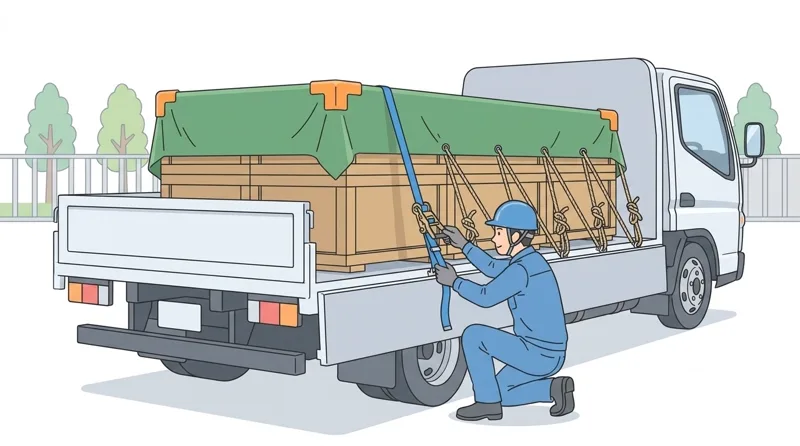
積み付けた荷物が走行中に動いたり落下したりしないよう、ロープや「ラッシングベルト(ベルト荷締機)」、ラッシングバー、ワイヤー等を用いて荷台にしっかり固定する作業を「固縛」といいます。
Securing loaded cargo firmly to the truck bed using ropes, ratchet lashing belts, load locks (lashing bars), or wire cables so that it cannot shift or fall while driving is called 'cargo securing / lashing (kobaku).'
ラッシングベルトやロープを使用する前には、ベルトのほつれ・切れ目やバックル金具の変形がないかを必ず点検し、荷物の角(エッジ)とベルトが当たる部分には荷物の破損とベルトの切断を防ぐため「コーナープロテクター(角当て)」を挟みます。
Before using lashing belts or ropes, always inspect them for fraying, cuts, or bent buckles, and place 'corner protectors (edge guards)' wherever a belt passes over the edge of cargo to prevent both box damage and belt cutting.
また、やむを得ず荷物と荷物の間や壁面との間にすき間ができるときは、そのままにせず「緩衝材(スペーサー・エアバッグ・発泡スチロール板など)」を詰め、円筒形の荷物やドラム缶等には必ず「歯止め(くさび・輪止め)」を施します。
Whenever gaps remain between cargo items or the side walls, fill them with 'dunnage / cushioning materials (spacers, airbags, foam boards),' and always block cylindrical cargo or drums with 'wedges / chocks (hadome).'
平ボディ車で雨濡れや飛散防止のために「シートがけ」を行うときは、風でシートがばたついたりめくれたりしないよう、前方の風上側からすき間なく張り、ゴムバンドやロープでフックに確実に留めます。
When covering cargo on a flatbed truck with a tarpaulin ('tarping / shito-gake') to prevent rain damage or scattering, stretch the tarp tightly from the front (upwind) side so wind cannot get underneath, and fasten it securely to the hooks with rubber bands or ropes.
走行を開始したあとも、振動によってロープやラッシングベルトに緩みが生じることがあるため、休憩時等に荷台の周りを回って固縛状態を再点検し、必要に応じて「増し締め」を行うことが大切です。
Even after starting your trip, road vibration can loosen ropes and lashing belts, so walk around the vehicle during rest stops to re-inspect the lashing and retighten ('mashi-jime') as needed.
Key points
- ラッシングベルトやロープと荷物の角の間には「コーナープロテクター(角当て)」を挟んで破損と切断を防ぐ
Place 'corner protectors' between lashing belts/ropes and cargo edges to prevent cargo crushing and belt cutting - すき間には緩衝材(スペーサー)を詰め、円筒形貨物には必ず歯止め(くさび)を施す
Fill gaps with dunnage/spacers and always apply wedges (hadome) to cylindrical cargo - 走行中の振動による緩みを防ぐため、休憩時に固縛状態を再点検して増し締めする
Re-inspect cargo lashing during rest stops and retighten belts/ropes to counter loosening from road vibration
| Word | Meaning |
|---|---|
| 固縛 | cargo lashing / securing |
| ラッシングベルト | ratchet lashing belt / tie-down strap |
| 角当て | corner protector / edge guard |
| 歯止め | chock / wedge (for cylindrical cargo) |
パレット積みの方法とロールボックスパレット(カゴ車)の安全取扱い
Pallet Stacking Patterns and Safe Handling of Roll Box Pallets (Cage Trolleys)
段ボール箱等をパレットに積み付ける方法には、同じ向きに重ねる「ブロック積み(棒積み)」と、1段ごとに箱の向きを変えて組み合わせる「交互列積み」「ピンホイール積み(風車積み)」「レンガ積み」などがあります。
Methods for stacking cardboard boxes on a pallet include 'block stacking (column stacking)' where boxes face the same direction, and interlocking patterns that alternate box orientation by layer such as 'alternating row stacking,' 'pinwheel stacking,' and 'brick stacking.'
ブロック積みは縦方向の圧縮強度には強いものの横揺れで崩れやすいため、上段に交互列積み等を組み合わせたり、ストレッチフィルムを巻いたりして荷崩れを防ぎます。
Because block stacking has high vertical compression strength but collapses easily under lateral sway, combine it with interlocking upper layers or wrap the pallet with stretch film to prevent load shift.
また、パレットの端から荷物が外へはみ出す「オーバーハング積み」は、隣のパレットとぶつかって荷潰れや荷崩れを起こすため避けなければなりません。
Avoid 'overhang stacking' where boxes protrude beyond the edge of the pallet, as overhanging boxes collide with adjacent pallets and get crushed or topple.
キャスター(車輪)のついた「ロールボックスパレット(カゴ車)」は重く重心も高いため、移動させるときは引っ張るのではなく進行方向が見えるように「押して」動かし、フレームの縦棒部分(内側)を持って手指の挟まれを防ぎます。
Because wheeled 'roll box pallets (cage trolleys / kago-sha)' are heavy and have a high center of gravity, move them by 'pushing' rather than pulling so you can see ahead, and grip the vertical frame bars from the inside so your fingers cannot be pinched against walls.
カゴ車をトラックの荷台に積み込んだあとは、すべてのキャスターのストッパー(ブレーキ)を確実にロックしたうえで、さらにラッシングベルトやラッシングバーで荷台壁面へ固定します。
After loading roll box pallets onto the truck bed, firmly lock all caster wheel stoppers (brakes) and additionally secure the cages to the cargo bed walls with lashing belts and load bars.
Key points
- パレット積みでは交互列積みやレンガ積み・ストレッチフィルム等を活用し、パレットからはみ出させない
Use interlocking stacking patterns and stretch film on pallets, and never let boxes overhang the pallet edges - ロールボックスパレット(カゴ車)は進行方向が見えるよう「押して」移動させ、手の挟まれに注意する
Move roll box pallets (cage trolleys) by pushing so you can see ahead, gripping inside the frame to protect your hands - 荷台に積んだカゴ車はキャスターストッパーをロックし、ラッシングベルト等で確実に固縛する
On the truck bed, lock all caster wheel stoppers on cage trolleys and secure them with lashing belts and bars
| Word | Meaning |
|---|---|
| 交互列積み | alternating-row pallet stacking |
| レンガ積み | brick-pattern stacking |
| ロールボックスパレット | roll box pallet (wheeled cage trolley) |
| ストレッチフィルム | stretch wrap film |
冷凍冷蔵車の温度管理(予冷・冷気循環)と特殊貨物の輸送
Temperature Control in Refrigerated Trucks (Pre-Cooling & Airflow) and Special Cargo
食品等を運ぶ冷凍冷蔵車では、荷物を積み込む前にあらかじめ冷凍機を作動させて荷室内を指定温度まで冷やしておく「予冷」を必ず行います。
On refrigerated and freezer trucks carrying food products, always perform 'pre-cooling (yorei)' by running the refrigeration unit in advance to cool the cargo compartment down to the specified temperature before loading.
冷凍機は「荷室内の温度を保つ装置」であり、常温の荷物を急速に冷やす能力はないため、積込前に荷物自体の温度も適正に冷やされているかを確かめます。
Because a truck refrigeration unit is designed to maintain cargo temperature rather than rapidly cool warm goods, also verify before loading that the cargo itself has been properly pre-chilled.
荷室内に荷物を積むときは、冷気の吹き出し口をふさがないように天井との間に空間をあけ、壁面や床面(T字レール等)にも冷気が循環する隙間を確保します。
When stowing cargo inside a refrigerated compartment, leave clearance below the ceiling so the cold-air outlets are not blocked, and maintain air channels along the walls and floor (T-rails) so cold air can circulate.
また、液体(タンクローリーや液体容器)を運ぶときは、発進・停止やカーブで内部の液体が大きく揺れ動く「スロッシング現象(液面揺動)」により制動距離が伸びたり横転しやすくなったりするため、特に慎重な速度管理が必要です。
When transporting liquids (in tank trucks or liquid containers), liquid surging back and forth during braking or cornering ('sloshing phenomenon') extends braking distances and can tip the vehicle over, requiring extra-smooth speed control.
危険物や毒物劇物、重量長尺物を輸送する場合は、関連法令に基づく標識(『危』マークや赤い布等)の掲出、消火器やイエローカード(緊急連絡カード)の携行、有資格者の乗務等を厳格に守ります。
When transporting hazardous materials, poisonous substances, or heavy/oversized items, strictly comply with regulations on displaying warning placards ('Hazardous (Ki)' signs or red flags), carrying fire extinguishers and emergency Yellow Cards, and holding required qualifications.
Key points
- 冷凍冷蔵車では積込前に荷室内を冷やす「予冷」を行い、冷気が循環する隙間をあけて積む
Pre-cool (yorei) refrigerated compartments before loading and leave airflow channels so cold air can circulate - 液体輸送時は液面が揺れ動く「スロッシング現象」による横転や制動距離増大に注意する
When hauling liquids, watch out for liquid surge ('sloshing') that can cause rollovers or longer braking distances - 危険物輸送時は標識の掲出・消火器やイエローカードの携行等の法令を厳守する
When hauling hazardous materials, strictly follow laws on warning placards, fire extinguishers, and emergency Yellow Cards
| Word | Meaning |
|---|---|
| 予冷 | pre-cooling |
| 冷気循環 | cold-air circulation |
| スロッシング現象 | sloshing / liquid surge phenomenon |
| 危険物 | hazardous materials (hazmat) |
荷物の受領・引渡し時の検品とケアレスミス防止
Cargo Checking (Kenpin) at Pickup/Delivery and Preventing Careless Errors
集荷先で荷物を受け取るとき(受領)および納品先で荷物を引き渡すとき(納品)には、必ず送り状(伝票)や積付表と実際の荷物を照らし合わせる「検品(検数)」を行います。
Both when picking up cargo at a shipping site and when delivering it at the destination, always perform 'cargo checking / tallying (kenpin)' by matching the actual goods against the shipping invoice (okurijo) or loading manifest.
検品では、①品名・品番、②個数(数量)、③行先(納品先)、④外装の異常(箱潰れ・破れ・水濡れ・汚損など)の有無、⑤取扱注意表示(ケアマーク:天地無用・われもの注意・水濡れ厳禁等)を1つずつ指差呼称で確かめます。
During inspection, point and call to verify: (1) item name and code, (2) quantity/piece count, (3) destination, (4) any exterior damage (crushed, torn, wet, or soiled boxes), and (5) handling care marks ('This Side Up (Tenchi Muyo),' 'Fragile,' 'Keep Dry,' etc.).
特に「天地無用」のマークがある荷物は、「上下を逆にしてはならない(決められた上向きのまま積む)」という意味であり、横倒しや逆さまに積むと中身が破損・漏出するため厳重に注意します。
In particular, the care mark 'Tenchi Muyo' means 'Do NOT turn upside down (This Side Up)'; laying such cargo on its side or upside down will damage or spill the contents.
もし集荷時の検品で箱のへこみや水濡れ、個数不足を見つけたときは、そのまま積み込まず、その場で荷主(出荷担当者)と一緒に確認し、運行管理者へ報告して伝票に記録を残します。
If you discover a dented or wet box or a quantity shortage during pickup inspection, do not load it as is; verify it on the spot with the shipper's staff, report to your Operation Manager, and record it on the shipping slip.
これを怠ると、輸送中に運転者が破損・紛失させた貨物事故(弁償責任)とみなされるトラブルになるため、受領時と引渡時の確実な検品と受領印(サイン)の確認がプロの基本です。
Failing to do so can result in the damage or shortage being blamed on transit handling; thorough pickup/delivery inspection and obtaining a signed receipt are fundamental duties of a professional truck driver.
Key points
- 受領時と納品時には送り状と現物を照合し、品名・個数・行先・外装異常を検品する
At pickup and delivery, match the shipping slip against actual cargo to check item name, count, destination, and box condition - 「天地無用」は上下逆や横倒しにしてはならないという意味のケアマークである
'Tenchi Muyo' is a care mark meaning 'This Side Up—do not invert or lay flat' - 集荷時に破損や個数不足を見つけたら積込前に荷主側と確認し運行管理者へ報告する
If you find damage or a shortage at pickup, confirm it with the shipper before loading and report to the Operation Manager
| Word | Meaning |
|---|---|
| 検品 | cargo inspection / tallying |
| 送り状 | shipping invoice / waybill |
| 天地無用 | This Side Up / Do Not Invert |
| 貨物事故 | cargo damage / freight claim accident |
Truck: Loading and Lashing
Practice this chapter in the appOfficial references
- JTA 特定技能1号 トラック運転者 学習用テキスト(貨物自動車運送事業・積載・固縛) — https://jta.or.jp/member/shien/tokuteiginou.html
- 国土交通省 トラック事業における安全運行・過積載防止の手引き — https://www.mlit.go.jp/jidosha/anzen/03safety/truck.html