
Taxi Operations, Laws & Regulations, Taximeter Use, Customer Service, and Barrier-Free Care
タクシーの運行実務・関係法令・メーター操作と接客・バリアフリー対応
Automobile Transportation · 自動車運送業 · Written by Tokutei Pass based on the official study texts; not copied verbatim.
タクシー事業の役割・第二種運転免許と乗務員証・基本マナー
Role of Taxi Services, Class 2 Driver's License, Driver ID Card, and Basic Etiquette
タクシー・ハイヤー事業は、道路運送法上「一般乗用旅客自動車運送事業」といい、1個の契約で乗車定員11人未満の自動車を貸し切って旅客(お客様)を目的地まで安全・快適に運送する公共交通機関です。
Under the Road Transport Act, the taxi and hire-car industry is classified as 'General Passenger Motor Vehicle Transport Business,' a public transport service that charters a vehicle seating fewer than 11 persons under a single contract to carry passengers safely and comfortably to their destination.
運賃をいただいてお客様を乗せて走る営業運転を行うには、普通第一種免許ではなく「普通第二種運転免許(二種免許)」を取得していなければなりません(回送時のみ一種免許でも運転可)。
To carry fare-paying passengers in commercial service, a driver must hold a 'Class 2 Driver's License (Dai-nishu Menkyo)' rather than a standard Class 1 license (a Class 1 license only permits non-revenue out-of-service driving).
乗務中は、車内の助手席前方などの乗客から見えやすい位置に「乗務員証(運転者証)」を必ず掲出し、地域によっては地理試験や指定研修・接遇研修等を修了しておく必要があります。
While on duty, you must display your 'Driver Identification Card (Jomuinsho / Untenshasho)' in a location clearly visible to passengers (such as on the front passenger dashboard) and complete required local geography and customer-service training.
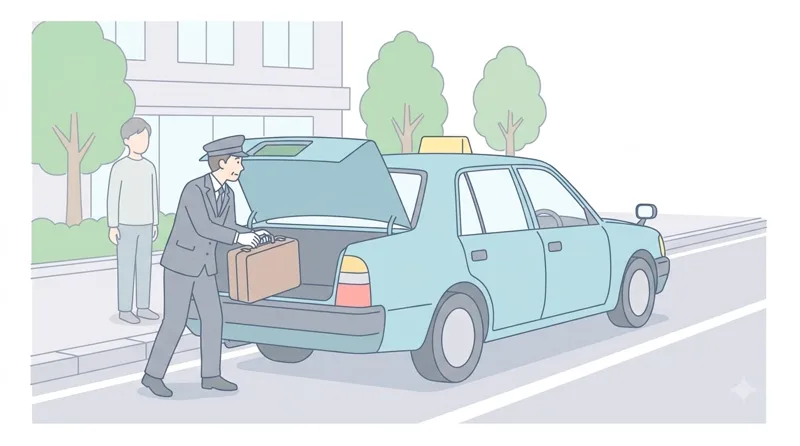
タクシーは密室空間でお客様をお迎えするため、清潔で端正な制服・身だしなみを整えるとともに、出庫前に車内の清掃・換気・消臭を行い、シートの汚れや忘れ物がないかを確かめます。
Because a taxi welcomes passengers into an enclosed cabin, maintain a clean, neat uniform and personal grooming, and clean, ventilate, and deodorize the interior before leaving the depot.
お客様に対しては常に丁寧な敬語(です・ます調)と明るい挨拶で応対し、急発進・急ブレーキ・急ハンドルを避けた滑らかな運転でお客様に安心感を与えることがプロの基本です。
Always address passengers using polite honorific Japanese ('desu/masu' style) and cheerful greetings, and provide a smooth ride free of sudden starts, hard braking, or sharp steering.
Key points
- タクシー事業は乗車定員11人未満の車で旅客を運ぶ事業であり、営業運転には「第二種運転免許」が必須
Taxi service carries passengers in vehicles seating fewer than 11 people and requires a 'Class 2 Driver's License' - 乗務中は車内の見えやすい場所に「乗務員証(運転者証)」を必ず掲出する
Always display the 'Driver ID Card (Jomuinsho)' in a clearly visible place inside the cabin while on duty - 清潔な身だしなみと車内清掃・換気を徹底し、丁寧な敬語と滑らかな運転で接客する
Maintain neat grooming and a clean, ventilated cabin, and serve passengers with polite language and smooth driving
| Word | Meaning |
|---|---|
| 一般乗用旅客自動車運送事業 | General Passenger Motor Vehicle Transport Business (taxi/hire) |
| 第二種運転免許 | Class 2 driver's license (for commercial passenger transport) |
| 乗務員証 | driver identification card (displayed in taxi) |
| 接遇 | customer hospitality and service |
運送引受義務(乗車拒否の禁止)と正当に拒絶できる例外事由
Duty to Accept Carriage (Prohibition of Refusing Passengers) and Lawful Exceptions
道路運送法(第13条)により、一般乗用旅客自動車運送事業者(タクシー)は、法令に定められた正当な事由がある場合を除き、運送の引き受けを拒絶してはならない(乗車拒否をしてはならない)と厳格に定められています。
Under Article 13 of the Road Transport Act, taxi operators and drivers are strictly prohibited from refusing to accept passengers ('prohibition of passenger refusal / josha kyohi') unless a lawful exception applies.
たとえば、「行先が近距離(ワンメーター)だから」「渋滞する方向だから」「小銭(釣り銭)がないから」「車椅子の積み込みに手間がかかるから」「盲導犬などの身体障害者補助犬を連れているから」「外国人で言葉が通じにくいから」といった理由でお客様の乗車を断ることは、すべて違法な「乗車拒否」となります。
Refusing a passenger because 'the destination is a short distance away,' 'traffic is congested in that direction,' 'I have no small change,' 'loading a wheelchair takes time,' 'the passenger has an assistance dog (guide dog),' or 'the passenger is a foreigner' is an illegal passenger refusal in every case.
一方で、法令上「正当に運送の引き受けを拒絶できる例外事由」として、①天災その他やむを得ない事由による運送支障があるとき、②お客様が法令や公序良俗に反する行為(最高速度違反や信号無視・進入禁止道路への進入などの強要)を求めるとき、があります。
Lawful exceptions where a driver may refuse carriage include: (1) when natural disasters or unavoidable events prevent safe transport, and (2) when the passenger demands illegal acts (such as speeding, running red lights, or entering a no-entry street).
さらに、③泥酔していて行先を全く告げられない・付添人がいないとき、④車内を著しく汚損するおそれがある服装・状態のとき、⑤危険物(火薬類やガソリン等)を持ち込もうとするとき、⑥マスク着用等の正当な感染防止措置等なく他に危害・迷惑を及ぼす暴行・脅迫行為があるときも引き受けを拒絶できます。
A driver may also lawfully refuse when: (3) a passenger is so heavily intoxicated without an attendant that they cannot state a destination, (4) the passenger's attire would severely soil the cabin, (5) the passenger attempts to bring hazardous materials (explosives, gasoline) aboard, or (6) the passenger commits violence or intimidation.
ただし、営業区域外(発地および着地の両方が自社の営業区域外となる場合)の運送は道路運送法第20条により原則禁止されているため、その旨をお客様に丁寧に説明してお断りします。
In addition, under Article 20 of the Road Transport Act, carrying a passenger when BOTH the pickup point and the destination lie outside your company's licensed operating zone (eigyo kuiki) is prohibited; politely explain this rule and decline.
Key points
- 「近距離」「渋滞」「釣銭不足」「車椅子や補助犬同伴」を理由に乗車を断ることは違法な乗車拒否
Refusing a ride due to short distance, traffic jams, lack of change, or a wheelchair/assistance dog is illegal - 法令違反の強要・危険物持込み・行先不明の泥酔者(付添なし)は正当に引き受けを拒絶できる
You may lawfully refuse passengers who demand traffic violations, carry hazmat, or are unattended and too intoxicated to state a destination - 発地と着地の両方が営業区域外となる運送は法律上引き受けることができない
You cannot accept a trip where both the pickup point and destination lie outside your licensed operating zone
| Word | Meaning |
|---|---|
| 乗車拒否 | illegal refusal of a passenger |
| 道路運送法 | Road Transport Act |
| 泥酔者 | heavily intoxicated person |
| 営業区域 | licensed operating zone / service area |
タクシーメーターと表示灯(空車・実車・迎車・割増・支払い・回送)
Taximeter and Sign Display Operations (Vacant, Occupied, Pickup, Late-Night, Payment, Out of Service)
タクシーには走行距離と時間(低速走行時・停車時の時間距離併用制)に応じて認可運賃を計算する「タクシーメーター」と、車外に営業状態を示す「スーパーサイン(ウインドウサイン・表示灯)」が備えられています。
A taxi is equipped with a 'taximeter' that calculates approved fares based on both distance and time (time-and-distance system during slow traffic or waiting) and a 'status indicator sign (super sign)' visible from outside.
お客様を探して走っているときやタクシー乗り場で待機しているときは「空車(赤色表示)」とし、お客様が乗車して行先を確認し発進するときにメーターを「実車(賃走)」に入れます。
Display 'Vacant (Kusha—red display)' while cruising for passengers or waiting at a taxi stand, and press the meter into 'Occupied / Hired (Jissha / Chinso)' when the passenger boards, confirms the destination, and you depart.
無線配車やアプリ配車でお客様の迎えに向かうときは「迎車」表示とし、午後10時から翌朝午前5時までの深夜早朝時間帯(2割増)には自動的または操作により「割増」表示となります。
Display 'En Route to Pickup (Geisha)' when heading to a radio- or app-dispatched pickup, and 'Late-Night Surcharge (Warimashi)' during the 20% surcharge hours from 10:00 p.m. to 5:00 a.m.
目的地に到着して安全な場所に停車したら、ただちにメーターの「支払い」ボタンを押して運賃表示を確定させます。もしメーターを「実車」のまま放置して精算中に時間加算で料金が上がってしまうと、重大なクレームにつながります。
As soon as you arrive at the destination and stop safely, press the 'Payment (Shiharai)' button on the taximeter to lock the fare. Leaving the meter in 'Occupied (Jissha)' during payment so the time-based fare ticks up mid-transaction causes serious customer complaints.
食事休憩をとるとき、燃料補給(LPガス充填等)へ行くとき、乗務終了で営業所へ戻るとき、または故障時等でお客様を乗せられないときは、誤ってお客様が手を挙げないよう必ず「回送」表示に切り替えます。
Whenever taking a meal break, refueling (filling LPG, etc.), returning to the depot at the end of a shift, or experiencing a breakdown, always switch the sign to 'Out of Service (Kaiso)' so pedestrians do not hail you by mistake.
Key points
- 空車時は「空車」、配車迎車時は「迎車」、22時〜翌5時は「割増」、休憩・入庫時は「回送」を表示する
Display 'Kusha' when vacant, 'Geisha' for dispatch pickups, 'Warimashi' from 22:00 to 05:00, and 'Kaiso' on breaks or returning to depot - 目的地に到着して停車したら、時間加算を防ぐため直ちにメーターを「支払い」にする
Press 'Shiharai (Payment)' immediately upon stopping at the destination so the time meter does not tick up during payment - メーターの不正使用(メーター不倒=エントツ行為等)は道路運送法違反として厳罰に処される
Failing to engage the taximeter when carrying passengers is a serious violation of the Road Transport Act
| Word | Meaning |
|---|---|
| 空車 | vacant taxi (available for hire) |
| 迎車 | en route to customer pickup |
| 割増 | late-night surcharge (22:00–05:00) |
| 回送 | out of service / returning to depot (kaiso) |
乗降時の安全確認(自動ドア開閉)・シートベルト着用と経路確認
Boarding/Alighting Safety (Power Door Operation), Seatbelt Request, and Route Confirmation
路上でお客様を乗降させるときは、交差点や横断歩道・バス停付近等の駐停車禁止場所を避け、左ウインカーを出して後続車に予告しながら道路の左端に寄せて完全に停止します。
When picking up or dropping off passengers on the street, avoid no-stopping zones such as intersections, crosswalks, and bus stops; signal left in advance, pull close to the left curb, and come to a complete stop.
左後部座席の自動ドア(パワー・ドア)を開ける前には、必ず左サイドミラーおよび自分の目(直接目視)で「左後方からすり抜けてくる自転車や原付バイク・歩行者がいないか」を確かめてからドアを開けます(ドア開け接触事故防止)。
Before opening the rear-left automatic door, always check both the left side mirror and over your left shoulder with your own eyes to confirm that no bicycle, moped, or pedestrian is passing on the left ('preventing dooring accidents').
また、ドアを閉めるときも、お客様の手指や足・傘・コートの裾等が挟まらないことを目視で確認してから閉めます。
When closing the door as well, visually verify that the passenger's fingers, feet, umbrella, or coat hem are clear before closing.
お客様が乗車されたら、「ご乗車ありがとうございます。どちらまで参りましょうか」と行先を伺って復唱し、希望される運行経路(一般道か有料道路・高速道路かなど)を確認します。
Once the passenger is aboard, greet them politely ('Thank you for riding with us. Where may I take you today?'), repeat the destination back for confirmation, and check their preferred route (local roads vs. toll/expressway).
発進前には、道路交通法(第71条の3)により後部座席を含む全席でのシートベルト着用が義務づけられているため、「安全のためシートベルトの着用をお願いいたします」と丁寧に声かけを行います。
Before pulling out, because Article 71-3 of the Road Traffic Act mandates seatbelt use in all seats including the rear seats, politely ask the passenger: 'For your safety, please fasten your seatbelt.'
Key points
- 左後部の自動ドアを開ける前に、必ず左ミラーと直接目視で左後方の自転車・二輪車を確認する
Always check the left mirror and look directly over your shoulder for bicycles/mopeds before opening the rear-left automatic door - 乗車時に行先を復唱確認し、希望経路や有料道路(高速道路)利用の有無を伺う
Repeat the destination back to confirm it upon boarding, and ask about the preferred route and toll/expressway use - 後部座席を含む全席でシートベルト着用が義務であり、発進前にお客様へ着用の声かけを行う
Seatbelts are mandatory in all seats including the rear; always remind passengers to buckle up before departing
| Word | Meaning |
|---|---|
| 自動ドア | driver-operated automatic door |
| 直接目視 | direct visual check (looking over shoulder) |
| 復唱 | repeating back for confirmation |
| 有料道路 | toll road / expressway |
高齢者・障がいのあるお客様・補助犬への接遇とUDタクシー
Serving Elderly Passengers, Passengers with Disabilities, Assistance Dogs, and UD Taxis
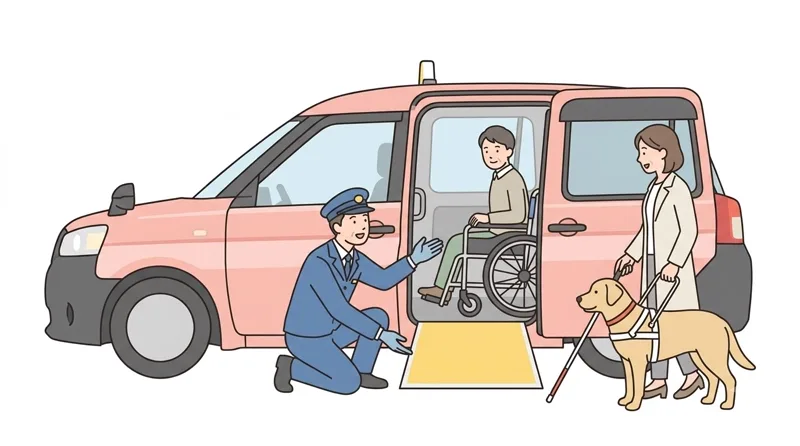
誰もが乗り降りしやすいように床を低くし、大きな開口部や乗降用スロープ・手すりを備えた「ユニバーサルデザインタクシー(UDタクシー)」が全国で普及しており、運転者は車椅子乗車のスロープ設置と固定具(タイダウンベルト)の操作を習熟しておく必要があります。
'Universal Design Taxis (UD Taxis)' featuring low floors, wide door openings, boarding ramps, and grab handles are deployed nationwide, and drivers must be proficient in setting up the wheelchair ramp and securing the wheelchair tie-down belts.
車椅子をご利用のお客様をお乗せするときは、勝手に車椅子を押したり持ち上げたりせず、まず「お手伝いいたしましょうか」とお声かけしてご希望の方法を伺い、乗車後は車椅子のブレーキと固定ベルト・シートベルトを確実に装着します。
When assisting a passenger using a wheelchair, never push or lift the wheelchair without asking first; always ask 'May I assist you?' to confirm how they would like help, and once aboard, firmly lock the wheelchair brakes and fasten the wheelchair tie-downs and seatbelt.
視覚障がいのあるお客様をご案内するときは、白杖や身体を急に引っ張ったりせず、半歩前に立って肘や肩に軽く触れていただき、乗車時にはお客様の手をドアの開口部上縁(屋根の縁)と座席面に導いて頭をぶつけないようサポートします。
When guiding a passenger with a visual impairment, never grab or pull their white cane or arm; stand half a step ahead so they can lightly hold your elbow or shoulder, and when boarding, guide their hand to the upper door frame (roof edge) and seat cushion so they do not bump their head.
聴覚障がいのあるお客様や外国人のお客様には、筆談具(メモ帳)や指さし会話シート・翻訳アプリ・地図画面などを活用して、行先や運賃を視覚的にわかりやすく伝えます。
For passengers with hearing impairments or foreign visitors, use written notes (hitsudan), point-and-speak cards, translation apps, and map screens to communicate destinations and fares clearly.
また、「身体障害者補助犬法」により、盲導犬・介助犬・聴導犬の「補助犬」はペットではなく障がいのある方の体の一部として社会参加を支える存在であり、タクシーへの同伴乗車を拒むことは法律で固く禁じられています。
Under the 'Act on Assistance Dogs for Physically Disabled Persons,' guide dogs, service dogs, and hearing dogs ('assistance dogs / hojoken') are not pets—refusing to allow an assistance dog aboard a taxi is strictly prohibited by law.
Key points
- 車椅子や高齢・障がいのあるお客様には、まず「お手伝いいたしましょうか」と声をかけて希望を確認する
Always ask 'May I assist you?' first to confirm how elderly or disabled passengers would like help - 視覚障がいのあるお客様の白杖を引っ張らず、乗車時はドア上縁と座面に手を添えて案内する
Never pull a blind passenger's white cane; when boarding, guide their hand to the top of the door frame and the seat surface - 身体障害者補助犬(盲導犬・介助犬・聴導犬)の同伴乗車を拒むことは法律で禁止されている
Refusing carriage to a passenger accompanied by an assistance dog (guide, service, or hearing dog) is prohibited by law
| Word | Meaning |
|---|---|
| ユニバーサルデザインタクシー | Universal Design Taxi (UD Taxi) |
| 身体障害者補助犬 | assistance dog for persons with physical disabilities |
| 白杖 | white cane (used by visually impaired persons) |
| 筆談 | communication by writing notes |
運賃・料金の精算(領収書発行)と車内遺失物(忘れ物)の防止
Fare & Toll Settlement (Issuing Receipts) and Preventing Lost Property Inside the Cab
目的地に到着してメーターを「支払い」にしたら、メーターに表示された運賃と、有料道路利用時の通行料金や迎車回送料金等の合計金額を正確に申し上げて精算を行います。
Upon arriving at the destination and switching the meter to 'Payment (Shiharai),' clearly state the total amount—combining the metered fare with any applicable expressway tolls or pickup fees—and process the payment.
現金で精算するときは、お客様から受け取った紙幣・硬貨の金額をその場で声に出して復唱(「一万円お預かりいたします」など)し、釣り銭と「領収書(レシート)」をお客様と一緒に確認しながら手渡します。
For cash payments, state the amount received out loud on the spot (e.g., 'I have received 10,000 yen') and count out the change together with the 'receipt (ryoshusho)' as you hand them to the passenger.
クレジットカード・交通系ICカード・QRコード決済・タクシーチケットなどで精算するときも、決済完了音や伝票の印字・署名等を確実に確認し、控えと領収書をお渡しします。
For credit cards, transit IC cards, QR code payments, or taxi vouchers, verify the payment completion tone, slip printout, or required signature, and hand the customer copy and receipt to the passenger.
精算後、お客様が降車される際には、必ず後部座席や足元を振り返って目視し、「お忘れ物はございませんか」とお声かけを行います(スマートフォン・財布・傘の忘れ物が非常に多く発生します)。
As the passenger alights after payment, always turn around to visually check the rear seat and floor and ask, 'Please make sure you have all your belongings' (smartphones, wallets, and umbrellas are frequently left behind).
もしお客様が降車されたあとに車内で忘れ物(遺失物)を発見したときは、自分で勝手に中身を開けたり自宅へ持ち帰ったりせず、直ちに営業所の運行管理者へ連絡し、会社や警察署(交番)へ速やかに届け出ます。
If you find lost property (ishitsubutsu) inside the cab after a passenger has left, never open it yourself or take it home; immediately report it to your depot's Operation Manager and turn it in to the company or a police box (koban).
Key points
- 現金精算時は預かり金額を復唱し、釣り銭と「領収書」をお客様と確認しながら渡す
For cash payments, repeat the amount received out loud and hand over change and the receipt while verifying with the customer - 降車時には後部座席と足元を目視確認し、忘れ物防止の声かけを必ず行う
As passengers alight, visually check the rear seat and floor and always remind them to check for forgotten items - 車内で遺失物(忘れ物)を見つけたら直ちに運行管理者へ連絡し、会社や警察へ届け出る
If lost property is found in the cab, immediately report to the Operation Manager and turn it in to the company or police
| Word | Meaning |
|---|---|
| 領収書 | receipt |
| 釣り銭 | change (returned to customer) |
| 遺失物 | lost property / forgotten item |
| 交番 | police box (koban) |
タクシーの防犯対策(防犯ボード・SOS表示灯)と急病人への対応
Taxi Crime Prevention (Security Partition & SOS Light) and Passenger Medical Emergencies
タクシーは現金を扱い夜間や人通りの少ない場所も走行するため、運転席と後部座席の間の「防犯ボード(防犯仕切り板)」、車内カメラ、緊急通報装置、および屋根上の行灯(社名表示灯)が赤色等に激しく点滅する「防犯灯(SOS非常灯)」などの防犯設備が備えられています。
Because taxis handle cash and operate at night or in quiet areas, they are equipped with crime-prevention devices including a 'security partition board (bohan board)' between the front and rear seats, an interior camera, an emergency alarm, and a rooftop 'SOS crime-prevention light (andon)' that flashes bright red in an emergency.
出庫前の点検では、運転席足元や手元にある非常スイッチの位置と作動方法を確かめ、売上金(多額の現金)は外から見える場所に置かず、こまめに安全な場所へ保管します。
Before leaving the depot, confirm the location and operation of the emergency switch near your foot or hand, and store cash takings out of sight in a secure place.
万が一、車内で強盗や暴行などの犯罪被害に遭いそうになったときは、何よりも自分自身の命と身体の安全を最優先し、無理に犯人と格闘せず、緊急スイッチ(SOS表示灯・防犯通報)を作動させて周囲に異変を知らせるとともに、安全な場所へ避難して110番通報します。
If you encounter a robbery or assault inside the cab, prioritize your own life and physical safety above all else: do not grapple recklessly with the perpetrator, activate the emergency switch (flashing the rooftop SOS light and alerting dispatch), escape to safety, and call 110.
反対に、他のタクシーが屋根の行灯を赤色点滅させたり「SOS」を表示させたりして走っているのを見かけたときは、その車内で緊急事態が起きているサインであるため、車両番号と進行方向を確認して直ちに110番通報します。
Conversely, if you spot another taxi driving with its rooftop light flashing red or displaying 'SOS,' recognize that an emergency is occurring inside that cab—note its license plate number and direction of travel and call 110 immediately.
また、乗務中にお客様が急病(意識喪失や激しい胸痛等)になったときは、直ちに安全な場所に停車して119番通報と救命処置(または最寄りの病院への搬送手配)を行い、営業所の運行管理者へ報告します。
If a passenger falls suddenly ill while aboard (loss of consciousness, severe chest pain, etc.), stop immediately in a safe place, call 119 for an ambulance, provide first aid, and report to your Operation Manager.
Key points
- 防犯ボード・車内カメラ・非常スイッチ(屋根のSOS赤色点滅灯)の作動方法を確認し、現金は見えない場所に保管する
Know how to operate the security partition, interior camera, and emergency SOS rooftop light switch, and keep cash out of sight - 強盗等の被害時は命の安全を最優先し、非常表示灯を作動させて避難・110番通報する
In a robbery, prioritize your life, activate the emergency SOS light, evacuate to safety, and call 110 - 他車のタクシーがSOS点滅しているのを見かけたら直ちに110番通報し、乗客の急病時は停車して119番通報する
Call 110 immediately if you see another taxi flashing its rooftop SOS light, and stop and call 119 if a passenger falls suddenly ill
| Word | Meaning |
|---|---|
| 防犯ボード | security partition board |
| 社名表示灯 | rooftop taxi lantern / company sign light (andon) |
| 緊急通報装置 | emergency alarm / alert device |
| 売上金 | fare proceeds / cash takings |
Taxi: Operations and Customer Service
Practice this chapter in the appOfficial references
- 全タク連 特定技能1号 タクシー運転者 学習用テキスト(法令・安全・接遇) — http://www.taxi-japan.or.jp/content/?p=article&c=102&a=15
- 国土交通省 道路運送法・旅客自動車運送事業運輸規則・UDタクシー研修教材 — https://www.mlit.go.jp/jidosha/jidosha_fr3_000007.html