 Tokutei Pass
Occupational Safety and Health Management
労働安全衛生管理
Food Manufacturing (SSW 2) · 飲食料品製造業(2号) · Written by Tokutei Pass based on the official study texts; not copied verbatim.
安全衛生の基本とハインリッヒの法則・KYT・ヒューマンエラー
Safety Basics, Heinrich's Law, KYT, and Human Error
労働安全衛生法は先取りの予防的安全管理を重視します。労働災害は「不安全な状態」と「不安全な行動」が重なって発生し、ハインリッヒの法則は「1件の重大事故の背後に29件の軽傷と300件のヒヤリ・ハットがある」と示します。
The Industrial Safety and Health Act emphasizes proactive, preventive safety management. Industrial accidents occur when mechanical/environmental 'unsafe conditions' overlap with human 'unsafe acts,' and Heinrich's Law states that behind 1 major accident lie 29 minor injury accidents and 300 near-misses (Hiyari-Hatto).
ヒヤリ・ハット報告では個人を責めずに職場全体で共有・改善します。危険予知訓練(KYT)の4ラウンド法は「1R現状把握→2R本質追究→3R対策樹立→4R目標設定」で進め、指差呼称は脳の覚醒度を高めミスを約6分の1に減らします。
In Hiyari-Hatto reporting, share and improve across the workplace without blaming individuals. The 4-Round Method of Hazard Prediction Training (KYT) proceeds through '1R Grasp Current Status → 2R Pursue Essence → 3R Establish Countermeasures → 4R Set Action Goals,' while Pointing and Calling raises brain alertness and cuts errors to about one-sixth.
ヒューマンエラー12分類には、手間を省く「近道・省略行動」やベテランに多い「危険軽視・慣れ」などがあり、ルール整備(ソフト面)・設備安全化(ハード面)・環境改善・教育訓練(人間面)の4側面で対策します。
The 12 human error classifications include 'shortcuts/omissions' to save effort and 'disregard for danger/habituation' common among veterans; countermeasures are taken across 4 aspects: software (rules), hardware (equipment safety), environment, and human (training).
Key points
- ハインリッヒの法則(1:29:300)に基づき、不安全な状態と不安全な行動の両面からヒヤリ・ハットを改善する。
Based on Heinrich's Law (1:29:300), improve Hiyari-Hatto near-misses by addressing both unsafe conditions and unsafe acts. - KYT基礎4ラウンド法は「現状把握→本質追究→対策樹立→目標設定」の順で行い、指差呼称でミスを約6分の1に減らす。
Conduct the KYT 4-Round Method in order (Grasp Status → Pursue Essence → Establish Countermeasures → Set Goals) and use Pointing and Calling to reduce errors to about 1/6. - 近道・省略行動や慣れなどのヒューマンエラーに対し、ソフト・ハード・環境・人間の4面から防止策を講じる。
Address human errors like shortcuts and habituation from four aspects: software, hardware, environment, and human.
| Word | Meaning |
|---|---|
| 不安全な状態・不安全な行動 | unsafe condition, unsafe act |
| ハインリッヒの法則(1:29:300) | Heinrich's Law (1:29:300 ratio) |
| KYT4ラウンド法 | KYT 4-Round Method |
| 指差呼称 | Pointing and Calling |
| 近道・省略行動 | shortcut and omission behavior |
リスクアセスメントと機械設備の安全化
Risk Assessment and Machine Equipment Safety
リスクアセスメントは設備や作業方法の新設・変更時に行い、「危険源の特定→発生頻度と重篤度によるリスク見積り→優先度設定→リスク低減措置」で進めます。
Risk assessment is performed when installing or changing equipment or work procedures, proceeding from 'identifying hazards → estimating risk by frequency and severity → setting priorities → implementing risk reduction measures.'
リスク低減措置の優先順位は、①設計段階で危険をなくす本質安全化(低電圧化や角の丸めなど)→②安全装置などの工学的対策→③手順書や教育などの管理的対策→④個人用保護具(PPE)の使用の順です。
The priority order for risk reduction is: (1) Inherent safety at the design stage (e.g., low voltage, rounded corners) → (2) Engineering measures such as safety guards and interlocks → (3) Administrative measures such as manuals and training → (4) Personal Protective Equipment (PPE).
人間がミスをしても安全に働かせない仕組みを「フールプルーフ(インターロックなど)」、停電や故障時に安全側に停止する仕組みを「フェールセーフ」といいます。
A mechanism that prevents dangerous operation even if a human makes a mistake is called 'Foolproof' (such as an interlock when a cover is opened), while a mechanism that stops on the safe side during a power outage or breakdown is called 'Fail-safe.'
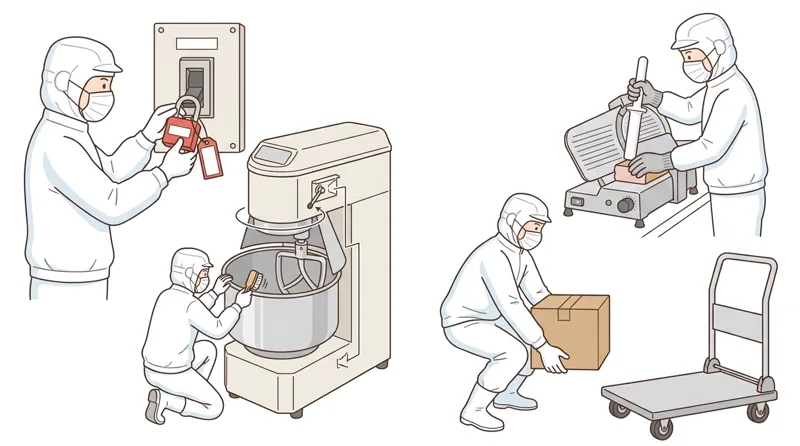
点検・清掃時は必ず電源を切り施錠と表示札で誤起動を防ぐ「ロックアウト・タグアウト」を徹底します。スライサー清掃時は耐切創手袋を着け、食材投入には押し棒を使い、回転軸付近では巻き込まれ防止のため軍手を使いません。
During inspection or cleaning, strictly enforce 'Lockout/Tagout'—turning off power, locking the switch, and displaying a tag to prevent accidental startup. Use cut-resistant gloves when cleaning slicers, use a push stick when feeding ingredients, and never wear cotton work gloves (gunte) near rotating shafts to prevent entanglement.
Key points
- リスク低減は「①本質安全化→②工学的対策→③管理的対策→④個人用保護具」の優先順位で実施する。
Implement risk reduction in the priority order: (1) Inherent safety → (2) Engineering measures → (3) Administrative measures → (4) Personal Protective Equipment (PPE). - ミスを防ぐインターロック等のフールプルーフと、故障時に安全側へ止まるフェールセーフを区別し、点検時はロックアウト・タグアウトを行う。
Distinguish Foolproof (interlocks against human error) from Fail-safe (stopping safely upon failure), and enforce Lockout/Tagout during maintenance. - スライサーには押し棒と耐切創手袋を使用し、回転部作業では軍手の着用を禁止する。
Use push sticks and cut-resistant gloves with slicers, and prohibit cotton gloves when working near rotating parts.
| Word | Meaning |
|---|---|
| リスクアセスメント・本質安全化 | risk assessment, inherent safety design |
| フールプルーフ・インターロック | foolproof, interlock mechanism |
| フェールセーフ | fail-safe mechanism |
| ロックアウト・タグアウト | Lockout/Tagout |
| 押し棒・耐切創手袋 | push stick, cut-resistant gloves |
異常時対応・転倒や腰痛の予防・温度環境管理
Abnormality Response, Fall & Back Pain Prevention, and Thermal Environment
機械の詰まりや異音などの異常発生時は、二次災害を防ぐため最優先で非常停止ボタンにより機械を完全停止させ、人命救助と上司報告を行います。また転倒防止のため床を乾いた状態(ドライフロア)に保ちます。
When abnormalities like jams or strange noises occur, press the emergency stop button first to completely halt the machine and prevent secondary accidents, rescue injured persons, and report to superiors. Keep floors dry (dry floor) to prevent slip-and-fall accidents.
腰痛予防では荷物に体を近づけて膝を曲げ腰を落とし脚力で持ち上げ、台車は前向きに押して進みます。冷凍庫作業では防寒着を着て内部解錠装置と警報機を事前点検し、暑熱環境ではWBGT(暑さ指数)管理と水分・塩分補給で熱中症を防ぎます。
To prevent back pain, stand close to the load, bend your knees, lower your hips, and lift using leg strength; push hand trucks forward with a clear view. For freezer work, wear cold-protective clothing and pre-check the internal unlock device and alarm; in hot environments, manage WBGT (heat stress index) and replenish water and salt to prevent heatstroke.
Key points
- 異常発生時は二次災害防止のためまず機械を非常停止させ、人命安全を最優先して上司へ報告する。
In an abnormality, press the emergency stop first to prevent secondary accidents, prioritize human life, and report to superiors. - 腰痛予防(膝を曲げ腰を落とす・台車は押す)、冷凍庫の内部解錠点検、WBGTによる熱中症予防を徹底する。
Prevent back pain (bend knees/lower hips, push carts forward), check internal freezer releases, and prevent heatstroke using WBGT.
| Word | Meaning |
|---|---|
| 二次災害・非常停止 | secondary disaster, emergency stop |
| ドライフロア・腰痛予防 | dry floor, low back pain prevention |
| 暑さ指数(WBGT)・熱中症 | WBGT heat index, heatstroke |
騒音・化学物質管理(SDS)とメンタルヘルス
Noise & Chemical Control (SDS) and Mental Health Care
騒音職場では6か月ごとに作業環境測定を行い耳栓等を着用します。薬品取扱時はSDS(安全データシート)を確認して保護具を着け、有毒な塩素ガスが発生するため塩素系漂白剤と酸性洗浄剤を決して混ぜてはいけません。
In noisy workplaces, conduct work environment measurements every 6 months and wear earplugs. When handling chemicals, check the SDS (Safety Data Sheet), wear PPE, and never mix chlorine bleach with acidic cleaners as toxic chlorine gas is generated.
メンタルヘルス管理では、遅刻や表情など作業員の「いつもと違う」変化に早く気づき、プライバシーを守りながら傾聴して産業医や専門窓口へつなぎます。
In mental health management, notice 'different from usual' signs in workers (such as tardiness or facial expression changes) early, listen attentively while protecting privacy, and connect them to an occupational physician or specialist desk.
Key points
- 騒音職場では6か月ごとに作業環境測定を行い、耳栓等の保護具を着用させる。
In noisy workplaces, conduct working environment measurements every 6 months and ensure workers wear earplugs. - SDS確認と「塩素系×酸性の混合禁止(塩素ガス発生防止)」を守り、メンタル不調は「いつもと違う」サインに気づき産業医等へつなぐ。
Check the SDS, never mix chlorine-based and acidic agents (prevents toxic chlorine gas), and catch 'different from usual' mental health signs early to connect with an occupational physician.
| Word | Meaning |
|---|---|
| 作業環境測定 | working environment measurement |
| 安全データシート(SDS)・塩素ガス | Safety Data Sheet (SDS), chlorine gas |
| メンタルヘルス・産業医 | mental health, industrial physician |
Occupational Safety and Health
Practice this chapter in the appOfficial references
- 厚生労働省・OTAFF 飲食料品製造業特定技能2号技能測定試験 学習用テキスト — https://otaff.or.jp/tokutei/insyoku-2/materials/