 Tokutei Pass
Food Hygiene Management
食品衛生管理
Food Manufacturing (SSW 2) · 飲食料品製造業(2号) · Written by Tokutei Pass based on the official study texts; not copied verbatim.
職長の役割と3つの危害要因(食中毒・寄生虫・化学物質)
Role of the Foreman and Three Hazard Factors (Food Poisoning, Parasites, Chemicals)
1号が定められた手順を守って作業するのに対し、2号の職長は作業手順書を作成し、日々の記録から問題点を見つけて衛生管理を改善する役割を担います。
While Category 1 workers follow established procedures, a Category 2 foreman creates Standard Operating Procedures (SOPs) and identifies issues from daily records to improve hygiene management.
危害要因には生物的・化学的・物理的要因があります。カンピロバクターや腸管出血性大腸菌は中心部75℃・1分以上で加熱殺菌し、黄色ブドウ球菌やボツリヌス菌の毒素は熱に強いため増殖防止が重要です。
Hazards are biological, chemical, or physical. Infectious bacteria like Campylobacter and enterohemorrhagic E. coli are killed by heating the core to 75°C for at least 1 minute, whereas toxins produced by Staphylococcus aureus (in hand wounds) or heat-resistant spore-forming Clostridium botulinum are hard to detoxify by heat, making multiplication prevention critical.
大鍋のカレー等で増える嫌気性芽胞菌のウェルシュ菌は、20〜50℃を速やかに通過させ60分以内に20℃以下(最終10℃以下)へ急冷します。ノロウイルスは85〜90℃・90秒以上加熱と次亜塩素酸ナトリウムで消毒します。
Clostridium perfringens (Welchii), an anaerobic spore-forming bacterium that multiplies in large pots of curry or stew, requires rapid cooling through the 20°C–50°C zone to 20°C or below within 60 minutes (and finally 10°C or below). Norovirus requires heating at 85–90°C for at least 90 seconds and sodium hypochlorite disinfection (alcohol is less effective).
寄生虫のアニサキスは-20℃で24時間以上冷凍または60℃・1分以上(70℃以上)加熱で死滅します。赤身魚のヒスタミン(化学的要因)は熱に強く加熱や冷凍で除去できないため、低温管理で生成を防ぎます。
The parasite Anisakis is killed by freezing at -20°C for at least 24 hours or heating at 60°C for at least 1 minute (or 70°C+). Histamine (a chemical hazard) in red-fleshed fish is heat-stable and cannot be removed by cooking or freezing, so its formation must be prevented through low-temperature control.
Key points
- 職長は作業手順書を作成し、日常記録から課題を発見して衛生管理を改善する。
Foremen draft work procedure manuals (SOPs) and discover issues from daily records to improve hygiene management. - ウェルシュ菌対策は20〜50℃を速やかに通過させ60分以内に20℃以下(10℃以下)へ急冷し、ノロウイルスは85〜90℃・90秒以上加熱と塩素消毒を行う。
Prevent Clostridium perfringens by rapidly cooling through 20–50°C to 20°C or below within 60 minutes (down to ≤10°C); inactivate Norovirus by heating at 85–90°C for ≥90 seconds and using chlorine disinfection. - アニサキスは-20℃・24時間以上冷凍または加熱で死滅させ、熱で分解されないヒスタミンは鮮度・低温管理で生成を防ぐ。
Kill Anisakis by freezing at -20°C for ≥24 hours or heating; prevent heat-stable histamine formation through freshness and low-temperature control.
| Word | Meaning |
|---|---|
| 生物的・化学的・物理的危害要因 | biological, chemical, and physical hazard factors |
| 感染型・毒素型食中毒 | infectious-type and toxin-type food poisoning |
| 芽胞・ウェルシュ菌 | spore, Clostridium perfringens |
| アニサキス・ヒスタミン | Anisakis parasite, histamine |
| 次亜塩素酸ナトリウム | sodium hypochlorite |
一般衛生管理(5S・ゾーニング・洗浄と殺菌)
General Hygiene Management (5S, Zoning, Cleaning and Sanitizing)
一般衛生管理の基本である5Sは、整理(不要物を捨てる)、整頓(必要なものを取り出しやすく定位置管理する)、清掃、清潔(3Sを維持する)、習慣化です。
The 5S foundation of general hygiene is Sort (Seiri: discard unneeded items), Set in Order (Seiton: keep needed items in fixed locations for easy retrieval), Shine (Seisou: clean), Standardize (Seiketsu: maintain 3S), and Sustain (Shuukanka: make it a habit).
交差汚染を防ぐゾーニングでは、清潔作業区域の気圧を高く(陽圧化)し、器具を色分けして作業動線を分けます。包装室入室時は「手洗い前に粘着ローラーがけ→手洗い・消毒→エアシャワー」の順で行い、下痢症状がある作業員は製造作業から外します。
Zoning to prevent cross-contamination keeps air pressure higher in clean zones (positive pressure), color-codes tools, and separates worker flow lines. Enter the packaging room in the order of 'lint-rolling BEFORE handwashing → handwashing and disinfecting → air shower,' and exclude workers with diarrhea from food handling.
濃度6%(60,000ppm)の次亜塩素酸ナトリウム原液で200ppmの殺菌液を15L(15,000mL)作る場合、必要原液量は「15,000×200÷60,000=50mL」となります。
To prepare 15 L (15,000 mL) of 200 ppm sanitizing solution from a 6% (60,000 ppm) sodium hypochlorite stock solution, the required stock volume is 15,000 × 200 ÷ 60,000 = 50 mL.
Key points
- 清潔作業区域は陽圧に保ち、入室時は手洗い前に粘着ローラーをかけて手指の再汚染を防ぐ。
Maintain positive pressure in clean work zones, and apply the adhesive lint roller before handwashing upon entry to prevent re-contaminating hands. - 殺菌液希釈量は「作りたい量(mL)×目標濃度(ppm)÷原液濃度(ppm)」で計算する(6%=60,000ppm)。
Calculate stock sanitizer volume as: Target volume (mL) × Target concentration (ppm) ÷ Stock concentration (ppm) (where 6% = 60,000 ppm).
| Word | Meaning |
|---|---|
| ゾーニング・陽圧化 | zoning, positive air pressurization |
| 交差汚染・粘着ローラー | cross-contamination, adhesive lint roller |
| 希釈計算(ppm) | dilution calculation (parts per million) |
アレルゲン管理と防虫・防鼠対策
Allergen Control and Insect & Rodent Control
アレルゲン(特定原材料8品目)管理では、アレルゲンを含まない製品を先に製造し、専用器具の区分や分解洗浄後の目視・ふき取り検査で混入を防ぎます。防虫防鼠は「侵入させない・定着させない・発生させない」の3原則で行います。
For allergen control (8 mandatory specific raw materials), manufacture allergen-free products first, use dedicated tools, and verify disassembly cleaning via visual checks and swab tests. Pest and rodent control follows the 3 principles: do not let them enter, do not let them settle, and do not let them breed.
防虫・防鼠の3原則は「侵入させない・定着させない・発生させない」です。外部との隙間をふさぎ、清掃でエサや水たまりをなくし、捕虫器などのモニタリング結果から発生源を特定して対策します。
The 3 principles of insect and rodent control are: do not let them enter, do not let them settle, and do not let them breed. Seal gaps to the outside, eliminate food scraps and standing water through cleaning, and identify breeding sources from insect trap monitoring results.
Key points
- アレルゲン管理では非含有製品を先に製造し、専用器具の区分や分解洗浄後の目視・ふき取り検査で交差汚染を防ぐ。
In allergen control, produce allergen-free items first, use dedicated tools, and prevent cross-contamination via visual checks and swab tests after disassembly cleaning. - 防虫・防鼠は「侵入させない・定着させない・発生させない」の3原則と定期的なモニタリングで管理する。
Manage insects and rodents through the 3 principles (prevent entry, settlement, and breeding) and periodic monitoring.
| Word | Meaning |
|---|---|
| 特定原材料8品目 | 8 mandatory specific allergen raw materials |
| アレルゲン・ふき取り検査 | allergen, swab test |
| 防虫防鼠の3原則 | three principles of insect and rodent control |
HACCPの12手順7原則と重要管理点(CCP)の運用
HACCP 12 Steps & 7 Principles and Critical Control Point (CCP) Operations
HACCPは一般衛生管理を土台とし、「HACCPに基づく衛生管理」と「考え方を取り入れた衛生管理」に分かれます。準備5手順に続き、7原則(危害要因分析→CCP決定→管理基準CL→モニタリング→改善措置→検証→記録)で進めます。
Built on general hygiene, HACCP is divided into 'HACCP-based hygiene management' and 'hygiene management incorporating the HACCP concept.' Following the 5 preparation steps (team formation to on-site verification of the flow diagram) are the 7 principles: Hazard Analysis → CCP determination → Critical Limit (CL) setting → Monitoring → Corrective Action → Verification → Record-keeping.
加熱工程のCCP例として、冷凍メンチカツの油ちょう(180℃・5分以上)、ハンバーグ焼成(中心温度75℃・1分以上)、レトルト殺菌(120℃・4分以上の連続監視)があります。
Examples of heating CCPs include deep-frying frozen minced meat cutlets (180°C for ≥5 min), baking hamburger patties (core temperature 75°C for ≥1 min), and retort sterilization (continuous monitoring at 120°C for ≥4 min).
ポテトサラダなどの非加熱混合工程では、後工程で加熱殺菌できないため、原料殺菌・加熱後急冷・酢によるpH調整や品温10℃以下管理を徹底します。
In unheated mixing processes such as potato salad, because there is no subsequent heat sterilization step, raw material sanitization, rapid cooling after boiling, pH adjustment with vinegar, and product temperature control at 10°C or below are strictly enforced.
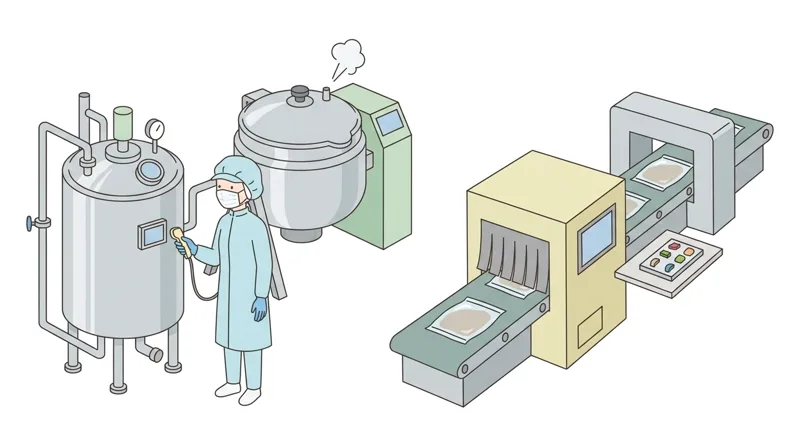
金属検出機やX線異物検出機(石・ガラス・硬質骨やアルミ蒸着フィルム包装品も検査可能)のCCPでテストピースが反応しない異常時は、直ちにラインを止めて調整し、前回正常確認時までさかのぼって全製品を隔離・再検査します。
At a metal detector or X-ray foreign-object detector CCP (which can also inspect stones, glass, hard bones, and aluminum-evaporated film packages), if a test piece fails to trigger detection, stop the line immediately, adjust the unit, and isolate and re-inspect all products back to the last normal check.
Key points
- HACCPの7原則(手順6〜12)は、危害要因分析→CCP決定→管理基準(CL)→モニタリング→改善措置→検証→記録の順で実施する。
The 7 principles of HACCP (Steps 6–12) proceed in order: Hazard Analysis → CCP determination → Critical Limit (CL) → Monitoring → Corrective Action → Verification → Record-keeping. - 加熱CCP(中心75℃・1分以上、レトルト120℃・4分以上など)と非加熱工程の温度・pH管理を確実に行う。
Reliably execute heating CCPs (core 75°C for ≥1 min, retort 120°C for ≥4 min, etc.) and temperature/pH control in unheated processes. - 金属検出機やX線検出機の感度異常時はラインを停止し、前回正常確認時以降の製品をすべて隔離して再検査する。
If a metal or X-ray detector shows abnormal sensitivity, stop the line and isolate and re-inspect all products produced since the last normal check.
| Word | Meaning |
|---|---|
| 危害要因分析(ハザード分析) | Hazard Analysis (HA) |
| 重要管理点(CCP)・管理基準(CL) | Critical Control Point (CCP), Critical Limit (CL) |
| モニタリング・改善措置・検証 | monitoring, corrective action, verification |
| 金属検出機・X線異物検出機 | metal detector, X-ray foreign object detector |
| テストピース・遡及再検査 | test piece, retroactive re-inspection |
Food Hygiene Management
Practice this chapter in the appOfficial references
- 厚生労働省・OTAFF 飲食料品製造業特定技能2号技能測定試験 学習用テキスト — https://otaff.or.jp/tokutei/insyoku-2/materials/