 Tokutei Pass
Crisis Management, Legal Compliance, and Addressing Social Issues
危機管理・法令遵守・社会課題への対応
Food Manufacturing (SSW 2) · 飲食料品製造業(2号) · Written by Tokutei Pass based on the official study texts; not copied verbatim.
コンプライアンス・公益通報者保護とフードディフェンス(食品防御)
Compliance, Whistleblower Protection, and Food Defense
原材料生産から製造・流通・消費までのつながりを「フードサプライチェーン」といい、消費者・取引先・従業員・地域社会等の利害関係者を「ステークホルダー」といいます。職長は会社方針を現場の具体的行動に落とし込みます。
The link from raw material production to manufacturing, distribution, and consumption is the 'Food Supply Chain,' and interested parties such as consumers, business partners, employees, and local communities are 'Stakeholders.' Foremen translate company policies into concrete on-site actions.
コンプライアンス(法令遵守)には法令だけでなく社内規則や企業倫理も含まれます。「公益通報者保護法」により、パートや外国人を含むすべての労働者が不正を通報したことを理由とする解雇や不利益取扱いは禁止されています。
Compliance includes not only laws and ordinances but also internal rules and corporate ethics. Under the 'Whistleblower Protection Act,' dismissal or disadvantageous treatment of any worker (including part-time and foreign workers) for reporting misconduct is prohibited.
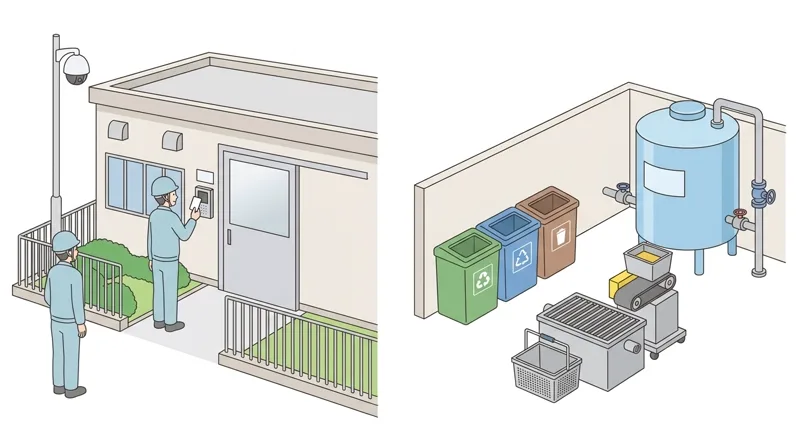
偶発的汚染を防ぐHACCPだけでは「意図的な異物・毒物混入」を防げないため「フードディフェンス(食品防御)」が必要です。カメラ・施錠・ポケットなし作業着などのハード対策と、声かけや風通しの良い職場づくり(ソフト対策)を両立させます。
Because HACCP (which prevents accidental contamination) alone cannot prevent 'intentional contamination with foreign matter or poison,' 'Food Defense' is required. Combine hardware measures (cameras, locks, pocketless uniforms, restrictions on personal items) with software measures (active communication and an open workplace culture).
Key points
- コンプライアンスは法令・社内ルール・社会倫理を含み、公益通報者保護法は通報者への解雇や不利益取扱いを禁じている。
Compliance encompasses laws, internal rules, and social ethics; the Whistleblower Protection Act prohibits firing or retaliating against whistleblowers. - 意図的な混入を防ぐフードディフェンスは、HACCPとは別の視点で対策を行う必要がある。
Food Defense against intentional contamination requires measures from a different perspective than HACCP. - フードディフェンスでは入退室制限・カメラ・ポケットなし作業着(ハード面)とコミュニケーション(ソフト面)を組み合わせる。
Combine hardware measures (access control, cameras, pocketless uniforms) and software measures (good workplace communication) in Food Defense.
| Word | Meaning |
|---|---|
| フードサプライチェーン・ステークホルダー | food supply chain, stakeholders |
| コンプライアンス(法令遵守) | compliance (observing laws and ethics) |
| 公益通報者保護法 | Whistleblower Protection Act |
| フードディフェンス(食品防御) | Food Defense |
| 意図的な混入 | intentional contamination |
食品表示法と牛・米トレーサビリティ法
Food Labeling Act and Beef & Rice Traceability Acts
「食品表示法」では、原材料名を重量の多い順に記載し、「/」等で区切って添加物を記載します。国内製造の加工食品には重量割合1位の原材料の産地を示す「原料原産地表示」が義務づけられています。
Under the 'Food Labeling Act,' ingredients are listed in descending order of weight, separated from additives by a slash ('/') or similar mark. Domestically manufactured processed foods must display the 'Place of Origin of Raw Materials' for the top-weight ingredient.
劣化が速い食品に「消費期限」、日持ちする食品に「賞味期限」を表示します。栄養成分義務5項目は「熱量・たんぱく質・脂質・炭水化物・食塩相当量」、表示義務の特定原材料8品目は「えび・かに・くるみ・小麦・そば・卵・乳・落花生」です。
Fast-deteriorating foods display a 'Use-by Date (Shouhikigen),' while relatively shelf-stable foods display a 'Best-before Date (Shoumikigen).' The 5 mandatory nutrition labeling items are 'Energy, Protein, Fat, Carbohydrates, and Salt Equivalent,' and the 8 specific raw materials (shrimp, crab, walnut, wheat, buckwheat, egg, milk, peanut) are mandatory allergen labels.
「牛トレーサビリティ法」では10桁の個体識別番号の表示と記録が義務づけられ、「米トレーサビリティ法」では米や米加工品の入出荷記録作成(原則3年間保存)と産地情報伝達が義務づけられています。
The 'Beef Traceability Act' mandates displaying and recording a 10-digit Individual Identification Number, while the 'Rice Traceability Act' mandates keeping transaction records (in principle for 3 years) and communicating origin information for rice and rice products.
Key points
- 原材料は重量順に記載し、国内製造加工食品の重量1位原料には原料原産地表示を行い、消費期限と賞味期限を区別する。
List ingredients by weight order, label the origin of the #1 weight ingredient in domestic processed foods, and distinguish Use-by from Best-before dates. - 栄養成分義務5項目(熱量・たんぱく質・脂質・炭水化物・食塩相当量)と特定原材料8品目(くるみを含む)を正確に表示する。
Accurately label the 5 mandatory nutrition items (Energy, Protein, Fat, Carbohydrates, Salt Equivalent) and 8 mandatory allergens (including walnut). - 牛トレーサビリティ法(10桁の個体識別番号)と米トレーサビリティ法(取引記録保存と産地伝達)を遵守する。
Comply with the Beef Traceability Act (10-digit ID number) and Rice Traceability Act (record retention and origin communication).
| Word | Meaning |
|---|---|
| 食品表示法・原料原産地表示 | Food Labeling Act, raw material origin labeling |
| 消費期限・賞味期限 | use-by date (expiration), best-before date |
| 食塩相当量(栄養成分表示) | salt equivalent (nutrition facts labeling) |
| 特定原材料8品目 | 8 mandatory allergen ingredients |
| 個体識別番号(10桁) | cattle individual identification number (10 digits) |
環境対策(3R・食品ロス・産業廃棄物・排水管理)
Environmental Measures (3R, Food Loss, Industrial Waste, Wastewater)
環境配慮(3R)の優先順位は「①発生抑制(リデュース)→②再使用(リユース)→③再生利用(リサイクル:飼料化や肥料化など)」であり、納品期限(3分の1ルール)の緩和や需要予測・賞味期限延長などで食品ロスを削減します。
The priority order for environmental 3R is '(1) Reduce → (2) Reuse → (3) Recycle (e.g., turning into feed or fertilizer),' while food loss is reduced by relaxing the 1/3 delivery rule, improving demand forecasting, and extending shelf life.
工場の産業廃棄物は排出事業者に処理責任があり、産業廃棄物管理票(マニフェスト)で最終処分まで確認します。排水管理では洗浄前に油や残渣をふき取り、グリーストラップや排水処理設備で水質(BOD・SS・pH)を守ります。
The waste-generating business bears responsibility for industrial waste disposal and verifies final disposal using an Industrial Waste Management Ticket ('Manifest'). For wastewater, wipe off oil and food residue before washing, and maintain water quality (BOD, SS, pH) using grease traps and wastewater treatment facilities.
Key points
- 3Rは「①リデュース→②リユース→③リサイクル」の優先順位で進め、産業廃棄物はマニフェストで最終処分まで管理し排水負荷を減らす。
Pursue 3R in the priority order '(1) Reduce → (2) Reuse → (3) Recycle,' track industrial waste to final disposal via Manifests, and reduce wastewater load. - 排水管理では洗浄前の油分・残渣除去とグリーストラップ清掃で水質指標(BOD・SS・pH)を守る。
In wastewater management, wipe off oil and food residue before washing and clean grease traps to meet water quality indicators (BOD, SS, pH).
| Word | Meaning |
|---|---|
| 3R(リデュース・リユース・リサイクル) | 3Rs (Reduce, Reuse, Recycle) |
| 産業廃棄物・マニフェスト(管理票) | industrial waste, Manifest (waste tracking ticket) |
| グリーストラップ・水質指標(BOD・SS・pH) | grease trap, water quality indicators (BOD, SS, pH) |
ビジネスと人権・女性活躍推進法・ハラスメント防止法
Business & Human Rights, Women's Participation Act, and Anti-Harassment Laws
「ビジネスと人権」の3つの柱は「①人権方針の策定・②人権デューデリジェンスの実施(サプライチェーン全体のリスク調査と予防)・③救済」です。
The three pillars of 'Business and Human Rights' are '(1) Formulating a human rights policy → (2) Conducting human rights due diligence (investigating and preventing risks across the entire supply chain) → (3) Remedy.'
従業員101人以上の企業に男女賃金差異等の公表を義務づける「女性活躍推進法」や、パワハラ・セクハラ・マタハラ防止義務法(労働施策総合推進法・男女雇用機会均等法・育児介護休業法)を守り、多文化共生職場を築きます。
Comply with the 'Act on Promotion of Women's Participation and Advancement' (mandating action plans and disclosure of the gender wage gap for companies with 101+ employees) and anti-harassment laws (Labor Measures Comprehensive Promotion Act, Equal Employment Opportunity Act, Child and Family Care Leave Act) to build a multicultural workplace.
Key points
- ビジネスと人権の3本柱(人権方針策定・人権デューデリジェンス・救済)をサプライチェーン全体で進める。
Advance the three pillars of Business and Human Rights (Policy, Human Rights Due Diligence, Remedy) across the entire supply chain. - 女性活躍推進法(101人以上で行動計画や男女賃金差異公表義務)とハラスメント防止関連法を遵守する。
Comply with the Women's Participation Promotion Act (mandatory gender wage gap disclosure for 101+ workers) and harassment prevention laws.
| Word | Meaning |
|---|---|
| 人権デューデリジェンス | human rights due diligence |
| 女性活躍推進法 | Act on Promotion of Women's Participation and Advancement |
| 労働施策総合推進法・男女雇用機会均等法 | Labor Measures Comprehensive Promotion Act, Equal Employment Opportunity Act |
Social Expectations of Food Companies
Practice this chapter in the appOfficial references
- 厚生労働省・OTAFF 飲食料品製造業特定技能2号技能測定試験 学習用テキスト — https://otaff.or.jp/tokutei/insyoku-2/materials/