 Tokutei Pass
Machining and Metalworking
機械加工・金属加工
Industrial Manufacturing - Machinery and Electronics · 製造分野 · Written by Tokutei Pass based on the official study texts; not copied verbatim.
工作機械の特徴(旋盤・フライス盤・NC・マシニングセンタ)
Machine Tool Characteristics (Lathe, Milling Machine, NC, Machining Center)
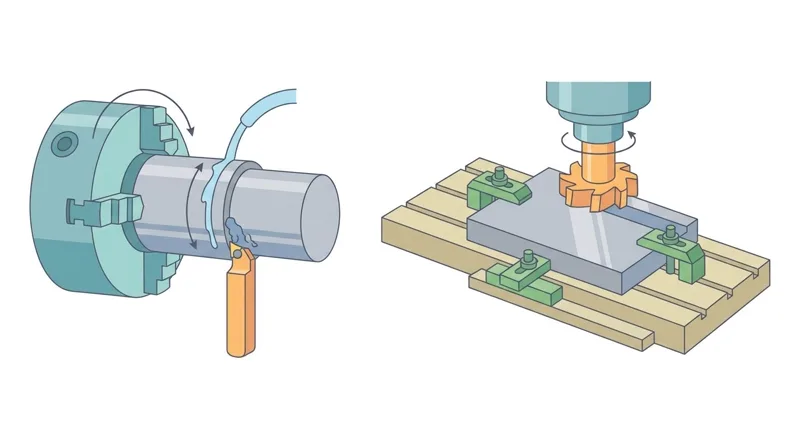
旋盤は、工作物を回転させ、固定した刃物(バイト)を当てて円筒の外径や穴(内径)などを削る工作機械です。
A lathe rotates the workpiece while feeding a stationary single-point cutting tool (bite) to cut outer diameters or inner bores.
フライス盤は、刃物(フライスやエンドミル)を高速回転させ、テーブルに固定した工作物を動かして平面や溝を削ります。
A milling machine rotates a multi-tooth cutter at high speed while moving the table holding the workpiece to machine flat surfaces and grooves.
NC(数値制御)工作機械は、数値で書かれたプログラムによって工具や工作物の動きを自動制御して加工します。
An NC (Numerical Control) machine tool automatically controls tool and workpiece movements using a numerical program.
マシニングセンタは、自動工具交換装置(ATC)を持ち、フライス削りや穴あけ・ねじ立てなど多種類の加工を1台で行います。
A machining center features an automatic tool changer (ATC) to perform milling, drilling, tapping, and boring on a single machine.
Key points
- 【○正しい】旋盤は「工作物を回転させてバイトを当てる」、NC工作機械は「数値プログラムで自動制御する」。
(○ True) A lathe 'rotates the workpiece against a cutting tool', and an NC machine 'automatically controls movement via numerical programs'. - 【×誤り】フライス盤を「工作物を高速回転させて固定した刃物を当てる」というのは誤り(回転するのは刃物)。
(× False) Saying a milling machine 'rotates the workpiece at high speed against a fixed blade' is FALSE (the cutter rotates). - 【×誤り】マシニングセンタを「工具自動交換機能がなく手動で穴あけだけを行う機械」というのは誤り。
(× False) Saying a machining center lacks automatic tool changing and only performs manual drilling is FALSE.
| Word | Meaning |
|---|---|
| 旋盤 | lathe |
| バイト | single-point cutting tool (bite) |
| フライス盤 | milling machine |
| 数値制御 | numerical control (NC) |
| マシニングセンタ | machining center |
切削油剤・切りくず処理・工具摩耗とバリ取り
Cutting Fluid, Chip Removal, Tool Wear, and Deburring
切削油を使う主な目的は、摩擦や熱を減らし、工具の摩耗を防いで切りくずを洗い流すことです(水溶性切削油剤は指定の方法で濃度を測定・管理します)。
Cutting fluid reduces friction and heat, prevents tool wear, and flushes away chips (water-soluble coolant concentration must be measured and maintained within limits).
旋盤などで加工した後の切りくずは鋭利で熱いため、素手で触らず機械を止めてからブラシやフックで取り除きます。
Metal chips after lathe machining are sharp and hot; stop the machine first and remove them using a brush or hook, never bare hands.
切削工具の摩耗が進むと加工面が粗くなり異常音やバリが出やすくなるため、機械を安全に停止して手順に従い工具を交換します。
As a cutting tool wears, the machined surface becomes rough with burrs and abnormal noise; stop the machine safely and inspect or replace the tool.
加工後の工作物に残る「バリ」はケガや組立不良の原因になるため、バリ取り作業で確実に除去します。
Sharp 'burrs' left on edges after machining cause injuries and assembly defects, so remove them thoroughly by deburring.
Key points
- 【○正しい】切削油は摩擦や熱を減らし工具摩耗を防ぐ。水溶性切削油剤は指定方法で濃度を測定し範囲内に管理する。
(○ True) Cutting fluid reduces friction/heat and prevents tool wear; water-soluble coolant concentration is measured and kept within specified limits. - 【○正しい】切りくずは機械を止めてからブラシやフックで取り除き、加工後の鋭利な「バリ」は確実に除去する。
(○ True) Stop the machine before removing chips with a brush or hook, and thoroughly remove sharp burrs after machining. - 【×誤り】切削工具が摩耗すると仕上げ面が鏡のように滑らかになりバリが出にくくなるというのは誤り。
(× False) Saying a worn cutting tool makes the finished surface mirror-smooth with fewer burrs is FALSE (wear makes the surface rough).
| Word | Meaning |
|---|---|
| 切削油 | cutting fluid (coolant) |
| 切りくず | metal chips (swarf) |
| 摩耗 | tool wear |
| バリ取り | deburring |
研削盤の砥石交換とプレス加工の安全
Grinding Wheel Replacement and Press Working Safety
研削盤(グラインダー)で砥石を交換した後は、安全カバーを付けて規定時間以上の試運転を行い、異常がないか確認します。
After replacing a grinding wheel on a grinder, attach the safety guard and perform a trial run for at least the specified duration to verify safety.
「プレス加工」とは、金型の間に金属の板を入れ、強い圧力をかけて打ち抜きや曲げなどの成形を行う加工法です。
'Press working' places sheet metal between upper and lower dies and applies strong pressure to punch, blank, or bend the metal.
プレス機械で作業するときは、両手操作式や光線式などの安全装置を絶対に外さずに使います。
When operating a press machine, always use safety devices (such as two-hand controls or light curtains) without disabling them.
金型の間に手を入れて部品やスクラップを取り除くときは、必ず機械を停止させてから行います。
Always stop the press machine completely before placing your hands between the dies.
Key points
- 【○正しい】研削盤で砥石を交換した後は、安全カバーを付けて規定時間以上の試運転を行う。
(○ True) After replacing a grinding wheel, fit the safety cover and run a test operation for the required time or longer. - 【○正しい】プレス加工は金型の間に金属板を入れ、強い圧力で打ち抜きや曲げを行う加工法である。
(○ True) Press working shapes sheet metal between dies using strong pressure for punching and bending. - 【○正しい】プレス作業では安全装置を外さずに使い、金型の間に手を入れるときは必ず機械を止める。
(○ True) Never disable press safety devices, and always stop the machine before putting hands between the dies.
| Word | Meaning |
|---|---|
| 研削盤 | grinding machine (grinder) |
| 砥石 | grinding wheel |
| 試運転 | trial run (test run) |
| プレス加工 | press working (stamping) |
| 金型 | die (mold) |
鋳造・溶接作業と鋼の熱処理(焼入れ)
Casting, Welding Safety, and Heat Treatment of Steel (Quenching)
「鋳造」とは、金属を加熱して溶かし、砂型や金型などの型(鋳型)に流し込んで冷やし固める加工法です。
'Casting' (Chuuzou) melts metal at high temperature and pours it into a mold cavity where it cools and solidifies into shape.
アーク溶接をするときは、強い光(紫外線など)から目や顔を守るため、遮光ガラスが付いた溶接用の遮光面を使います。
During arc welding, wear a welding shield (helmet) fitted with shaded filter glass to protect your eyes and face from intense arc rays.
溶接作業の前には、火災を防ぐため周囲の可燃物を片付け、火花が飛ぶ範囲に消火器などを準備します。
Before welding, clear away combustible materials and prepare fire extinguishers within the range of flying sparks to prevent fire.
鋼の「焼入れ」とは、鋼を高温に加熱してから水や油で急冷し、硬くする(硬度を高める)熱処理のことです。
'Quenching' (Yakiire) heats steel to a high temperature and cools it rapidly in water or oil to harden the steel.
Key points
- 【×誤り】鋳造を「金属を溶かさずに常温のまま刃物で削る方法」というのは誤り(溶かして型に流し込む)。
(× False) Defining 'casting' as cutting unmelted metal at room temperature with a blade is FALSE (casting melts metal and pours it into a mold). - 【×誤り】鋼の「焼入れ」を加熱して急冷し「柔らかくする熱処理」というのは誤り(焼入れは硬くする処理)。
(× False) Defining 'quenching' (Yakiire) as heating and rapidly cooling steel to make it soft is FALSE (quenching hardens steel). - 【○正しい】アーク溶接では遮光ガラス付きの遮光面を使い、作業前に周囲の可燃物を片付けて消火器を準備する。
(○ True) Use a welding face shield with shaded glass for arc welding, and remove combustibles and prepare fire extinguishers beforehand.
| Word | Meaning |
|---|---|
| 鋳造 | casting (foundry) |
| アーク溶接 | arc welding |
| 遮光面 | welding face shield |
| 可燃物 | combustible materials |
| 焼入れ | quenching (hardening) |
金属材料の性質(ステンレス鋼・アルミニウム・銅)
Properties of Metallic Materials (Stainless Steel, Aluminum, Copper)
ステンレス鋼は、鉄(鋼)にクロムやニッケルなどを加えてさびにくくした(耐食性を高めた)合金鋼です。
Stainless steel is a corrosion-resistant alloy steel made by adding chromium and nickel to iron (steel).
一方、銅と亜鉛を主成分とする黄色みを帯びた合金は「黄銅(しんちゅう)」といいます。
By contrast, a yellowish alloy composed mainly of copper and zinc is brass (oudou), not stainless steel.
アルミニウムは鉄より軽く(比重は約3分の1)、熱や電気をよく伝えますが、磁石には付かず融点は鉄より低いです。
Aluminum is lighter than iron, conducts heat and electricity well, is non-magnetic, and has a lower melting point than iron.
銅は電気や熱を非常によく伝える導体であるため、電線や放熱部品などに広く使われています。
Copper conducts electricity and heat extremely well (it is a conductor, not an insulator) and is widely used for electrical wires and heat sinks.
Key points
- 【×誤り】ステンレス鋼を「銅と亜鉛を主成分とする黄色い合金」というのは誤り(それは黄銅/しんちゅう)。
(× False) Saying stainless steel is a yellowish alloy of copper and zinc is FALSE (that is brass; stainless steel is rust-resistant iron-chromium alloy). - 【○正しい】アルミニウムは鉄より軽く熱や電気をよく伝えるが、磁石には付かず融点は鉄より低い。
(○ True) Aluminum is lighter than iron and conducts heat and electricity well, but is not attracted to magnets and melts at a lower temperature than iron. - 【○正しい】銅は絶縁材料ではなく、電気や熱を非常によく伝えるため電線や放熱部品に使われる。
(○ True) Copper is not an insulator; because it conducts electricity and heat very well, it is used for wires and heat-dissipating parts.
| Word | Meaning |
|---|---|
| ステンレス鋼 | stainless steel |
| アルミニウム | aluminum |
| 融点 | melting point |
| 銅 | copper |
| 放熱部品 | heat-dissipating part (heat sink) |
Metal Machining
Practice this chapter in the appOfficial references
- 製造分野特定技能1号評価試験(経済産業省・JAIM) — https://www.jaim-skill.or.jp/exam/about-ssw1/
- 製造分野特定技能評価試験 試験基準(別紙) — https://www.jaim-skill.or.jp/assets/files/exam/top/exam_criteria.pdf