
Human Dignity and Independence (Part A - Subject Group 1)
人間の尊厳と自立(Aパート・科目群①)
National Exam for Certified Care Workers 介護福祉士 · 介護福祉士国家試験(筆記) · Written by Tokutei Pass based on the official study texts; not copied verbatim.
人間の尊厳と基本的人権(憲法第13条・第25条)
Human Dignity and Fundamental Human Rights (Articles 13 & 25 of the Constitution)
介護福祉実践の最も重要な土台は、年齢や障害・疾病の有無にかかわらず、すべての人をかけがえのない個人として敬う「人間の尊厳(dignity)の保持」にあります。
The most important foundation of certified care welfare practice is 'upholding human dignity'—respecting every person as an irreplaceable individual regardless of age, disability, or illness.
1948年に国連総会で採択された「世界人権宣言」では、すべての人間は生まれながらにして自由であり、かつ尊厳と権利とについて平等であると明記されています。
The 'Universal Declaration of Human Rights,' adopted by the United Nations General Assembly in 1948, clearly states that all human beings are born free and equal in dignity and rights.
日本国憲法第13条は「すべて国民は、個人として尊重される」と定め、生命・自由および幸福追求の権利(幸福追求権)を最大限に尊重することを求めています。
Article 13 of the Constitution of Japan stipulates that 'all of the people shall be respected as individuals' and requires maximum respect for the right to life, liberty, and the pursuit of happiness.
さらに日本国憲法第25条第1項は「すべて国民は、健康で文化的な最低限度の生活を営む権利を有する」と規定し、生存権と社会保障・社会福祉向上の理念を示しています。
Furthermore, Article 25, Paragraph 1 of the Constitution of Japan states that 'all people shall have the right to maintain the minimum standards of wholesome and cultured living,' establishing the right to life and the philosophy of social security and social welfare.
介護福祉士法や介護保険法・障害者総合支援法の目的規定にも、この「個人の尊厳の保持」と「その人らしい自立した日常生活の支援」が一貫して位置づけられています。
The purpose provisions of the Certified Social Worker and Certified Care Worker Act, Long-Term Care Insurance Act, and Services and Supports for Persons with Disabilities Act all consistently position 'maintaining individual dignity' and 'supporting independent daily life true to the person' at their core.
Key points
- すべての人をかけがえのない個人として尊重することが「人間の尊厳の保持」である
Respecting every person as an irreplaceable individual is the core of 'upholding human dignity' - 日本国憲法第13条は「個人の尊重と幸福追求権」を定めている
Article 13 of the Constitution of Japan stipulates 'respect for individuals and the right to pursue happiness' - 日本国憲法第25条は健康で文化的な最低限度の生活を営む「生存権」を定めている
Article 25 of the Constitution of Japan guarantees the 'right to life' to maintain minimum standards of wholesome and cultured living
| Word | Meaning |
|---|---|
| 人間の尊厳の保持 | upholding human dignity |
| 世界人権宣言 | Universal Declaration of Human Rights |
| 幸福追求権(憲法第13条) | right to pursue happiness (Article 13 of the Constitution) |
| 生存権(憲法第25条) | right to life (Article 25 of the Constitution) |
QOL(生活の質・人生の質)の概念と構成要素
Concept and Components of QOL (Quality of Life)
QOL(Quality of Life:生活の質・人生の質)とは、単に生命を維持するだけでなく、その人がどれだけ自分らしく満足感や幸福感・生きがいを持って暮らしているかという概念です。
QOL (Quality of Life) goes beyond mere biological survival; it refers to how much a person lives true to themselves with a sense of satisfaction, happiness, and purpose in life (ikigai).
QOLは、健康状態や日常生活動作(ADL)などの「身体的側面」、安心感や意欲などの「心理的側面」、家族や友人・地域とのつながりなどの「社会的側面」から構成されます。
QOL comprises the 'physical aspect' such as health status and Activities of Daily Living (ADL), the 'psychological aspect' such as peace of mind and motivation, and the 'social aspect' such as connections with family, friends, and the community.
さらに近年では、自分の存在価値や人生の意味を見いだす「スピリチュアル(実存的)な側面」も含め、全人間的にQOLをとらえる視点が重視されています。
In recent years, a holistic view of QOL also emphasizes the 'spiritual (existential) aspect,' which involves finding personal value of existence and meaning in life.
たとえ重度の要介護状態や終末期であっても、本人の望む生活環境や楽しみ・交流を支えることで、主観的なQOLを高く保ち向上させることが可能です。
Even when a user requires heavy care or is in the end-of-life stage, supporting their desired living environment, pleasures, and social interaction makes it possible to maintain and enhance their subjective QOL.
QOLの評価においては、第三者から見た客観的な生活水準だけでなく、利用者本人の価値観に照らした「主観的満足度」を最優先することが鉄則です。
When evaluating QOL, the cardinal rule is to prioritize the user's 'subjective satisfaction' based on their own values rather than merely objective living standards viewed by a third party.
Key points
- QOL(Quality of Life)は生命の維持にとどまらず、本人の満足感や生きがいを重視する概念である
QOL (Quality of Life) emphasizes personal satisfaction and purpose in life rather than mere biological survival - QOLは身体的・心理的・社会的・スピリチュアル(実存的)な側面から総合的にとらえる
QOL is understood holistically across physical, psychological, social, and spiritual (existential) dimensions - 身体機能やADLが低下しても、適切な支援と環境調整によってQOLは向上できる
Even if physical function or ADL declines, QOL can be improved through appropriate support and environmental adjustments
| Word | Meaning |
|---|---|
| QOL(生活の質・人生の質) | QOL (Quality of Life) |
| 日常生活動作(ADL) | Activities of Daily Living (ADL) |
| 主観的満足感と生きがい | subjective satisfaction and purpose in life (ikigai) |
| スピリチュアル(実存的)な側面 | spiritual (existential) aspect |
ノーマライゼーションの思想と歴史的展開
Philosophy and Historical Development of Normalization
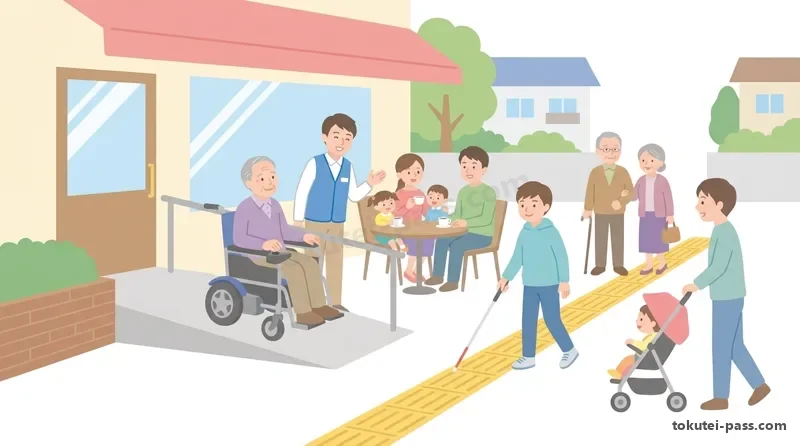
「ノーマライゼーション(normalization)」とは、障害のある人や高齢者を特別視して隔離するのではなく、地域社会で障害のない人と同じように当たり前の生活を送れるようにする理念です。
'Normalization' is the philosophy of enabling people with disabilities and older adults to live normal daily lives in the local community just like people without disabilities, rather than treating them as special and isolating them.
デンマークのバンク-ミケルセンは、知的障害者の大規模入所施設での処遇に疑問を抱き、親の会とともに運動を進めて「1959年法」にノーマライゼーションの理念を初めて盛り込みました。
Bank-Mikkelsen of Denmark questioned the treatment of people with intellectual disabilities in large residential institutions, worked with parents' associations, and first incorporated the principle of normalization into the '1959 Act.'
その後、スウェーデンのニィリエはノーマライゼーションを「1日のノーマルなリズム」「1週間・1年間のノーマルなリズム」「ライフサイクルにおけるノーマルな発達経験」など「8つの原理」として体系化しました。
Subsequently, Bengt Nirje of Sweden systematized normalization into 'eight principles,' including a normal rhythm of the day, a normal rhythm of the week and year, and normal developmental experiences throughout the life cycle.
さらにアメリカ・カナダで活動したヴォルフェンスバーガーは、社会的に価値を低く見られがちな人々に「価値ある社会的役割」を実現させる「ソーシャルロール・バロリゼーション(SRV)」へと発展させました。
Furthermore, Wolfensberger, who worked in the United States and Canada, developed this into 'Social Role Valorization (SRV),' which aims to realize valued social roles for people who tend to be devalued by society.
なお、障害のある人を訓練して「正常(ノーマル)な人間に変える」という意味ではなく、「生活環境や社会の側をノーマル(普通)にする」という点が試験の最頻出ポイントです。
A key exam point is that normalization does NOT mean training people with disabilities to 'make them normal,' but rather 'making the living environment and society normal for everyone.'
Key points
- デンマークのバンク-ミケルセンは「1959年法」でノーマライゼーションを提唱した「ノーマライゼーションの父」である
Bank-Mikkelsen of Denmark, the 'father of normalization,' advocated normalization in the 1959 Act - スウェーデンのニィリエは1日・1週間・1年のリズムや自己決定など「8つの原理」に整理した
Nirje of Sweden organized normalization into 'eight principles' covering normal daily/annual rhythms and self-determination - ヴォルフェンスバーガーは価値ある社会的役割を重視する「ソーシャルロール・バロリゼーション(SRV)」を提唱した
Wolfensberger proposed 'Social Role Valorization (SRV),' emphasizing valued social roles
| Word | Meaning |
|---|---|
| ノーマライゼーション(normalization) | normalization |
| バンク-ミケルセン(デンマーク・1959年法) | Bank-Mikkelsen (Denmark, 1959 Act) |
| ニィリエ(スウェーデン・8つの原理) | Bengt Nirje (Sweden, eight principles) |
| ヴォルフェンスバーガー(ソーシャルロール・バロリゼーション) | Wolfensberger (Social Role Valorization / SRV) |
自立と自律の概念・自立生活(IL)運動
Concepts of Independence and Autonomy, and the Independent Living (IL) Movement
従来の「自立」は、食事や着替え・排泄などの身辺動作を他者の介助なしに一人で行える「身体的自立」や、自ら働いて収入を得る「経済的自立」という狭い意味でとらえられがちでした。
Traditionally, 'independence' was often narrowly defined as 'physical independence' (performing personal care tasks such as eating, dressing, and toileting alone without assistance) or 'economic independence' (earning one's own living).
しかし現代の介護福祉では、たとえ日常的な介護や公的支援を受けていても、自らの意思と価値観に基づいて生き方を決める「自律(自己決定による自立)」こそが自立の本質とされています。
In modern care welfare, however, the essence of independence is 'autonomy (independence through self-determination)'—choosing and deciding how to live based on one's own will and values, even while receiving daily care or public support.
1970年代にアメリカのカリフォルニア州バークレーで重度障害当事者のエド・ロバーツらが始めた「自立生活(IL:Independent Living)運動」は、この新しい自立観を世界に広げました。
In the 1970s in Berkeley, California (USA), the 'Independent Living (IL) movement' initiated by people with severe disabilities such as Ed Roberts spread this new concept of independence worldwide.
たとえば重度の筋ジストロフィーがある人が、着替えや入浴を介助者に任せることで体力を温存し、自分が望む絵画制作や社会活動に力を注ぐことも立派な自立生活の姿です。
For example, a person with severe muscular dystrophy who delegates dressing and bathing to a caregiver in order to conserve energy for painting or social activities they wish to pursue is demonstrating genuine independent living.
また自立生活運動では、障害当事者自身が運営する「自立生活センター(CIL)」を通じて、同じ立場の仲間が相談に乗る「ピア・カウンセリング」などの支援も展開されています。
In the Independent Living movement, 'Centers for Independent Living (CIL)' run by people with disabilities themselves also provide support such as 'peer counseling,' where peers in the same position advise and support one another.
Key points
- 現代の自立は身辺自立だけでなく、介助を受けながらでも自ら生き方を選び決定する「自律」を重視する
Modern independence values 'autonomy'—choosing and deciding one's own way of life even while receiving care assistance - アメリカの重度障害者エド・ロバーツらは自己決定を核とする「自立生活(IL)運動」を推進した
Ed Roberts and peers with severe disabilities in the US led the 'Independent Living (IL) movement' centered on self-determination - 介助を活用して自分がやりたい活動や社会参加を実現することも重要な自立支援である
Utilizing care assistance to achieve desired activities and social participation is an essential form of independence support
| Word | Meaning |
|---|---|
| 身体的自立と精神的自立(自律) | physical independence and mental independence (autonomy) |
| 自立生活運動(IL運動) | Independent Living Movement (IL movement) |
| エド・ロバーツとピア・カウンセリング | Ed Roberts and peer counseling |
| 自己決定による自立 | independence through self-determination |
エンパワメントとストレングス視点・パターナリズムからの脱却
Empowerment, Strengths Perspective, and Overcoming Paternalism
病気や障害・環境上の障壁などによって「自分には何もできない」と自信や権限を失っている状態を「パワーレス(無力化)」といいます。
A state in which a person loses confidence and control over their life—feeling 'I cannot do anything' due to illness, disability, or environmental barriers—is called 'powerlessness.'
利用者が本来持っている潜在能力や生活をコントロールする力を取り戻し、自らの力で課題を解決できるよう支援することを「エンパワメント(empowerment:力づけること)」といいます。
Supporting users to regain their inherent potential and ability to control their lives so they can solve challenges on their own is called 'empowerment.'
その際、本人の「できないこと(問題点や欠陥)」ばかりに目を向けるのではなく、本人の性格・特技・意欲・人脈・環境などの強みや長所に着目する「ストレングス視点」が不可欠です。
In doing so, rather than focusing only on what the person 'cannot do (problems or deficits),' it is essential to adopt a 'strengths perspective' that focuses on their personality, skills, motivation, social network, and environmental resources.
反対に、専門職や家族が「本人のためだから」という理由で本人の意思を確認せず一方的に方針を決めて押しつける態度を「パターナリズム(父権主義)」といい、厳しく戒めなければなりません。
Conversely, an attitude in which professionals or family members unilaterally decide and impose policies without confirming the person's will under the pretext that 'it is for their own good' is called 'paternalism' and must be strictly avoided.
さらに、個人や地域を孤立から守り社会の一員として包み込む「ソーシャル・インクルージョン(社会的包摂)」の視点を持つことで、誰もが役割を持てる地域共生社会へとつながります。
Furthermore, holding the perspective of 'social inclusion'—protecting individuals and communities from isolation and embracing everyone as full members of society—leads to a community-based inclusive society where everyone has a role.
Key points
- 無力化(パワーレス)した人が本来の力と自己決定権を取り戻す支援を「エンパワメント」という
Supporting a powerless person to regain their inherent strength and right to self-determination is called 'empowerment' - 本人の意欲・経験・強み・環境資源などの長所に着目する見方を「ストレングス視点」という
Focusing on the user's motivation, experience, strengths, and environmental resources is the 'strengths perspective' - 専門職が「あなたのため」と称して一方的に決定を押しつける「パターナリズム(父権主義)」を排除する
Professionals must eliminate 'paternalism'—imposing unilateral decisions under the guise of acting 'for your own good'
| Word | Meaning |
|---|---|
| エンパワメント(empowerment) | empowerment |
| パワーレス(無力化状態) | powerlessness |
| ストレングス視点(強みへの着目) | strengths perspective |
| パターナリズム(父権主義) | paternalism |
権利擁護(アドボカシー)とインフォームド・コンセント・意思決定支援
Rights Protection (Advocacy), Informed Consent, and Decision-Making Support
「権利擁護(アドボカシー:advocacy)」とは、認知症や知的障害・精神障害などにより自分の権利や意思を十分に主張できない人の権利を守り、その思いを代弁する活動です。
'Advocacy (rights protection)' refers to protecting the rights and representing the wishes of people who have difficulty asserting their rights or intentions due to dementia, intellectual disabilities, or mental disabilities.
アドボカシーには、専門職や市民が代弁する「ケース・アドボカシー」、制度改善を求める「コーズ・アドボカシー」のほか、当事者自身が自らの権利を主張する「セルフ・アドボカシー(自己権利擁護)」があります。
Advocacy includes 'case advocacy' (professionals or citizens speaking for an individual), 'cause advocacy' (seeking system reforms), and 'self-advocacy,' in which individuals with disabilities assert their own rights themselves.
医療や介護を行う際には、支援の目的・内容・メリットとリスク・他の選択肢などを本人が理解できる言葉で十分に説明し、本人の自由な意思で同意を得る「インフォームド・コンセント(説明と同意)」が原則です。
When providing medical or nursing care, the principle of 'informed consent' applies: thoroughly explaining the purpose, content, benefits, risks, and alternatives in plain language that the person can understand, and obtaining their voluntary agreement.
また、人生の最終段階における医療やケアについて、本人が家族や医療・介護従事者とあらかじめ繰り返し話し合うプロセスを「ACP(アドバンス・ケア・プランニング:人生会議)」といいます。
Additionally, the process in which the person proactively and repeatedly discusses future medical and care preferences for the end-of-life stage with family and healthcare/care professionals is called 'ACP (Advance Care Planning).'
厚生労働省の『意思決定支援ガイドライン』では、判断能力が低下していても頭ごなしに「決められない」とみなさず、絵や写真・実物を示して本人の意思形成と表明を丁寧に支えることが求められています。
Under the Ministry of Health, Labour and Welfare's 'Decision-Making Support Guidelines,' even if a person's judgment has declined, staff must not automatically assume they cannot decide, but should carefully support them in forming and expressing their will using pictures, photos, or real objects.
Key points
- 権利を主張しにくい人の権利を守り代弁することを「アドボカシー」、当事者自身による主張を「セルフ・アドボカシー」という
Protecting and speaking up for the rights of those who struggle to express themselves is 'advocacy'; speaking up for oneself is 'self-advocacy' - わかりやすい十分な説明のうえで本人の自発的な同意を得ることを「インフォームド・コンセント」という
Providing clear, sufficient explanation and obtaining the user's voluntary agreement is 'informed consent' - 将来の医療・ケアについて本人を主体に家族や専門職と事前に話し合う取組みを「ACP(人生会議)」という
Discussing future medical and care wishes in advance with the person at the center alongside family and professionals is 'ACP'
| Word | Meaning |
|---|---|
| 権利擁護(アドボカシー) | rights protection (advocacy) |
| セルフ・アドボカシー(自己権利擁護) | self-advocacy |
| インフォームド・コンセント(説明と同意) | informed consent (explanation and agreement) |
| ACP(アドバンス・ケア・プランニング:人生会議) | ACP (Advance Care Planning) |
個別性の尊重・ユニットケアとプライバシー保護
Respecting Individuality, Unit Care, and Protecting Privacy
利用者にはそれぞれ長年培ってきた「生活歴(ライフヒストリー)」や価値観・習慣・信仰・趣味があり、誰一人として同じ人はいません。この「個別性」を尊重することが個別ケアの基本です。
Every user has a unique 'life history,' set of values, habits, beliefs, and hobbies cultivated over many years; no two people are alike. Respecting this 'individuality' is the foundation of individualized care.
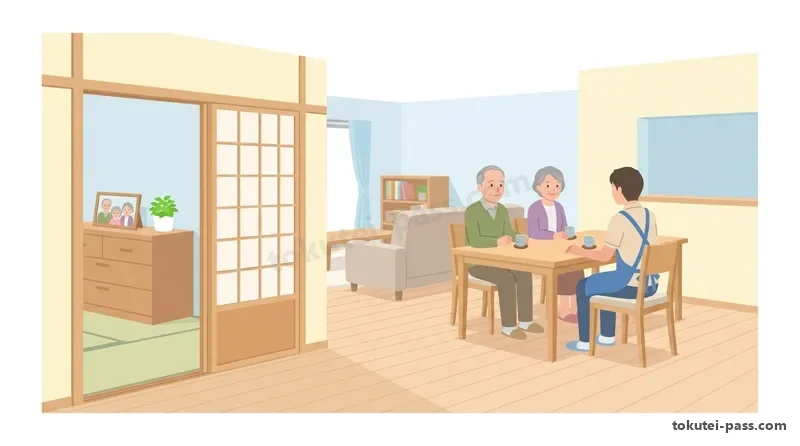
従来の施設で見られた「全員が同じ時間に起きて同じ食事をとる」といった集団的・画一的な処遇を改め、全室個室と10人程度の小規模生活単位で暮らす「ユニットケア」が普及しています。
Moving away from uniform group treatment seen in traditional facilities (where everyone wakes up and eats at the same scheduled time), 'unit care'—featuring all private rooms and small living units of around 10 residents—has become widespread.
ユニットケアでは、自宅で使っていた家具や愛用品を持ち込んで家庭的な雰囲気を作り、顔なじみの職員が一人ひとりの生活リズム(起床・食事・入浴時間など)に合わせたケアを行います。
In unit care, residents bring familiar furniture and personal belongings from home to create a homelike atmosphere, and familiar staff provide care tailored to each person's daily rhythm (waking, dining, and bathing times).
また居室への入室時のノック・名乗り、排泄や入浴時のカーテン・タオルによる露出防止、個人情報の厳格な管理など、日常生活のあらゆる場面でプライバシーと羞恥心への配慮を徹底します。
Furthermore, privacy and modesty must be protected in all daily situations: knocking and stating one's name before entering a room, using curtains and towels to prevent exposure during toileting or bathing, and strictly managing personal information.
在宅生活から施設などへ急激に環境が変わる際には、心身に大きなストレスや混乱が生じる「リロケーションダメージ」を防ぐため、なじみの品や生活習慣の継続を支えることが大切です。
When a person's environment changes abruptly from home to a facility, supporting the continuation of familiar belongings and daily routines is essential to prevent 'relocation damage' (physical and psychological stress or confusion caused by moving).
Key points
- 一人ひとりの「生活歴(ライフヒストリー)」や習慣・価値観を知り、個別性を尊重したケアを行う
Learn each person's 'life history,' habits, and values to provide care that respects individuality - 「ユニットケア」は個室と小規模な共同生活空間により、個人の生活リズムとプライバシーを守るケア形態である
'Unit care' combines private rooms and small communal living spaces to protect personal daily rhythms and privacy - 環境変化による「リロケーションダメージ」を防ぐため、なじみの愛用品や習慣の継続を大切にする
To prevent 'relocation damage' from environmental changes, value the continuation of familiar personal items and habits
| Word | Meaning |
|---|---|
| 個別性と生活歴(ライフヒストリー) | individuality and life history |
| ユニットケア(全室個室・小規模生活単位) | unit care (all private rooms and small living units) |
| リロケーションダメージの予防 | prevention of relocation damage |
| プライバシーの保護と羞恥心への配慮 | privacy protection and consideration for modesty |
身体拘束の原則禁止・虐待防止と短文事例の解法
Prohibition of Physical Restraint, Abuse Prevention, and Solving Short Case Questions
利用者の行動の自由を奪う「身体拘束」は、人間の尊厳を著しく傷つけ関節拘縮や筋力低下・せん妄を招くため、介護保険指定基準などにより原則禁止とされています。
'Physical restraint,' which deprives users of freedom of movement, severely damages human dignity and causes joint contractures, muscle weakness, and delirium; therefore, it is prohibited in principle under Long-Term Care Insurance standards.
例外として緊急やむを得ず行う場合も、「切迫性」「非代替性」「一時性」の3要件をすべて満たし、委員会等での組織的決定・本人と家族への説明と同意・詳細な記録が義務づけられています。
Even in exceptional emergency cases where restraint is unavoidable, all 'three requirements'—imminence, non-substitutability, and temporariness—must be met, along with organizational decision-making, explanation and consent from the user and family, and detailed records.
国家試験の『人間の尊厳と自立』では、毎年1問の理論問題と1問の短文事例問題が出題されます。事例問題では「安全を理由に活動を諦めさせるか、環境を整えて本人の希望を支えるか」が問われます。
In the national exam subject 'Human Dignity and Independence,' one theory question and one short case question appear every year. The case question asks whether to restrict an activity for safety reasons or adjust the environment to support the user's wishes.
たとえば「車いすを自分でこぎたい」「地域のサークルや買物に行きたい」という利用者の意思に対し、家族が転倒を心配して反対している場合でも、安全対策を講じながら本人の自己決定と社会参加を支える選択肢が正解となります。
For example, if a user wants to 'propel their own wheelchair' or 'join a local club or go shopping' while family members object out of fear of falls, the correct choice is always to take safety measures while supporting the user's self-determination and social participation.
また「ちょっと待ってて」「立たないで」など言葉で行動を制限する「スピーチロック」も尊厳を損なう不適切な関わりであり、常に利用者の行動の背景にある思いを聴き取る姿勢が求められます。
Furthermore, restricting behavior with words such as 'Wait a minute!' or 'Do not stand up!' ('speech lock') also impairs dignity; care professionals must always listen to the feelings behind the user's actions.
Key points
- 身体拘束は原則禁止であり、緊急やむを得ない3要件は「切迫性・非代替性・一時性」である
Physical restraint is prohibited in principle; the three unavoidable emergency requirements are 'imminence, non-substitutability, and temporariness' - 短文事例では、安全管理や家族の心配だけを優先して本人の希望を制限する選択肢は誤りである
In short case questions, options that restrict the user's wishes solely for safety management or family anxiety are incorrect - 残存機能や福祉用具・地域資源を活用し、本人の自己決定と社会参加を実現する支援を選ぶ
Choose support that utilizes residual functions, assistive devices, and community resources to realize the user's self-determination
| Word | Meaning |
|---|---|
| 身体拘束の原則禁止とスピーチロック | prohibition of physical restraint and speech lock |
| 緊急やむを得ない3要件(切迫性・非代替性・一時性) | three unavoidable emergency requirements (imminence, non-substitutability, temporariness) |
| 本人主体の意思決定支援 | user-centered decision-making support |
| 社会参加の促進 | promotion of social participation |
Human Dignity & Independence
Practice this chapter in the appOfficial references
- 公益財団法人社会福祉振興・試験センター「介護福祉士国家試験 試験科目別出題基準(人間の尊厳と自立)」 — https://www.sssc.or.jp/kaigo/kijun/index.html
- 厚生労働省「身体拘束ゼロへの手引き」および「認知症の人の日常生活・社会生活における意思決定支援ガイドライン」 — https://www.mhlw.go.jp/stf/seisakunitsuite/bunya/hukushi_kaigo/kaigo_koureisha/ninchi/index.html