
Comprehensive Case Problems (Sogo Mondai)
総合問題
National Exam for Certified Care Workers 介護福祉士 · 介護福祉士国家試験(筆記) · Written by Tokutei Pass based on the official study texts; not copied verbatim.
総合問題(4事例×3連問=12問)の構造と科目横断的統合
Structure of Comprehensive Problems (4 Cases × 3 Questions = 12 Questions) and Cross-Subject Integration
介護福祉士国家試験の最終領域である「総合問題(問題114〜125の計12問)」は、4つの長文事例(総合問題1〜4)について各3問ずつ連続して問う「3連問形式」で構成されています。
The final domain of the Certified Care Worker National Exam, 'Comprehensive Problems' (Questions 114–125, 12 questions in total), consists of 4 long case vignettes (Cases 1–4), each followed by a '3-question sequential set.'
この領域は単一の科目知識だけでなく、「人間と社会」「こころとからだのしくみ」「介護」の3領域すべての知識・技術・倫理観を1人の利用者事例の中で総合的に統合して判断する実践力を評価します。
Rather than testing isolated subject knowledge, this domain evaluates practical ability to synthesize knowledge, skills, and ethics across all 3 exam domains ('Human and Society,' 'Mind and Body Mechanisms,' and 'Caregiving') within a single user's case.
各事例文は250〜400字程度で、利用者の年齢・性別・疾患・要介護度や障害支援区分・生活歴・家族構成・利用中のサービスが提示され、時間経過(「その後」「半年後」など)に沿って場面が展開します。
Each vignette is 250–400 Japanese characters long, presenting the user's age, sex, diseases, care level or disability support category, life history, family structure, and current services, unfolding across a timeline ('thereafter,' 'six months later,' etc.).
通常、4事例のうち前半2事例(総合問題1・2)は「高齢者(認知症・脳血管疾患・パーキンソン病・骨折など)」、後半2事例(総合問題3・4)は「障害者(身体・知的・精神・発達障害・難病)」がテーマとなります。
Typically, the first 2 cases (Cases 1 and 2) focus on 'Older Adults' (dementia, cerebrovascular disease, Parkinson's disease, fractures), while the latter 2 cases (Cases 3 and 4) focus on 'Persons with Disabilities' (physical, intellectual, mental, developmental, or intractable diseases).
また全4領域の1つである「総合問題(12問)」も科目別得点基準(全ての試験科目群で得点があること)の対象であり、確実な得点が求められる重要科目です。
Furthermore, 'Comprehensive Problems (12 questions)' is one of the 4 domains subject to the minimum passing score rule (requiring at least 1 point in every subject group), making it a high-priority scoring section.
Key points
- 総合問題は「4つの長文事例×各3問=計12問」であり、高齢者2事例と障害者2事例が出題される
Comprehensive Problems comprise '4 long cases × 3 questions = 12 questions,' covering 2 older adult cases and 2 disability cases - 医学知識・生活支援技術・コミュニケーション・社会制度を時間軸に沿って統合する力が問われる
Evaluates the ability to integrate medical knowledge, daily living support skills, communication, and social systems along a timeline
| Word | Meaning |
|---|---|
| 総合問題(4事例×3連問=12問) | Comprehensive Problems (4 cases × 3 sequential questions = 12 questions) |
| 科目横断的統合(3領域の統合) | Cross-subject integration (synthesizing all 3 domains) |
| 時間軸(状態変化)に沿った展開 | Unfolding along a timeline (condition changes) |
| 高齢者事例と障害者事例 | Older adult cases and Disability cases |
3連問の出題構成黄金律(医学・介護技術・法制度の連動)
Golden Rule of the 3-Question Structure (Linking Medicine, Care Techniques, and Legal Systems)
各事例の「第1問目」では、事例人物が抱える疾患や障害の「医学的特徴・症状・身体のしくみ」や、脳の損傷部位図・ジェノグラム(家系図)・アセスメント視点が問われることが多いのが特徴です。
In 'Question 1' of each case, questions typically test the 'medical characteristics, symptoms, and body mechanisms' of the user's disease or disability, brain lesion diagrams, genograms, or assessment perspectives.
続く「第2問目」では、その疾患や障害特性を踏まえた「具体的な生活支援技術(移動・食事・入浴・排泄・住環境整備・福祉用具)」や「コミュニケーション技術(声かけ)」が問われます。
In 'Question 2,' questions test 'concrete daily living support techniques' (transfers, meals, bathing, excretion, home modification, assistive devices) or 'communication techniques (verbal approach)' tailored to those characteristics.
そして「第3問目」では、時間経過や状態変化(退院・増悪・家族の病気・災害など)に伴う「法制度・社会資源の活用」「多職種連携」「介護計画の見直し」が問われます。
In 'Question 3,' questions test 'utilization of legal systems and social resources,' 'multidisciplinary collaboration,' or 'care plan revision' following the passage of time or changes in condition (discharge, worsening symptoms, family illness, disasters).
つまり3問すべてが独立しているのではなく、「①疾患・背景を理解する → ②その場の適切な介助・声かけを行う → ③将来や地域生活に向けて制度・チームで支える」という介護実践の流れそのものになっています。
Thus, the 3 questions mirror the actual flow of care practice: '(1) Understand the disease and background → (2) Provide appropriate hands-on care and communication → (3) Support long-term community living through systems and teamwork.'
たとえ第1問の医学知識で迷っても、第2問・第3問の追加情報にヒントが隠されていることが多いため、3問全体を通読してから解くのが有効です。
Even if you are unsure about medical details in Question 1, additional context in Questions 2 and 3 often provides valuable clues, so reading through all 3 questions before answering is highly effective.
Key points
- 第1問:疾患・症状・医学的特徴やアセスメント(こころとからだ・認知症・障害の理解)
Question 1: Disease, symptoms, medical features, or assessment (Mind & Body, Dementia, and Disability Understanding) - 第2問・第3問:具体的な生活支援技術・声かけと、状態変化後の法制度・多職種連携
Questions 2 & 3: Concrete daily living support/communication skills, and legal systems/multidisciplinary collaboration after status changes
| Word | Meaning |
|---|---|
| 第1問(疾患理解・身体のしくみ・アセスメント) | Question 1 (Disease understanding, body mechanisms, assessment) |
| 第2問(生活支援技術・コミュニケーション・福祉用具) | Question 2 (Daily living support techniques, communication, assistive devices) |
| 第3問(法制度・多職種連携・介護過程の展開) | Question 3 (Legal systems, multidisciplinary collaboration, care process) |
| 3問全体の通読による状況把握 | Reading all 3 questions together to grasp the whole case |
総合問題1の典型:認知症・パーキンソン病のある高齢者支援
Typical Pattern of Case 1: Supporting Older Adults with Dementia or Parkinson's Disease
「総合問題1」では、アルツハイマー型認知症・レビー小体型認知症・前頭側頭型認知症や、パーキンソン病のある高齢者が在宅やグループホームで暮らす事例が頻出です。
In 'Comprehensive Problem 1,' cases frequently feature older adults with Alzheimer's dementia, Dementia with Lewy Bodies (DLB), Frontotemporal Dementia (FTD), or Parkinson's disease living at home or in a group home.
レビー小体型認知症の事例では、リアルな「幻視(虫や子どもが見える)」「パーキンソニズム(小刻み歩行・転倒)」「レム睡眠行動障害」「認知機能の日内変動」への理解と、否定せず環境(照明や影)を整える対応が問われます。
In DLB cases, questions test understanding of vivid 'visual hallucinations' (seeing insects or children), 'parkinsonism' (shuffling gait, falls), 'REM sleep behavior disorder,' and 'diurnal fluctuations,' alongside non-denying responses and lighting adjustments.
前頭側頭型認知症の事例では、脱抑制や常同行動(毎日決まった時刻・コースの散歩や同じ食事へのこだわり)を無理に制止せず、安全を見守りながらルーティンをケアプランに活かす支援が求められます。
In FTD cases, rather than forcibly stopping disinhibition or 'stereotypic behaviors' (walking the exact same route at the same time daily), workers watch over safety and incorporate the user's routine into the care plan.
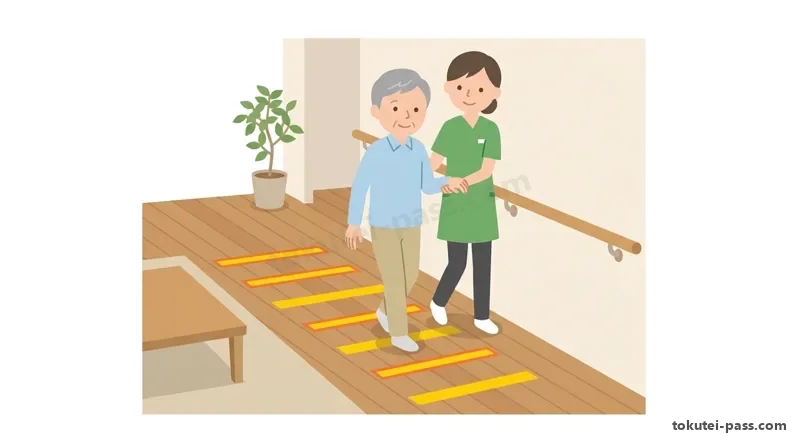
パーキンソン病の事例では、ホーエン・ヤール重症度分類(III度から姿勢反射障害が出現)、薬効が切れると動けなくなる「ウェアリング・オフ現象(オン・オフ現象)」に合わせた食事・入浴時間の調整、床の目印テープなどが出題されます。
In Parkinson's disease cases, questions cover the Hoehn & Yahr severity stages (postural reflex impairment appears from Stage III), scheduling meals and baths around the 'wearing-off phenomenon' when medication wears off, and floor marker tapes.
さらに家族介護者の疲労に対しては、認知症カフェや家族会(ピアサポート)、短期入所生活介護(ショートステイ)、小規模多機能型居宅介護の活用へと展開します。
Furthermore, to address family caregiver exhaustion, cases expand into utilizing Dementia Cafes, family peer support groups, Short-Stay respite care, or Small-Scale Multifunctional In-Home Care.
Key points
- レビー小体型の幻視・転倒予防や、前頭側頭型の常同行動を制止せず見守るケア
Visual hallucinations and fall prevention in DLB; watching over stereotypic behavior without forcible restraint in FTD - パーキンソン病のヤール重症度・ウェアリングオフ現象(薬効時間帯に合わせたケア)の理解
Understanding Hoehn & Yahr stages and the wearing-off phenomenon (timing care when medication is effective) in Parkinson's disease
| Word | Meaning |
|---|---|
| レビー小体型認知症(幻視・パーキンソニズム) | Dementia with Lewy Bodies (visual hallucinations, parkinsonism) |
| 前頭側頭型認知症(常同行動・脱抑制) | Frontotemporal Dementia (stereotypic behavior, disinhibition) |
| ホーエン・ヤール重症度分類とウェアリング・オフ現象 | Hoehn & Yahr severity classification and Wearing-off phenomenon |
| 認知症カフェと小規模多機能型居宅介護 | Dementia Cafe and Small-Scale Multifunctional In-Home Care |
総合問題2の典型:脳血管疾患・骨折後の移行支援と看取り
Typical Pattern of Case 2: Care Transitions After Stroke or Fracture and End-of-Life Care
「総合問題2」では、脳梗塞・脳出血による片麻痺や嚥下障害、大腿骨頸部骨折などを契機に、「病院 → 介護老人保健施設(老健) → 在宅 → 特別養護老人ホーム(特養)」へと生活の場が移行する事例が多く見られます。
In 'Comprehensive Problem 2,' cases often follow older adults with hemiplegia or dysphagia after cerebral infarction/hemorrhage or femoral neck fracture transitioning across settings: 'Hospital → Long-Term Care Health Facility (Rouken) → Home → Intensive Care Home (Tokuyou).'
医学面では、右脳損傷による「左片麻痺・左半側空間無視」や、左脳損傷による「右片麻痺・失語症(ブローカ失語・ウェルニッケ失語)」、さらには廃用症候群や誤嚥性肺炎・脱水のサインが問われます。
Medically, questions test the link between brain lesions and symptoms: right hemisphere damage causes 'left hemiplegia and left unilateral spatial neglect,' whereas left hemisphere damage causes 'right hemiplegia and aphasia (Broca's/Wernicke's),' plus disuse syndrome, aspiration pneumonia, and dehydration.
生活支援技術面では、片麻痺に応じたベッドからの起き上がり・車いす移乗(健側からのアプローチ)、三動作杖歩行、脱健着患、個浴での出入り(健側足から入り健側足から出る)が確実に問われます。
In daily living support techniques, questions reliably test sitting up in bed, wheelchair transfers (approaching from the sound side), three-point cane walking, 'Dakken Chakkan' dressing, and bathtub entry/exit (sound leg first both ways).
在宅復帰の場面では、退院前カンファレンスや家屋調査、介護保険の住宅改修(手すり設置・段差解消)や福祉用具貸与・特定福祉用具販売(入浴補助用具・ポータブルトイレ)の知識を統合します。
During home return transitions, questions integrate pre-discharge conferences, home assessments, Long-Term Care Insurance home modifications (handrails, step removal), assistive device rental, and specified welfare equipment sales (bath aids, portable toilets).
また施設での終末期・看取り場面へと展開した場合は、本人の事前意思(ACP:人生会議)の尊重、医師・看護職との連携、家族の揺れ動く気持ちへの寄り添いがポイントとなります。
When the case progresses to end-of-life care at a facility, key points include respecting Advance Care Planning (ACP), collaborating with physicians and nurses, and supporting the family's wavering emotions.
Key points
- 損傷脳部位と症状(右脳=左片麻痺・左半側空間無視、左脳=右片麻痺・失語症)の対応関係
Correspondence between brain lesion site and symptoms (Right brain = Left hemiplegia & Left neglect; Left brain = Right hemiplegia & Aphasia) - 片麻痺介助技術(健側アプローチ・杖歩行・脱健着患・入浴)と住宅改修・ACPの統合
Integrating hemiplegia care techniques (sound-side approach, cane gait, Dakken Chakkan, bathing) with home modification and ACP
| Word | Meaning |
|---|---|
| 左半側空間無視(右脳損傷)と失語症(左脳損傷) | Left unilateral spatial neglect (right brain lesion) and Aphasia (left brain lesion) |
| 在宅復帰支援(退院前カンファレンス・住宅改修) | Home return support (pre-discharge conference, home modification) |
| 特定福祉用具販売と福祉用具貸与 | Specified welfare equipment sales vs. Welfare equipment rental |
| ACP(アドバンス・ケア・プランニング:人生会議) | ACP (Advance Care Planning / Life Conference) |
総合問題3の典型:地域で暮らす中途障害者・難病患者の自立と社会参加
Typical Pattern of Case 3: Community Living and Social Participation for Mid-Life Disabilities and Intractable Diseases
「総合問題3」では、壮年期(40〜60代)の脳血管疾患による高次脳機能障害、筋萎縮性側索硬化症(ALS)、筋ジストロフィー、脊髄損傷、またはストーマ(人工肛門)を造設した障害者の地域生活事例が中心です。
In 'Comprehensive Problem 3,' cases center on community living for middle-aged adults (40s–60s) with higher brain dysfunction after stroke, Amyotrophic Lateral Sclerosis (ALS), muscular dystrophy, spinal cord injury, or a stoma.
高次脳機能障害の事例では、手順通りに動作ができない「失行」、物や空間を認識できない「失認」、計画的に段取りできない「遂行機能障害」、感情爆発が起きる「社会的行動障害」への理解とメモ・手順書活用が問われます。
In higher brain dysfunction cases, questions test understanding of 'apraxia' (inability to perform purposeful movements), 'agnosia,' 'executive dysfunction' (difficulty planning steps), and 'social behavior disorders,' alongside using memory notes and step-by-step guides.
ALSなどの進行性難病では、運動神経が障害される一方で「眼球運動・膀胱直腸機能・感覚(痛覚・触覚)・知能」は最後まで保たれる特徴を踏まえ、文字盤や意思伝達装置、喀痰吸引・胃ろうケアを連携します。
In progressive intractable diseases like ALS, while motor neurons degenerate, '4 functions remain preserved until the end': eye movement, bladder/rectal function, sensation (pain/touch), and intellect—linking to transparent kana boards, communication devices, suctioning, and gastrostomy care.
また40歳以上65歳未満で特定疾病(初老期認知症・脳血管疾患・ALS・パーキンソン病関連疾患等16疾病)に該当する場合は介護保険の第2号被保険者となり、介護保険優先の原則と障害福祉サービスの併用が論点となります。
For individuals aged 40–64 with one of the 16 specified diseases (e.g., ALS, cerebrovascular disease, presenile dementia), they qualify as Category 2 insured persons under Long-Term Care Insurance, raising the principle of Long-Term Care Insurance priority combined with disability welfare services.
就労や社会参加に向けては、就労移行支援・就労継続支援(A型=雇用契約あり、B型=雇用契約なし)、重度訪問介護、同行援護(視覚)、行動援護(知的・精神)などの制度活用が問われます。
For employment and social participation, questions test Employment Transition Support, Continuous Employment Support (Type A = with employment contract; Type B = without employment contract), Visiting Care for Persons with Severe Disabilities, Accompanying Support (visual), and Behavior Support (intellectual/mental).
Key points
- 高次脳機能障害(失行・失認・遂行機能障害)やALSの陰性徴候(眼球運動・感覚・膀胱直腸機能・知能保持)の理解
Understand higher brain dysfunction (apraxia, agnosia, executive dysfunction) and the 4 preserved functions in ALS (eye movement, sensation, bladder/bowel, intellect) - 就労継続支援A型(雇用契約あり)・B型(雇用契約なし)や同行援護・行動援護・重度訪問介護の区別
Distinguish Continuous Employment Support Type A (contract) vs. Type B (non-contract), Accompanying Support, Behavior Support, and Severe Visiting Care
| Word | Meaning |
|---|---|
| 高次脳機能障害(注意障害・遂行機能障害・失行・失認) | Higher brain dysfunction (attention, executive function, apraxia, agnosia) |
| 筋萎縮性側索硬化症(ALS)の保たれる4機能 | 4 preserved functions in Amyotrophic Lateral Sclerosis (ALS) |
| 就労移行支援と就労継続支援(A型・B型) | Employment Transition Support and Continuous Employment Support (Type A / Type B) |
| 重度訪問介護・同行援護・行動援護 | Severe Visiting Care, Accompanying Support, and Behavior Support |
総合問題4の典型:障害者支援施設・グループホームと防災・共生社会
Typical Pattern of Case 4: Disability Support Facilities, Group Homes, Disaster Preparedness, and Inclusive Society
「総合問題4」では、障害者支援施設やグループホーム(共同生活援助)で暮らす知的障害、自閉スペクトラム症(ASD)、聴覚・視覚障害、脊髄損傷(対麻痺・四肢麻痺・自律神経過反射)のある利用者事例が多く出題されます。
In 'Comprehensive Problem 4,' cases frequently feature users with intellectual disabilities, Autism Spectrum Disorder (ASD), deafblindness, or spinal cord injury (paraplegia, tetraplegia, autonomic dysreflexia) living in Disability Support Facilities or Group Homes.
自閉スペクトラム症(ASD)や知的障害のある利用者では、環境変化や予定変更、聴覚過敏によるパニックを防ぐため、絵カードや写真による「視覚的構造化」やクールダウンできる静かな空間確保を行います。
For users with ASD or intellectual disabilities, to prevent panic triggered by environmental changes, schedule changes, or auditory hypersensitivity, workers use 'visual structuring' with picture cards and secure quiet spaces for cooling down.
頸髄・上位胸髄損傷者の事例では、膀胱や直腸に尿や便がたまった刺激で急激な高血圧・頭痛・発汗・徐脈が起こる「自律神経過反射」や、車いす上でのプッシュアップ(除圧)が重要なポイントとなります。
In cervical or high thoracic spinal cord injury cases, key points include 'autonomic dysreflexia'—acute hypertension, headache, sweating, and bradycardia triggered by bladder distension or fecal impaction—and wheelchair push-ups for pressure relief.
また近年は、障害者施設や地域での「防災対策(避難訓練・福祉避難所・災害時個別避難計画)」や、高齢化した障害者が65歳以降も慣れ親しんだ事業所に通える「共生型サービス」が頻出テーマです。
Recent exams frequently feature 'disaster preparedness' (evacuation drills, Welfare Evacuation Shelters, Individual Evacuation Plans) and 'Symbiotic (Inclusive) Services' allowing aging persons with disabilities to continue using familiar providers after turning 65.
さらに現場の新人職員指導(OJT:職場内研修)やスーパービジョン(支持的機能・教育的機能・管理的機能)を絡めた設問も見られます。
Questions may also incorporate On-the-Job Training (OJT) for new staff and Supervision (supportive, educational, and administrative functions).
Key points
- ASDの視覚的構造化・感覚過敏配慮、上位脊髄損傷の「自律神経過反射(尿閉・便秘等が誘因)」
Visual structuring and sensory care in ASD; 'autonomic dysreflexia' (triggered by urinary retention or constipation) in high spinal cord injury - 福祉避難所・個別避難計画、共生型サービス、OJT・スーパービジョンの3機能の理解
Understand Welfare Evacuation Shelters, Individual Evacuation Plans, Symbiotic Services, OJT, and the 3 functions of Supervision
| Word | Meaning |
|---|---|
| 自律神経過反射(頸髄・上位胸髄損傷) | Autonomic dysreflexia (cervical and high thoracic spinal cord injury) |
| 共生型サービスと高齢障害者支援 | Symbiotic Services (Kyouseigata Service) and aging disability support |
| 福祉避難所と個別避難計画 | Welfare Evacuation Shelters and Individual Evacuation Plans |
| OJT(職場内研修)とスーパービジョン | On-the-Job Training (OJT) and Supervision |
ジェノグラム・エコマップの読解と家族・きょうだい児支援
Reading Genograms and Eco-Maps, and Supporting Families and Siblings of Children with Disabilities
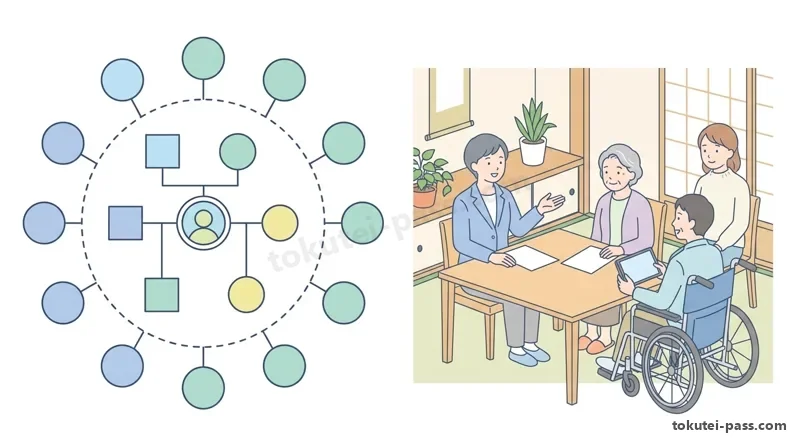
総合問題では、家族関係を図示した「ジェノグラム(家系図)」や、利用者・家族と地域社会資源との関わりを図示した「エコマップ(生態地図)」が視覚素材として出題されることがあります。
Comprehensive Problems sometimes include visual diagrams such as a 'Genogram' (family tree illustrating family relationships) or an 'Eco-Map' (ecological map illustrating connections between the user/family and social resources).
ジェノグラムでは、男性は「四角(□)」、女性は「丸(○)」、本人は「二重四角または二重丸」、死亡は「×印または黒塗り」、婚姻関係は実線、離婚は二重斜線、同居世帯は点線または実線で囲んで表します。
In a Genogram: males are represented by a 'Square (□),' females by a 'Circle (○),' the index person by a 'double square or double circle,' deceased persons by an 'X or shaded symbol,' marriage by a solid line, divorce by double slashes, and cohabiting household members by an enclosing line.
また障害のある子どもの兄弟姉妹である「きょうだい児」や「ヤングケアラー」の事例(第37回等)では、親の関心が障害児に集中する中で我慢や孤独感を抱えやすいきょうだい児の心情に配慮した家族支援が問われます。
In cases involving 'siblings of persons with disabilities' (Kyoudai-ji) or 'Young Carers' (such as the 37th National Exam), questions emphasize family support that attends to the loneliness and self-restraint experienced by siblings when parental attention focuses on the child with a disability.
高齢の親が障害のある子を支えてきた世帯では、親の入院や認知症発症(「親亡き後問題」「8050問題」)を契機に生活が破綻しやすいため、介護保険(親)と障害福祉(子)の双方の相談支援機関が協働します。
In households where aging parents support an adult child with a disability ('After-Parents-Pass-Away Problem' or '8050 Problem'), parental hospitalization or dementia can trigger a household crisis, requiring collaboration between Long-Term Care Insurance (parent) and Disability Welfare (child) consultation agencies.
地域包括支援センターや基幹相談支援センター、成年後見制度や日常生活自立支援事業などを有機的に結びつける「重層的支援体制整備事業」の視点が重要です。
The perspective of the 'Multi-Layered Support System Development Project'—organically linking Community General Support Centers, Core Consultation Support Centers, Adult Guardianship, and Daily Life Independence Support Projects—is essential.
Key points
- ジェノグラムの基本記号(□=男性、○=女性、二重線=本人、囲み線=同居世帯)とエコマップの読み方
Master basic Genogram symbols (□ = Male, ○ = Female, double border = Index person, enclosing line = Cohabiting household) and Eco-Maps - 「きょうだい児」の心理的配慮や、高齢の親と障害のある子の世帯への複合的・重層的支援
Psychological care for 'siblings (Kyoudai-ji)' and multi-layered support for households with aging parents and disabled children (8050)
| Word | Meaning |
|---|---|
| ジェノグラム(家系図)とエコマップ(生態地図) | Genogram (family tree) and Eco-Map (ecological map) |
| きょうだい児支援とヤングケアラー | Support for siblings of persons with disabilities (Kyoudai-ji) and Young Carers |
| 親亡き後問題と8050問題 | After-Parents-Pass-Away Problem and the 8050 Problem |
| 重層的支援体制整備事業 | Multi-Layered Support System Development Project |
総合問題を確実に解き切る実践的解法ストラテジー
Practical Test-Taking Strategies for Mastering Comprehensive Problems
総合問題を解く際の第1のコツは、事例本文を読む前に「3つの設問文(何が問われているか)」に軽く目を通し、注目すべきキーワード(疾患名・時期・場所・人物)を意識しながら本文を読むことです。
Tip 1 for solving Comprehensive Problems: before reading the long case text, briefly scan the '3 question stems' so you read the passage with key targets (disease name, time point, setting, role) in mind.
第2のコツは、「いつの時点の質問か(入院中なのか、退院直後の自宅なのか、グループホーム入居後なのか)」と「誰の立場での対応か(訪問介護員・施設介護職・生活支援員)」を正確に把握することです。
Tip 2: accurately identify 'which point in time the question asks about' (during hospitalization, right after discharge home, or after moving into a group home) and 'whose role is being asked' (home helper, facility care worker, or life support worker).
第3のコツは、介護福祉士国家試験に共通する「不適切選択肢のパターン」を見抜くことです。「直ちに施設入所を勧める」「すべての動作を介護職が代行する」「家族の意向のみを優先する」「強く説得・制止する」といった選択肢は原則として誤りです。
Tip 3: spot common 'incorrect option patterns' on the national exam. Options such as 'immediately recommend facility admission,' 'perform all movements on the user's behalf,' 'prioritize only the family's wishes,' or 'strongly persuade or restrain the user' are in principle wrong.
反対に、「本人の思いや生活歴を傾聴・受容する」「残存機能(できること)を活かして環境を整える」「自己決定を支える」「医療職や介護支援専門員と連携する」という選択肢が正解の軸となります。
Conversely, correct answers consistently center on: 'listening to and accepting the user's feelings and life history,' 'utilizing residual functions (strengths) and adjusting the environment,' 'supporting self-determination,' and 'collaborating with medical staff and Care Managers.'
試験当日は最後の12問(総合問題)で時間不足にならないよう、1事例(3問)あたり約5〜6分、4事例合計で20〜25分程度の時間を残して落ち着いて取り組みましょう。
On exam day, to avoid running out of time on the final 12 questions, budget about 5–6 minutes per case (3 questions)—leaving 20–25 minutes total for the 4 cases to solve them calmly.
Key points
- 「いつの時点・どこの場所・誰の立場」の設問かを事例文から正確に読み取る
Accurately identify 'which time point, setting, and professional role' each question specifies in the vignette - 「全介助への安易な変更・説得・一方的判断」を除き、「利用者主体・残存機能活用・多職種連携」を選ぶ
Eliminate options involving 'full assistance takeover, persuasion, or unilateral decisions,' and choose 'user-centeredness, residual function use, and teamwork'
| Word | Meaning |
|---|---|
| 設問先読みと時系列(場面推移)の把握 | Previewing question stems and tracking chronological scene shifts |
| 利用者主体と自己決定の尊重 | User-centeredness and respecting self-determination |
| 残存機能(ストレングス)の活用 | Utilizing residual functions (Strengths) |
| 時間配分(4事例12問で20〜25分確保) | Time management (reserving 20–25 minutes for the 4 cases / 12 questions) |
Integrated Case Questions
Practice this chapter in the appOfficial references
- 公益財団法人社会福祉振興・試験センター「介護福祉士国家試験 試験科目別出題基準(総合問題)」 — https://www.sssc.or.jp/kaigo/kijun/index.html
- 厚生労働省「介護福祉士国家試験 過去試験問題(第35回〜第38回 総合問題)」 — https://www.sssc.or.jp/kaigo/kakomon/index.html