
The Care Process (Kaigo Katei)
介護過程
National Exam for Certified Care Workers 介護福祉士 · 介護福祉士国家試験(筆記) · Written by Tokutei Pass based on the official study texts; not copied verbatim.
介護過程の意義・目的と展開のサイクル
Significance, Purpose, and Cycle of the Care Process
「介護過程」とは、利用者が望むよりよい生活(自己実現やQOLの向上)を実現するために、直感や経験則だけに頼らず「科学的根拠(問題解決思考)」に基づいて意図的・計画的に介護を展開するプロセスです。
The 'Care Process' (Kaigo Katei) is a systematic, intentional process of delivering care based on 'scientific evidence (problem-solving thinking)' rather than intuition or habit alone, aimed at realizing the better life (self-actualization and QOL) desired by the user.
介護過程の目的には、①利用者一人ひとりの個別性に応じた「利用者主体のケア」の実現、②チーム内および多職種間での目標共有と「ケアの統一性・継続性」の確保、③介護実践の客観的評価があります。
Its purposes are: (1) realizing 'user-centered care' tailored to each individual, (2) sharing goals within the team and across professions to ensure 'consistency and continuity of care,' and (3) objectively evaluating care practice.
介護過程は、「①アセスメント(情報収集と課題分析) → ②介護計画の立案 → ③実施 → ④モニタリング・評価(→再アセスメント)」という一連の循環的プロセス(PDCAサイクル)で進められます。
The Care Process progresses through a cyclical PDCA loop: '(1) Assessment (Information Gathering and Problem Analysis) → (2) Care Plan Formulation → (3) Implementation → (4) Monitoring and Evaluation (→ Re-assessment).'
一度計画を立てて終わりではなく、利用者の心身の状態や環境・気持ちの変化に合わせて絶えず見直し、より良い支援へと螺旋状(スパイラル)に高めていくことが重要です。
Rather than ending once a plan is written, it must be continuously reviewed in response to changes in the user's physical/mental state, environment, and feelings, elevating support quality in an upward spiral.
また介護過程を言語化・可視化して共有することにより、どの介護福祉職が関わっても一定水準以上の質の高いケアを提供でき、利用者と家族の安心感と信頼につながります。
By verbalizing and visualizing the care process for team sharing, any care worker involved can deliver consistent high-quality care, fostering reassurance and trust for the user and family.
Key points
- 介護過程は経験則ではなく「科学的根拠」に基づき、個別ケアとチームの統一的支援を実現する
The Care Process relies on 'scientific evidence' rather than guesswork to achieve individualized care and unified team support - 展開の順序:アセスメント(情報収集・課題分析)→計画立案→実施→モニタリング・評価
Sequence of the cycle: Assessment (Information Gathering & Analysis) → Planning → Implementation → Monitoring & Evaluation
| Word | Meaning |
|---|---|
| 介護過程の展開(4段階サイクル) | Unfolding the Care Process (4-stage cycle) |
| 科学的根拠(エビデンス)に基づく介護 | Evidence-based caregiving |
| ケアの統一性と継続性 | Consistency and continuity of care |
| 個別性の尊重と自己実現 | Respecting individuality and self-actualization |
情報収集の視点と主観的情報・客観的情報
Perspectives of Information Gathering and Subjective vs. Objective Data
アセスメントの第1歩である「情報収集」では、利用者の全体像を理解するため、氏名・年齢・家族構成・既往歴・生活歴・価値観・住環境・ICFの6要素(心身機能・活動・参加など)を幅広く集めます。
In 'Information Gathering,' the first step of assessment, workers collect comprehensive data—basic profile, family structure, medical history, life history, values, living environment, and the 6 ICF components—to grasp the user's holistic picture.
収集する情報には、利用者本人や家族が語った言葉・思い・訴えである「主観的情報(S情報:Subjective data)」と、観察した行動・表情や測定したバイタルサイン・検査数値などの「客観的情報(O情報:Objective data)」があります。
Collected information comprises 'Subjective Data' (S-data: words, thoughts, wishes, and complaints spoken by the user or family) and 'Objective Data' (O-data: observed behaviors, facial expressions, measured vital signs, and test results).
言葉で訴えることが難しい認知症や重度障害のある利用者に対しては、表情の険しさ、視線の動き、食事量や睡眠状態の変化といった非言語的サインを丁寧に観察します。
For users with dementia or severe disabilities who have difficulty expressing themselves verbally, carefully observe non-verbal signs such as tense facial expressions, eye movements, food intake, and sleep patterns.
情報源には、利用者本人や家族からの直接聴取(一次情報)だけでなく、医師の診断書や看護記録、介護支援専門員のフェイスシートなどの関連書類(二次情報)も含まれます。
Information sources include both primary information (direct interviews with the user and family) and secondary information from related records (physician's diagnosis, nursing records, Care Manager's face sheet).
また情報収集はそれ自体が目的ではなく、利用者との信頼関係を築きながらプライバシーに配慮し、支援に必要な情報を継続的に集める姿勢が求められます。
Information gathering is not an end in itself; workers must gather necessary information continuously while building trust and protecting the user's privacy.
Key points
- 主観的情報(本人・家族の語りや訴え)と客観的情報(観察事実や測定値)の双方を収集する
Collect both Subjective Data (user/family statements) and Objective Data (observed facts and measurements) - 言語表現が困難な利用者では、表情や行動変化などの非言語的サインを丁寧に観察する
For users with difficulty communicating verbally, carefully observe non-verbal signs such as facial expressions and behavioral changes
| Word | Meaning |
|---|---|
| 主観的情報(S情報)と客観的情報(O情報) | Subjective Data (S-data) and Objective Data (O-data) |
| ICF(国際生活機能分類)の視点による情報収集 | Information gathering based on the ICF perspective |
| 非言語的サイン(表情・しぐさ・生活リズム)の観察 | Observing non-verbal signs (expressions, gestures, daily rhythms) |
| プライバシーの保護と信頼関係 | Privacy protection and building trust |
アセスメント(課題分析)とデマンド・ニーズの区別
Assessment (Problem Analysis) and Distinguishing Demands from Needs
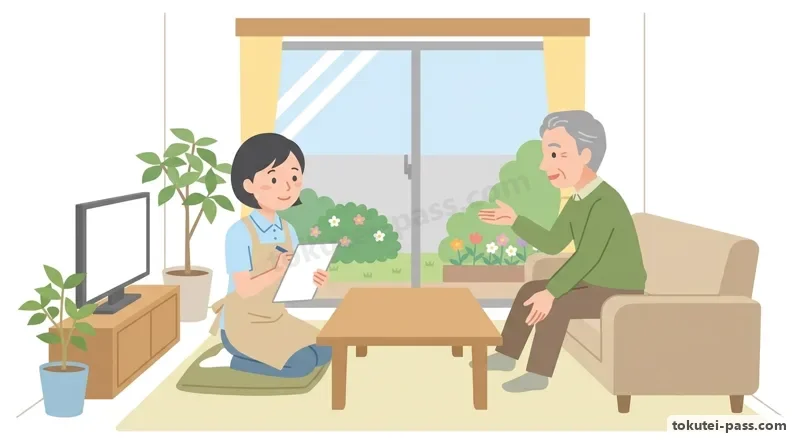
「アセスメント(課題分析)」では、収集した断片的な情報(心身機能・生活歴・環境・本人の思いなど)を相互に関連づけて解釈・統合し、「なぜその困りごとが生じているのか」という原因と背景を明らかにします。
In 'Assessment,' fragmented pieces of information (physical/mental functions, life history, environment, user wishes) are interrelated, interpreted, and integrated to clarify the 'causes and background of why a difficulty is occurring.'
ここで重要なのが、利用者が口にする表面的な要求である「デマンド(要望)」と、その背景にある専門職と共に導き出す本来の解決課題である「ニーズ(生活課題)」を区別することです。
Crucial here is distinguishing between a 'Demand' (the surface-level request spoken by the user) and a 'Need' (the underlying life challenge identified together with professionals).
例えば「もうデイサービスに行きたくない」という発言(デマンド)に対し、「膝の痛みやトイレの失敗が恥ずかしくて外出に不安がある」という背景を読み解き、「安心して排泄・移動し他者と交流できること」をニーズとして捉えます。
For example, behind the statement 'I don't want to go to day service anymore' (Demand), workers uncover the background—'anxiety about going out due to knee pain and embarrassment over toileting mistakes'—and identify the Need as 'being able to excrete and move safely while interacting with others.'
また問題点やできないことばかりに目を向けるのではなく、利用者が持っている「強み(ストレングス・残存能力・意欲・家族や地域の支え)」に着目して生活課題を導き出します。
Rather than focusing only on problems or disabilities, workers derive life needs by focusing on the user's 'Strengths' (residual abilities, motivation, and family/community support).
さらに行動の背景を分析する際は、介護福祉職の先入観や思い込みを排除し、現在の状態だけでなく将来予測されるリスクや可能性も含めて総合的に判断します。
Furthermore, when analyzing the background of behaviors, care workers must set aside preconceptions and make comprehensive judgments that include future predicted risks and possibilities.
Key points
- 複数の情報を関連づけて行動や状態変化の「原因・背景」を分析・解釈する
Interrelate multiple pieces of information to analyze and interpret the 'causes and background' of behaviors or condition changes - 表面的な要望(デマンド)の奥にある本来の「生活課題(ニーズ)」と「強み(ストレングス)」を見極める
Distinguish surface requests (Demands) from underlying 'life challenges (Needs)' while focusing on 'Strengths'
| Word | Meaning |
|---|---|
| アセスメント(課題分析・情報の関連づけ) | Assessment (problem analysis and connecting information) |
| デマンド(表面的要望)とニーズ(生活課題) | Demands (surface requests) vs. Needs (underlying life challenges) |
| ストレングス(強み・残存機能)への着目 | Focusing on Strengths (residual functions and motivation) |
| 言動の背景要因の解釈 | Interpreting background factors behind words and actions |
介護計画の立案(長期目標・短期目標・支援内容)と同意
Formulating the Care Plan (Long-Term Goals, Short-Term Goals, Support Content) and Consent
アセスメントで明確になった生活課題(ニーズ)を解決するため、「介護計画」を立案します。介護計画には、目指す生活像を示す「長期目標」と、そこに到達するための段階的な「短期目標」、および「具体的な支援内容」を記載します。
To resolve the life needs clarified during assessment, a 'Care Plan' is formulated, specifying 'Long-Term Goals' (the desired life vision), step-by-step 'Short-Term Goals' to reach them, and 'Concrete Support Content.'
目標を設定する際は、介護福祉職の行動(〜を介助する)ではなく、「利用者を主語」とし、利用者自身が「〜できる」「〜して過ごす」という肯定的かつ具体的な姿で表現します。
When setting goals, make 'the user the subject of the sentence'—expressing positive, concrete states achieved by the user ('Mr./Ms. A can...', 'Mr./Ms. A spends time...') rather than actions of the care worker ('Assist with...').
特に「短期目標」は、利用者の現在の能力で少し頑張れば達成可能(実現可能)であり、後から達成度を客観的に「評価・測定可能」な具体的表現にします。
In particular, 'Short-Term Goals' must be achievable (realistic with slight effort given current abilities) and stated concretely so achievement can later be 'objectively evaluated and measured.'
支援内容(援助内容)には「いつ・どこで・誰が・どのように支援するか」や安全上の留意点を誰が読んでも実践できるよう具体的に書き、必ず利用者本人と家族へわかりやすく説明して「同意」を得ます。
Write support content ('when, where, who, and how to support' plus safety precautions) concretely so any staff member can practice it consistently, and always explain the plan clearly to obtain 'consent' from the user and family.
複数の生活課題がある場合は、生命や安全に関わる緊急性の高い課題や、利用者本人が最も強く望んでいる事項から優先順位をつけて計画化します。
When multiple life needs exist, prioritize them in the plan starting from urgent issues affecting life and safety or matters most strongly desired by the user.
Key points
- 目標は「利用者を主語」にし、実現可能で客観的に達成度を評価できる具体的表現にする
State goals with 'the user as the subject' in realistic, concrete terms that allow objective evaluation of achievement - 立案した介護計画は、実施前に必ず利用者本人および家族に説明して同意を得る
Always explain the formulated care plan to the user and family and obtain their consent before implementation
| Word | Meaning |
|---|---|
| 長期目標と短期目標(段階的設定) | Long-Term Goals and Short-Term Goals (step-by-step setting) |
| 利用者を主語とした目標記述 | Goal formulation with the user as the subject |
| 具体的な援助内容と留意点 | Concrete support content and safety precautions |
| インフォームド・コンセント(説明と同意) | Informed consent (explanation and agreement) |
実施・モニタリング・評価と計画の見直し
Implementation, Monitoring, Evaluation, and Plan Revision
介護計画の「実施」では、チーム全員が計画に基づいて統一された方法で支援を行いつつ、その日の利用者の体調や気分、反応を観察しながら安全・安楽に配慮して実践します。
In 'Implementation,' the entire team provides support using unified methods based on the plan while observing the user's daily physical condition, mood, and reactions to ensure safety and comfort.
実施中に継続的に行う「モニタリング(経過観察)」では、計画通りに支援が行われているか、利用者の満足度や心身の変化はどうか、短期目標に向かって順調に進んでいるかを点検します。
Ongoing 'Monitoring' during implementation checks whether support is delivered as planned, how satisfied the user is, whether physical/mental conditions have changed, and whether progress toward short-term goals is on track.
もし実施途中で利用者の病状急変や転倒、強い拒否などが生じた場合は、評価時期を待たずに速やかに再アセスメントを行い、計画を修正します。
If a sudden change in condition, a fall, or strong refusal occurs during implementation, conduct a re-assessment immediately and revise the plan without waiting for the scheduled evaluation date.
一定期間後に行う「評価(エバリュエーション)」では、介護職の自己満足ではなく「利用者が目標をどの程度達成できたか」を基準に判定し、未達成の場合はその要因(目標設定や支援方法の適否)を分析して次期計画へつなげます。
In 'Evaluation' after a set period, judge success based on 'the degree to which the user achieved the goal' rather than staff self-satisfaction; if unachieved, analyze the causes and link findings to the next plan.
短期目標が達成された場合にも、次のステップとなる新しい短期目標を設定したり、その状態を維持するための計画へと発展的に見直したりします。
Even when short-term goals are achieved, the plan is constructively reviewed to set new next-step short-term goals or maintain the achieved state.
Key points
- モニタリングでは計画の実施状況や利用者の変化を継続確認し、急変時は直ちに計画を見直す
Monitoring continuously checks implementation status and user changes; revise the plan immediately if sudden changes occur - 評価は「利用者の目標達成度」を基準に行い、再アセスメントと計画修正へつなげる
Evaluate based on the 'user's goal achievement level,' leading into re-assessment and plan revision
| Word | Meaning |
|---|---|
| 意図的・統一的な実施 | Intentional and unified implementation |
| モニタリング(実施状況と経過の確認) | Monitoring (checking implementation status and progress) |
| 評価(目標達成度の判定) | Evaluation (judging goal achievement) |
| 再アセスメントと介護計画の修正 | Re-assessment and Care Plan revision |
ケアプランと個別援助計画の連動・サービス提供責任者等の役割
Linkage Between Master Care Plans and Individual Support Plans, and Key Roles
介護保険制度では、介護支援専門員(ケアマネジャー)が作成するマスタープランである「居宅サービス計画(または施設サービス計画)」に基づき、各事業所が「訪問介護計画」や「通所介護計画」などの個別援助計画を作成します。
Under the Long-Term Care Insurance System, based on the master 'In-Home Service Plan' (or Facility Service Plan) created by a Care Manager, each provider creates individualized plans such as a 'Home-Visit Care Plan' or 'Day Service Plan.'
訪問介護事業所において「訪問介護計画」を作成するのは「サービス提供責任者(サ責)」であり、居宅サービス計画の方針に沿って作成し、訪問介護員への指示・指導やモニタリングを行います。
At a home-visit care agency, the 'Service Provision Representative' (Sabisu Teikyou Sekininsha / Sa-seki) creates the 'Home-Visit Care Plan' aligned with the Care Manager's plan, instructs home helpers, and conducts monitoring.
また障害者総合支援法では、相談支援専門員が作成する「サービス等利用計画」に基づき、各事業所の「サービス管理責任者(サビ管)」が「個別支援計画」を作成します。
Under the Services and Supports for Persons with Disabilities Act, based on the 'Service Utilization Plan' created by a Consultation Support Specialist, the facility's 'Service Management Representative' (Sabi-kan) creates the 'Individual Support Plan.'
介護支援専門員が主催する「サービス担当者会議」には、利用者・家族とともに各事業所のサービス提供責任者や介護福祉職が出席し、日常の介護過程で得た気づきや課題を共有してチーム全体の支援を連動させます。
At 'Service Representative Meetings' convened by the Care Manager, the Sa-seki and care workers attend alongside the user and family to share daily care insights and synchronize team-wide support.
もし訪問介護等の現場で利用者の生活課題や状態に変化が見られた場合は、事業所独自で判断せず介護支援専門員へ報告・提案し、居宅サービス計画の見直しと連動させます。
If changes in the user's living challenges or condition arise during home-visit care, the agency reports and proposes adjustments to the Care Manager so the In-Home Service Plan is reviewed in tandem.
Key points
- 居宅サービス計画(介護支援専門員作成)に基づき、サービス提供責任者が「訪問介護計画」を作成する
Based on the In-Home Service Plan (by the Care Manager), the Service Provision Representative creates the 'Home-Visit Care Plan' - 障害福祉では「サービス等利用計画(相談支援専門員)」に基づき、サービス管理責任者が「個別支援計画」を作成する
In disability welfare, based on the Service Utilization Plan, the Service Management Representative creates the 'Individual Support Plan'
| Word | Meaning |
|---|---|
| 居宅サービス計画と訪問介護計画 | In-Home Service Plan (Care Plan) and Home-Visit Care Plan |
| サービス提供責任者(訪問介護) | Service Provision Representative (Sa-seki in home-visit care) |
| サービス等利用計画と個別支援計画(サービス管理責任者) | Service Utilization Plan and Individual Support Plan (Sabi-kan) |
| サービス担当者会議での多職種連携 | Multidisciplinary collaboration at Service Representative Meetings |
高齢者事例(介護保険)における行動解釈と計画修正
Older Adult Cases (Long-Term Care Insurance): Interpreting Behavior and Revising Plans
国家試験の事例問題(高齢者2連問)では、通所介護や入所施設を利用する高齢者の「行動変化の解釈(アセスメント)」と、カンファレンスでの「短期目標・支援内容の見直し」が問われます。
In 2-question sequential case problems for older adults on the national exam, questions test 'interpreting behavioral changes (assessment)' and 'revising short-term goals or support content' at care conferences.
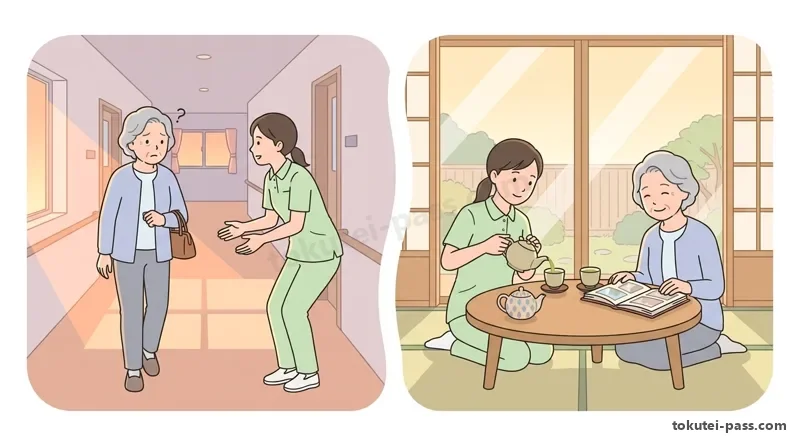
例えば、レクリエーションや入浴・食事を拒否したり怒りっぽくなったりした利用者に対し、「わがまま」「認知症の進行」と安易に決めつけず、難聴や視力低下、疲労、便秘や疼痛、元の職業歴やプライドなどの背景を探ります。
For instance, when a user refuses recreation, bathing, or meals or becomes irritable, do not hastily label it 'selfishness' or 'dementia progression'; explore underlying factors such as hearing/vision loss, fatigue, constipation, pain, former occupation, or pride.
また在宅復帰や自宅生活継続を目指す事例では、現在の施設内動作と自宅の住環境(段差やトイレの位置、家族の介護力)を照らし合わせて課題を抽出します。
In cases aiming for discharge home or continued home living, extract challenges by comparing current facility performance with the actual home environment (steps, toilet location, family caregiving capacity).
計画修正では、いきなり高すぎる目標や全介助へ変えるのではなく、本人の自尊心や強み(得意だった家事や趣味)を活かし、小集団や役割作りからスモールステップで進める支援内容を選びます。
When revising plans, rather than jumping to overly high goals or full assistance, leverage the user's self-esteem and strengths (familiar chores or hobbies) and select small-step support such as small-group activities or meaningful roles.
さらに入所直後やサービス利用開始直後の混乱(リロケーションダメージ)に対しては、なじみの物を配置したり特定の職員が関わったりして安心感を高める計画が有効です。
Furthermore, to address confusion right after facility admission or service initiation (relocation damage), plans that arrange familiar belongings or assign consistent staff to build reassurance are effective.
Key points
- 拒否や不穏行動の背景にある身体的不調・感覚低下・生活歴・自尊心を多角的に解釈する
Multidimensionally interpret physical discomfort, sensory decline, life history, and pride behind refusal or restlessness - 計画修正では本人の「強み・得意なこと」を活かし、スモールステップの短期目標を設定する
When revising plans, leverage the user's 'strengths and familiar skills' and set short-term goals in small steps
| Word | Meaning |
|---|---|
| 行動変化の背景解釈(身体・心理・環境要因) | Interpreting background of behavioral changes (physical, psychological, environmental) |
| 生活歴と自尊心(プライド)への配慮 | Respecting life history and pride (self-esteem) |
| スモールステップによる短期目標修正 | Short-term goal revision using small steps |
| 強み(ストレングス)を活かした役割支援 | Role support leveraging user strengths |
障害者事例(障害福祉)の展開と事例研究の倫理
Disability Welfare Cases and Ethics in Case Research (Case Studies)
障害福祉サービス(グループホーム[共同生活援助]や就労継続支援、生活介護など)の事例問題では、利用者が環境変化や加齢に伴い状態変化した際に「最優先で収集すべき情報」や「個別支援計画の目標」が問われます。
In disability welfare case problems (Group Homes, Continuous Employment Support, Living Care), questions ask for the 'highest-priority information to gather' when a user's condition changes due to environment or aging, and appropriate 'Individual Support Plan goals.'
例えば、知的障害や自閉スペクトラム症のある利用者が作業所や居室でパニックや遅刻・食欲低下を起こした際は、まず日中活動先や夜間・体調・人間関係・こだわりや感覚過敏への影響を確認します。
For example, when a user with an intellectual disability or Autism Spectrum Disorder (ASD) experiences panic, tardiness, or loss of appetite at a workshop or group home, first check daytime activities, night sleep, physical health, interpersonal relations, and sensory sensitivities.
そして本人の「自己選択・自己決定」を尊重し、視覚的な手順書や環境調整を取り入れて本人が安心して自信を持てる支援計画を立てます。
Respecting the user's 'self-selection and self-determination,' incorporate visual schedules or environmental adjustments to build a support plan that fosters reassurance and confidence.
また、介護実践を振り返り法則性や教訓を導き出す「事例研究(ケーススタディ)」は、介護福祉職自身の「自己覚知」を促し介護の専門性を高めるために行われます。
Furthermore, 'Case Research' (Case Study / Jirei Kenkyuu)—reflecting on care practice to derive principles and lessons—is conducted to promote the care worker's 'self-awareness' (Jiko Kakuchi) and elevate professional expertise.
事例研究を行う際は、対象者(利用者・家族)に研究目的を説明して同意を得ること、個人が特定されないよう徹底的に「匿名化」すること、不利益を与えないことなど研究倫理を遵守します。
When conducting case research, strictly observe research ethics: explain the research purpose to obtain consent from the user and family, thoroughly 'anonymize' data so individuals cannot be identified, and ensure no disadvantage occurs.
Key points
- 障害福祉事例では、日中活動と生活の場の情報を連携して収集し、自己決定を支える個別支援計画を立てる
In disability cases, coordinate information between daytime activity sites and living spaces, and build plans supporting self-determination - 事例研究の目的は「自己覚知と介護の質・専門性向上」であり、本人同意と匿名化などの研究倫理を守る
The purpose of Case Research is 'self-awareness and improving care professionalism,' requiring informed consent and strict anonymization
| Word | Meaning |
|---|---|
| 共同生活援助(グループホーム)と就労継続支援 | Group Home (Community Living Support) and Continuous Employment Support |
| 日中活動先との情報共有と環境調整 | Information sharing with daytime activity providers and environmental adjustment |
| 事例研究(ケーススタディ)と自己覚知 | Case Research (Case Study) and Self-awareness (Jiko Kakuchi) |
| 研究倫理(インフォームド・コンセントと匿名化) | Research ethics (Informed consent and Anonymization) |
The Care Process
Practice this chapter in the appOfficial references
- 公益財団法人社会福祉振興・試験センター「介護福祉士国家試験 試験科目別出題基準(介護過程)」 — https://www.sssc.or.jp/kaigo/kijun/index.html
- 厚生労働省「介護福祉士養成課程 カリキュラム(介護過程)」 — https://www.mhlw.go.jp/stf/seisakunitsuite/bunya/hukushi_kaigo/seikatsuhogo/kaigo-fukushishi/index.html