Caregiving Documents & Records (Reading Care Records, Handover Notes, Manuals, and Schedules)
介護の文書(介護記録・申し送り・マニュアル・予定表の読解)
Nursing Care · 介護 - Kaigo · Written by Tokutei Pass based on the official study texts; not copied verbatim.
介護の文書の役割と8つの文書タイプ・読み取りの基本
Role of Caregiving Documents, the 8 Document Types, and Reading Fundamentals
介護施設では、多くの職員が交代で働くため、利用者の状態や業務の決まり・予定を「文書(記録や表)」で正確に共有します。文書を正しく読み取ることは安全なケアの基本です。
In long-term care facilities, many staff members work in rotating shifts, so user conditions, work rules, and schedules are shared accurately through written documents (records and tables). Reading documents accurately is the foundation of safe caregiving.
試験に出題される介護の文書は、①利用者の状況、②仕事のやり方(業務マニュアル)、③掲示・お知らせ、④献立表、⑤行事の計画、⑥仕事の予定(日勤・夜勤)、⑦事故の報告、⑧申し送り・介護記録、の8種類です。
The Caregiving Japanese Evaluation Test features 8 types of documents: (1) User's Condition (Riyousha no joukyou), (2) Work Procedures / Manuals (Shigoto no yarikata), (3) Facility Notices / Posters (Keiji / Oshirase), (4) Menu Charts (Kondatehyou), (5) Event Plans (Gyouji no keikaku), (6) Work Schedules (Shigoto no yotei: day/night shifts), (7) Accident Reports (Jiko no houkoku), and (8) Handover Notes & Care Records (Moushiokuri / Kaigo kiroku).
文書を読むときは、「いつ(日時・曜日・昼か夜か)」「どこで(場所・階数)」「だれが(利用者・介護職・看護師・調理員・ご家族)」「なにを・どのようにするか」を丁寧に確かめます。
When reading any document, carefully verify: When (date, time, day of the week, daytime or nighttime), Where (location, floor number), Who (user, care worker, nurse, cooking staff, family), and What / How things are done.
特に「右と左」「昼間と夜間」「自分でできることと介助が必要なこと」「参加人数の数字」「①→②→③→④の順番」は、選択肢で引っかけになりやすいため注意して照らし合わせます。
Pay special attention to Left vs. Right, Daytime vs. Nighttime, Independent vs. Needs Assistance, exact numbers of participants, and step-by-step order (1 -> 2 -> 3 -> 4), as distractors frequently swap these details.
Key points
- 介護の文書は「利用者の状況・仕事のやり方・掲示・献立表・行事の計画・仕事の予定・事故報告・申し送り」の8タイプある。
Exam documents fall into 8 types: User Condition, Work Procedures, Notices, Menu Charts, Event Plans, Work Schedules, Accident Reports, and Handover Notes. - 読み取りでは「日時・場所・担当者・対象者・具体的内容」を文書と一字一句照合する。
Always cross-check Date/Time, Location, Person in Charge, Target User, and Specific Actions word-for-word against the document. - 「左右の違い」「昼と夜の違い」「一人でできるか手伝うか」「手順の順番」の入れ替えに注意する。
Watch out for common distractor traps: swapping Left/Right, Day/Night, Independent/Assisted, and the sequence of steps.
| Word | Meaning |
|---|---|
| 介護の文書・介護記録 | Caregiving documents (Kaigo no bunsho) and Care records (Kaigo kiroku) |
| 利用者の状況・仕事のやり方 | User's condition (Riyousha no joukyou) and Work procedures (Shigoto no yarikata) |
| 掲示(お知らせ)・献立表 | Posted notice (Keiji / Oshirase) and Menu chart (Kondatehyou) |
| 行事の計画・仕事の予定 | Event plan (Gyouji no keikaku) and Work schedule (Shigoto no yotei) |
| 事故の報告・申し送り | Accident report (Jiko no houkoku) and Shift handover (Moushiokuri) |
| 確認・観察・見守り | Confirmation (Kakunin), Observation (Kansatsu), and Watching over (Mimamori) |
利用者の状況①:コミュニケーション(見る・聞く・話す)の記録
User's Condition 1: Records of Communication Abilities (Seeing, Hearing, Speaking)
「利用者の状況」の表では、利用者の氏名・年齢・介護度とともに、「見る(視力)」「聞く(聴力)」「話す(会話)」の能力が項目別に書かれています。
In a User's Condition (Riyousha no joukyou) table, alongside the user's name, age, and care level, communication abilities are listed under three categories: Miru (Seeing / Vision), Kiku (Hearing), and Hanasu (Speaking / Conversation).
「見る」の欄では、「右目はよく見えるが、左目は白内障で見えにくい」「新聞を読むときは眼鏡を使う」のように、左右どちらの目が見えにくいか、眼鏡を使う場面が書かれています。
Under Seeing (Miru), the record specifies which eye sees well or poorly and when glasses are used—for example: The right eye sees well, but the left eye is hard to see with due to cataracts (Hakunaishou); uses glasses (Megane) when reading the newspaper.
「聞く」の欄では、「左耳は聞こえにくいが、右耳はよく聞こえる」「少し大きい声でゆっくり話せば聞こえる」「補聴器を使っている」などの特徴が記載されます。
Under Hearing (Kiku), details such as: Hard of hearing in the left ear, but hears well in the right ear, Can hear if spoken to slowly in a slightly loud voice, or Uses a hearing aid (Hochouki) are recorded.
選択肢では「右目が見えにくい(本当は左目)」「大きい声で話しても全く聞こえない(本当は大きい声なら聞こえる)」のように事実と逆の文が作られるため、左右と条件を必ず確認します。
Incorrect choices often reverse the facts—such as stating the right eye sees poorly (when it is the left eye) or that the user cannot hear at all even in a loud voice (when they can hear if spoken to loudly)—so always verify left/right sides and conditions.
Key points
- コミュニケーションの表では「見る・聞く・話す」の3項目に分けて利用者の状態が書かれている。
Communication tables organize user status into three sections: Miru (Seeing), Kiku (Hearing), and Hanasu (Speaking). - 目や耳の記録では「右か左か」と「眼鏡・補聴器の有無」を正確に読み取る。
For vision and hearing records, accurately read Right (Migi) vs. Left (Hidari) and whether glasses (Megane) or a hearing aid (Hochouki) are used. - 「少し大きい声なら聞こえる」のか「全く聞こえない」のかといった条件の違いに注意する。
Distinguish carefully between being able to hear when spoken to loudly versus not being able to hear at all.
| Word | Meaning |
|---|---|
| コミュニケーション(見る・聞く・話す) | Communication (Seeing Miru, Hearing Kiku, Speaking Hanasu) |
| 右目・左目・見えにくい | Right eye (Migime), Left eye (Hidarime), Hard to see (Mienikui) |
| 眼鏡(メガネ)をかける | Wear glasses (Megane wo kakeru) |
| 右耳・左耳・聞こえにくい | Right ear (Migimimi), Left ear (Hidarimimi), Hard to hear (Kikoenikui) |
| 補聴器(耳の聞こえを助ける道具) | Hearing aid (Hochouki - device that assists hearing) |
| 大きい声でゆっくり話す | Speak slowly in a loud voice (Ookii koe de yukkuri hanasu) |
利用者の状況②:移動・排泄・食事・入浴と家族・面会の記録
User's Condition 2: Records of Mobility, Excretion, Meals, Bathing, and Family Visits
日常生活動作の記録では、「移動」「排泄」「食事」「入浴」について、時間帯ごとの方法や介助の程度が書かれています。特に「昼間」と「夜間(夜)」の違いがよく問われます。
In records of daily living activities, Mobility (Idou), Excretion (Haisetsu), Meals (Shokuji), and Bathing (Nyuuyoku) describe methods by time of day and the level of assistance required. Questions frequently test the difference between daytime (Hiruma) and nighttime (Yakan / Yoru).
たとえば排泄と移動で、「昼間は歩行器(または車いす)でトイレに行くが、夜はベッドの横のポータブルトイレを使う。少し介護が必要だが、失禁はない。食事は一人で食べられる」といった内容です。
For example, an excretion and mobility record may state: During the daytime, goes to the restroom using a walker (or wheelchair), but at night uses a bedside portable toilet; requires slight assistance, has no incontinence (Shikkin wa nai), and eats meals independently.
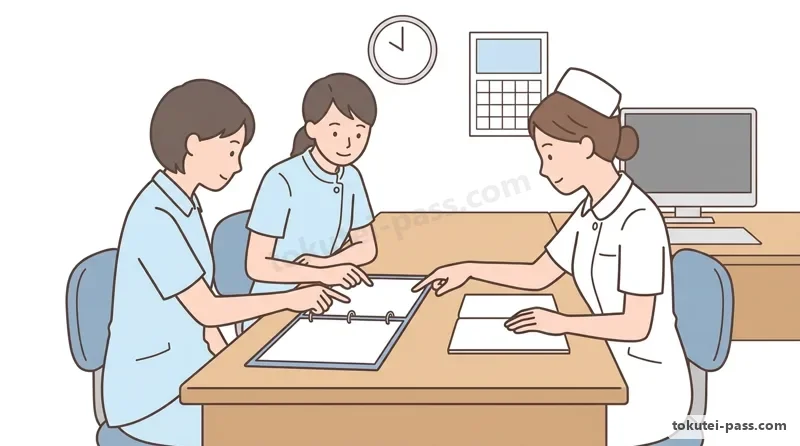
退院直後や持病のある利用者の記録では、「先月退院したばかりで、入浴のときにときどき胸が苦しくなることがあるため、入浴時は介護と見守りが必要」のように注意点が書かれます。
For users recently discharged from the hospital or with chronic conditions, precautions are noted: Discharged (Taiin) last month; sometimes experiences chest tightness (Mune ga kurushiku naru) during bathing, so assistance and watching over (Kaigo to mimamori) are required when bathing.
また「ご家族と面会」の記録では、「娘は近くに住んでいるが平日は仕事があるため、土曜日か日曜日に面会に来る。息子は遠い県に住んでいてあまり来られない」のように家族ごとの事情を読み分けます。
In Family and Visitation (Gokazoku to menkai) records, distinguish each family member's situation: The daughter lives nearby but works on weekdays (Heijitsu), so she visits on Saturdays or Sundays; the son lives in a distant prefecture and rarely visits.
Key points
- 排泄の記録では「昼間はトイレ、夜間はポータブルトイレ」のような時間帯による違いと「失禁の有無」を確認する。
In excretion records, check the difference between daytime (restroom) and nighttime (portable toilet) methods, and whether incontinence (Shikkin) is present. - 入浴時に「胸が苦しくなることがある」などの健康上の注意点と「見守りの必要」を見落とさない。
Note health precautions during bathing—such as occasional chest tightness—and the requirement for assistance and watching over (Mimamori). - 家族の面会記録では、息子・娘などの続柄ごとに「住んでいる場所」と「面会に来る曜日・頻度」を整理する。
In family visitation (Menkai) records, match each relative (daughter, son) with where they live and which days they visit (weekdays vs. weekends).
| Word | Meaning |
|---|---|
| 昼間(昼)と夜間(夜)の違い | Difference between Daytime (Hiruma / Hiru) and Nighttime (Yakan / Yoru) |
| 一人でできる(自立)・少し介護が必要 | Can do independently (Jiritsu) / Requires slight caregiving assistance |
| 失禁はない(もらすことはない) | No incontinence (Shikkin wa nai) |
| 退院・入院・胸が苦しくなる | Hospital discharge (Taiin), Hospitalization (Nyuuin), Chest tightness (Mune ga kurushiku naru) |
| 介護と見守りが必要 | Requires caregiving assistance and watching over (Kaigo to mimamori ga hitsuyou) |
| ご家族・面会・平日と土曜日/日曜日 | Family (Gokazoku), Visitation (Menkai), Weekdays (Heijitsu) and Saturday / Sunday |
仕事のやり方(業務マニュアル)①:車いすの安全と火事・災害時の手順
Work Procedures (Manuals) 1: Wheelchair Safety and Emergency Fire Procedures
「仕事のやり方」は、介護職が守るべき業務マニュアルです。「車いすの安全な使い方」の文書では、まず「使う前にブレーキとタイヤ(空気)を確認する」ことが書かれています。
Work Procedures (Shigoto no yarikata) are operational manuals that care workers must follow. In a Wheelchair Safe Usage manual, the first rule is: Before use, check the brakes (Brake) and tires (air pressure).
続いて「利用者が乗るとき・降りるときと、車いすが止まっているときは必ずブレーキをかける」「動かす前に必ず『車いすを押しますよ』と声をかける」というルールが示されます。
Next are the rules: Always apply the brakes when the user gets on or off and whenever the wheelchair is stopped, and Always say 'I am going to push the wheelchair now' (Kurumaisu wo oshimasuyo) before moving.
「火事が起きた場合(緊急時の手順)」の文書では、行動する順番(①→②→③→④)がそのまま問われます。正しい順番は、①大きい声で周りの人に火事を知らせる、②非常ベルのボタンを押す、です。
In an Emergency Procedure in Case of Fire (Kaji ga okita baai) document, questions directly test the exact order of actions (1 -> 2 -> 3 -> 4). The correct sequence begins with: (1) Alert people nearby in a loud voice that there is a fire -> (2) Press the emergency alarm bell button (Hijou bell).
そして、③119番に電話をかける、④利用者を安全な場所に誘導する(エレベーターは使わない)、の順に行動します。「文と同じ順番のものを選んでください」という問題では、①から④の順序を正確に追います。
Then proceed with: (3) Call 119 on the telephone -> (4) Guide users to a safe location (Anzen na basho ni yuudou suru - never use elevators). When asked to choose the option matching the document's sequence, trace steps 1 through 4 accurately.
Key points
- 車いすマニュアルでは「使用前のブレーキ・タイヤ確認」「乗降時・停止時のブレーキ」「出発前の声かけ」が3大原則である。
The three core rules in a wheelchair manual are: Check brakes and tires before use, Lock brakes when stopped or transferring, and Speak before pushing. - 火事が起きたときの手順は「①大きい声で周りに知らせる→②非常ベルを押す→③119番に電話する→④安全な場所へ誘導する」の順である。
The four steps in case of fire are: (1) Shout to alert others nearby -> (2) Press the emergency alarm bell -> (3) Call 119 -> (4) Guide users to a safe place. - 順番を問う問題では、番号や矢印(→)の順序が入れ替わっている選択肢に注意する。
For sequence questions, carefully check the numbers and arrows (->) to spot options where steps are reversed.
| Word | Meaning |
|---|---|
| ブレーキとタイヤを確認する | Check the brakes and tires (Brake to tire wo kakunin suru) |
| 止まっているときは必ずブレーキをかける | Always apply the brakes when stopped |
| 火事が起きた場合(緊急時の対応) | In case a fire breaks out (Kaji ga okita baai - emergency response) |
| 大きい声で周りの人に知らせる | Alert people nearby in a loud voice (Ookii koe de mawari no hito ni shiraseru) |
| 非常ベルのボタンを押す・119番に電話する | Press the emergency bell button (Hijou bell) / Call 119 (119-ban) |
| 安全な場所に誘導する・非常口 | Guide to a safe location (Anzen na basho ni yuudou suru) / Emergency exit (Hijouguchi) |
仕事のやり方(業務マニュアル)②:排泄・入浴・食事介助の手順書
Work Procedures (Manuals) 2: Manuals for Excretion, Bathing, and Meal Assistance
「排泄介助の手順」の文書では、①利用者が自分でできることを確認する→②いっしょにトイレに行く→③便座にしっかり座ったか確認する→④呼び出しボタンを説明する→⑤トイレの外で待つ、の順番が示されます。
In an Excretion Assistance Procedure document, the sequence is: (1) Check what the user can do by themselves -> (2) Go to the restroom together -> (3) Confirm the user is seated stably on the toilet seat (Benza) -> (4) Explain the call button -> (5) Wait outside the restroom.
「入浴介助の注意点」の文書では、入浴前に体調(バイタルサイン)を確認し、先にトイレを済ませてもらうこと、食事のすぐあとの入浴は避けることが書かれています。
In a Bathing Assistance Precautions document, the rules specify: check physical condition (vital signs) before bathing, have the user use the restroom beforehand, and avoid bathing immediately after a meal (Shokuji no sugu ato no nyuuyoku wa sakeru).
また冬場などのヒートショック(急激な温度変化による血圧変動)を防ぐため、「脱衣室と浴室を暖めておくこと」、入浴後は汗をかいて水分が減るため「必ず水分補給をすること」が明記されます。
Furthermore, to prevent heat shock caused by sudden temperature changes in winter, warm up the changing room (Datsuishitsu) and bathroom (Yokushitsu) beforehand, and always provide fluid intake (Suibun hokyuu) after bathing to replace fluids lost through sweat.
「食事介助のやり方」の文書では、介護職も椅子に座って同じ目線で介助すること、最初に献立を説明してお茶や汁物から勧めること、食後は口腔ケアを行い30分ほど座って休んでもらうことが書かれます。
In a Meal Assistance Procedure document, the care worker sits on a chair at the same eye level as the user, first explains the menu and offers tea or soup to moisten the mouth, and after eating provides oral care (Koukuu care) and has the user rest seated for about 30 minutes.
Key points
- トイレ介助の手順書では「できることの確認→誘導→着座確認→ボタン説明→外で待機」の流れを押さえる。
Toilet assistance sequence: Check what the user can do -> Guide to toilet -> Confirm stable seating -> Explain call button -> Wait outside. - 入浴マニュアルでは「食直後の入浴を避ける」「脱衣室・浴室の温度管理」「入浴後の水分補給」が重要である。
Bathing manuals emphasize: Avoid bathing right after meals, Warm the changing room and bathroom, and Rehydrate (Suibun hokyuu) after bathing. - 食事マニュアルでは「座って同じ目線で介助」「献立の説明」「食後の口腔ケアと30分間の座位保持」を確認する。
Meal manuals emphasize: Sit at eye level to assist, Explain the menu, Perform post-meal oral care, and Maintain a sitting posture for 30 minutes.
| Word | Meaning |
|---|---|
| 自分でできることを確認する | Check what the user can do by themselves |
| 便座に座ったか確認する・トイレの外で待つ | Confirm seating on the toilet seat / Wait outside the restroom |
| 食事のすぐあとの入浴はやめる | Avoid bathing immediately after a meal |
| 脱衣室と浴室の温度に気をつける | Pay attention to the temperature of the changing room and bathroom |
| 入浴のあとに水分補給をする | Provide fluid intake after bathing (Nyuuyoku no ato ni suibun hokyuu wo suru) |
| 椅子に座って食事の介護をする | Sit on a chair at eye level to provide meal assistance |
施設の掲示・お知らせ(面会のルール・食中毒予防・手の洗い方)
Facility Notices and Posters (Visitation Rules, Food Poisoning Prevention, and Handwashing Steps)
施設の玄関や廊下・洗面所に貼られる「掲示(お知らせ)」は、面会に来るご家族や職員に守ってほしいルールを伝える文書です。禁止事項と場所・期間を正確に読み取ります。
Notices (Keiji / Oshirase) posted at the entrance, hallways, or washbasins communicate rules for visiting families and staff. Read them carefully to identify prohibited actions, applicable locations, and dates.
「面会のみなさまへ」の掲示では、「この施設はどこも禁煙です(たばこを吸ってはいけません)」「建物の中では携帯電話は使用禁止です。電話をかけるときは建物の外でお願いします」などがよく出ます。
In notices titled To All Visitors (Menkai no minasama e), common rules include: Smoking is prohibited everywhere in this facility (Doko mo kinen desu) and Mobile phones are prohibited inside the building; please make phone calls outside the building.
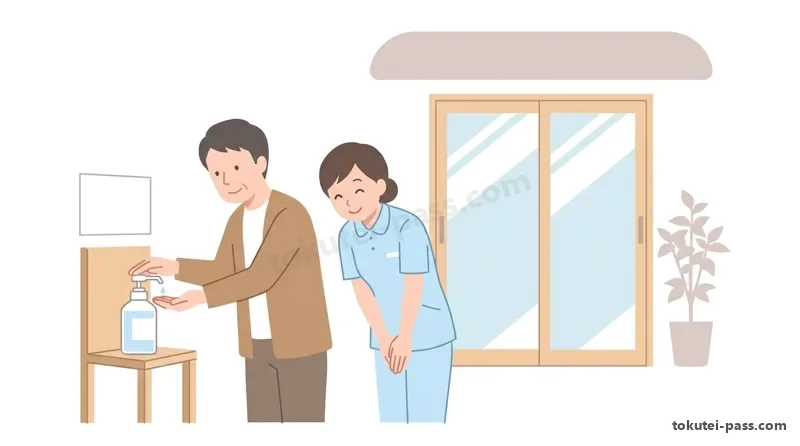
「ご家族のみなさまへ(夏の食中毒予防)」の掲示では、「6月1日から8月31日まで、食中毒を防ぐため、食べ物を持ってこないでください」「玄関で手の消毒をしてください」といった期間とお願いが書かれます。
In notices titled To All Family Members (Summer Food Poisoning Prevention), specific dates and requests are stated: From June 1 to August 31, to prevent food poisoning (Shokuchuudoku), please do not bring food into the facility, and Please disinfect your hands at the entrance (Genkan).
また洗面所の「手の洗い方」の掲示では、①水で手をぬらす→②石けんをつけて手のひらと手の甲を洗う→③指先(爪の間)を洗う→④指の間と手首を洗う→⑤水でよく流す→⑥ペーパータオルで拭く、の順番を確かめます。
At washbasins, a How to Wash Hands (Te no araikata) poster shows 6 steps: (1) Wet hands with water -> (2) Apply soap and wash palms (Tenohira) and backs of hands (Tenokou) -> (3) Wash fingertips and under nails (Yubisaki) -> (4) Wash between fingers and wrists (Tekubi) -> (5) Rinse thoroughly with water -> (6) Wipe dry with a paper towel.
Key points
- 面会者向けの掲示では「施設内はどこも禁煙」「携帯電話は建物の外で使う」などの場所とルールを読み取る。
In visitor notices, verify rules and locations such as No smoking anywhere on the premises and Use mobile phones outside the building. - 食中毒予防や感染症流行時の掲示では「期間(いつからいつまで)」「食べ物の持ち込み禁止」「玄関での手指消毒」を確認する。
In food poisoning and infection notices, check the exact period (start and end dates), prohibition on bringing food, and hand disinfection at the entrance. - 手洗い手順の掲示では「手のひら・手の甲・指先・指の間・手首」を洗う順番を文書どおりに追う。
For handwashing posters, follow the exact order of washing palms, backs of hands, fingertips, between fingers, and wrists as written.
| Word | Meaning |
|---|---|
| 面会のみなさまへ・ご家族のみなさまへ | To All Visitors (Menkai no minasama e) / To All Family Members |
| どこも禁煙(たばこを吸わないでください) | No smoking anywhere (Doko mo kinen) |
| 建物の中では使用禁止 | Prohibited inside the building (Tatemono no naka dewa shiyou kinshi) |
| 食中毒・感染症の流行 | Food poisoning (Shokuchuudoku) / Outbreak of infectious disease (Kansenshou no ryuukou) |
| 玄関で手の消毒をする | Disinfect hands at the main entrance (Genkan de te no shoudoku wo suru) |
| 手の洗い方(手のひら・手の甲・指先・手首) | How to wash hands (Palm Tenohira, Back of hand Tenokou, Fingertips Yubisaki, Wrist Tekubi) |
献立表と行事の計画(誕生日会・夏まつり)の読み取り
Reading Menu Charts (Kondatehyou) and Event Plans (Birthday Parties, Summer Festivals)
「献立表」は、日付・曜日ごとに「朝食・昼食・おやつ・夕食」のメニューが並んだ表です。縦の列(日付や食事区分)と横の行(主食・副食・汁物・デザート)が交差する場所を正確に読みます。
A Menu Chart (Kondatehyou) lists Breakfast (Choushoku), Lunch (Chuushoku), Snack (Oyatsu), and Dinner (Yuushoku) across multiple dates and days of the week. Read the intersection of the vertical column (date/meal) and horizontal row (staple food Shushoku, side dish Fukushoku, soup Shirumono, Dessert).
たとえば「火曜日の昼食の主食は肉うどん、デザートはヨーグルト」「水曜日の夕食の副食は焼き魚と野菜の煮物」のように、いつのどの食事かを間違えないよう照合します。
For example: Tuesday's lunch staple food is beef udon (Niku udon) and dessert is yogurt; Wednesday's dinner side dishes are grilled fish (Yakizakana) and simmered vegetables (Yasai no nimono). Cross-check carefully so you do not confuse days or meals.
「行事の計画(誕生日会・夏まつりなど)」の表には、「日時(何月何日・何時から何時まで)」「場所(2階ホール・3階ホールなど)」「参加者の人数」「準備と担当者」が書かれています。
An Event Plan (Gyouji no keikaku—such as a Birthday Party Tanjoubikai or Summer Festival Natsumatsuri) table lists Date and Time (Nichiji), Location (Basho: 2nd-floor hall or 3rd-floor hall), Number of Participants (Sankasha), and Preparations / Person in Charge (Junbi / Tantousha).
特に「参加者(利用者20人・ご家族15人・介護職5人・看護師1人・調理員1人)」の人数と、「だれが何を準備するか(看護師がプレゼントを買う、調理員が飲み物を用意する、介護職が会場準備と誘導をするなど)」を確実に区別します。
Carefully distinguish participant numbers by group (e.g., 20 users, 15 family members, 5 care workers, 1 nurse, 1 cook) and who is responsible for each task (e.g., the nurse buys birthday gifts, the cook prepares drinks, and care workers set up the hall and guide users).
Key points
- 献立表では「日付(曜日)」「朝食・昼食・夕食」「主食・副食・デザート」の3つを揃えて確認する。
On a Menu Chart, always align all three elements: Date/Day of the week, Meal (breakfast/lunch/dinner), and Dish category (staple/side/dessert). - 行事の計画表では「日時・場所(何階ホールか)」と、職種別・家族の「参加者数」を正確に読み取る。
On an Event Plan table, accurately read Date/Time, Location (which floor hall), and Participant counts for each group. - 「準備・担当者」の欄で、介護職・看護師・調理員・利用者がそれぞれ何を担当するかを照合する。
Under Preparation and Person in Charge (Tantousha), verify what tasks are assigned to Care Workers, Nurses, Cooks, and Users.
| Word | Meaning |
|---|---|
| 献立表(朝食・昼食・おやつ・夕食) | Menu chart (Kondatehyou: Breakfast Choushoku, Lunch Chuushoku, Snack Oyatsu, Dinner Yuushoku) |
| 主食・副食・汁物・デザート | Staple food (Shushoku), Side dish (Fukushoku), Soup (Shirumono), Dessert |
| 行事の計画(誕生日会・夏まつり) | Event plan (Gyouji no keikaku: Birthday party Tanjoubikai, Summer festival Natsumatsuri) |
| 日時・場所(2階ホール・3階ホール) | Date and time (Nichiji), Location (Basho: 2nd-floor hall / 3rd-floor hall) |
| 参加者(利用者・ご家族・職員の人数) | Participants (Sankasha: number of users, family members, and staff) |
| 準備・担当者(役割分担) | Preparation and Person in charge (Junbi / Tantousha - role assignment) |
仕事の予定(日勤スケジュールと夜勤スケジュール)の読み取り
Reading Work Schedules (Day Shift Schedule and Night Shift Schedule)
「仕事の予定」は、介護職の1日の業務を時間順に示したスケジュール表です。昼間の「日勤(例:9:00〜18:00)」と、夜から翌朝までの「夜勤(例:17:00〜翌10:00)」の2種類がよく出題されます。
A Work Schedule (Shigoto no yotei) shows a care worker's daily duties in chronological order. Two schedules frequently appear on the exam: Day Shift (Nikkin, e.g., 9:00 to 18:00) and Night Shift (Yakin, e.g., 17:00 to 10:00 the next morning).
日勤の予定表では、9:00に出勤・朝のミーティング、10:00に水分補給、11:30に昼食・服薬の介護、13:00から60分間の休憩、14:00に入浴の介護、16:00に水分補給、17:00に夕方のミーティング、17:30に記録、18:00に退勤といった流れを読み取ります。
On a Day Shift schedule: 9:00 report to work (Shukkin) and morning meeting, 10:00 hydration assistance, 11:30 lunch and medication assistance (Fukuyaku), 13:00 60-minute break (Kyuukei), 14:00 bathing assistance, 16:00 hydration, 17:00 evening meeting, 17:30 writing records (Kiroku), and 18:00 finish work (Taikin).
夜勤の予定表では、17:00に出勤し、18:00に夕食・服薬の介護と日勤者からの申し送り、20:00に就寝の介護(洗面・口腔ケア・着替え)、そして夜間(23:00など)は「2時間に1回の巡視」を行います。
On a Night Shift schedule: 17:00 report to work, 18:00 dinner/medication assistance and handover (Moushiokuri) from the day shift, 20:00 bedtime care (Shuushin no kaigo: face washing, oral care, changing into sleepwear), and night rounds (Junshi) once every 2 hours starting at 23:00.
翌朝は6:00に起床の介護、8:00に朝食・服薬の介護、9:00に朝のミーティング(申し送り)、9:30に記録を書き、10:00に退勤します。「何時に何をするか」「休憩は何分間か」「巡視は何時間に1回か」に注目します。
The next morning: 6:00 wake-up care (Kishou no kaigo), 8:00 breakfast and medication assistance, 9:00 morning meeting (handover), 9:30 writing records, and 10:00 finish work. Pay attention to what task occurs at what time, break duration in minutes, and patrol frequency.
Key points
- 日勤スケジュールでは、出勤から退勤までの各時刻の業務(食事・服薬・休憩時間・入浴・記録)を正確に追う。
On a Day Shift (Nikkin) schedule, track each timed duty from clock-in to clock-out (meals, medication, break duration, bathing, recording). - 夜勤スケジュールでは、20:00ごろの「就寝の介護」、夜間の「巡視(2時間に1回など)」、翌朝6:00ごろの「起床の介護」を確認する。
On a Night Shift (Yakin) schedule, verify 20:00 bedtime care (Shuushin), night rounds (Junshi: once every 2 hours), and 6:00 morning wake-up care (Kishou). - 時刻の前後関係(ミーティングの前か後か、記録を書く時間はいつか)を問う選択肢に注意する。
Watch out for options testing the order of events, such as whether recording (Kiroku) happens before or after the meeting.
| Word | Meaning |
|---|---|
| 仕事の予定(スケジュール表) | Work schedule (Shigoto no yotei / Schedule chart) |
| 日勤(9:00〜18:00)・夜勤(17:00〜10:00) | Day shift (Nikkin: 9:00 - 18:00) and Night shift (Yakin: 17:00 - 10:00) |
| 出勤・退勤・休憩・ミーティング | Report to work (Shukkin), Finish work (Taikin), Break (Kyuukei), Meeting |
| 食事・服薬の介護 | Meal and medication assistance (Shokuji / Fukuyaku no kaigo) |
| 就寝の介護・起床の介護 | Bedtime care (Shuushin no kaigo) and Wake-up care (Kishou no kaigo) |
| 巡視(2時間に1回見回る) | Night patrol rounds (Junshi - checking rooms once every 2 hours) |
事故の報告(事故報告書・ヒヤリ・ハット記録)の読み取り
Reading Accident Reports (Jiko Houkokusho and Near-Miss / Hiyari-Hatto Records)
施設内で転倒や誤嚥・物の破損などが起きたときに作成する「事故の報告(事故報告書)」には、「利用者名」「日時」「場所」「事故の内容」「原因」「これからどうするか(再発防止策)」が記載されます。
When a fall, aspiration, or property damage occurs in a facility, an Accident Report (Jiko no houkoku / Jiko houkokusho) is created with the User's Name, Date/Time (Nichiji), Location (Basho), Incident Details (Naiyou), Cause (Genin), and Future Preventive Measures (Korekara dou suru ka).
たとえば「洗面所でAさんが自分で入れ歯(義歯)を洗っていたとき、手が滑って床に落とし、入れ歯が割れてしまった」という内容の報告書がよく出題されます。
A classic exam example is: In the washroom (Senmenjo), while Mr. A was washing his dentures (Ireba / Gishi) by himself, they slipped from his hand, fell to the floor, and broke.
この事例の「原因」欄には「指先の力が弱くなっていること、手が水で濡れて滑りやすかったこと」が書かれ、「これからどうするか」の欄に今後の具体策が書かれます。
Under Cause (Genin), the report notes: The strength in his fingertips (Yubisaki no chikara) has weakened, and his hands were wet and slippery. Under Future Measures (Korekara dou suru ka), specific preventive steps are written.
再発防止策でも自立支援を考え、「入れ歯を外すのはAさんが自分で行い、洗ってケースに片付けるのは介護職が行う」のように、本人がすることと介護職がすることを分けて読み取ります。
Preventive measures still respect independence support: Mr. A will continue removing his dentures by himself, while a care worker will wash them and put them away in their storage case (Case). Read carefully to distinguish what the user does versus what the care worker does.
Key points
- 事故報告書は「日時・場所・内容・原因・これからどうするか(対策)」の5つの項目で構成される。
An Accident Report consists of 5 core items: Date/Time, Location, Incident Details, Cause, and Future Preventive Measures (Korekara dou suru ka). - 事故が起きた直接の「原因(指の力が弱い、手が濡れていたなど)」を文書から正確に探す。
Identify the direct Cause written in the document (such as weak fingertip grip or wet, slippery hands). - 「これからどうするか」では、利用者本人が続けて行うことと介護職が代わりに行うことの分担を確認する。
Under Future Measures, distinguish which action the user continues doing independently and which action the care worker takes over.
| Word | Meaning |
|---|---|
| 事故の報告(事故報告書) | Accident report (Jiko no houkoku / Jiko houkokusho) |
| 場所(洗面所・居室・食堂) | Location (Basho: Washroom Senmenjo, Private room Kyoshitsu, Dining hall Shokudou) |
| 内容(入れ歯を落として割れた・転倒した) | Incident details (Naiyou: dropped and broke dentures / fell down Tentou) |
| 原因(指先の力が弱い・手が濡れていた) | Cause (Genin: weak fingertip strength / hands were wet with water) |
| これからどうするか(再発防止の対策) | What to do from now on (Korekara dou suru ka - recurrence prevention) |
| ケースに入れて保管する | Put into a storage case and keep safely (Case ni irete hokan suru) |
申し送りノートと時間別介護記録(ショートステイ・通院・夜間記録)
Handover Notes and Timed Care Records (Short Stay, Hospital Visits, and Night Records)
「申し送りノート」には、次の勤務の職員へ伝える連絡事項が書かれます。たとえば「ショートステイ(短期入所)」の連絡では、「明日は2階に2人来て、4階から1人帰ります」のように階ごとの人数が書かれます。
A Handover Note (Moushiokuri note) passes important messages to the next shift. For example, a Short Stay handover note states arrivals and departures by floor: Tomorrow, 2 users will arrive on the 2nd floor, and 1 user will return home from the 4th floor.
さらに帰る方法と時間についても、「Aさんは15時の送迎車で帰ります。Bさんは14時にご家族が迎えに来ます」のように書かれるため、だれが何時にどの方法で帰るかを整理します。
It also specifies departure times and transportation methods: Mr. A will return home on the 15:00 shuttle van (Sougeisha); Ms. B's family will pick her up at 14:00. Organize who leaves at what time and by which method.
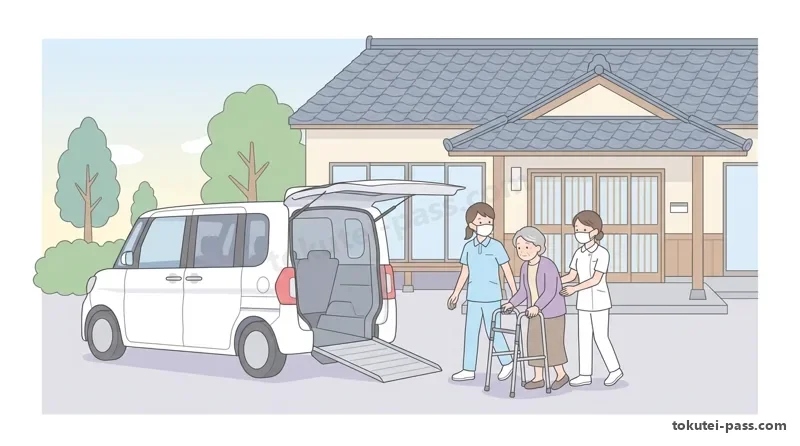
また病院へ行く(通院)の申し送りでは、「明日、Cさんは10時半(10時30分)に施設の車で病院へ行きます。看護師がいっしょに行きます。出発の10分前(10時20分)までに玄関へ連れてきてください」といった時間計算が含まれます。
A hospital visit (Tsuuin) handover note often requires simple time calculation: Tomorrow at 10:30 (10-ji han), Ms. C will go to the hospital in the facility car accompanied by a Nurse. Please bring Ms. C to the main entrance (Genkan) 10 minutes before departure (by 10:20).
時間別の「介護記録(夜間の様子)」では、「18:00 夕食は全部食べ、お茶を200ml飲んだ。吐き気はない」「02:45 ナースコールあり。気分が悪いと言い、少し嘔吐した」「03:10 気分が落ち着き、バイタルサインに異常なし。看護師に報告した」のように時刻ごとの変化を読み取ります。
Timed night Care Records (Kaigo kiroku) track changes chronologically: 18:00 Ate all of dinner, drank 200 ml of tea, no nausea -> 02:45 Nurse call rang; felt unwell and vomited slightly (Sukoshi outo shita) -> 03:10 Feeling settled, vital signs normal, reported to the Nurse.
Key points
- ショートステイの申し送りでは「何階に何人来るか・帰るか」と「送迎車か家族の迎えか・何時か」を正確に区別する。
In Short Stay handover notes, distinguish how many users arrive or leave on each floor, and whether they leave by shuttle van (Sougeisha) or family pickup. - 通院の申し送りでは「10時半の10分前=10時20分に玄関へ連れていく」のような時刻の読み取りに注意する。
In hospital visit handovers, calculate times carefully: 10 minutes before 10:30 means arriving at the entrance (Genkan) by 10:20. - 夜間の時間別記録では、18:00・02:45・03:10など時刻ごとの「食事・水分量(ml)・嘔吐の有無・バイタルサイン・看護師への報告」を照合する。
In timed night records (18:00, 02:45, 03:10), match each timestamp with meal/fluid intake (ml), vomiting, vital signs, and reporting to the Nurse.
| Word | Meaning |
|---|---|
| 申し送りノート・連絡事項 | Handover notebook (Moushiokuri note) and Communication items (Renraku jikou) |
| ショートステイ・送迎車・ご家族の迎え | Short stay, Shuttle vehicle (Sougeisha), Family pickup |
| 施設の車で病院へ行く | Go to the hospital in the facility vehicle (Shisetsu no kuruma de byouin e iku) |
| 10時半の10分前(10時20分)に玄関へ来る | Come to the entrance 10 minutes before 10:30 (at 10:20) |
| お茶を200ml飲む・少し嘔吐した | Drink 200 ml of tea / Vomited slightly (Sukoshi outo shita) |
| バイタルサインは異常なし・看護師に報告した | No abnormalities in vital signs / Reported to the Nurse |
試験によく出るポイントと覚え方
Frequently Tested Points & Memory Tips
「文書・記録」では、介護記録・食事や水分の摂取表・排泄チェック表・申し送りノート・シフト表・掲示物の読み取り問題が出題されます。
In 'Documents & Records', questions test reading comprehension of care records, meal/fluid intake charts, excretion check sheets, handover notes, shift schedules, and notices.
表やグラフを読む問題では、まず「日付・時間帯・利用者名・単位(ml、g、回、割)」を確認しましょう。特に水分摂取量の合計計算や、主食・副食の摂取割合が頻出です。
When reading tables, always check the 'date, time slot, user name, and unit (ml, g, times, tenths/wari)' first. Adding up total fluid intake (ml) and distinguishing staple food (Shushoku) from side dishes (Fukushoku) are tested constantly.
また、薬袋(処方せん)の読み取りでは「食前(食事の約30分前)・食後(食事の後30分以内)・食間(食事と食事の間、食後約2時間)・頓服(症状が出たとき)」の違いが必ず問われます。
When reading medication bags, you must distinguish: 'Shokuzen = before meals (~30 min before)', 'Shokugo = after meals (within 30 min)', 'Shokkan = between meals (~2 hours after a meal, NOT during a meal!)', and 'Tonpuku = as needed when symptoms appear'.
Key points
- 服薬時期の区別:「食前=食事前」「食後=食事後」「食間=食事と食事の間(食事中ではない!)」「就寝前=寝る前」「頓服=症状があるとき」。
Medication timing: 'Shokuzen = before meals', 'Shokugo = after meals', 'Shokkan = between meals (never confuse with during meals!)', 'Shuushinmae = before bed', 'Tonpuku = as needed for symptoms'. - 食事・水分記録の読み取り:「主食(ご飯・パン)と副食(おかず)の区別」「1日または時間帯別の水分合計量(ml)の足し算」を正確に行う。
Meal & fluid charts: Distinguish 'Shushoku (staple: rice/bread)' from 'Fukushoku (side dishes)', and carefully add up fluid intake (ml) by time slot or full day. - 排泄チェック表の記号:「排尿・排便の回数」「便の性状(普通便・軟便・泥状便・水様便・硬便)」と時間帯を照らし合わせる。
Excretion check sheets: Match time slots with urination (Hainyou) / bowel movement (Haiben) counts and stool types (Futsuuben = normal, Nanben = soft, Suiyouben = watery, Kouben = hard). - 勤務表(シフト表)の略語:「日勤(昼の勤務)・早番(朝早い勤務)・遅番(夕方〜夜の勤務)・夜勤(夜間の勤務)・公休(休み)」。
Shift table terms: 'Nikkin = day shift, Hayaban = early shift, Osoban = late shift, Yakin = night shift, Koukyuu = scheduled day off'. - 申し送り・ヒヤリハット報告書:「いつ・どこで・誰が・どうしたか・原因と再発防止策」の項目と本文を照合して読み取る。
Handover & Near-miss (Hiyari-hatto) reports: Cross-check 'When, Where, Who, What happened, Cause, and Prevention measures' against the question options.
| Word | Meaning |
|---|---|
| 食前・食後・食間・頓服 | Shokuzen (before meal), Shokugo (after meal), Shokkan (between meals), Tonpuku (as needed) |
| 主食・副食と水分摂取量 | Shushoku (staple food), Fukushoku (side dish), and Fluid intake |
| 普通便・軟便・水様便 | Futsuuben (normal stool), Nanben (soft stool), Suiyouben (watery stool) |
| 早番・日勤・遅番・夜勤 | Hayaban (early shift), Nikkin (day shift), Osoban (late shift), Yakin (night shift) |
Caregiving Documents & Records
Practice this chapter in the appOfficial references
- 厚生労働省「介護分野における特定技能外国人の受入れについて」 — https://www.mhlw.go.jp/stf/newpage_000117702.html
- 日本介護福祉士会『介護の特定技能評価試験 学習テキスト 改訂2版 ~介護技能・介護の日本語~』 — https://www.mhlw.go.jp/content/12000000/001253126.pdf
- 日本介護福祉士会『介護の日本語』テキスト — https://www.mhlw.go.jp/content/12000000/001184460.pdf
- 厚生労働省「介護特定技能評価試験(日本語)サンプル問題」 — https://www.mhlw.go.jp/content/12000000/001745561.pdf